
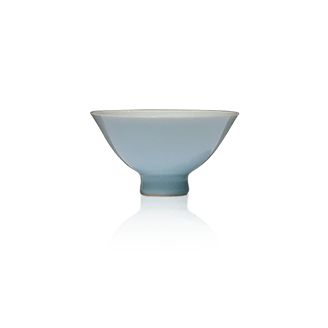
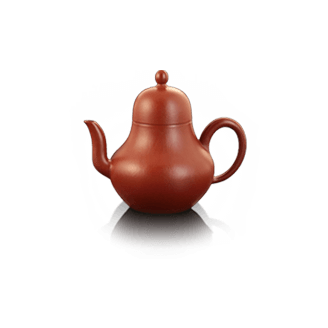
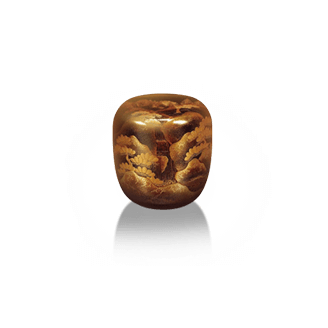
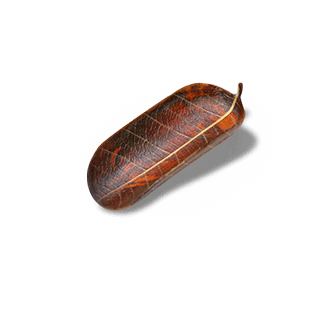

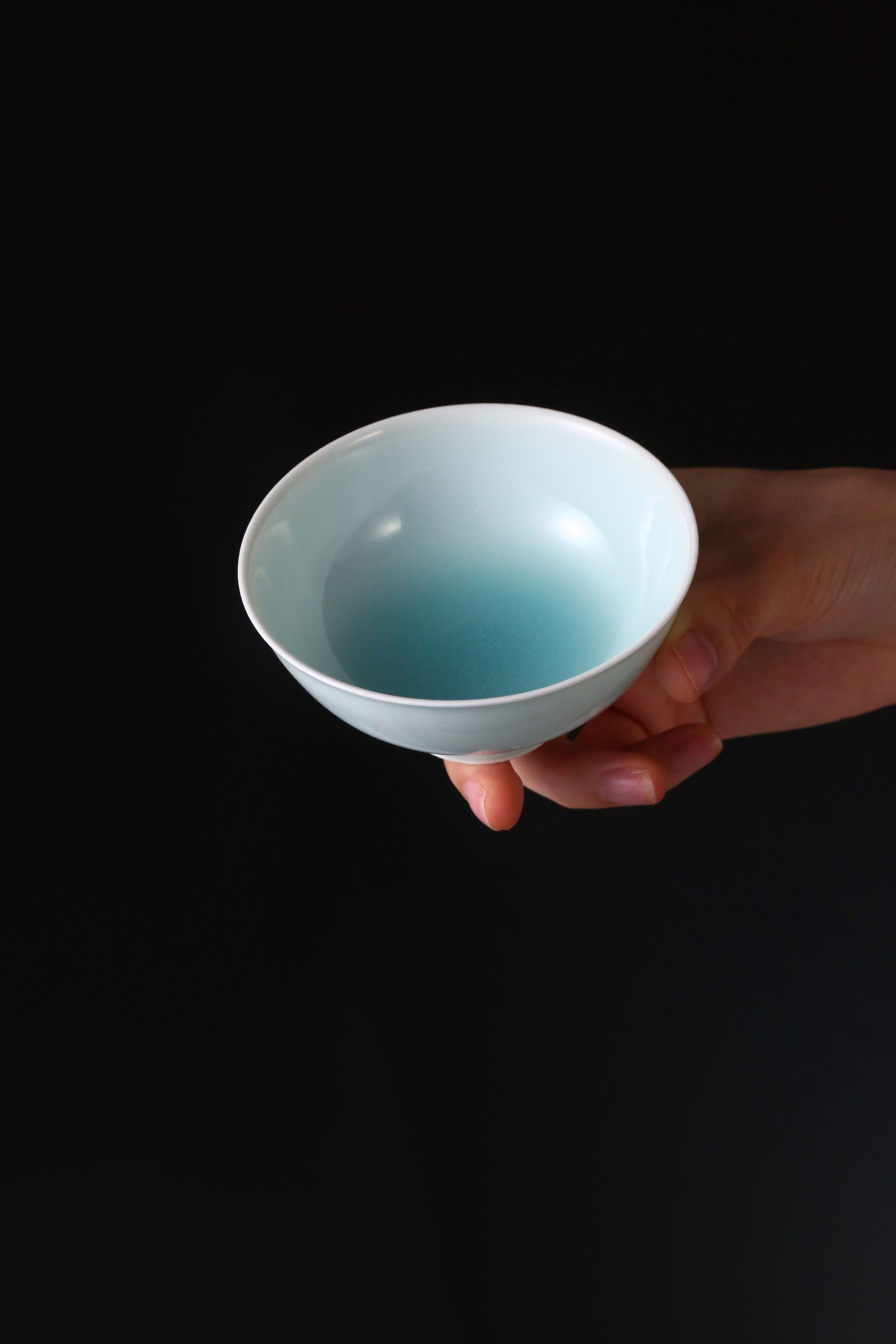
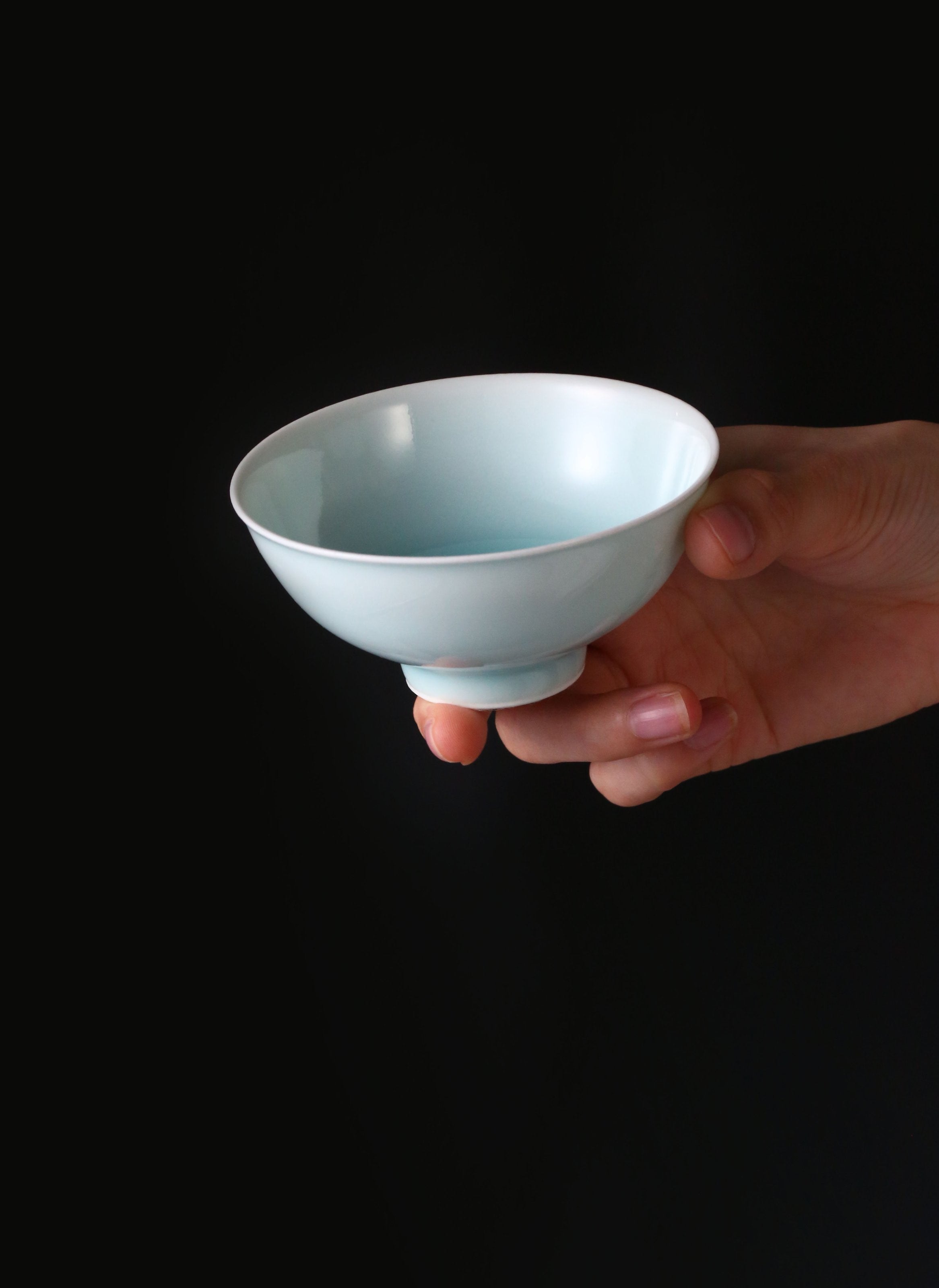
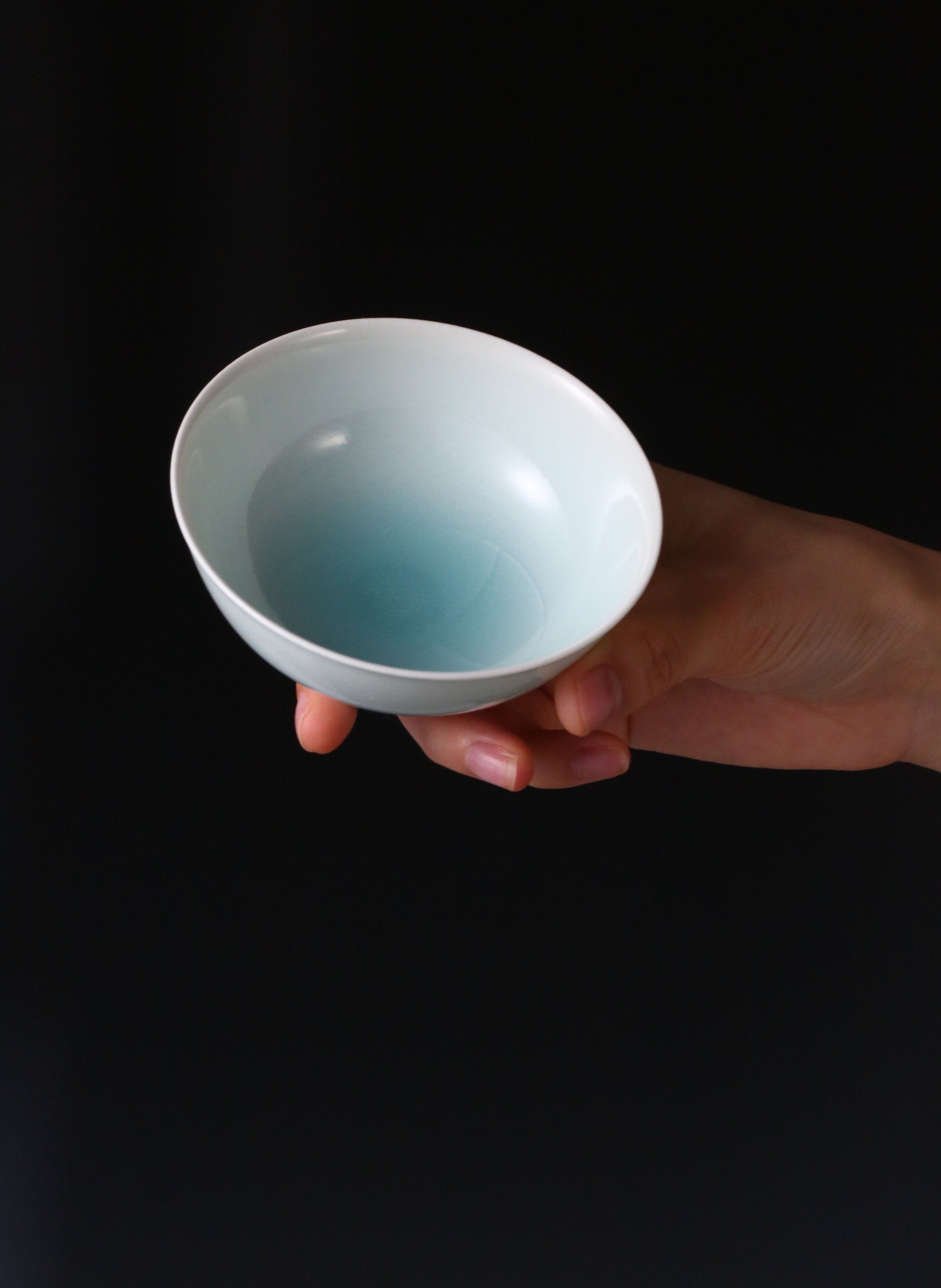
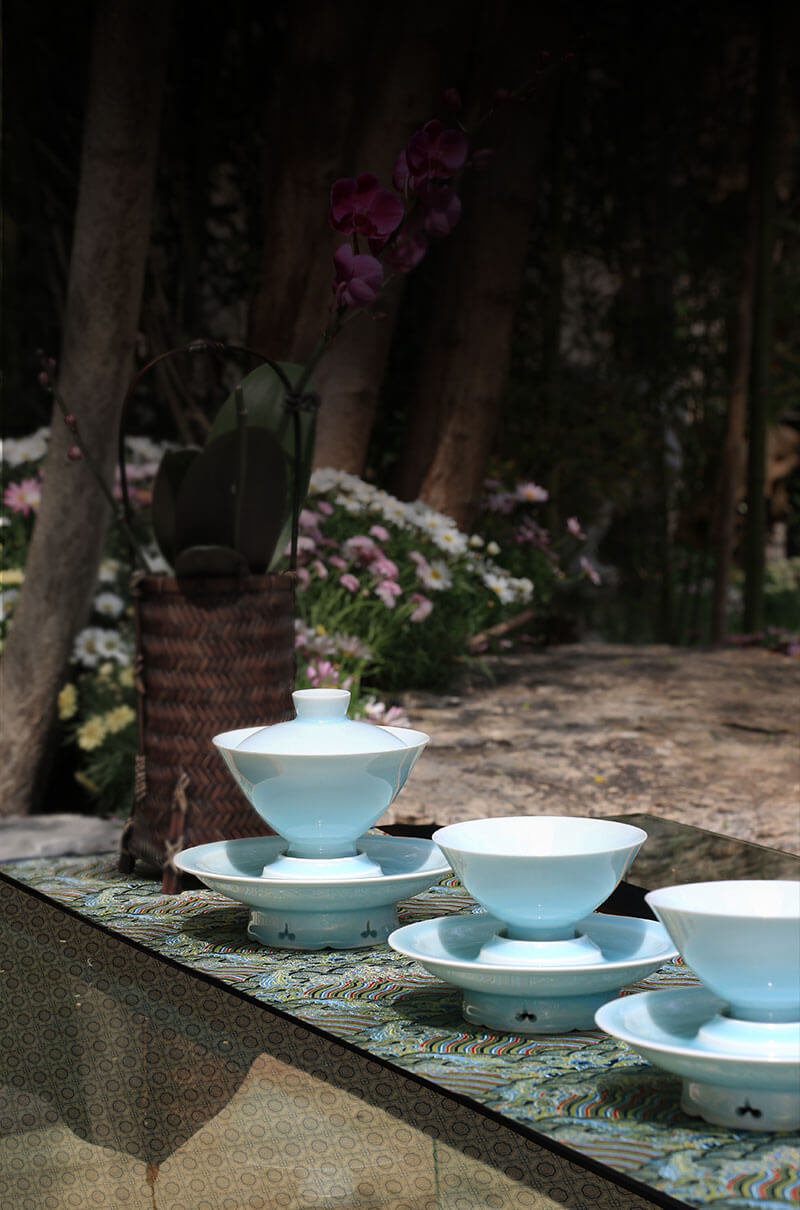
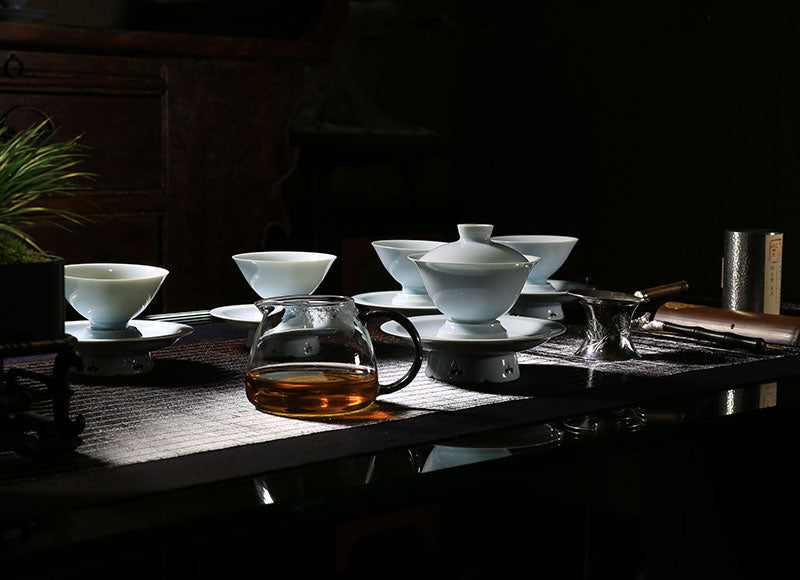
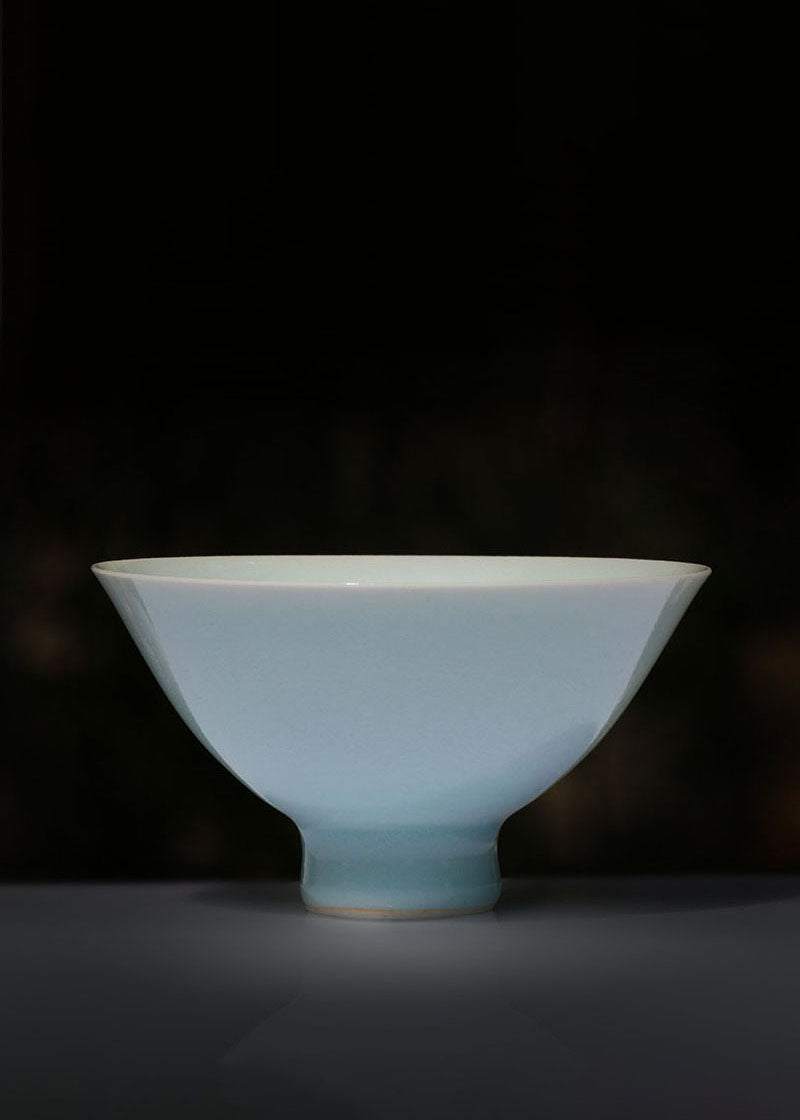
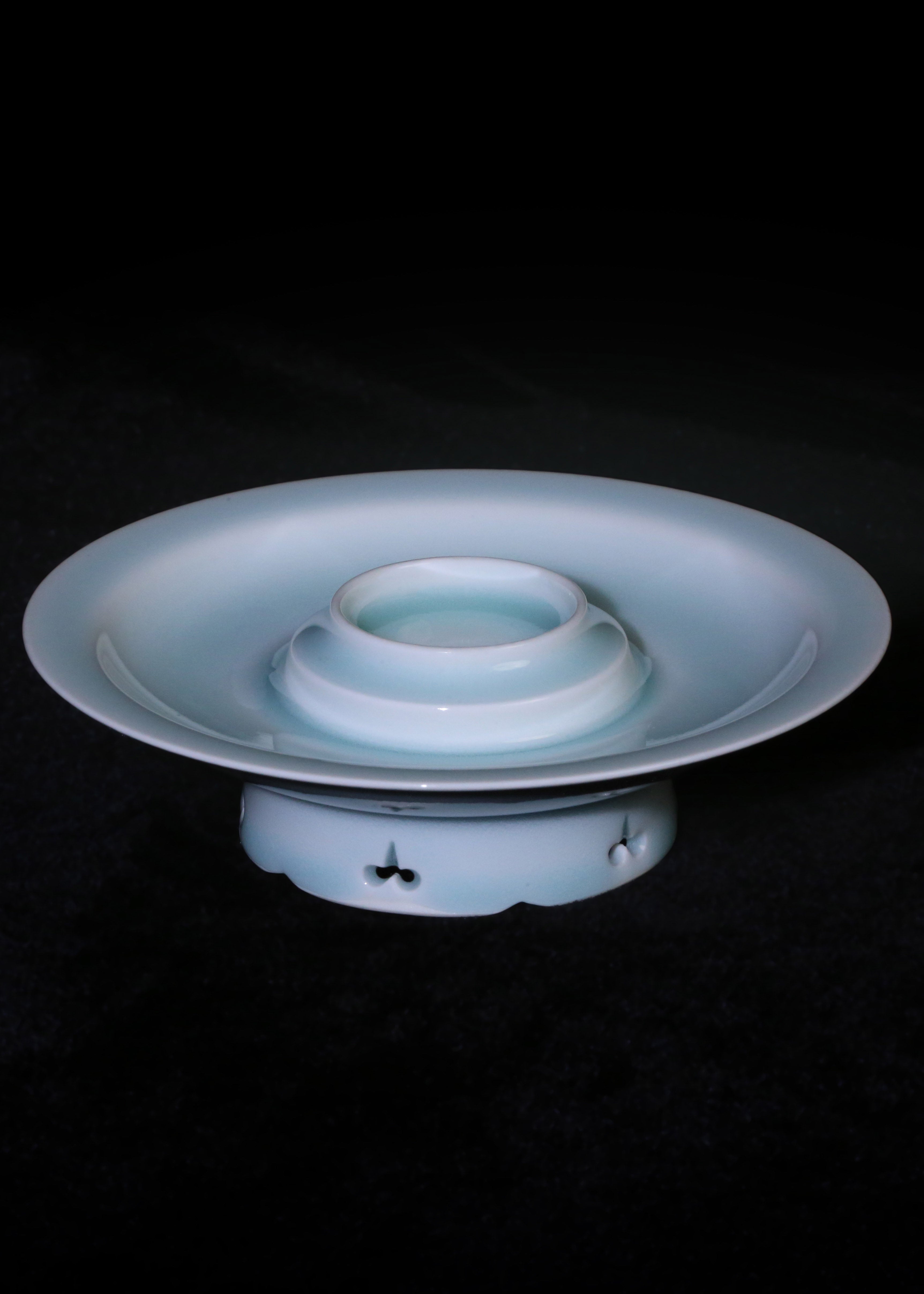
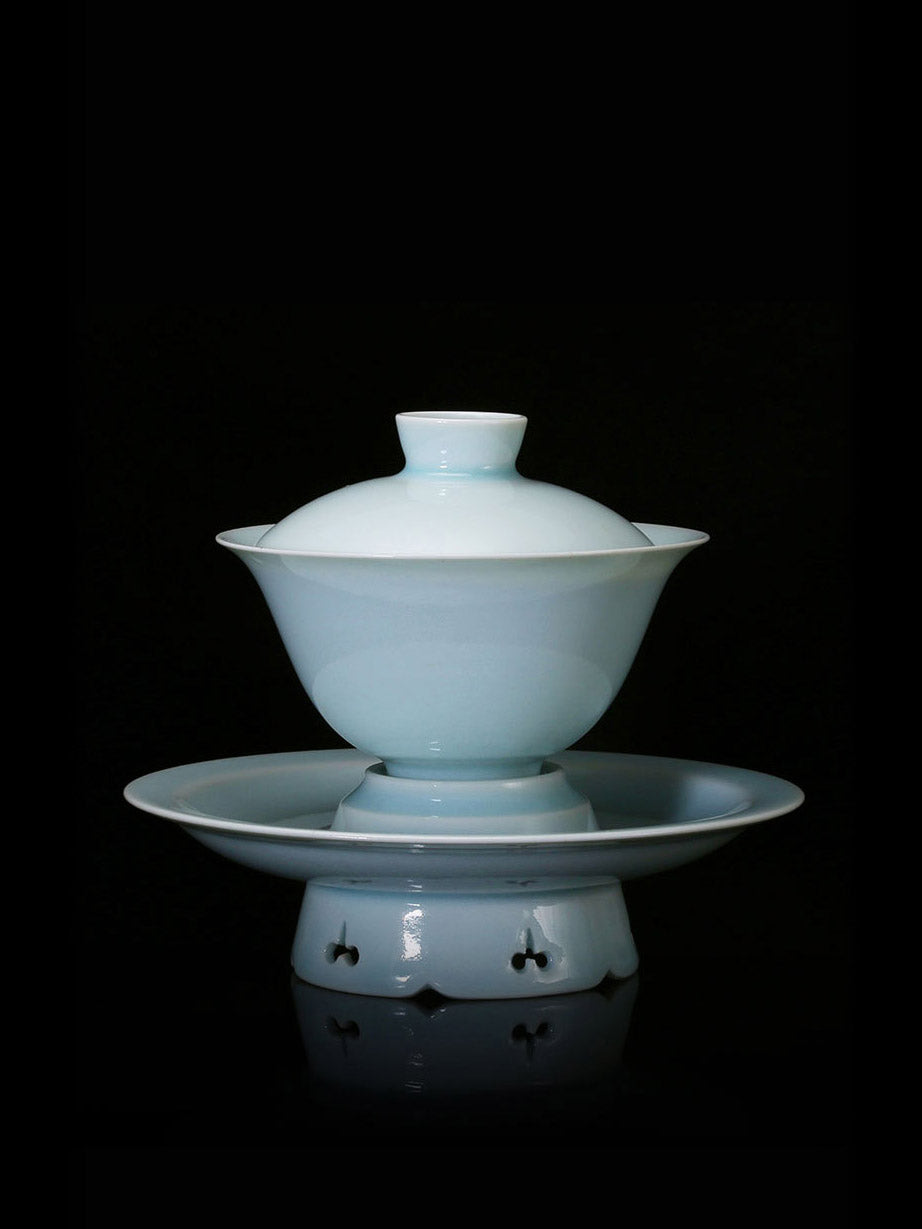
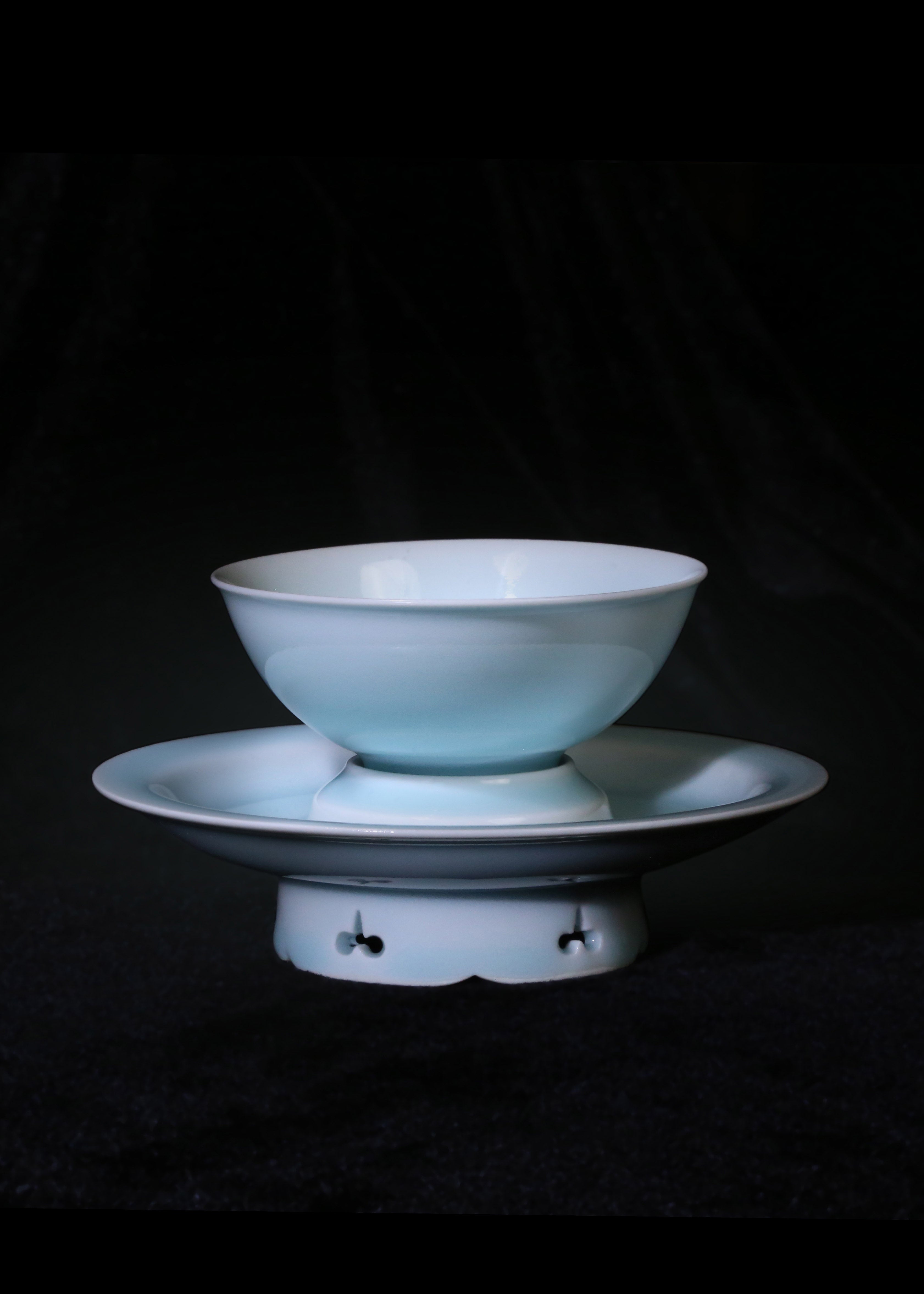
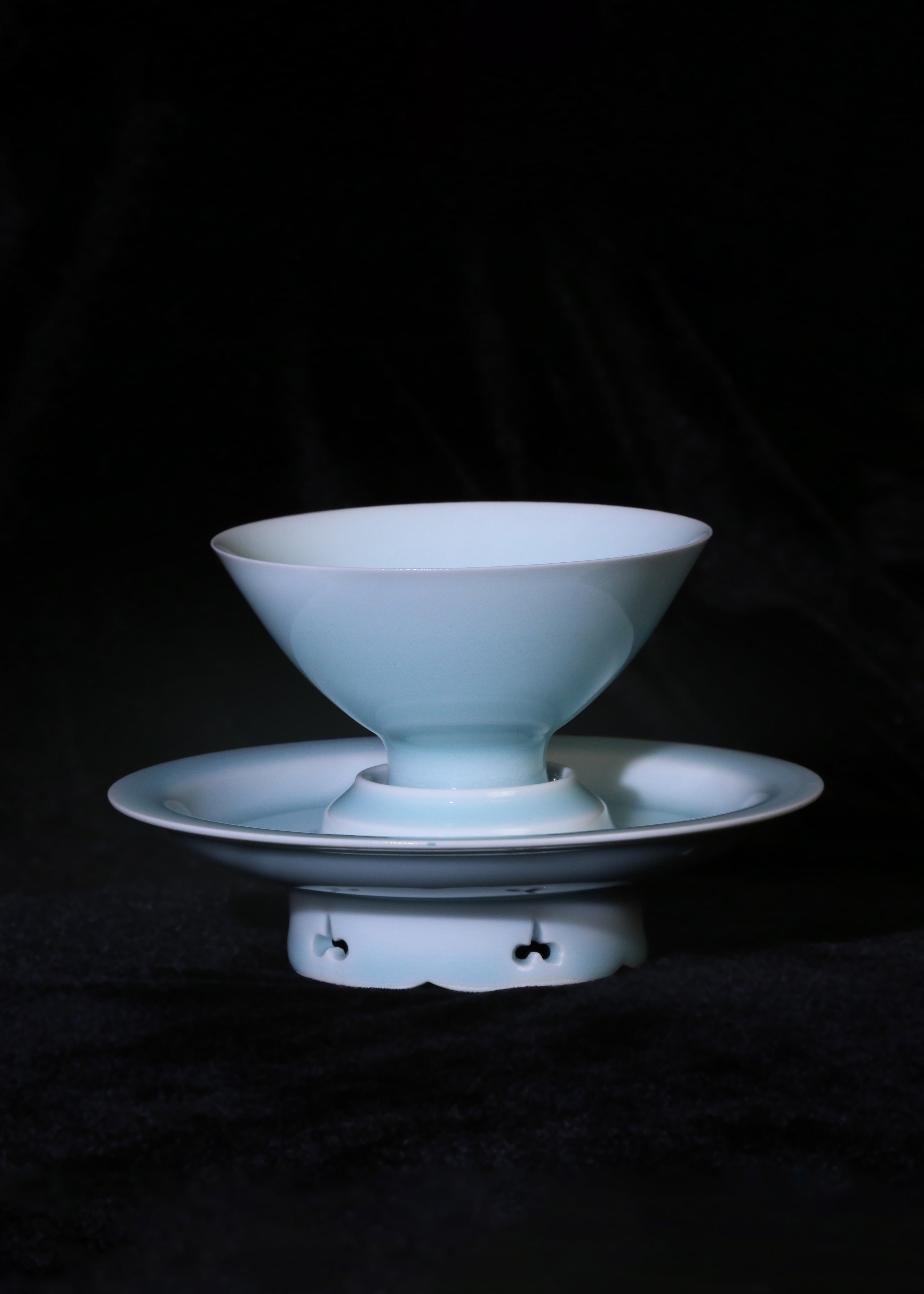
大雅齋制宋韻湖田窯影青釉雨過天青鬥笠盞/建水/捲口杯/蓋碗
大雅齋制宋韻湖田窯影青釉雨過天青鬥笠盞/建水/捲口杯/蓋碗
It was 2015 when I first stepped into the residence of Huang Yunpeng, an inheritor of the intangible cultural heritage of blue and white porcelain. Fragments of shadow blue porcelain were quietly displayed in the exhibition hall, and I stood there dumbfounded—such beauty left me speechless.
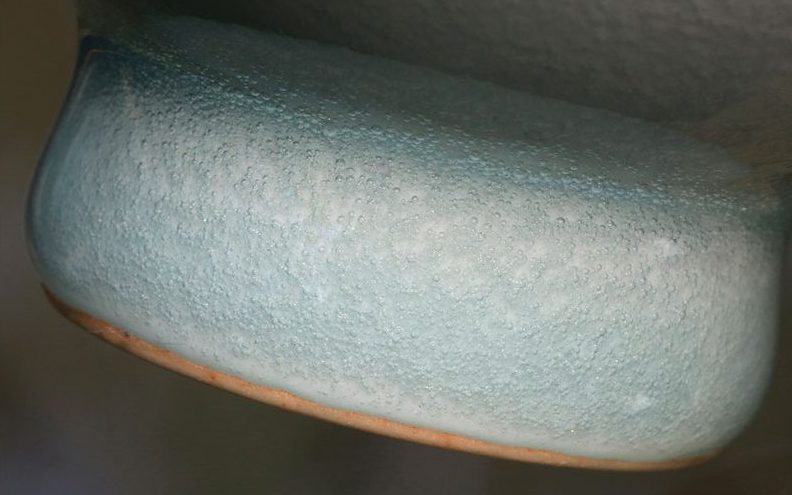
The Hutian Kiln had been firing from the Five Dynasties all the way to the Ming Dynasty, with its kiln flames burning nonstop for 600 years. It was one of the largest, longest-running and most exquisitely crafted kilns in ancient China. Its shadow blue glaze bears a poetic name: the blue of the sky after rain—a dream chased by literati for a thousand years, and a literary sentiment etched into the bones of the Chinese people.
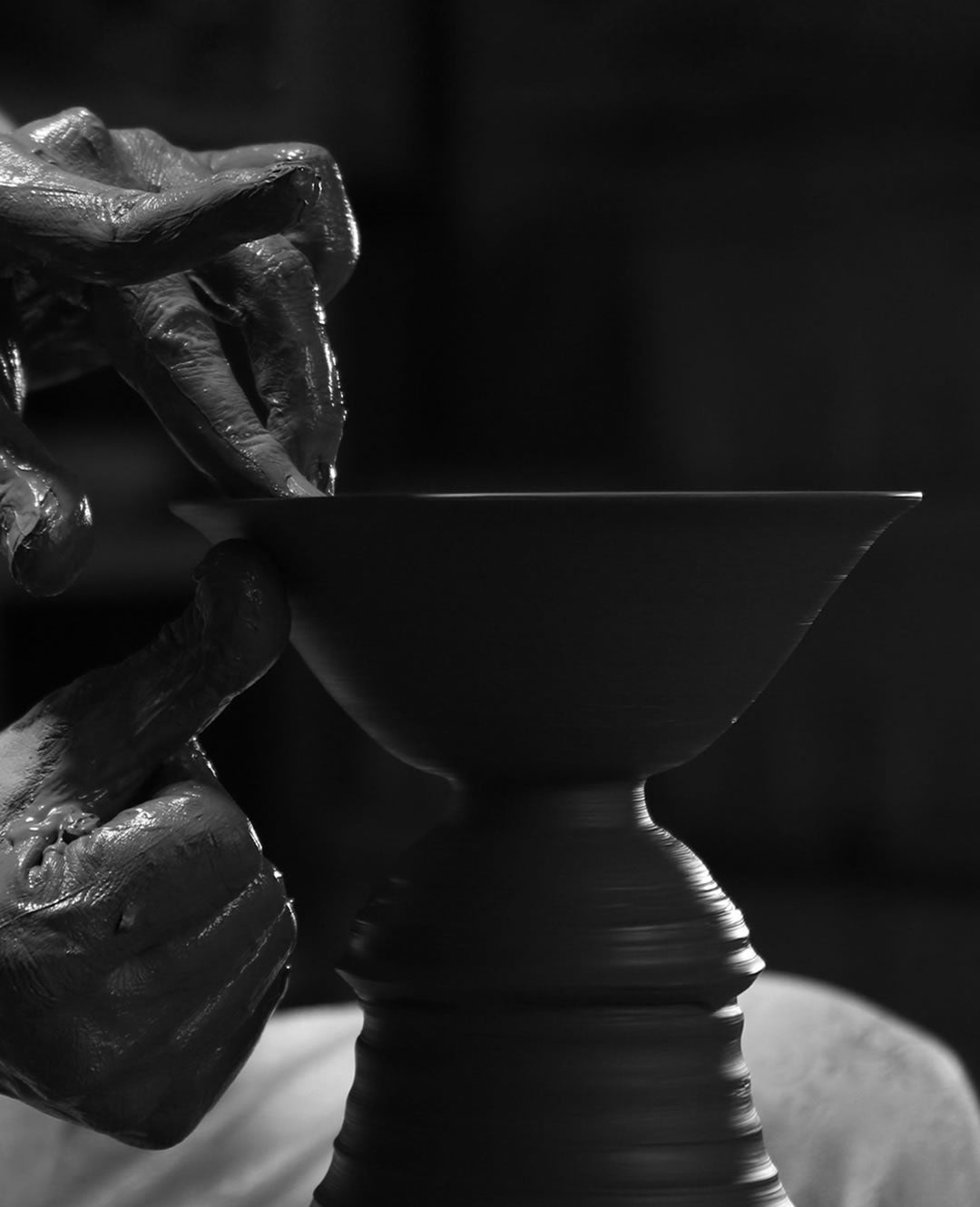
From then on, I was utterly obsessed. I wandered through the ghost markets and every street and alley in Jingdezhen, covering all places where Hutian Kiln shards could be found. Complete pieces? Extremely rare. Yet even those fragments, with their glaze and form alone, were enough to enchant me.
The Song people crafted single-color glazes. What they pursued was pure roundness and pure simplicity. That kind of minimalism was an aristocratic minimalism.
The Song Dynasty was a peak of civilization. "The blue of the sky after rain" was a legacy of that era: quiet, understated, unassuming, gentle, yet so beautiful that you could not look away.
Occasionally I would come across complete pieces at street stalls, yet something always felt off. I couldn’t quite put it into words, but driven by my obsession with old porcelain shards and my natural eye for ceramics, I knew — there was something wrong with these pieces. I am the kind of person who likes to get to the bottom of things, and before long I got to know the craftsmen who make these porcelains. They live in Hutian Village, southeast of Jingdezhen.
To this day, a small number of inheritors still uphold the ancient craftsmanship. They belong to the same extended family, yet each guards their own branch. Even though they share the same ancestry, the glazes they fire, the kiln styles they imitate, and the techniques they use are all kept strictly confidential — never taught or shared with one another.
And so, in this village, I reproduce these porcelains exactly as my heart tells me to. New porcelain is already beautiful enough; there is no need to artificially age it, still less to sell counterfeits. The shapes of those broken vessels have clean, crisp lines, and everything returns to quiet simplicity. There is none of the extravagance of the Tang Dynasty, nor the excessive ornateness of the Qing.
Single-color glaze is purely the work of nature and minerals — its colors are highly restrained. Yet within this single hue, in layers of light and shade, dark and pale, I am completely immersed.
Boss Hu's Five-Year-Old Son
Those who make counterfeits have their own tricks, and I just can’t connect with them. The one I hit it off with best is Boss Hu, under forty. He is a junior member of the family, with a wide river in front of his house and two boys at home. One of them, around five or six years old, was especially attached to me.
When he saw me staring blankly at his two big baskets of porcelain shards, he ran over to guide me: “These are from the Northern Song Dynasty—they look whitish. These are Southern Song—their glaze is clear blue.” I was secretly amazed—he was only five or six. He added: “Uncle, don’t be fooled. This one was refired. The bowl is Northern Song. When we got it, the glaze wasn’t fired well and looked ugly, so Dad fired it again. That’s why it looks so real.”
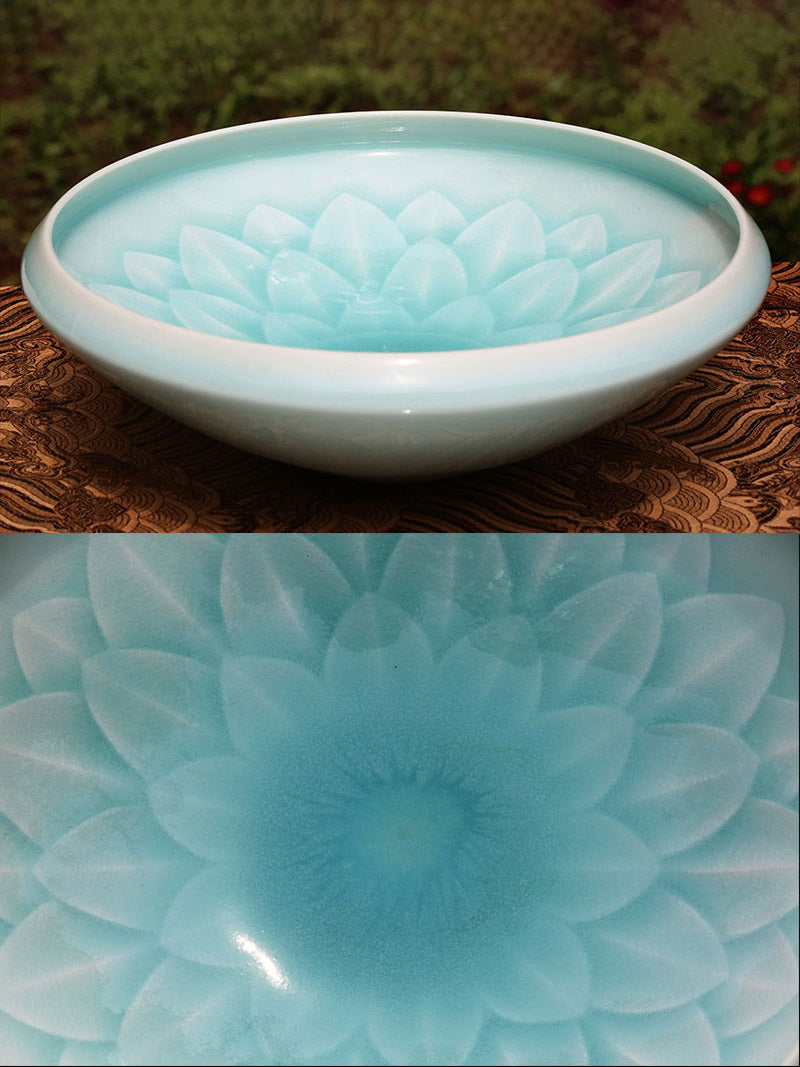
Among the shards were also some baby bowls made with the “Ban Dao Ni” (half-carved clay) technique, carved vividly—yet sadly all broken. I asked Boss Hu why there were so many old shards. He said the area had been firing porcelain for nearly 700 years, and kiln sites were everywhere.
He took me to the nearest one: a small hillside not far outside the village, overgrown with weeds. No digging was needed; broken porcelain could be picked up everywhere. He said the good pieces had long been picked clean, and what was left was worthless. But for those of us who want to reproduce the ancient pieces, these shards are still useful.
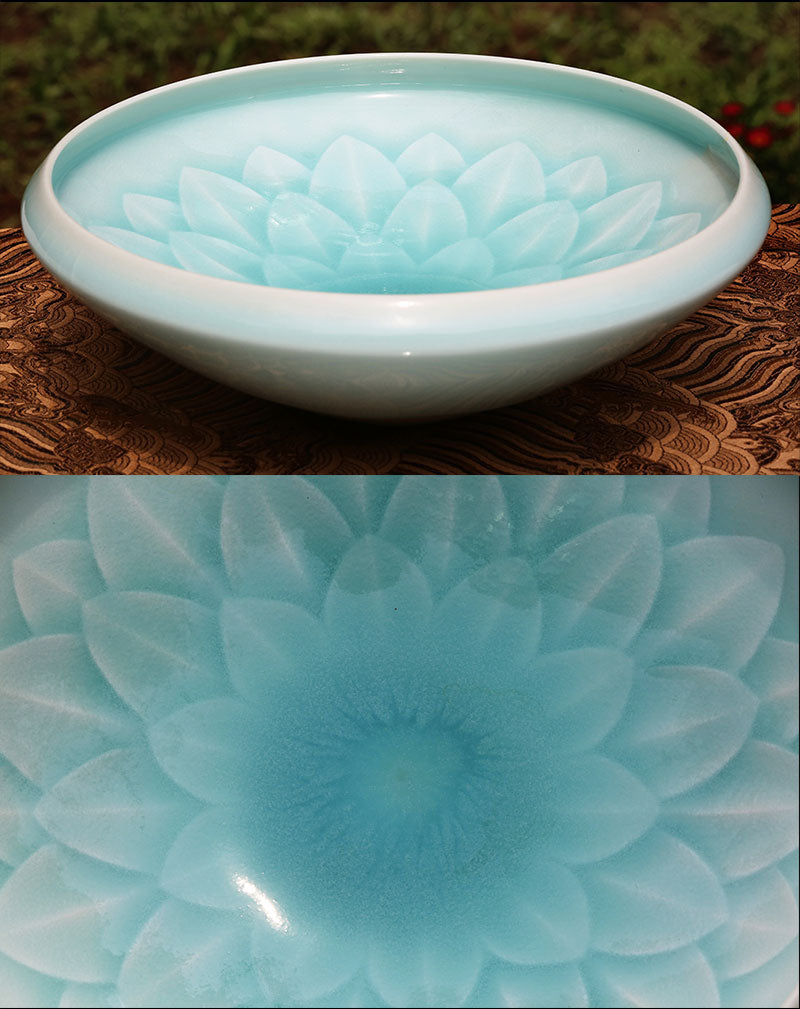
Within his family, his cousins and distant younger brothers each kept to their own craft—some did carved patterns of the Northern Song, others did stamped patterns of the Southern Song (which they locally called “pounding dead heads”). Each had their own clients. Only he was willing to fire new porcelain.
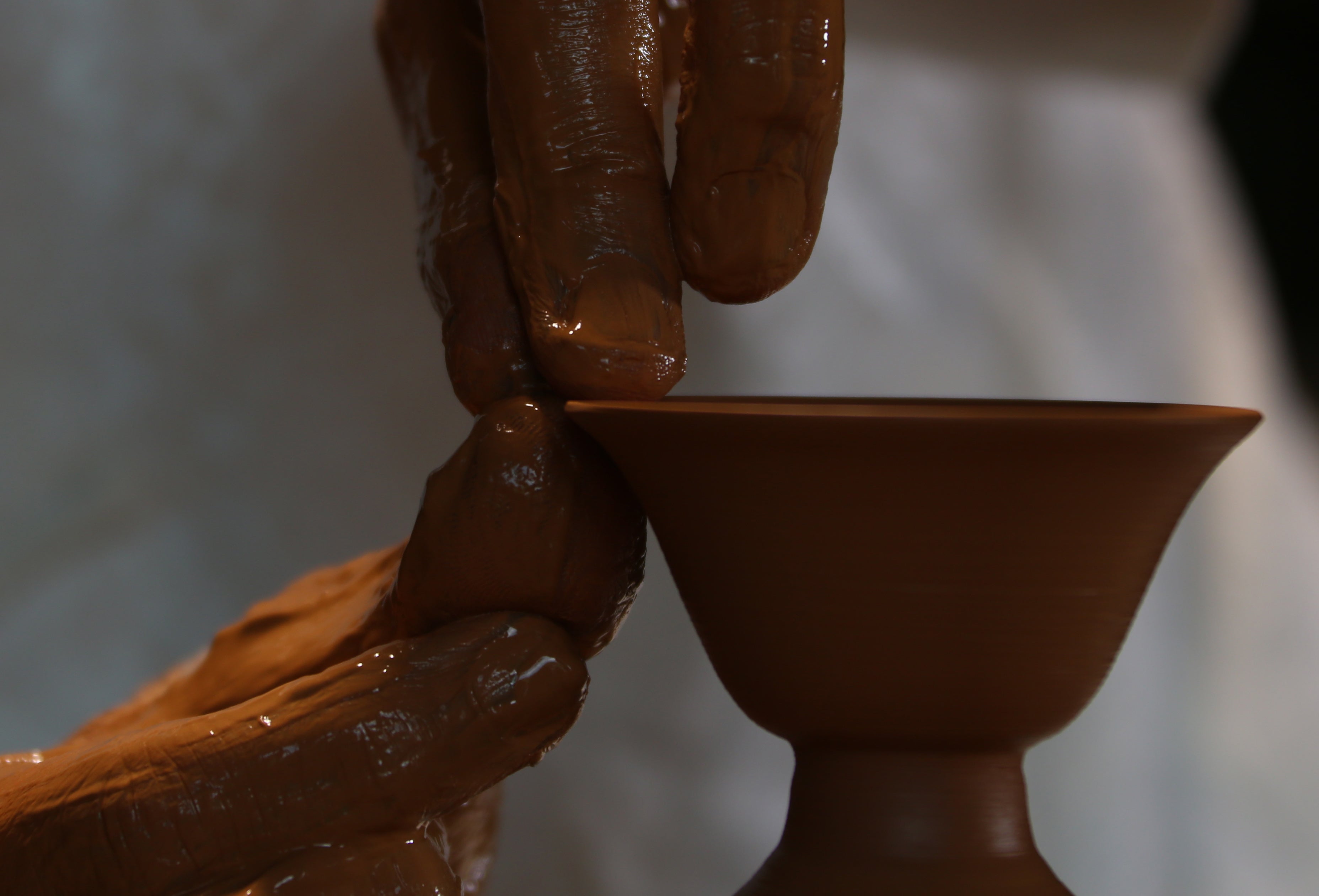
Others only made antiques-style pieces for specific buyers, keeping everything from production to sales strictly secret. To achieve realism, they could not use ready-made iron tools; they had to use bamboo knives. The clay could not be machine-kneaded either—it had to be tamped by foot. Otherwise, it would be obvious at a glance that it was new. Nor could they use acid to artificially age it…
I showed him the broken pieces I had collected and told him I wanted to capture that same spirit. He said: “I can fire the glaze and manage the kiln, but for your strict standards on shape, you need the best trimming master.”
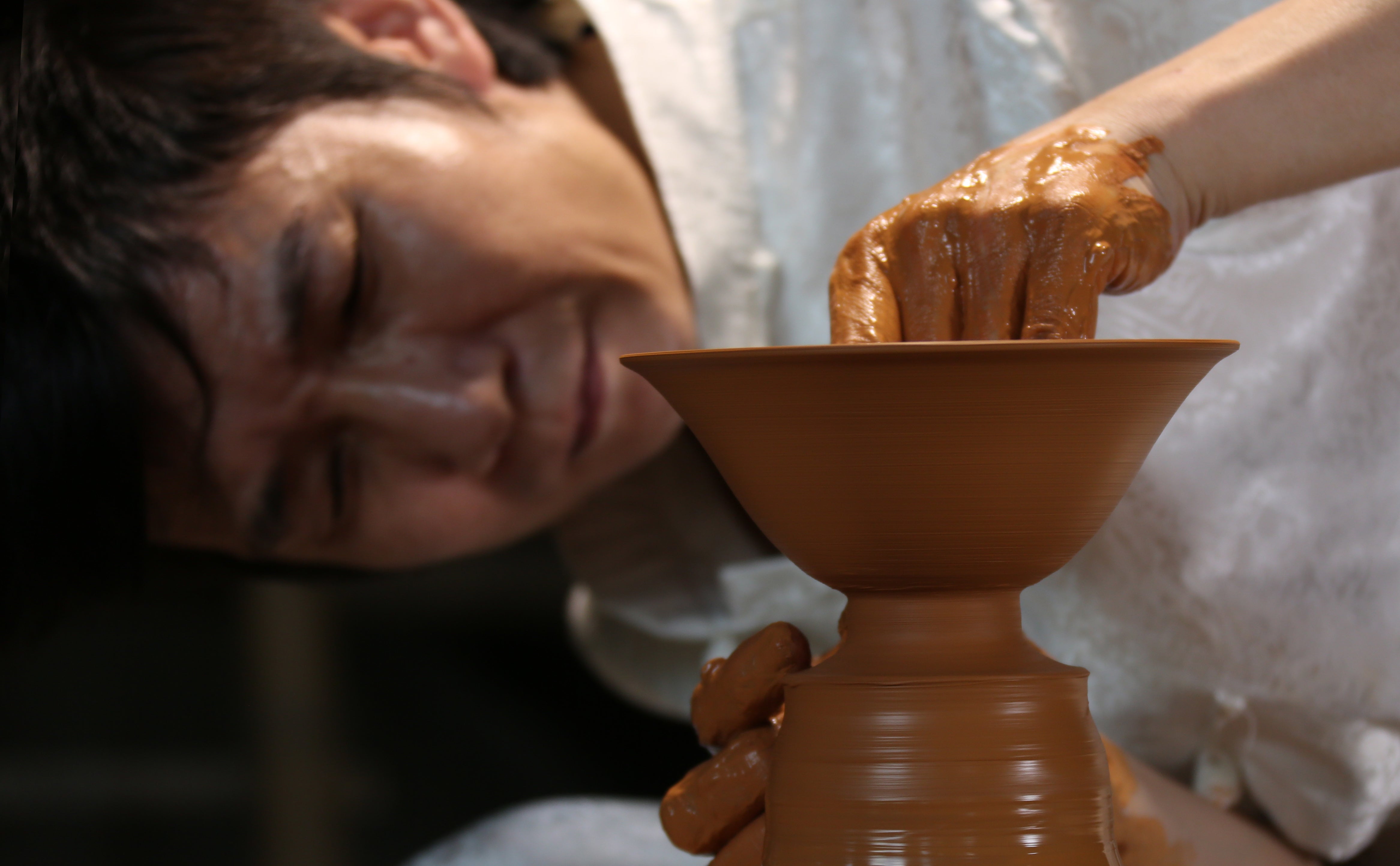
In the end, with the help of two intangible cultural heritage inheritors and Boss Hu, I finally reproduced these shapes.
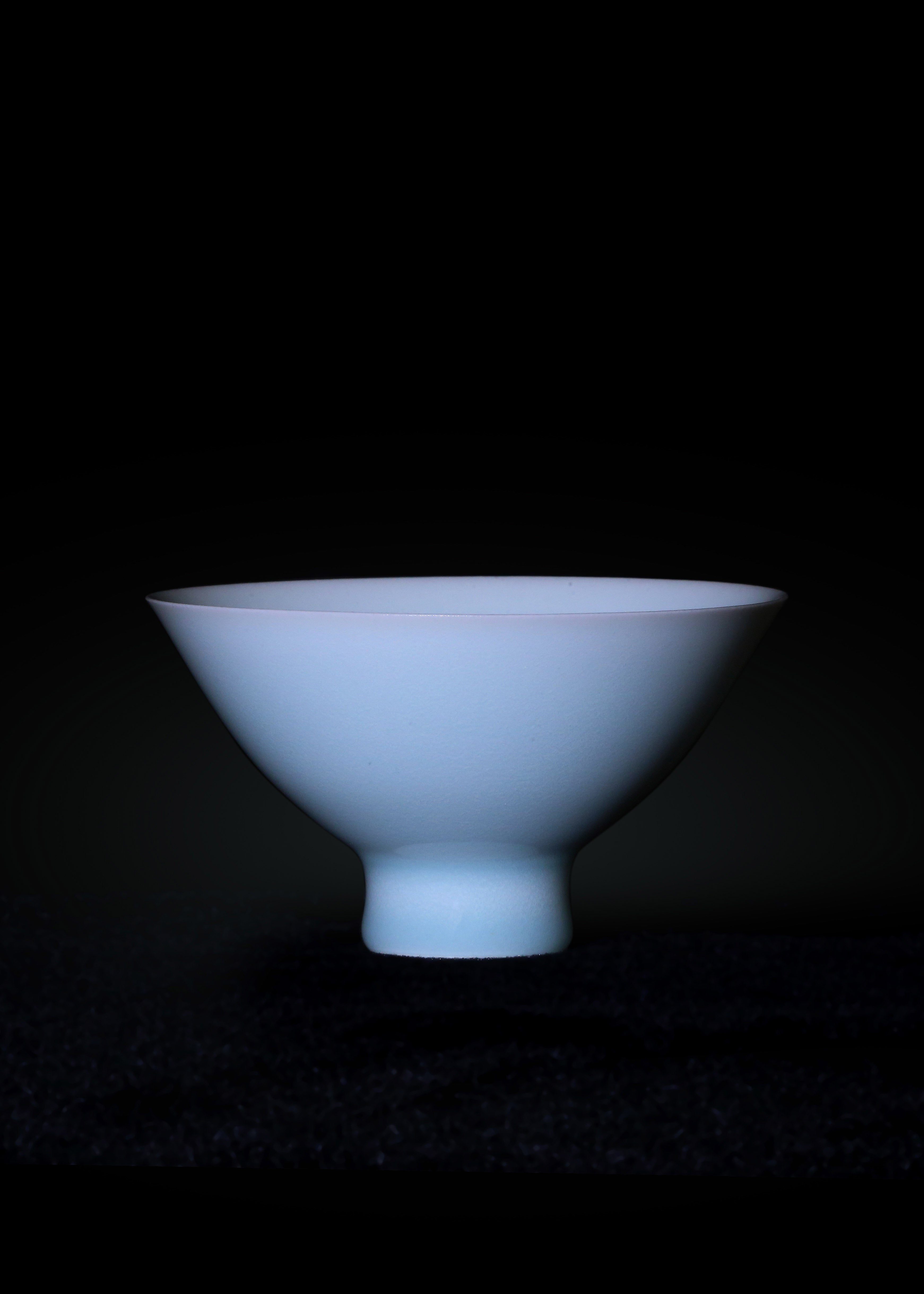
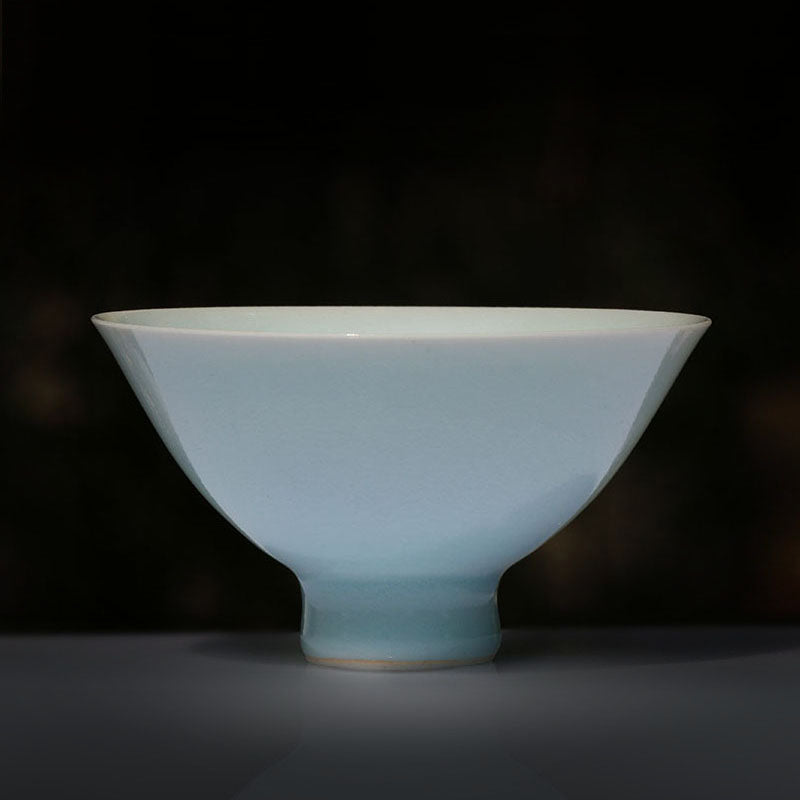
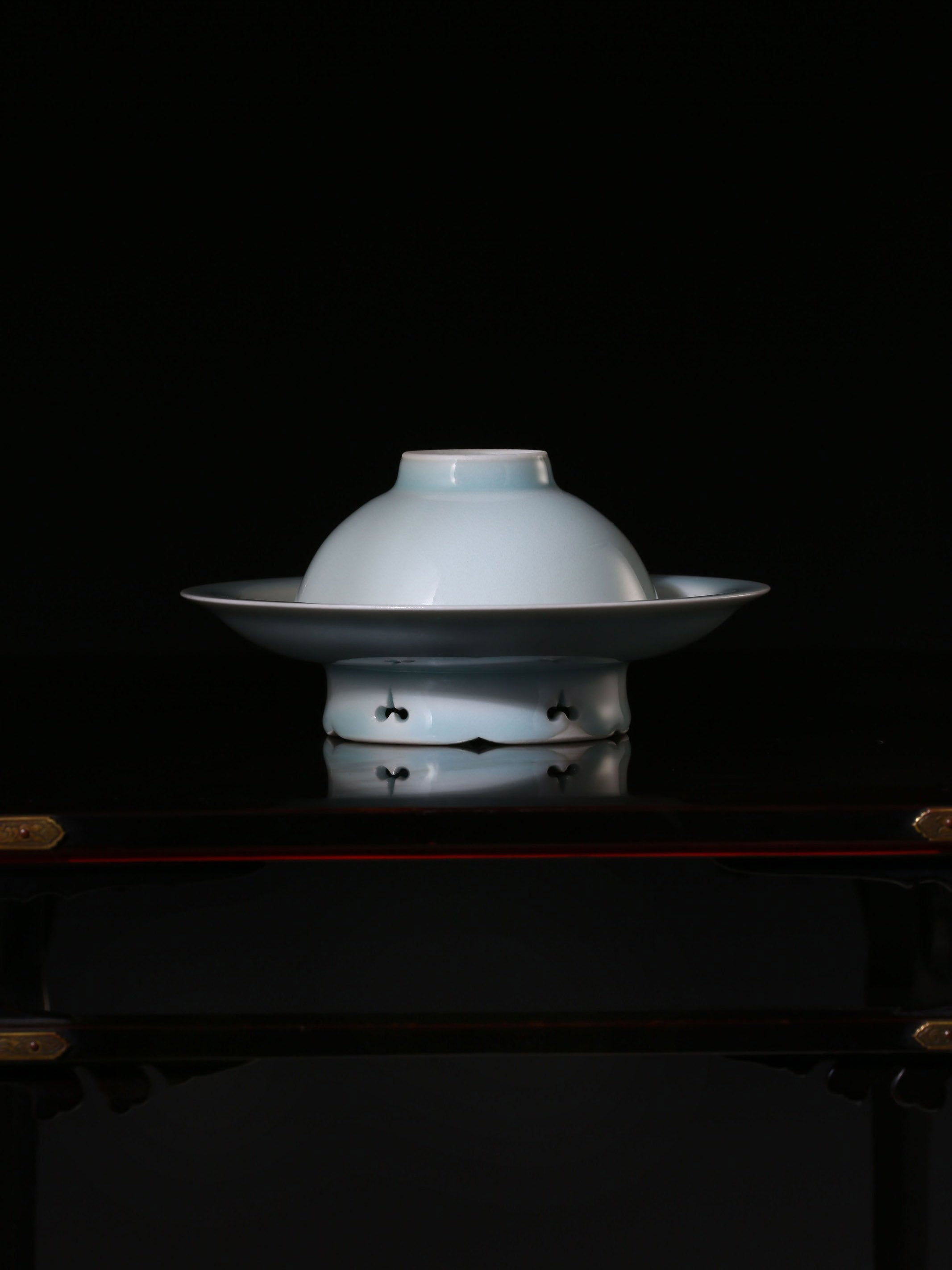
These thousand-year-old styles—bamboo hat cups, rolled-rim cups—all had ancient prototypes. The cup stands originated from wine vessels. The zhadou (dregs vessel) also had a prototype; even after a thousand years, one could still feel the elegance of that era in its form. Some things truly transcend time.
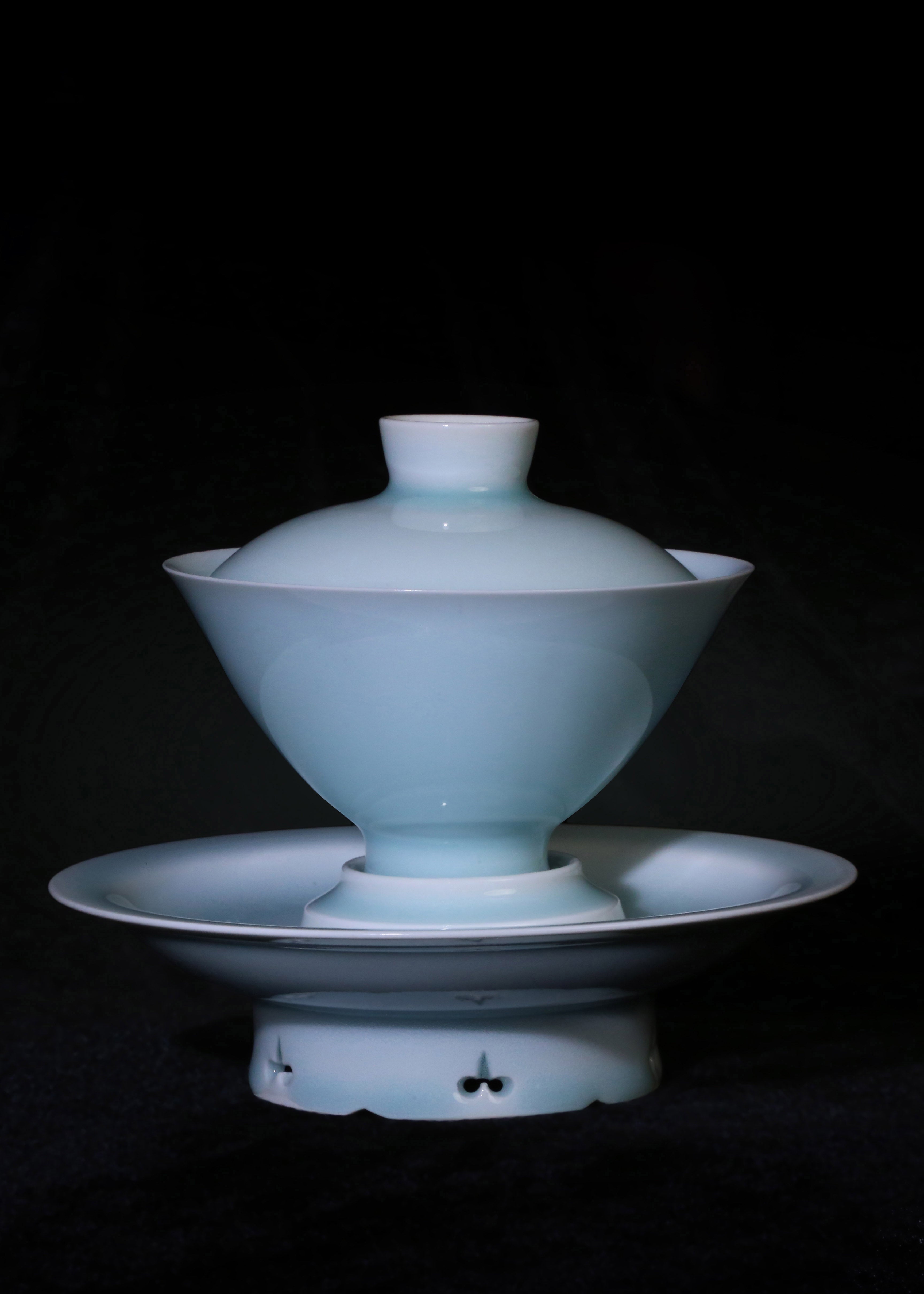
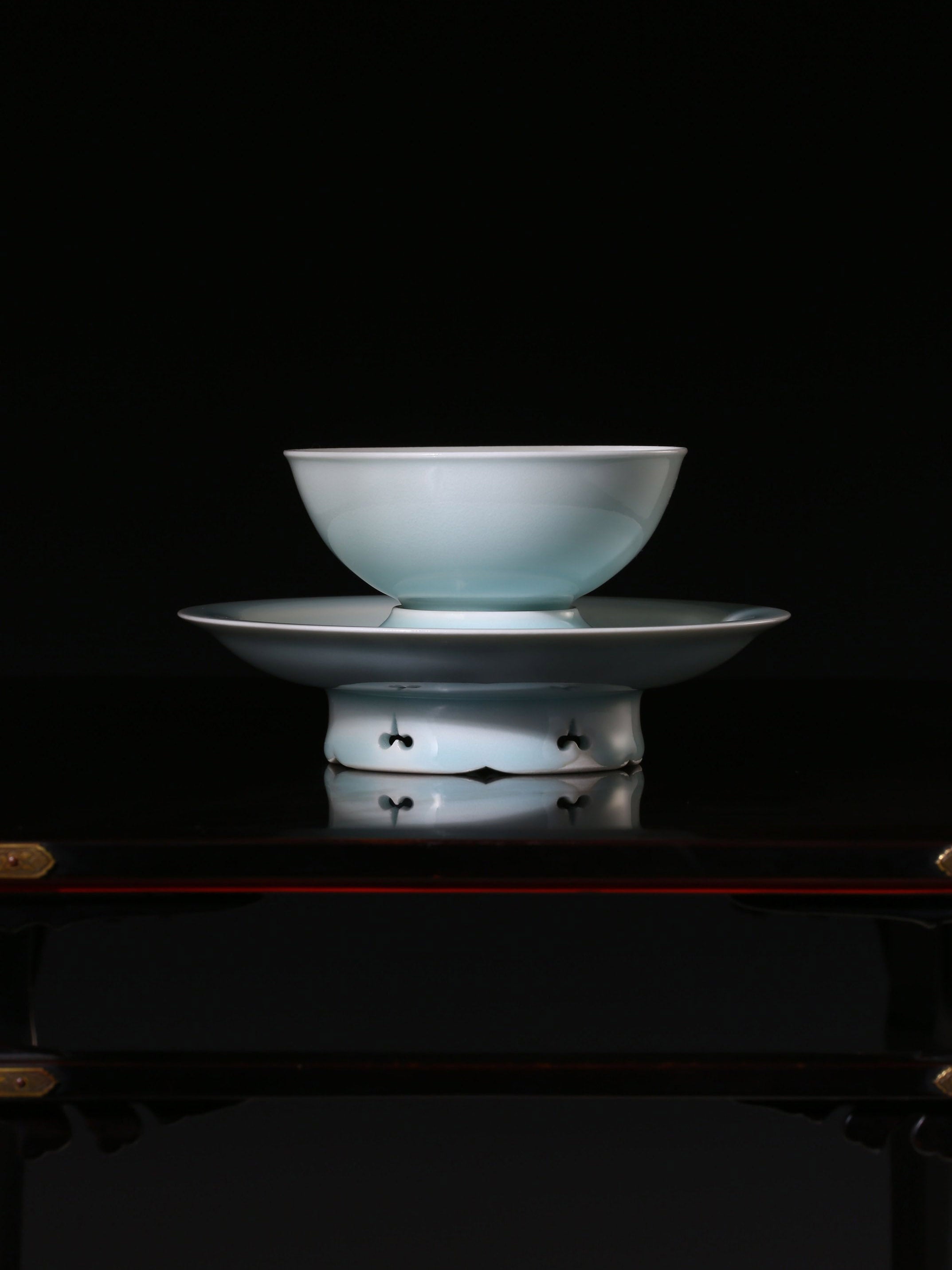
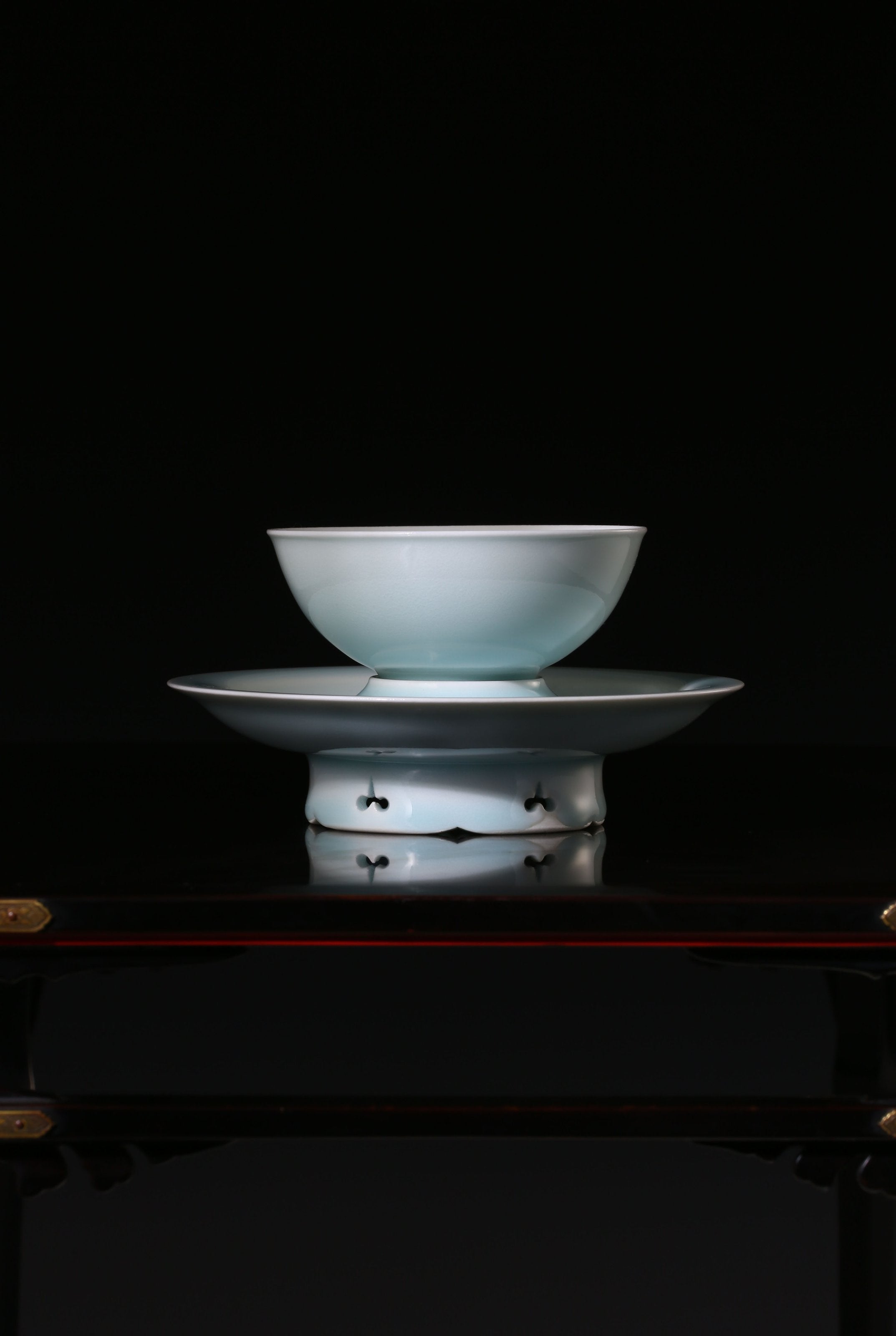
Yet there was no tea-drinking in the Qing style, nor lidded bowls, in the Song Dynasty. So I combined the flared-rim bowl and the high-footed cup into one, creating a lidded bowl. I spent half a year tinkering with it, thoroughly enjoying the process. On the day it came out of the kiln, everyone was delighted—Boss Hu most of all. He then showed me the pieces he had made in the style of Husi Kiln; he was now studying the porcelain-making techniques of the north.
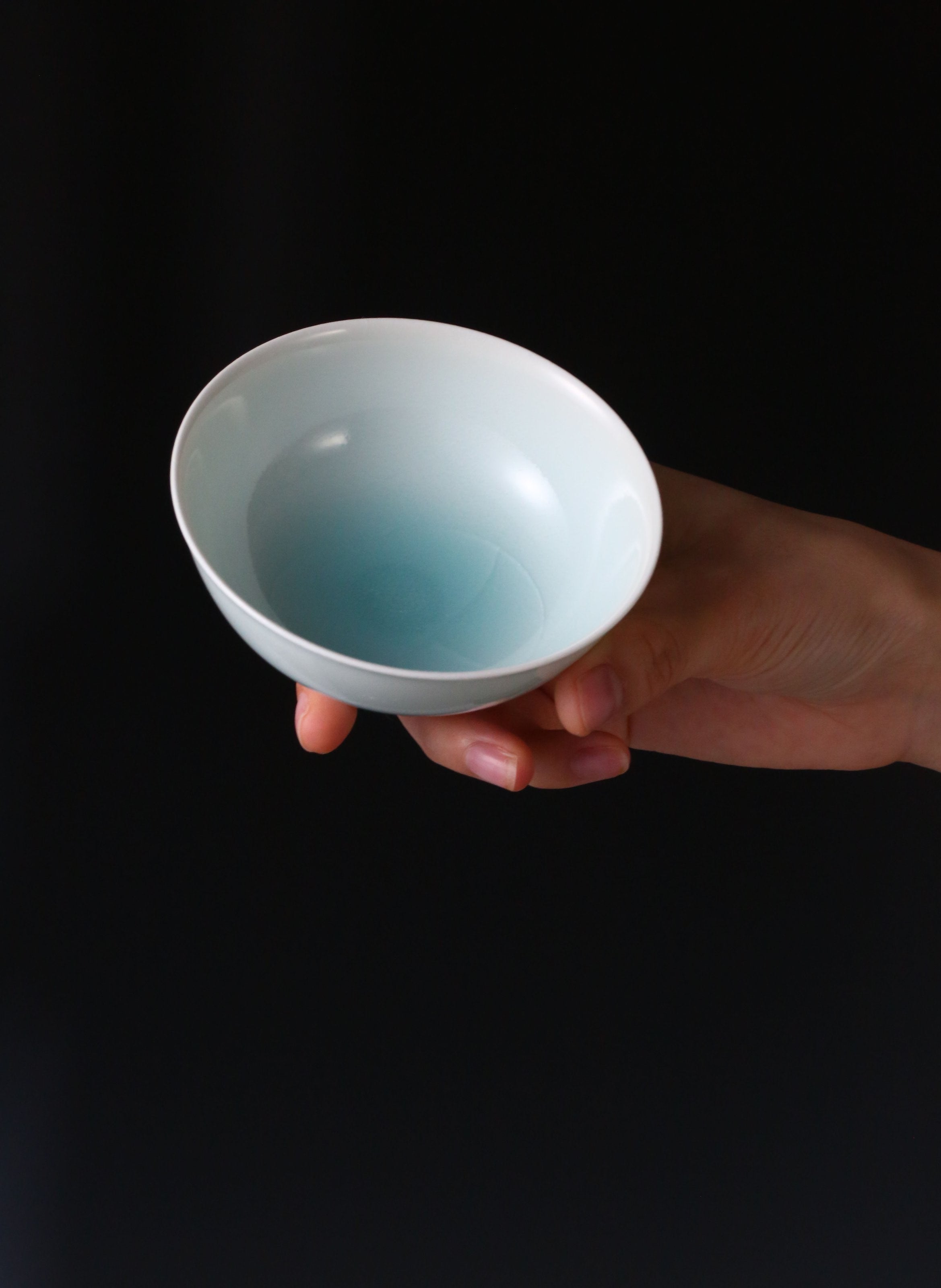
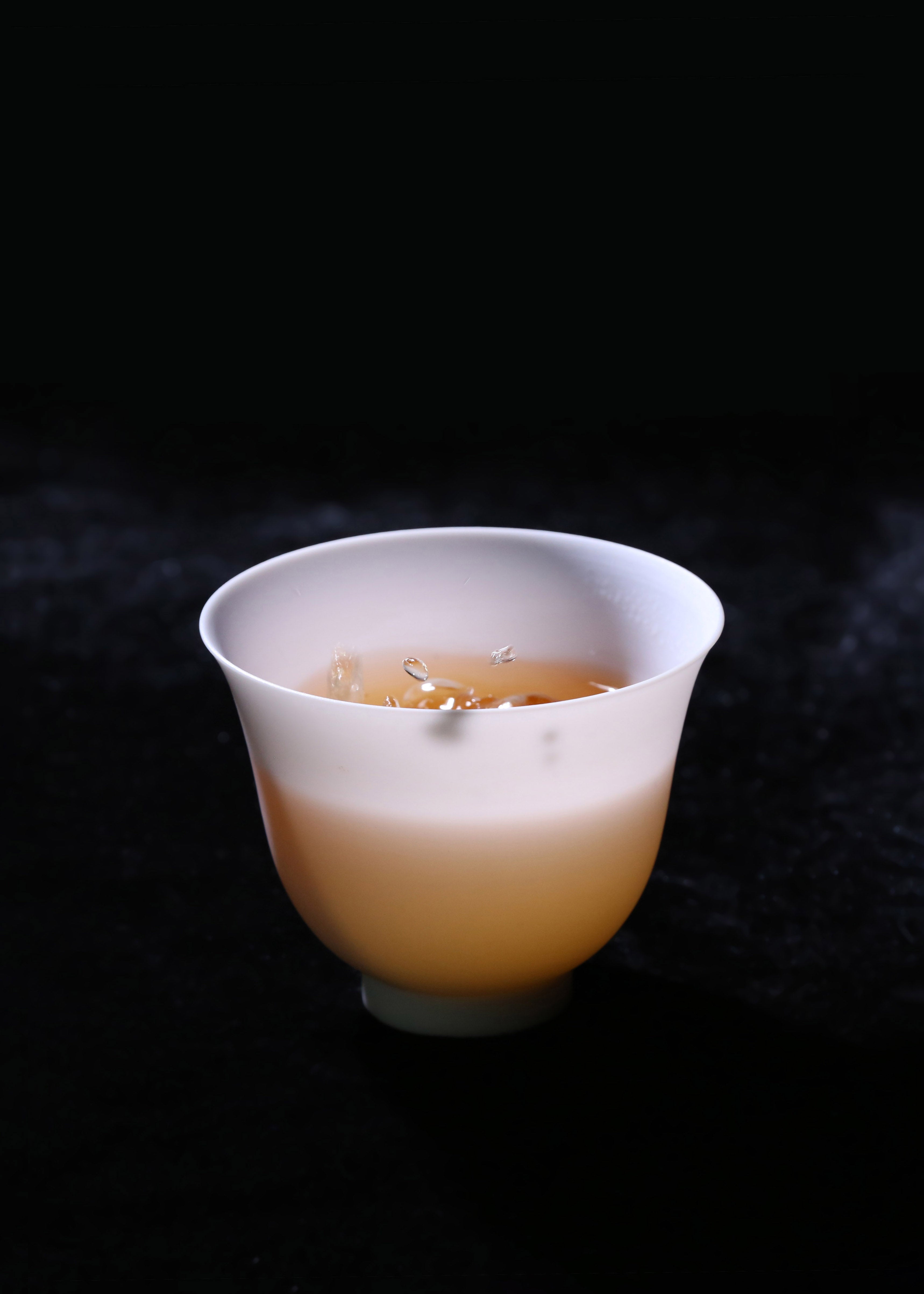
Looking at the newly fired Hutian Kiln porcelain in the hue of the blue of the sky after rain, that sky-like color truly softens the heart.
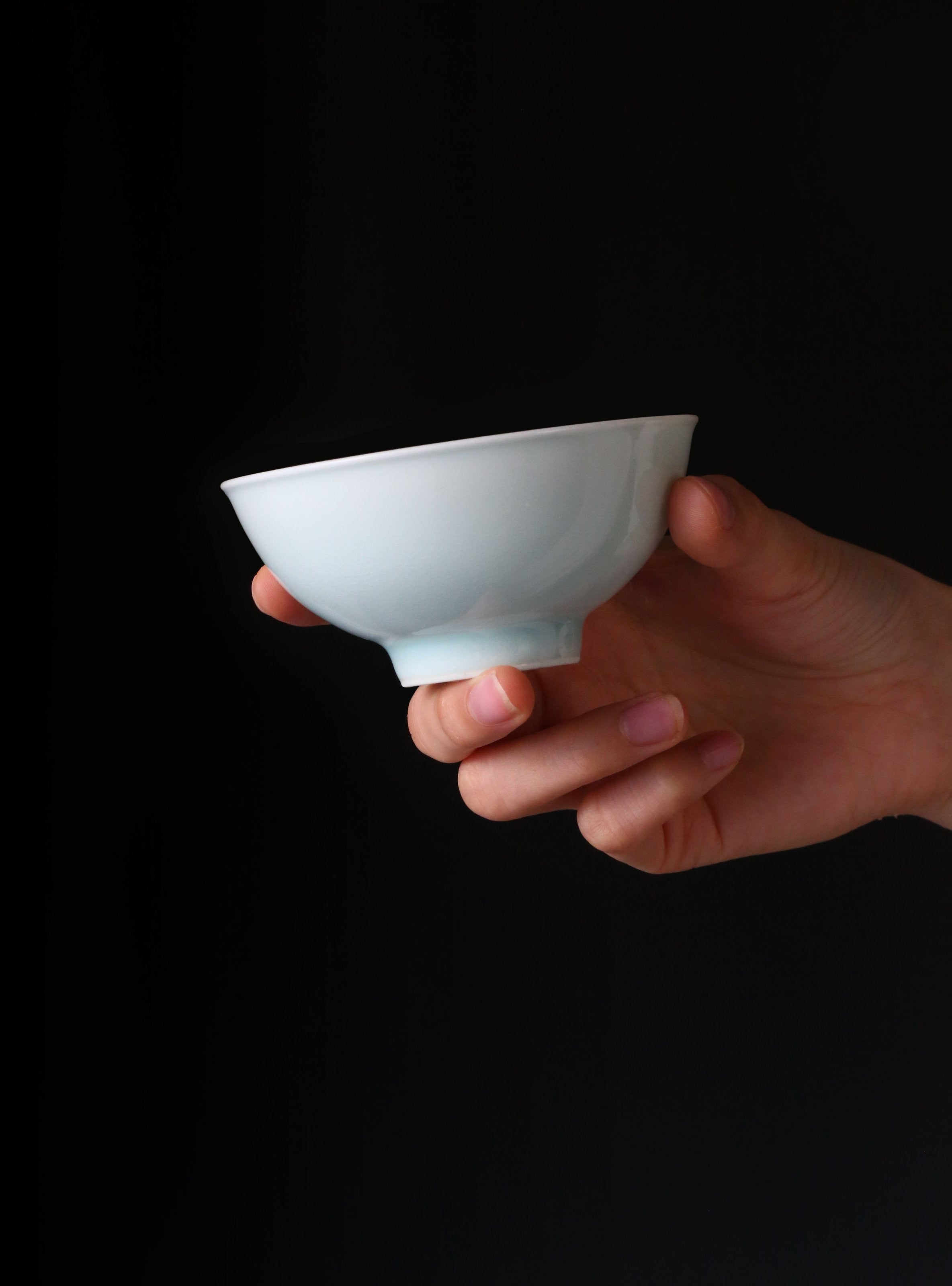
The bamboo hat cup, in particular, boasts supremely elegant lines. Hutian Kiln ware is characterized by a “thin body, thick glaze” — generous yet restrained, with every detail of its shape crafted to perfection. All Hutian Kiln pieces bear the dignified air of imperial kiln ware.
A thin body means sacrificing sturdiness;
A bamboo-hat shape and high foot mean sacrificing stability;
The Ban Dao Ni half-carved clay technique means sacrificing speed;
The sky-blue glaze means sacrificing yield rate.
Such renunciation is the standard of imperial kilns.It is this very sacrifice that has created the timeless beauty of the sky,enduring through the ages.
And it has given birth to the inherent grace and minimalism of the great Song Dynasty.
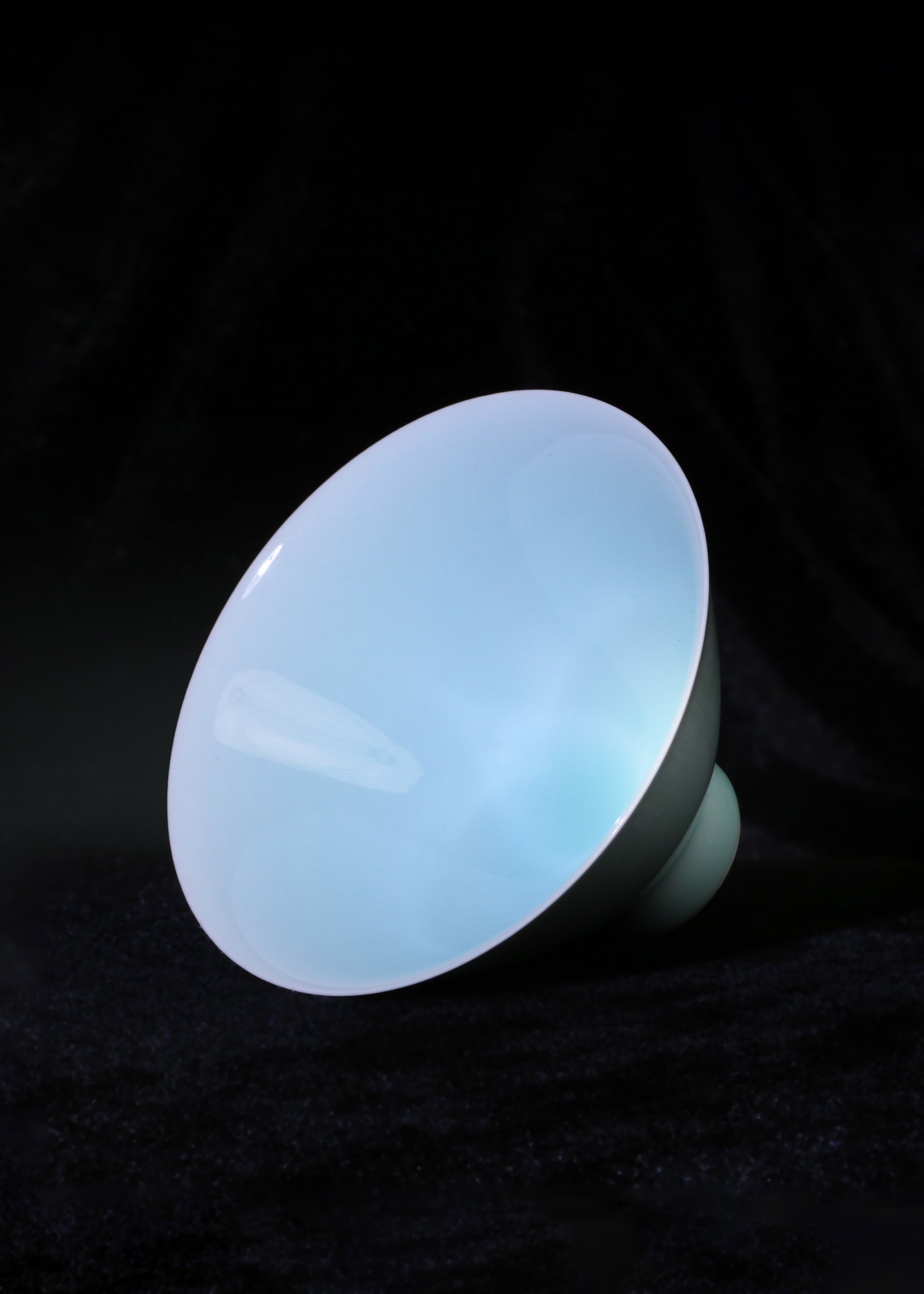
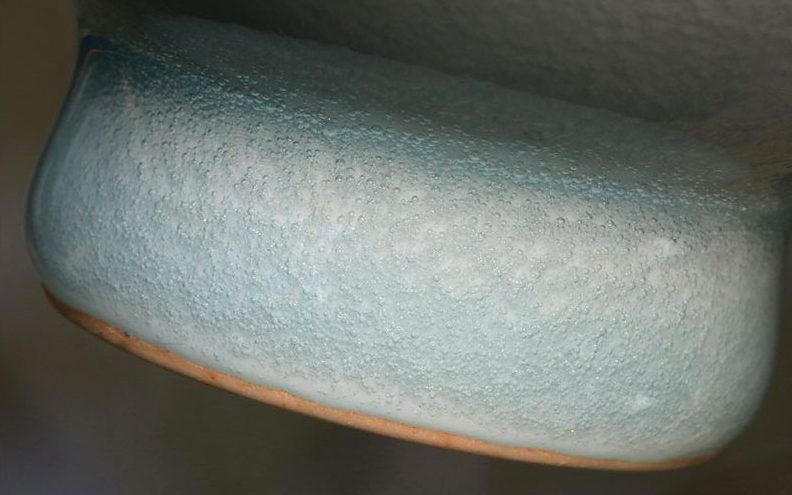
It turns out that true beauty, even in fragments, still encapsulates a complete Song Dynasty.