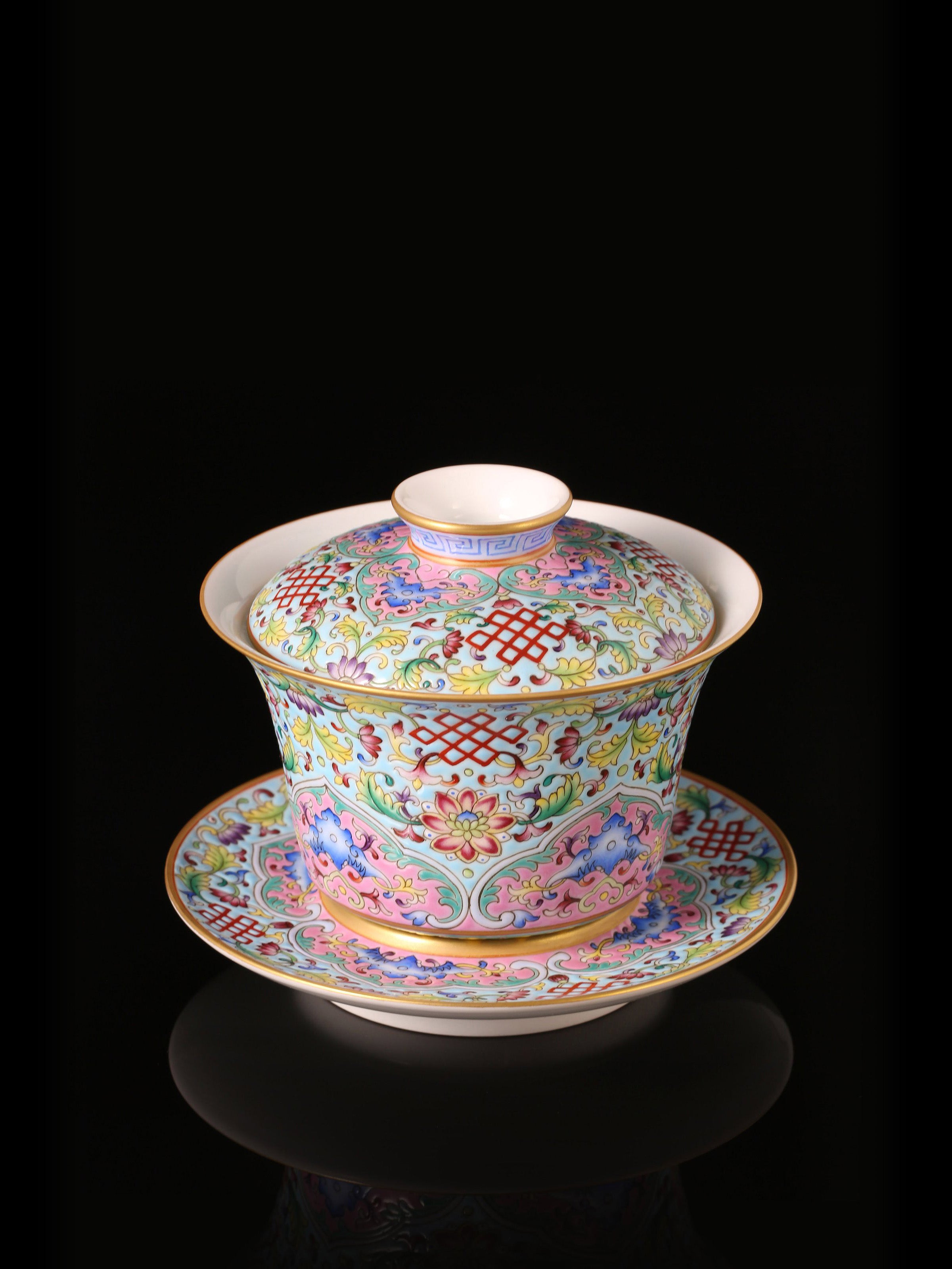
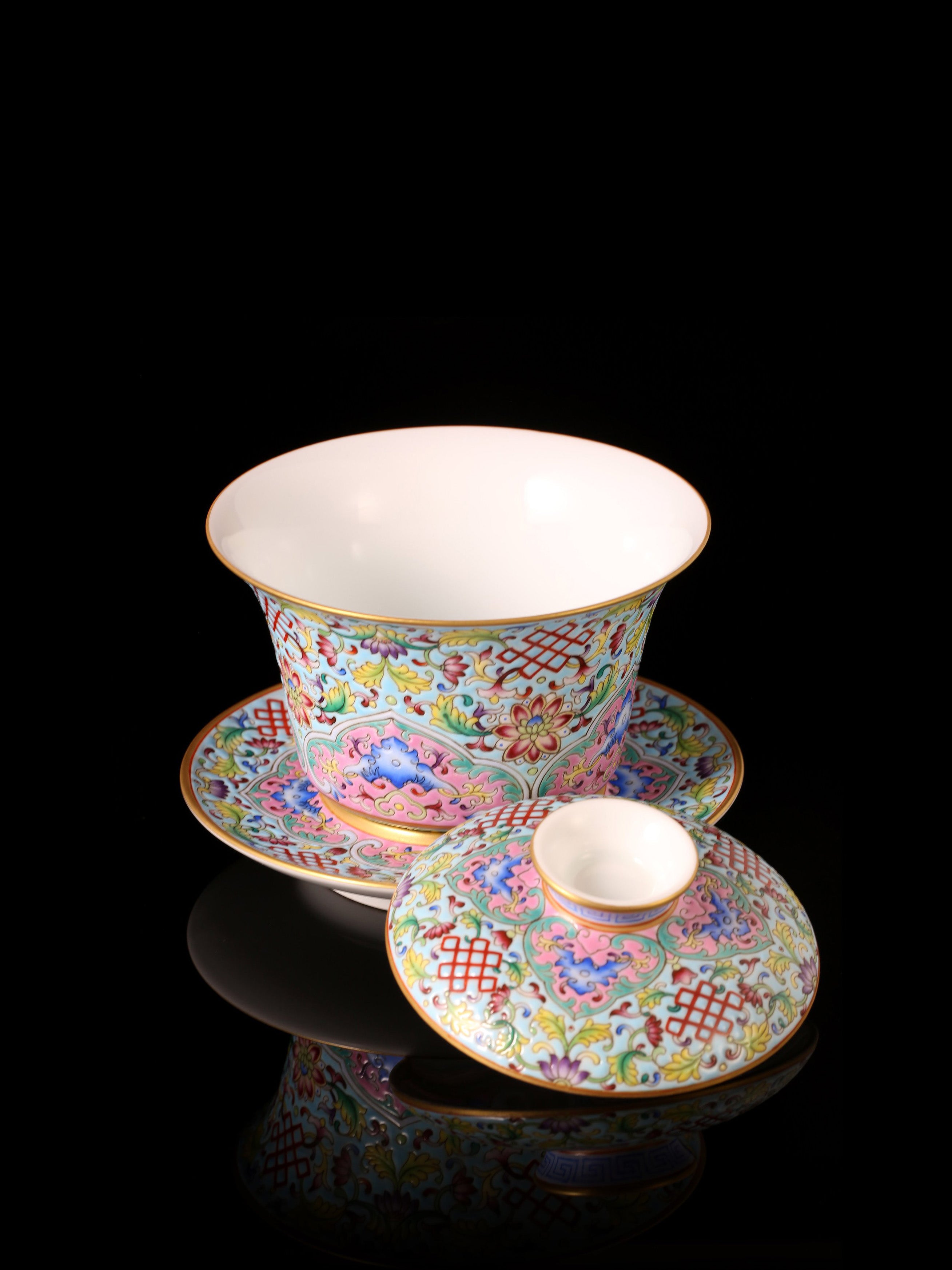
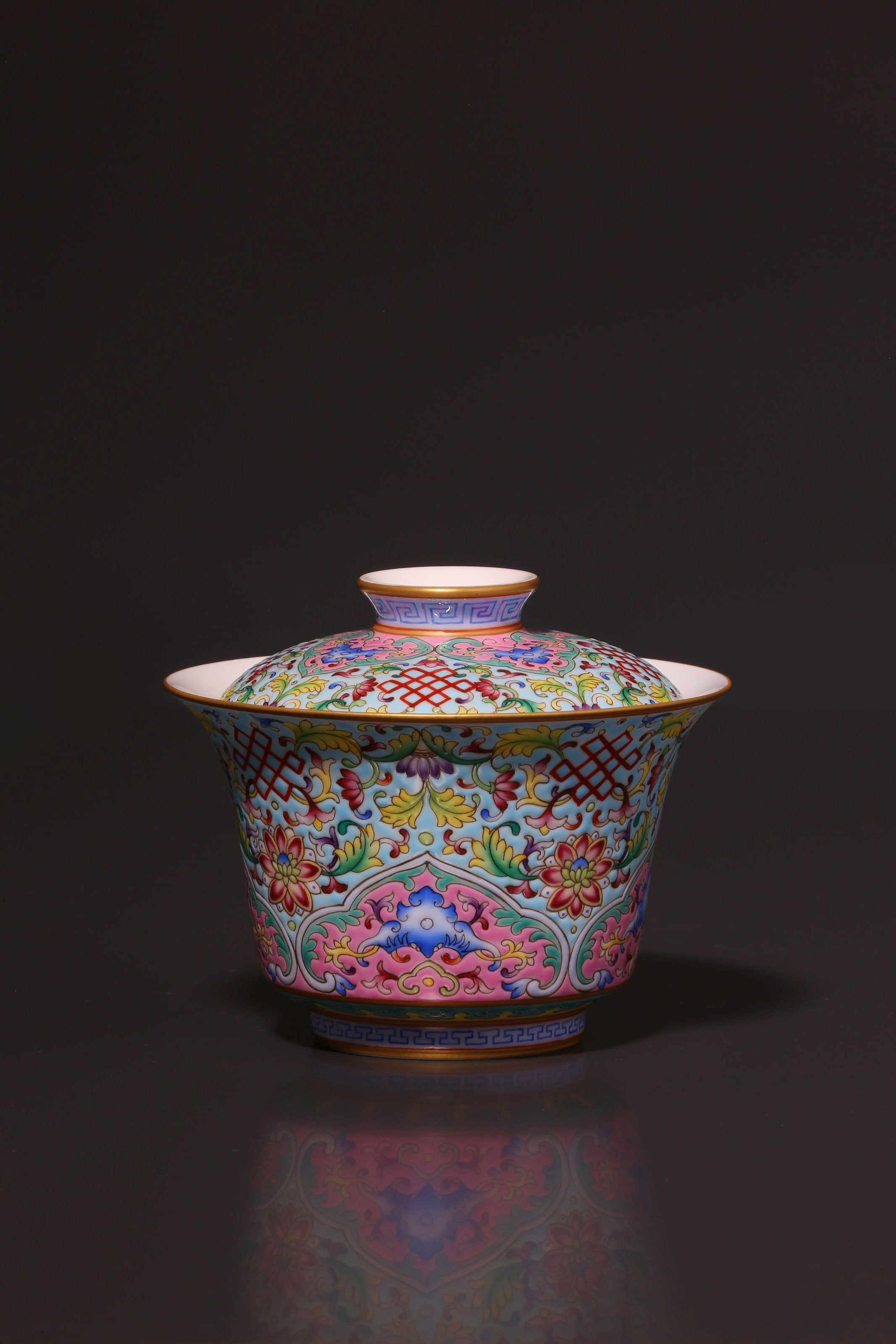
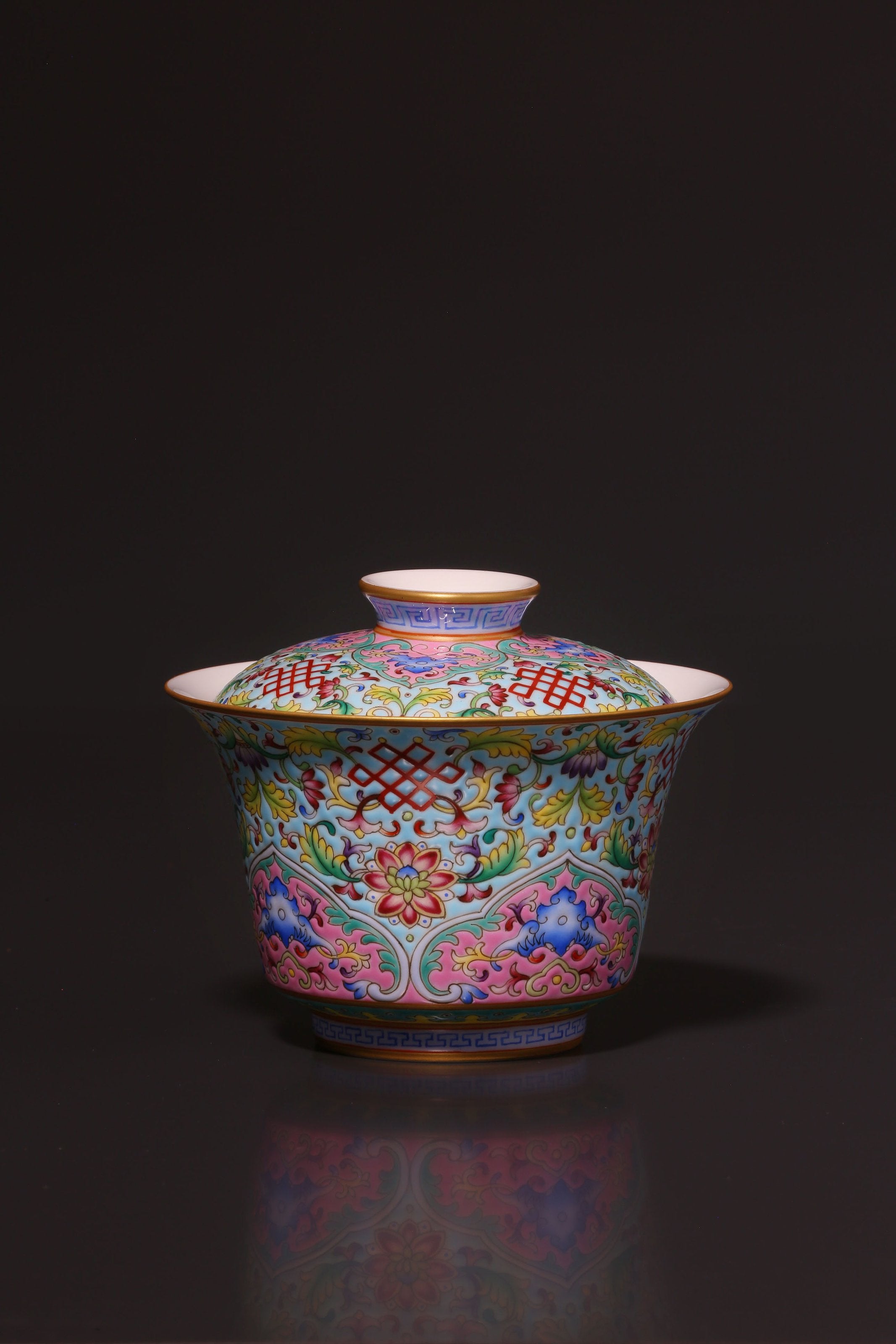
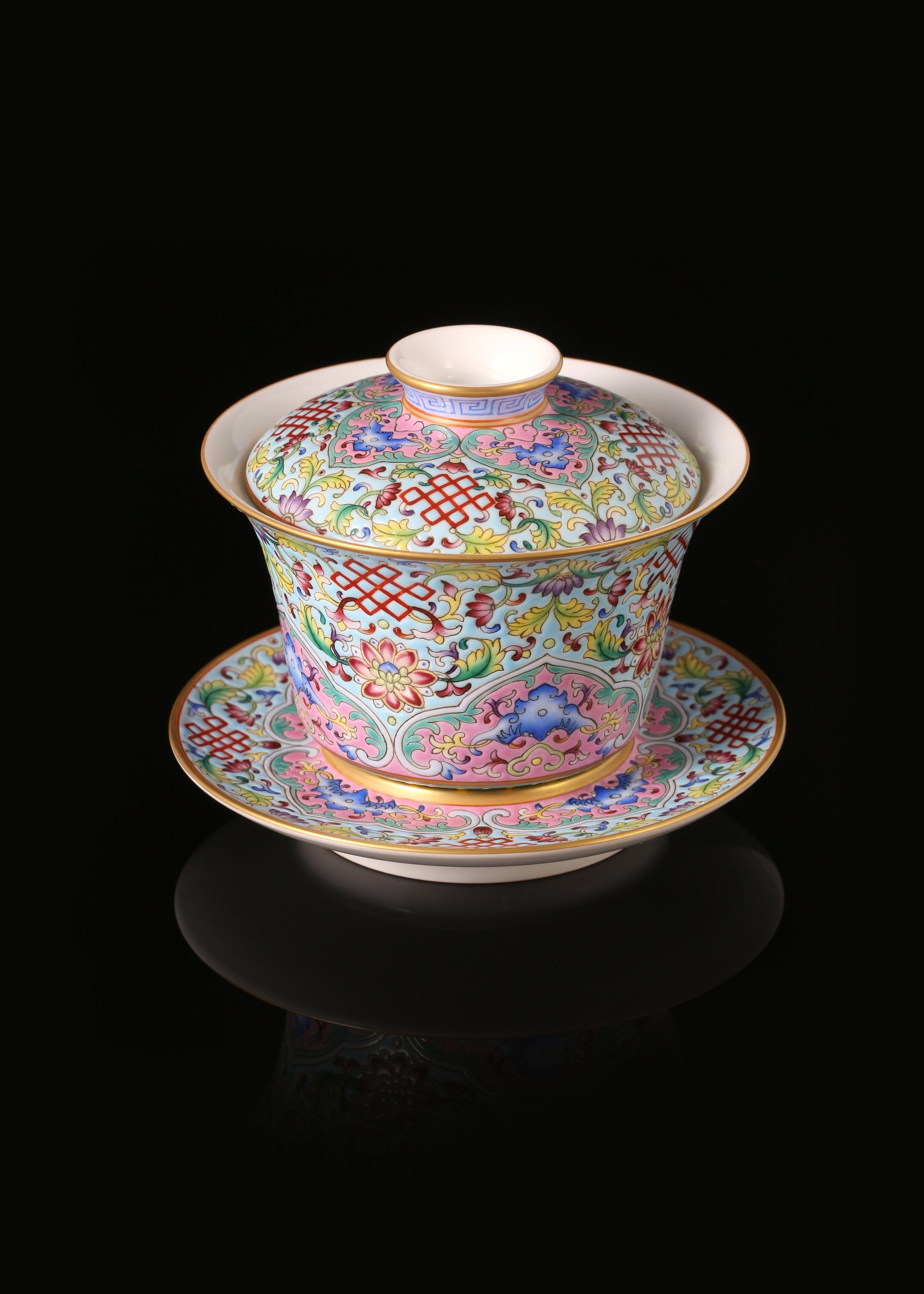
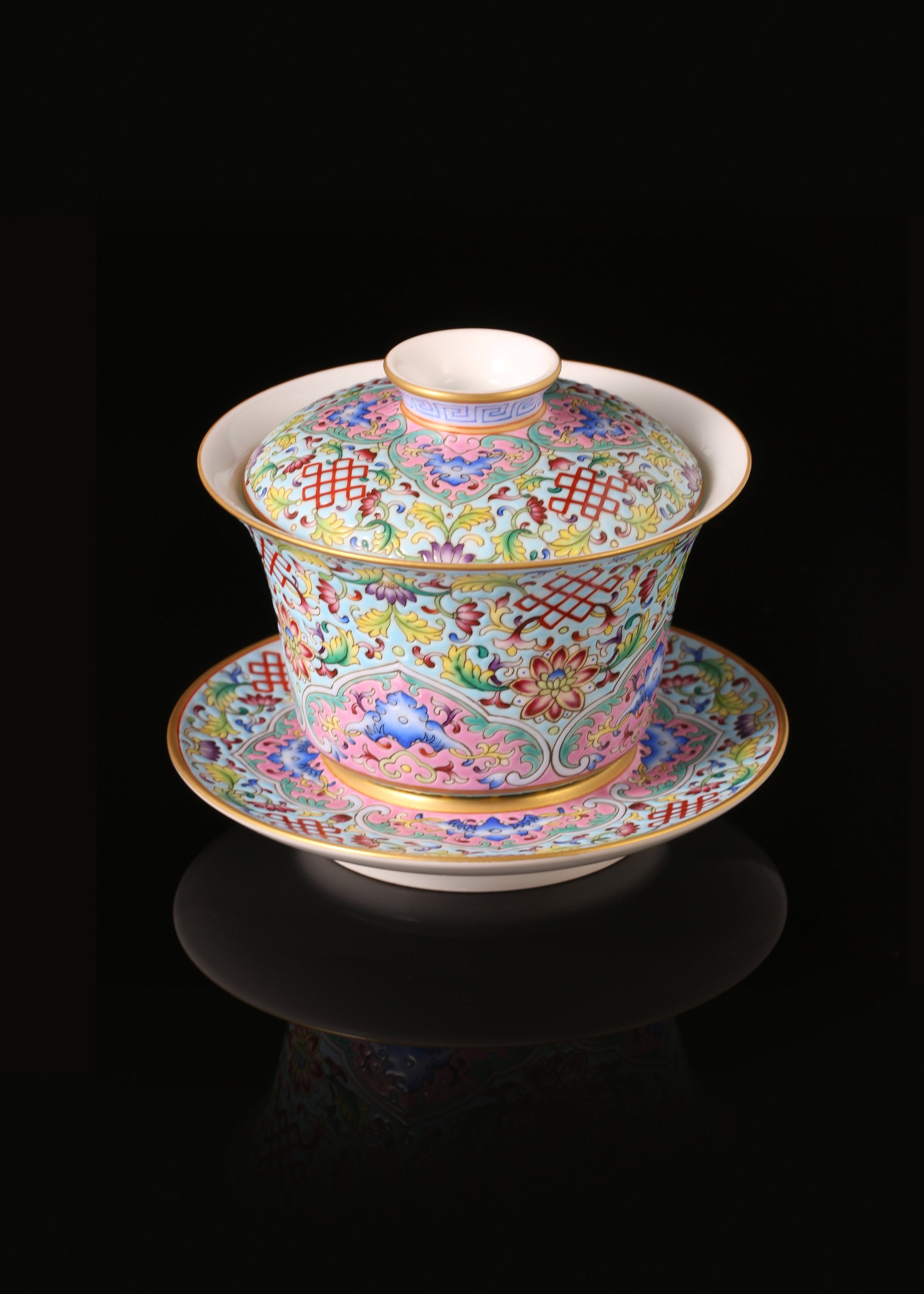
Enamel-Decorated Lidded Bowl with Chinese Heart-Uniting Knot,
This lidded bowl is jointly crafted by Xu Zhijun, inheritor of the intangible cultural heritage of Qing Dynasty imperial kiln famille rose hand-painted porcelain craftsmanship of Jingdezhen, Master Zhang Jian, master of overglaze decoration and piled gold technique, and several other renowned artisans.
It is painted with multiple techniques including enamel colour and piled gold, and requires
four separate kiln firings to complete.
The patterns include Chinese knots, scrolling patterns, baoxiang flower knots and more.
Every pattern carries a profound meaning, and every meaning embodies auspiciousness.
The decoration is exquisitely rendered, and the colours gentle, elegant and perfectly refined.
Chinese Heart-Uniting Knot
The heart-uniting pattern is an ancient motif with profound implication.
With its feature of two knots linked together, it is often used as a symbol of love, conveying the blessings of
good fortune and harmony and
eternal union of hearts.
Baoxiang Flower
The term “baoxiang” originated from Buddhism, as an honorific title for the Buddha among Buddhist believers.
Baoxiang flower is an ideal floral form representing purity, dignity and beauty.
It does not refer to a single type of flower, but an artistically refined pattern that integrates and abstracts elements from various flowers such as lotus, peony and pomegranate.
The baoxiang flower motif emerged and flourished in the Tang Dynasty, inheriting the Tang aesthetic of favouring fullness and the characteristics of national art and culture.
In the Song Dynasty, the baoxiang flower pattern shifted from a luxurious and opulent style to a more orderly and minimalist one.
The scrolling baoxiang flower pattern also appeared in the Song Dynasty, with more distinct dynamism.
Scrolling Pattern
The exterior is decorated with enamel-painted scrolling patterns, with clear leaf veins.
The branches and leaves twist and curl gracefully, elegant and full of dynamism.
Thanks to its continuous, unbroken structure, it symbolises
endless vitality.