Skip to content

Cart

Your cart is empty

Continue shopping
F.T.L. 豐泰隆 and Dayatang 大雅堂 are our two brands —
rooted together, bound by a single lineage.
A Cup of Fine Tea
Six Generations of Perseverance and Legacy

F.T.L. 豐泰隆 and Dayatang 大雅堂 are our two brands —
rooted together, bound by a single lineage.

F.T.L.:Since 1851

From the mountain villages of eastern Fujian to the world stage

【F.T.L. 豐泰隆: A 175-Year Legacy, Six Generations】

F.T.L. 豐泰隆 represents the most completely documented lineage of the Tanyang Congou tea-making craft. According to the Memorials of Min-Zhe Governor Ying Gui: "The village of Tanyang produces over 7,000 chests of tea annually, accounting for more than 70% of Fujian black tea production at the time."

The refined Congou tea from Tanyang's F.T.L. 豐泰隆 was selected as a specialty tea for the British royal family and was auctioned as an Eastern luxury in major auction houses across more than a dozen countries.

First Generation: Shi Guangling

(1827.9.9 – 1893.4.4)

Shi Guangling founded F.T.L. 豐泰隆. He was a co-founder of Tanyang Congou black tea and a pioneer of China's modern tea industry. He opened the maritime tea route for Fujian black tea and pioneered the double-smoked method. Due to the exceptional quality of his tea, F.T.L. 豐泰隆 was chosen as a supplier of specialty tea to the British royal family.

In 1887, an additional order of F.T.L. 豐泰隆 Congou black tea was placed for Queen Victoria's Golden Jubilee banquet at Windsor Castle — three times the usual quantity, totalling 200 chests.

Archival Evidence:British Library (India Office Records), reference IOR/L/AG/1/6/27, contains the 1888 entry in the Royal Household Procurement Records: "Double-smoked Congou from Fuhkien (modern-day Fujian), mark F.T.L.-D.S. (F.T.L. = F.T.L. 豐泰隆D.S. = Double-smoked), 30 chests for Windsor Castle, included in the Annual Provision List."

(Double-smoked Congou from Fuhkien, mark F.T.L.-D.S., 30 chests for Windsor Castle, included in the Annual Provision List.

30 chests ≈ 1.5 tons (1 chest ≈ 50 kg)

This record is cross‑verified with the original 1888 annotated entry from the Royal Household Procurement Records.

Second Generation: Shi Changying, Shi Changxun

Third Generation: Shi Shoujun, Shi Shoutang

Building on their ancestors' achievements, they established the technical standards of the Maritime Silk Road Grading System (Super Grade / Grade 1 / Grade 2), which was incorporated into the London Tea Trade Standards in 1883, becoming an internationally recognized benchmark.

F.T.L. 豐泰隆 set up a network of agents in 21 international ports. Its double-smoked craft black tea, positioned as an Eastern luxury, entered major auction houses worldwide and was traded in the UK, France, Singapore, the Netherlands, Australia, Russia, the US, Germany, Japan, and beyond.

Archival Evidence:

The National Archives (UK), reference LS 4/132 (1889), accounting records of the Lord Steward's Office (Royal Household) state:

"Expenditure on purchasing F.T.L. 豐泰隆 double‑smoked black tea accounted for 17% of the budget for Eastern teas, and its unit price reached 2.3 times that of ordinary black tea of the same period."

Fourth Generation: Shi Zuofan

style name: Fulong

(1895-1972)

Shi Zuofan (style name: Fulong), great-grandson of Shi Guangling, was a founder of modern China's tea industry and the first Chief Tea Evaluator of the state-run Fu'an Tea Refining Factory.
He systematically established the modern black tea evaluation system, trained the first group of Chinese tea experts to go abroad, and authored Essentials of Minhong Black Tea Refining, still a classic textbook in tea science.
Key contributions:
He formulated industry standards for China's black tea sector;
Innovated the “stepwise fermentation method”;
During a difficult period, he risked his life to preserve traditional tea-making techniques.
In 2021, the Tanyang Congou Intangible Cultural Heritage Protection Center posthumously recognized him as the “Founder of the Modern Black Tea Refining System.”

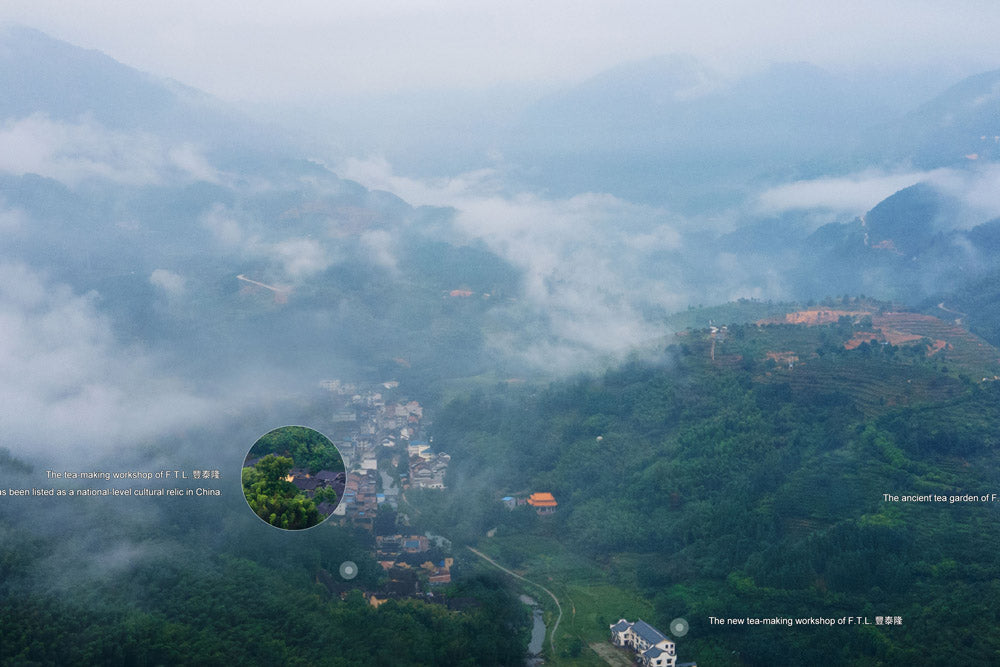
The tea-making workshop of F.T.L. 豐泰隆 holds significant importance in the history of tea production and is recognized as a cultural relic in China.

Fifth Generation: Shi Jikang

(1928-2015)

Shi Jikang was a tea scientist, engineer, and head of the Technology Section at the state‑run Tanyang Tea Factory.

His life was marked by turmoil and lived at the edge of danger. At a time when the craft of Chinese Gongfu black tea was at risk of being lost, he risked everything to preserve this intangible cultural heritage:

1969: Wrapped the ancestral scenting manual (窨制Key) in fertilizer bags and buried it under the old house foundation, digging it up each year after the rainy season to air it and prevent moisture damage.

Winter 1969: Used an ox‑cart to hide six chests of antique tea‑making tools engraved with "F.T.L. 豐泰隆" in an abandoned kiln on Baiyun Mountain's north slope.

1972: Transferred a batch of tools to relatives in Xiapu County (recorded in the 2005 edition of Tanyang Village Chronicles).

1980: Handed over 27 sets of tools, now displayed in the Tanyang Congou Intangible Cultural Heritage Museum.

2017: After his death, a hand‑drawn "treasure map" from 1969 and the (窨制Key) were found among his belongings.

Sixth Generation: Shi Liqiang

Shi Liqiang is the sixth‑generation direct inheritor, an ICH bearer, and a tea industry innovator of the 21st century.

In 1950, Shi Jikang began research on the Guanxianghong tea cultivar. In 2000, Shi Liqiang took over and completed the cultivar's stabilization. He developed a new tea variety, Dayatang Red Rose (Guanxianghong), and was granted the Plant New Variety Rights Certificate (No. CNA20184364.8) by China's Ministry of Agriculture.

The ICH collection teas personally crafted by Shi Liqiang set a contemporary black tea auction record of 450,000 RMB per chest at a Soong Ching Ling Foundation charity auction.

His work has been featured in reports by major Chinese media outlets.

Guanxianghong and the Double-Smoked Method – An Oriental Taste Code Flowing in the Genes

Six generations have preserved the taste heritage through the double-smoked method (achieving 0.8% theaflavin content) and the Guanxianghong cultivar (with an 85% purple bud rate).

The tea's history as a royal tribute (served at the 1887 Golden Jubilee banquet) and global material evidence (such as a 1908 tea chest found in Singapore) attest to its 175 years of cultural depth. From its premium status at London auctions to the contemporary record of 450,000 RMB per chest, the tradition continues through innovation while honoring its roots.

Crafts Never Age
– From Yesterday into the Future

F.T.L. 豐泰隆 ®, a century-old tea merchant with six generations of heritage, embodies 175 years of refined craftsmanship and trusted reputation.

Rooted in this family legacy, we founded 大雅堂 ® in 2016 — starting from a single cup of black tea, it has evolved into a cultural platform that brings together masters of China’s intangible cultural heritage.

F.T.L. 豐泰隆 is the root, deeply anchored in the fertile soil of Eastern Fujian; 大雅堂 is the crown, carrying forward its bloodline to thrive and flourish.

Dayatang 大雅堂 ICH Inheritors Alliance

From One Tea to a Hundred ICH Crafts

Today, the alliance brings together over 100 ICH tea makers, tea utensil craftsmen, and tea culture scholars —its reach extending into ancient utensil-making techniques and tea space aesthetics, with new craftsmen joining each month.

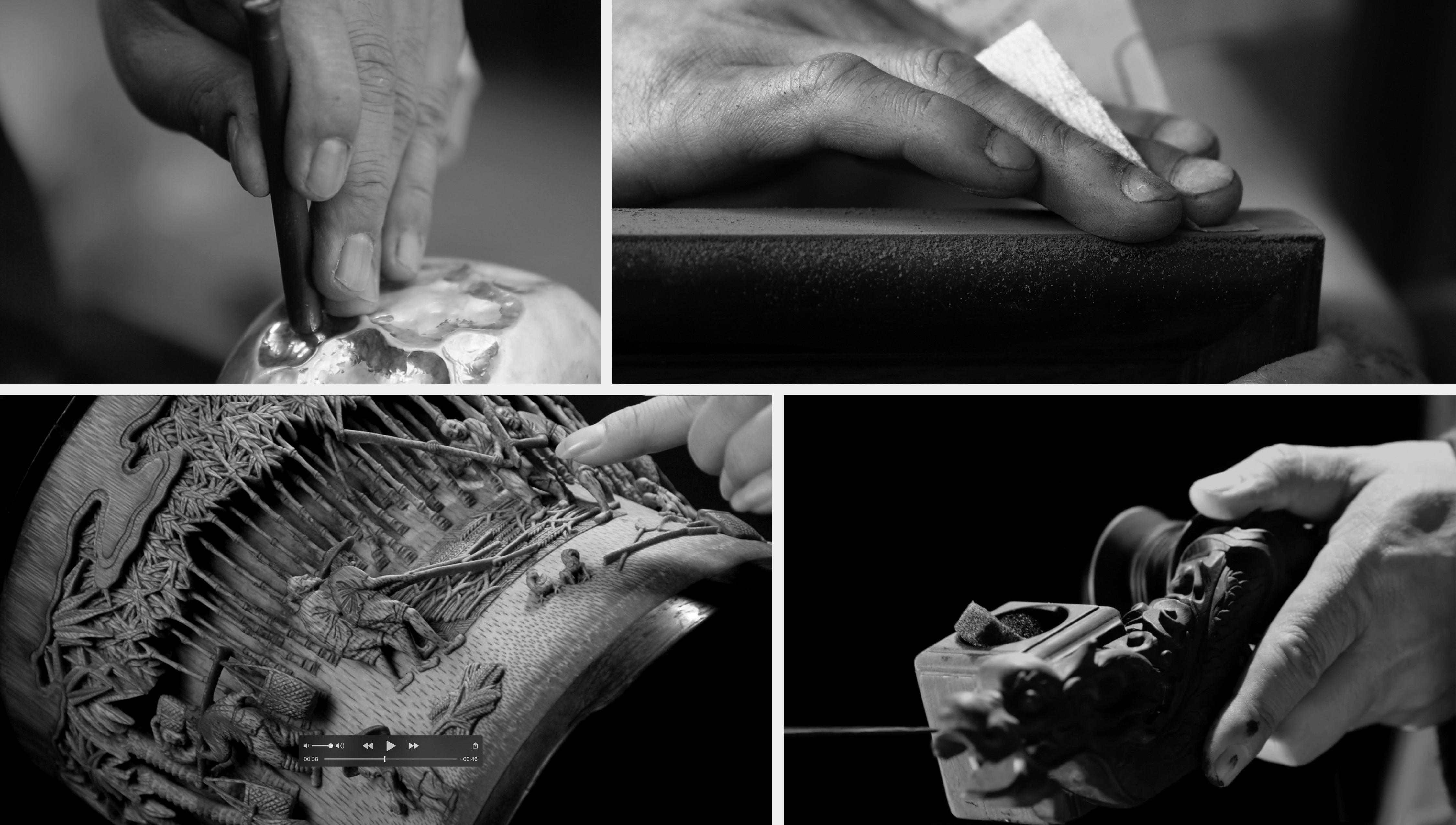
They share a common obsession with craftsmanship—their handiworks take countless days and nights, blending heart and hand, treating every detail of the teaware like a daughter's dowry as they chisel and carve. To restore historic tea recipes, they spend years shuttling between laboratories and ancient texts.

Their devotion answers a fundamental question: When robotic arms can perfectly replicate every step, why do human hands still tremble as they pass on 175 years of warmth?

On the wall, photos of departed artisans still hang. Their gaze still rests on the future of tea culture.

Just as the six generations of F.T.L. 豐泰隆—from the tea workshops of the late Qing dynasty to today's Guanxianghong—they continue to mark the path of inheritance.

Dayatang 大雅堂

From a single style of black tea to a hundred ICH crafts, Dayatang joins hands with the ICH Inheritors Alliance

—using craftsmanship as our bond, to connect with kindred spirits across the globe.

Auction Cooperation

Since 2016, the Alliance has partnered with over ten auction houses, including China Guardian, Xiling Yinshe Auction, and Rongbaozhai, holding a total of 65 auctions dedicated to ICH teas and tea wares.

From 2017, China Guardian launched the "Si Cha Ya Wu Dayatang" (Dayatang Tea Utensils) and "Dayatang Nature & Flavor" special sessions.

From 2019, Xiling Yinshe Auction introduced the "Dayatang Contemporary Craft" special session.

Over ten auction houses have become Dayatang partners.
Larger-scale auctions are coming soon.

Media Coverage

Inheritors of the Dayatang ICH Alliance have been featured in international media including the BBC, as well as major Chinese outlets, documenting the authentic stories behind China's intangible cultural heritage.

Shi Liqiang (Gongfu Black Tea ICH Inheritor)
Sixth-generation inheritor, creator of Guanxianghong
Dayatang ICH collaborated with CCTV to produce a feature on Shi Liqiang's development of the "Red Rose" (Guanxianghong) tea cultivar. CCTV-10's Science & Education Channel and other media have reported on his work, with broadcasts also aired on Fujian TV and Fuzhou TV. The feature documents how this sixth-generation inheritor of a century-old tea house preserved traditional methods while developing a new tea variety with independent intellectual property rights. Original footage is available for reference.

Che Jie (Pu'er Tea Master)
Programme: The Mekong River with Sue Perkins | Platform: BBC Two | Premiere: October 2014
In 2014, a BBC crew travelled to Bampo Laozhai in Nannuo Mountain, Xishuangbanna, to document the daily life of tea master Che Jie in his ancient tea garden. The camera follows host Sue Perkins into the primeval forest to visit thousand-year-old tea trees. Che Jie is shown hand-fixing tea leaves in a traditional wok, the leaves tumbling in his palms. The episode also captures life in the Hani village and the generations-old bond between Che Jie and his community.
Visit the BBC Programme Index website and search the programme ID for verification.
Also featured in: CCTV documentary Tea: Story of the Leaf

Li Xingchang (Pu'er Tea ICH Inheritor)
Programme: Pu'er: The Dark Gold of Yunnan | Platform: BBC World Service (The Documentary) | Aired: March 2018
Li Xingchang explained the differences between ancient tree tea and plantation tea to the BBC in the Pu'er region, demonstrating traditional fixation and rolling techniques. He spoke of his family's multi-generational tea-making history and led journalists into ancient tea gardens, sharing the terroir and heritage of Pu'er tea. Available on the BBC World Service website.
Wei Yuede (Anxi Tieguanyin Tea ICH Inheritor)
Programme: The Why Factor Special | Platform: BBC World Service | Aired: 2018
In Xiping Town, Anxi, Wei Yuede recounted the legend of his ancestor Wei Yin discovering the tea tree guided by a dream of Guanyin (the Goddess of Mercy). He demonstrated the "zuo qing" (withering and tossing) process, alternating betweenliangqing (airing) and yaoqing (tossing), showcasing the characteristic "green leaves with red borders" of traditional Tieguanyin. He expressed concern over the decline of traditional methods and showed journalists around his ecological tea garden. Audio and short videos available on the BBC World Service website.

Chen Dehua (Wuyi Rock Tea Da Hong Pao ICH Inheritor)
Programme: The Food Chain | Platform: BBC World News | Aired: c. 2017
In Wuyishan, Chen Dehua explained the history of the original Da Hong Pao mother trees and their propagation by cuttings, demonstrating traditional charcoal roasting techniques for rock tea. The programme mentioned his pioneering role in commercially producing pure-breed Da Hong Pao. Archives available via BBC World News.

Wang Shunming (Da Hong Pao Tea National ICH Inheritor)
Programme: The Art of Eating Series | Platform: BBC Four | Aired: 2016
In the core production area of Wuyishan, Wang Shunming explained the complete production process of Da Hong Pao – shaking, fixation, rolling, and roasting. Holding the dry leaves, he described the formation of its signature "rock rhyme" (yan yun). Programme archives available via BBC Four.

Liu Guoying (Da Hong Pao Tea National ICH Inheritor)
Programme: The Art of Eating Series | Platform: BBC Four | Aired: 2016
In the Wuyishan tea region, Liu Guoying explained how different terroirs (Zhengyan, Banyan, Zhoucha) influence tea flavour, and demonstrated the tea tasting process for rock tea. Programme archives available via BBC Four.

Zhang Tianfu (Tea Sage)
Programme: Chinese Tea Culture Feature | Platform: BBC News | Aired: c. 2014
At tea mountains and factories in Fujian, Zhang Tianfu discussed the history of China's tea industry, reflecting on his introduction of modern mechanical tea processing in the 1930s. Report available on the BBC News website.
Also featured in: CCTV documentary Tea: Story of the Leaf, Episode 6: "True Feelings in a Bowl of Tea"

Liang Junde & Jiang Yuanxun (Jin Jun Mei Founders, Tea Masters)
Programme: Fujian Wuyishan: The Revival of Black Tea | Platform: BBC News Chinese | Aired: c. 2016
In Tongmu Village, Liang Junde demonstrated the plucking standard for Jin Jun Mei – whole buds – and explained the differences between Lapsang Souchong and traditionally crafted black tea, mentioning the creation of Jin Jun Mei in 2005. Jiang Yuanxun conducted tea tastings at Zhengshan Tea Company's tasting room, explaining Jin Jun Mei's market positioning and quality standards. Report available on the BBC News Chinese website.
Also featured in: CCTV documentary Tea: Story of the Leaf

Fan Shenghua (West Lake Longjing Tea Frying ICH Inheritor)
Programme: The Last Hand-Fried Tea Masters of China | Platform: BBC News | Aired: 2018
Fan Shenghua began learning tea frying at 13, his hands never leaving the wok for over forty years. He recalls the blisters on his palms during his early years, but his master insisted he persevere, because "only the hands can sense the most subtle changes in the tea leaves"…
The report is available on the BBC News YouTube channel: The last hand-fried tea masters of China.

Ye Hanzhong (Chaozhou Gongfu Tea ICH Inheritor)
Programme: The Art of Chinese Tea | Platform: BBC World Service (The Documentary) | Aired: May 2019
In his traditional home in Chaozhou, Ye Hanzhong demonstrated the complete twenty-one-step Gongfu tea ceremony using a red clay pot and Ruochen cups. He explained the philosophy of harmony, respect, precision, and joy embedded in each movement – warming the pot, rinsing cups, pouring high, and serving low. Audio available on the BBC World Service website.

Yang Fuxi (Imperial Bow and Arrow Craftsmanship ICH Inheritor)
Programme: The Art of China, Episode 3: The Empire Strikes Back | Platform: BBC Four | Aired: 2014
In his Beijing workshop, Yang Fuxi demonstrated the traditional process of making Qing dynasty imperial bows – composite bows crafted with horn, tendon, and bamboo. He explained the differences between imperial bows and those used for civilian hunting, and gave a live shooting demonstration. Programme archives available via BBC Four.

Mei Xiangjing (Fuding White Tea Handicraft ICH Inheritor)
Programme: White Tea: The Champagne of Teas | Platform: BBC Radio 4 (The Food Programme) | Aired: April 2018
In Fuding, Mei Xiangjing demonstrated the "natural withering" process for white tea – spreading fresh leaves evenly on bamboo screens in a well-ventilated withering room, neither fried nor rolled… Audio available on the BBC Radio 4 website.
Also featured in: CCTV documentary Tea: Story of the Leaf, Episode 1: "The Temperature of the Land and the Palm"

Fang Shoulong (White Tea Master)
Programme: White Tea: The Champagne of Teas | Platform: BBC Radio 4 (The Food Programme) | Aired: April 2018
In his Fuding ecological tea garden, Fang Shoulong explained his organic cultivation philosophy… Audio available on the BBC Radio 4 website.
Also featured in: CCTV documentary Tea: Story of the Leaf, Episode 6: "True Feelings in a Bowl of Tea"

Xiong Lao'er (Jingdezhen Thin-Walled Porcelain ICH Inheritor)
Dayatang ICH collaborated with CCTV-10 to produce a feature on thin-walled porcelain, documenting the story of Xiong Lao'er, known as the "King of Thin-Walled Porcelain" in Jingdezhen. Original footage is available for reference.

Sheng Yiyuan (Yongkang Tin Carving ICH Inheritor)
Dayatang produced an ICH application documentary for Yongkang tin carving master Sheng Yiyuan, capturing the unique appeal of this traditional craft through imagery. Original footage is available for reference.

...

Note: ICH inheritors dedicate their lives to their crafts. Many have vague memories of filming details or broadcast platforms. The above list is not exhaustive; there are more media reports on these and other inheritors not included here.

Partnering with the Base

In July 2025, Dayatang ICH was invited to become a core partner of the China National Cultural Trade Base (Sanya), joining a global initiative aimed at promoting cultural heritage and craftsmanship.

The base aims to build a global platform that fosters the exchange of intangible cultural heritage and craftsmanship, creating opportunities for international collaboration and cross-cultural dialogue.

F.T.L. 豐泰隆 and Dayatang 大雅堂 ICH, brands with a 175‑year history, have traversed a century of change—connecting heritage craftsmanship with contemporary life through dedication and skill.

Journey of ICH Across Ten Thousand Miles

Ten years. Ten thousand miles.The journey has covered  every renowned, tea region in China, and extended to Japan, visiting masters of tea utensils and lacquerware.

To date, we have visited over 100 ICH inheritors of tea and crafts. Some old friends captured in our lens have since passed away; fellow travelers from those early days have gradually faded from the road.

Each inheritor carries a unique story and their craft, passed down through generations. We are part of this journey — as recorders, as companions. In the frame is their craft; outside the frame are our shared ten years.
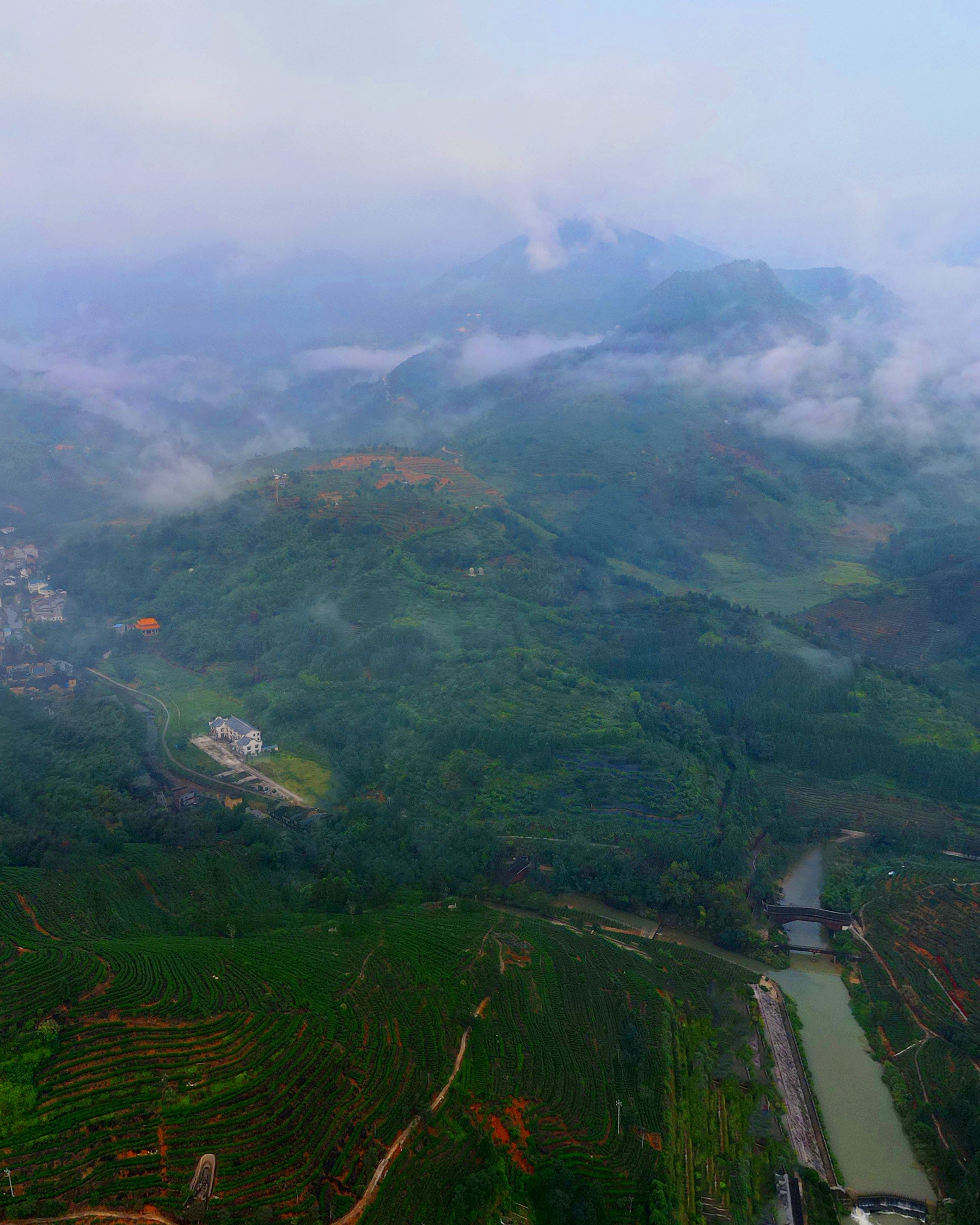
175 years, six generations

from F.T.L. 豐泰隆 to a hundred ICH inheritors, from one tea to Dayatang 大雅堂.
The root and the crown, all are guardians of the craft.