








Grand Elegance Hall Treasure Box with Swastika Pattern and Abundant Blessings inlaid with Boxwood
Grand Elegance Hall Treasure Box with Swastika Pattern and Abundant Blessings inlaid with Boxwood
Grand Elegance Hall Treasure Box with Swastika Pattern and Abundant Blessings inlaid with Boxwood
Grand Elegance Hall Treasure Box with Swastika Pattern and Abundant Blessings inlaid with Boxwood
Shape: Qianlong Treasure Box
author: Dayatang
Material 1: Dalbergia cochinchinensis (common name), Dalbergia cochinchinensis (scientific name).
Material 2: Purple sandalwood (common name), East African blackwood (scientific name), Dalbergia melanoxylon (Latin name)
Material 3: Boxwood, small-leaved boxwood (common name), boxwood (scientific name), Buxus sinica (Rehder & EH Wilson) M. Cheng (Latin name)
Specifications: Length : 30cm Width : 30cm Height : 18cm
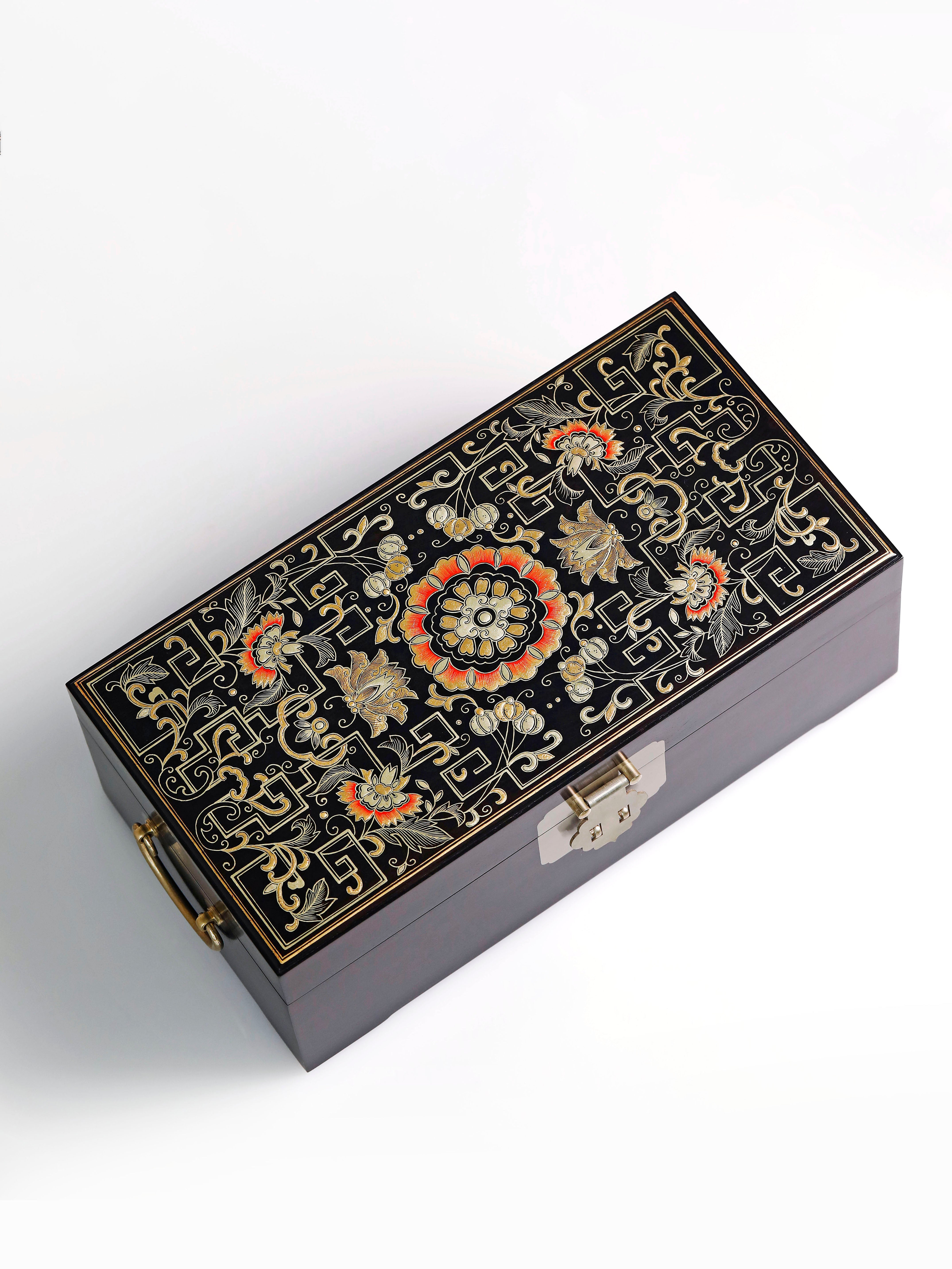
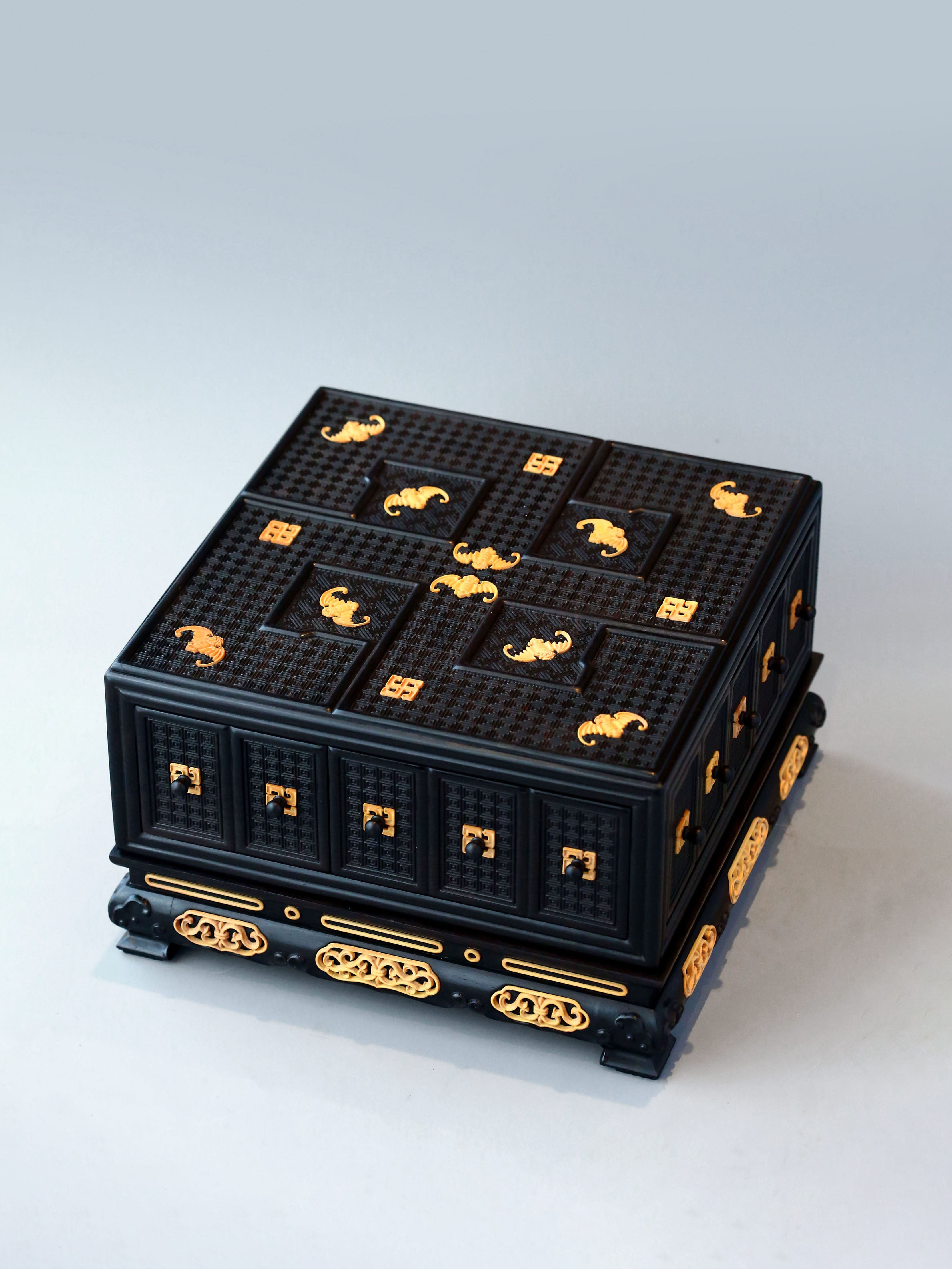
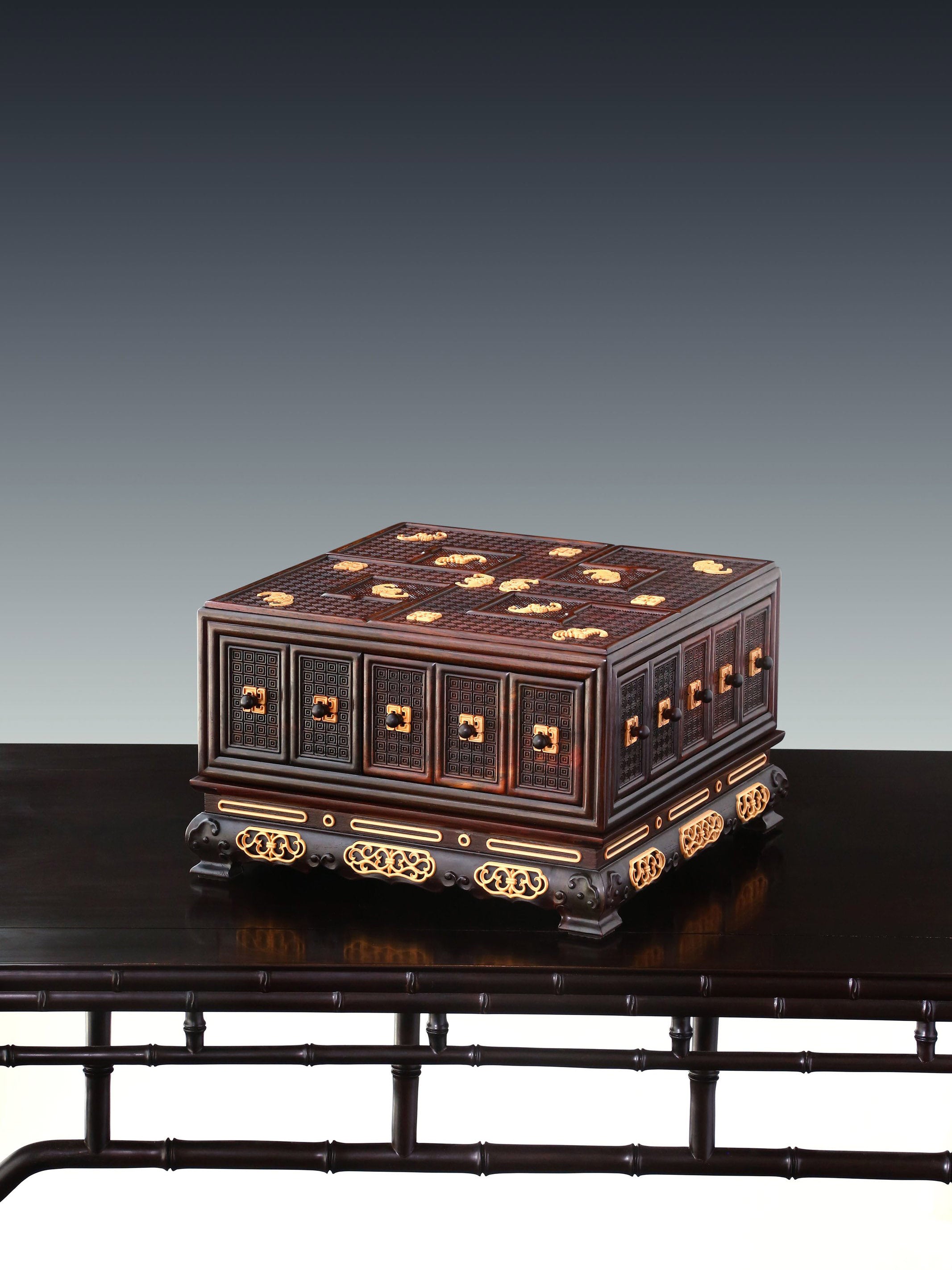
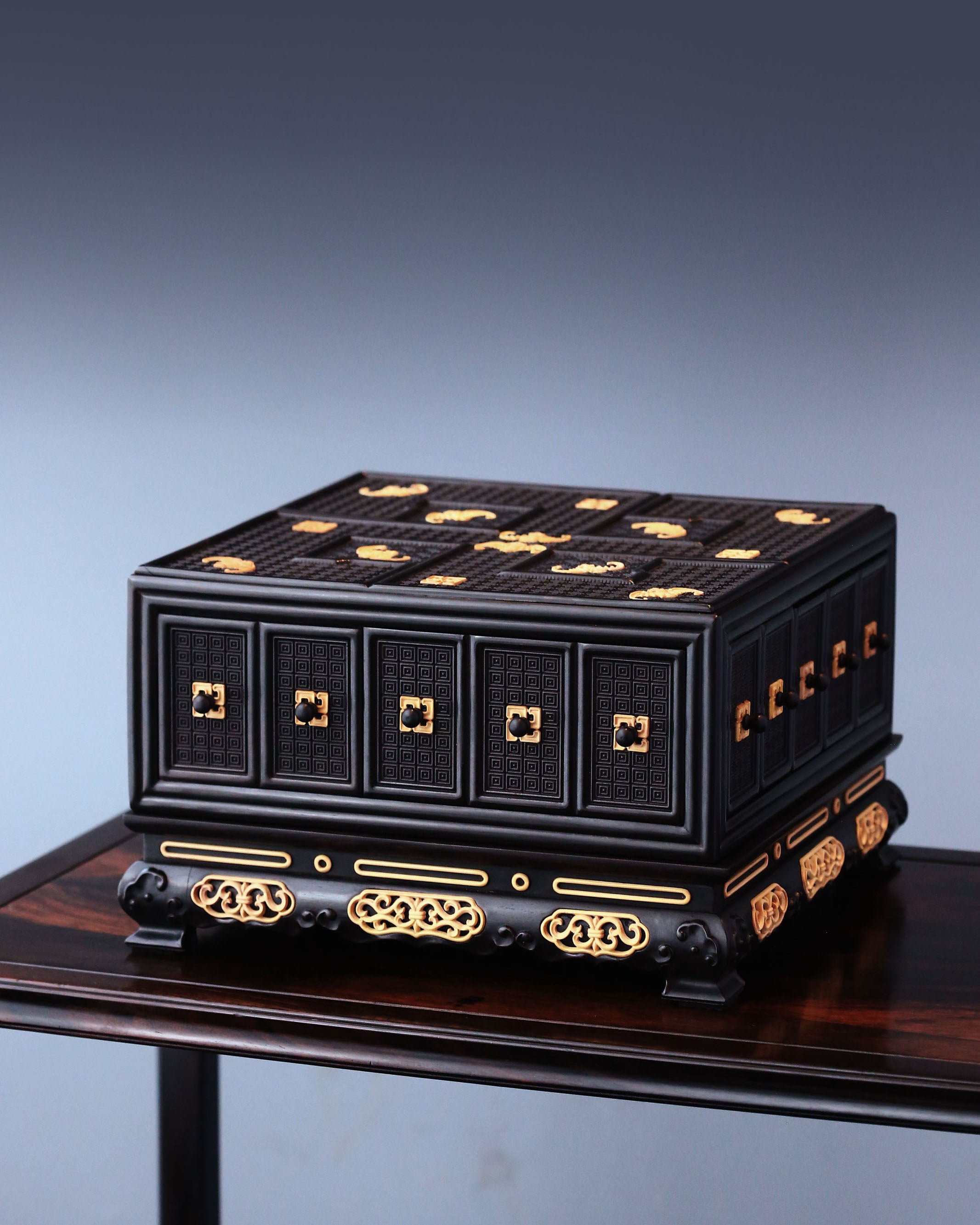
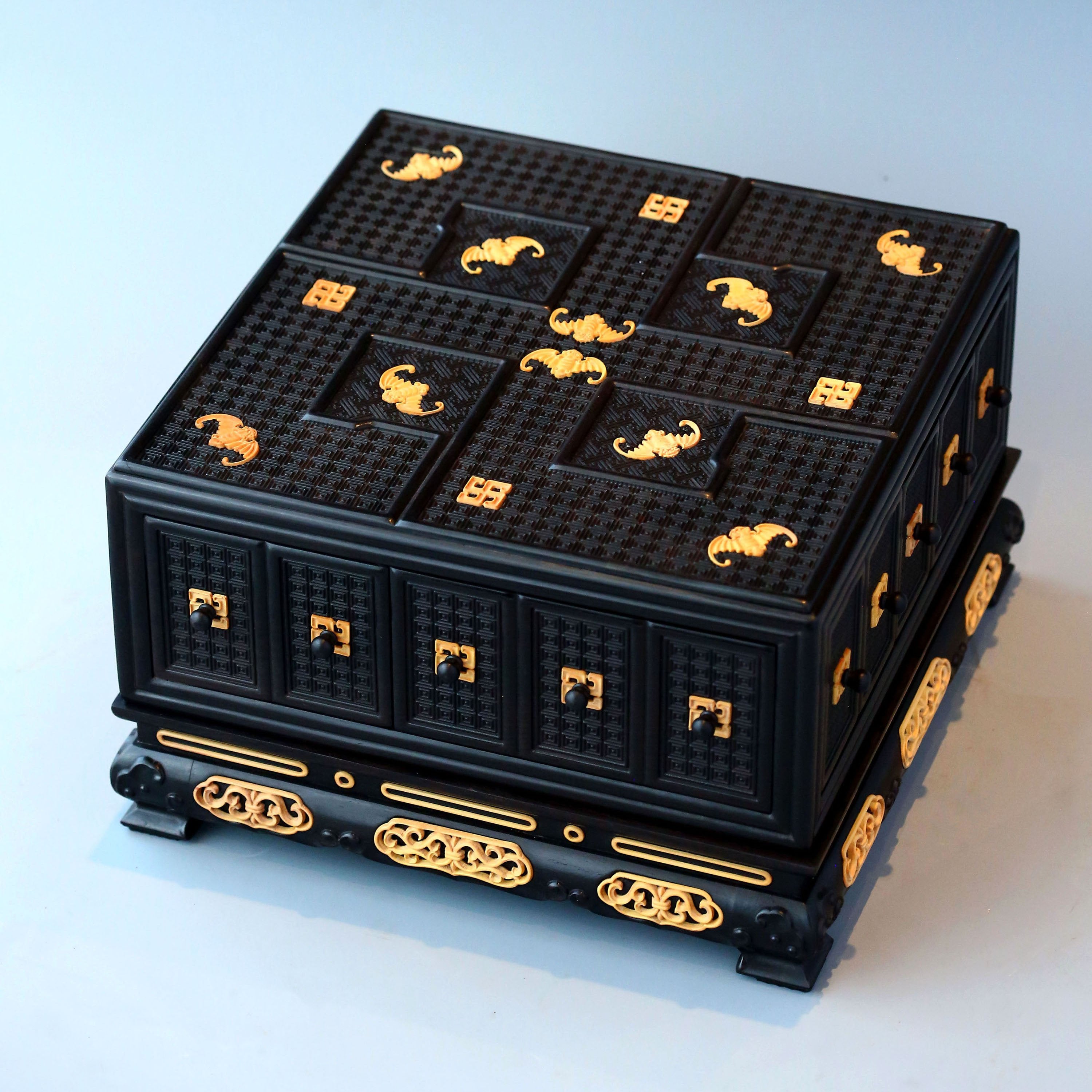
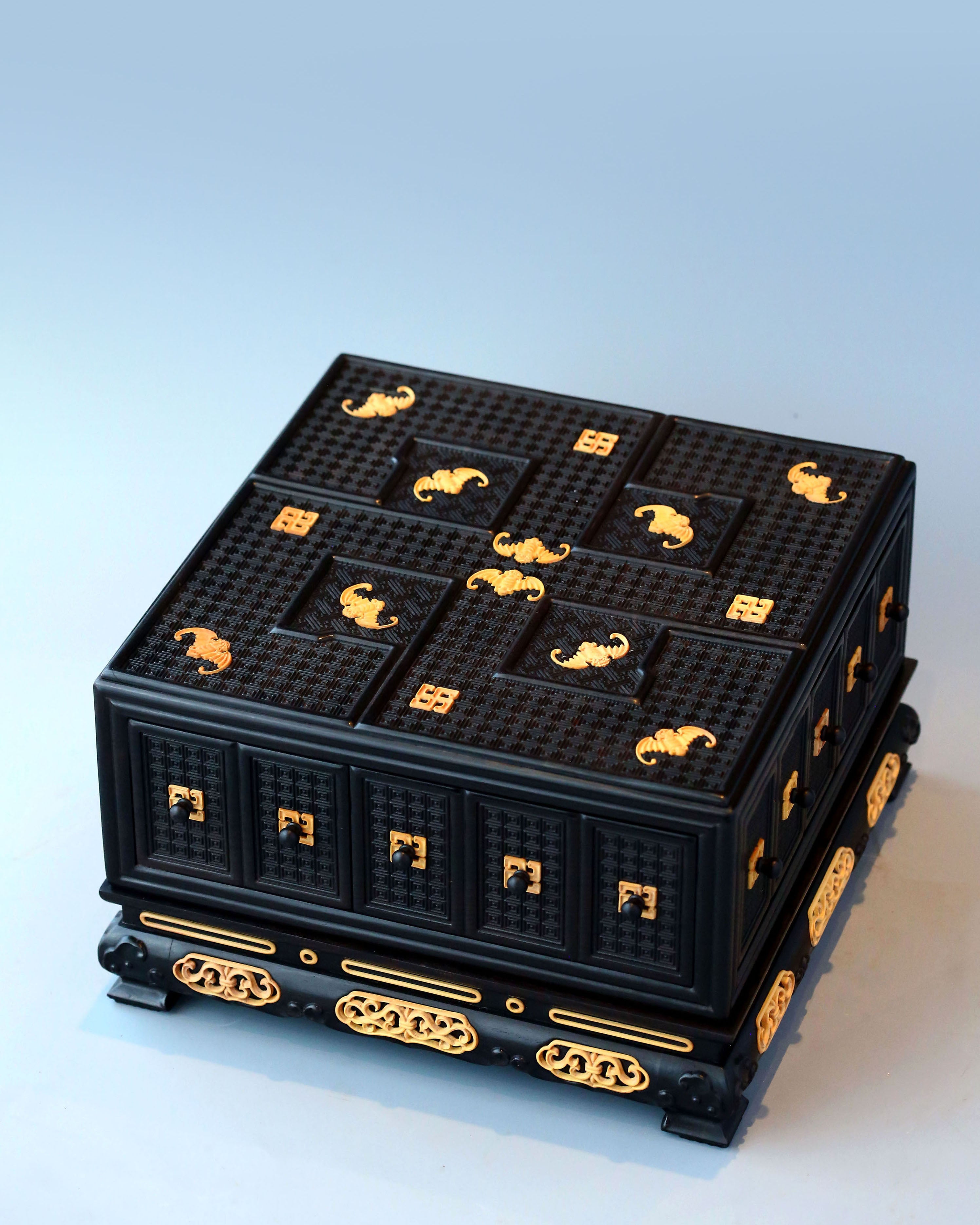
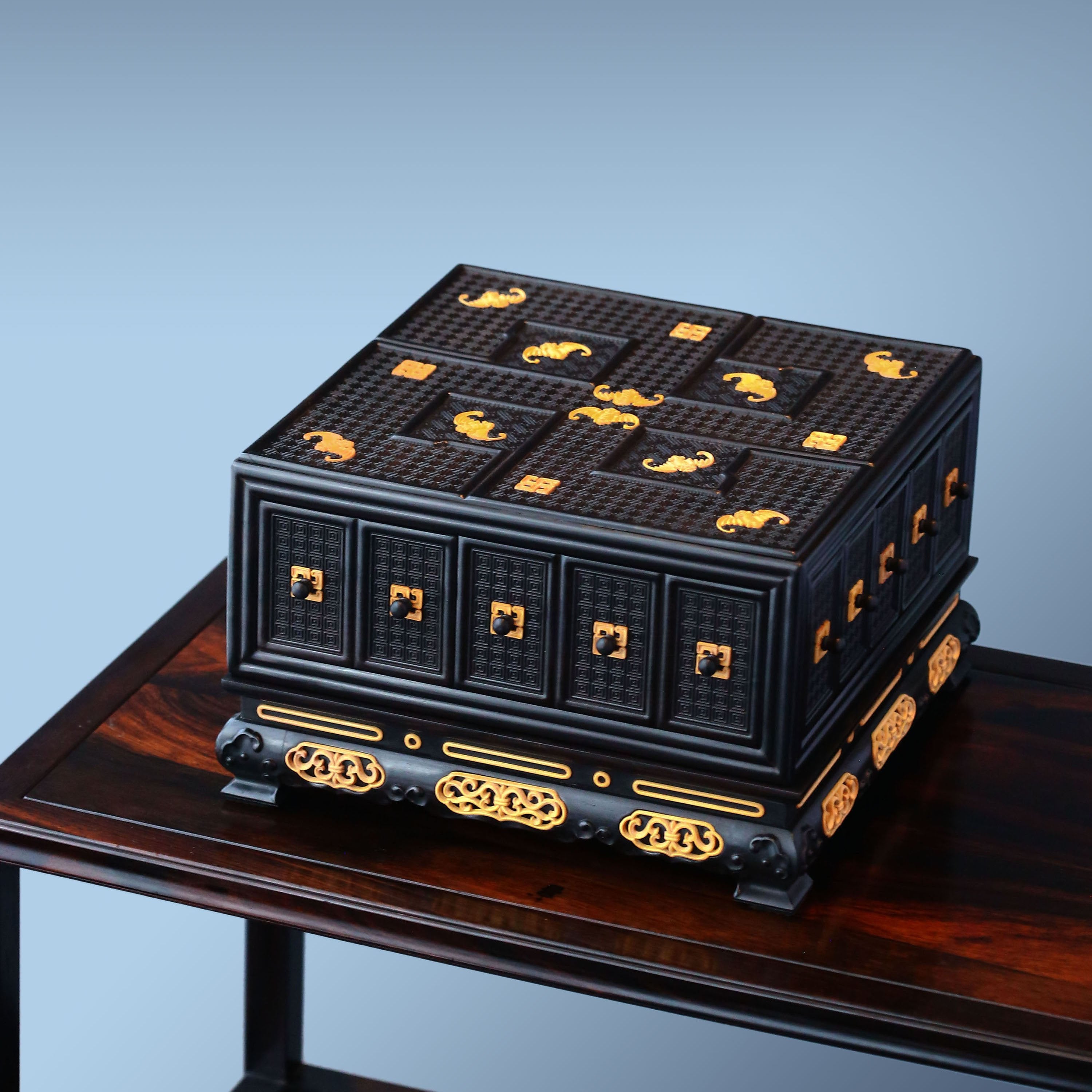
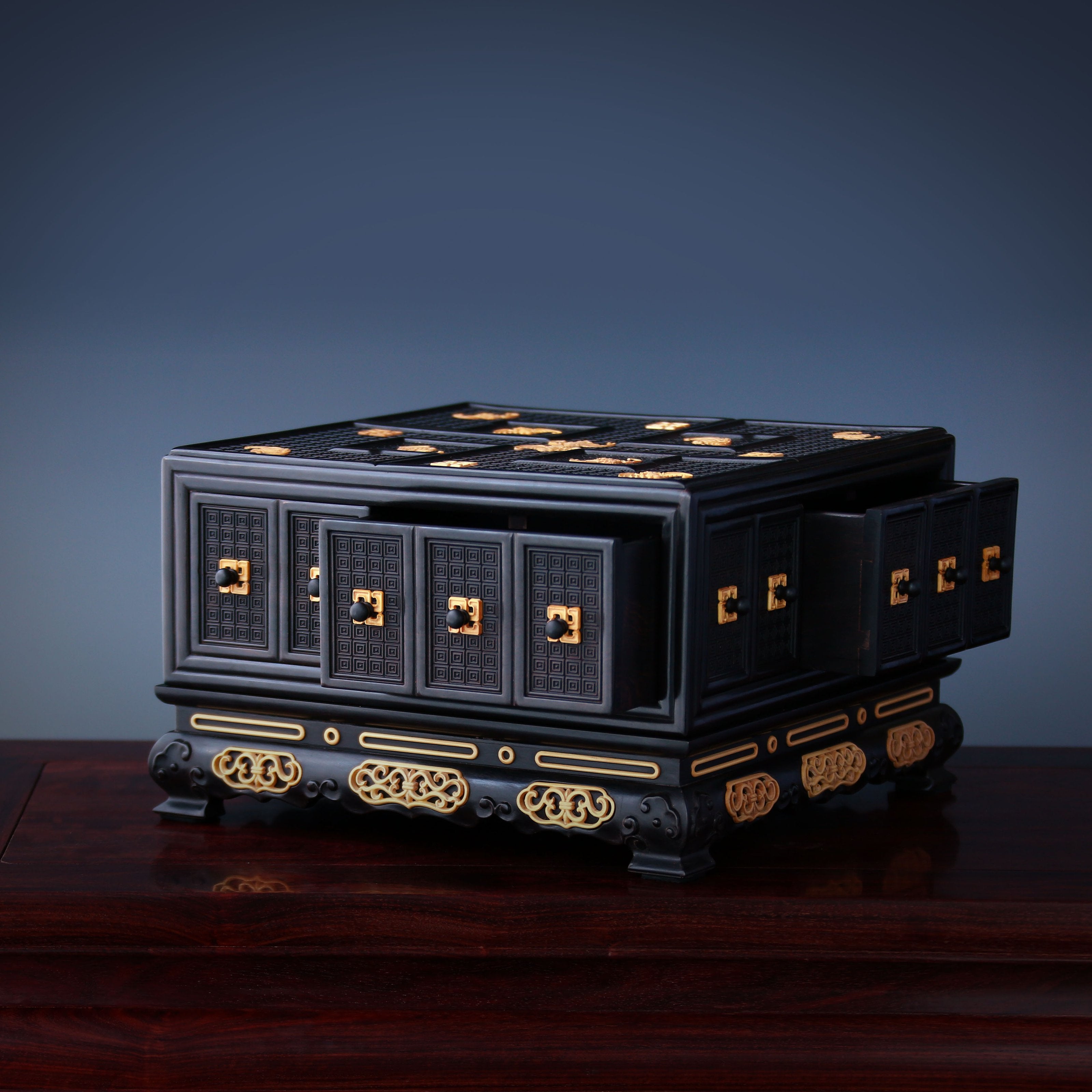
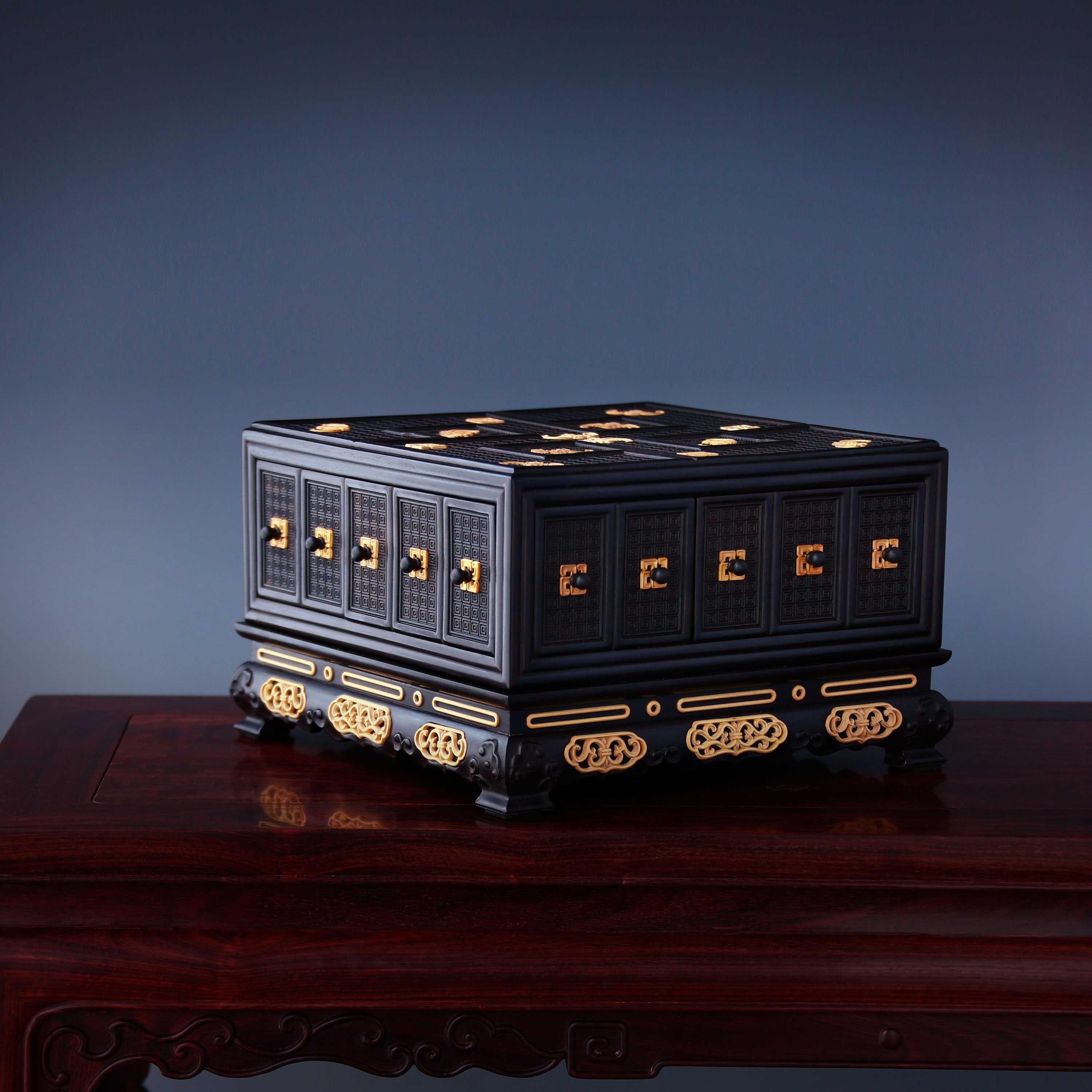
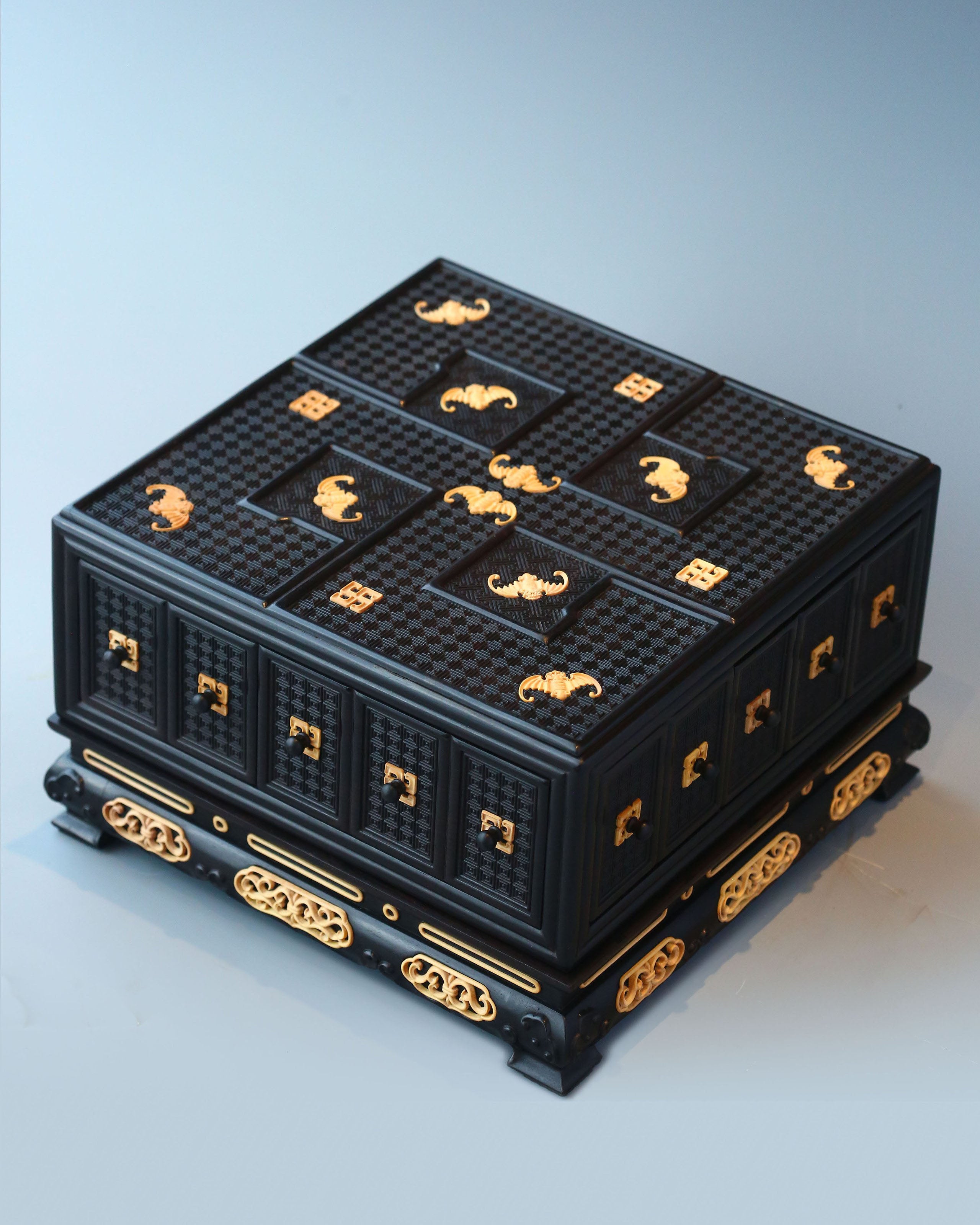
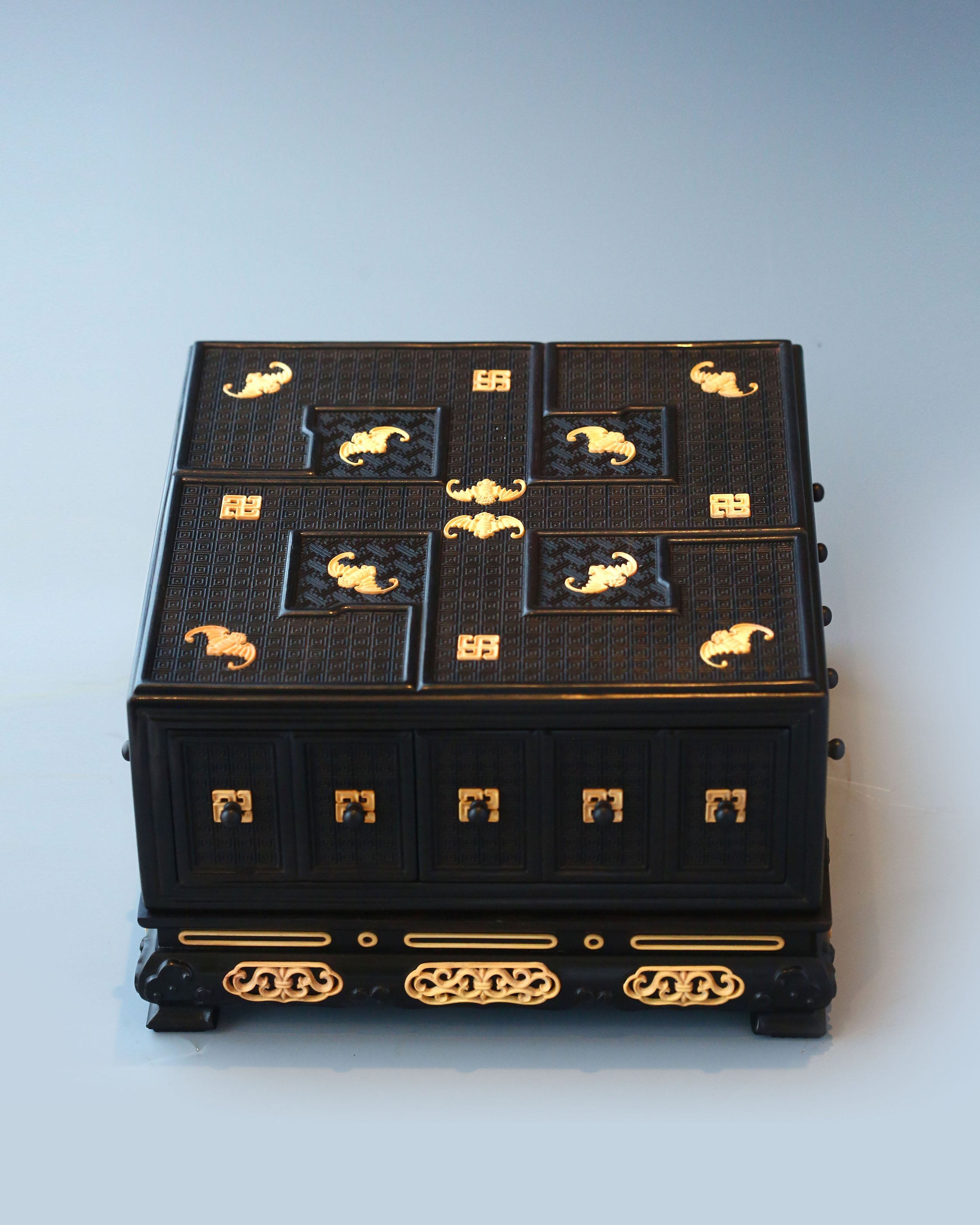
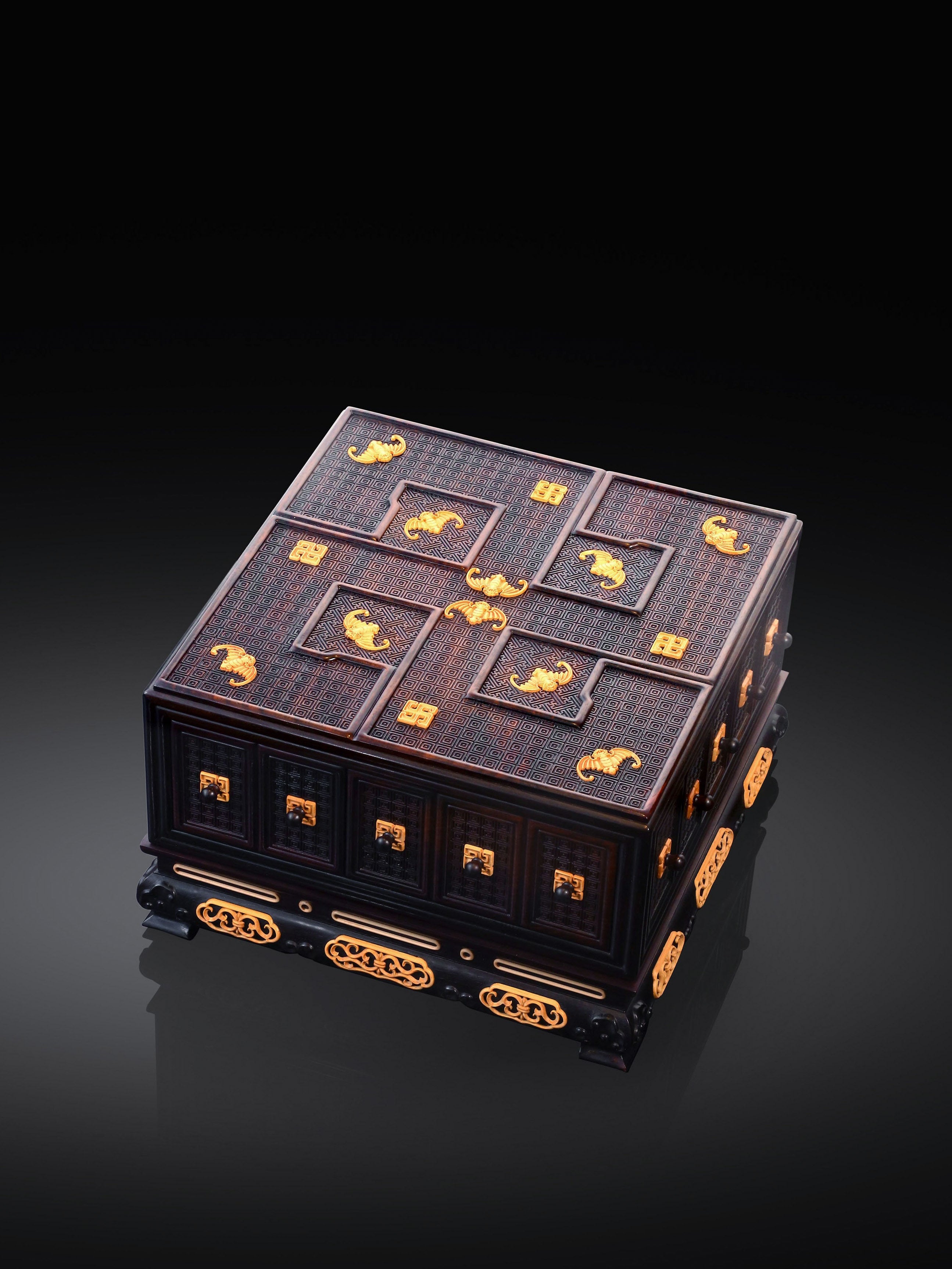
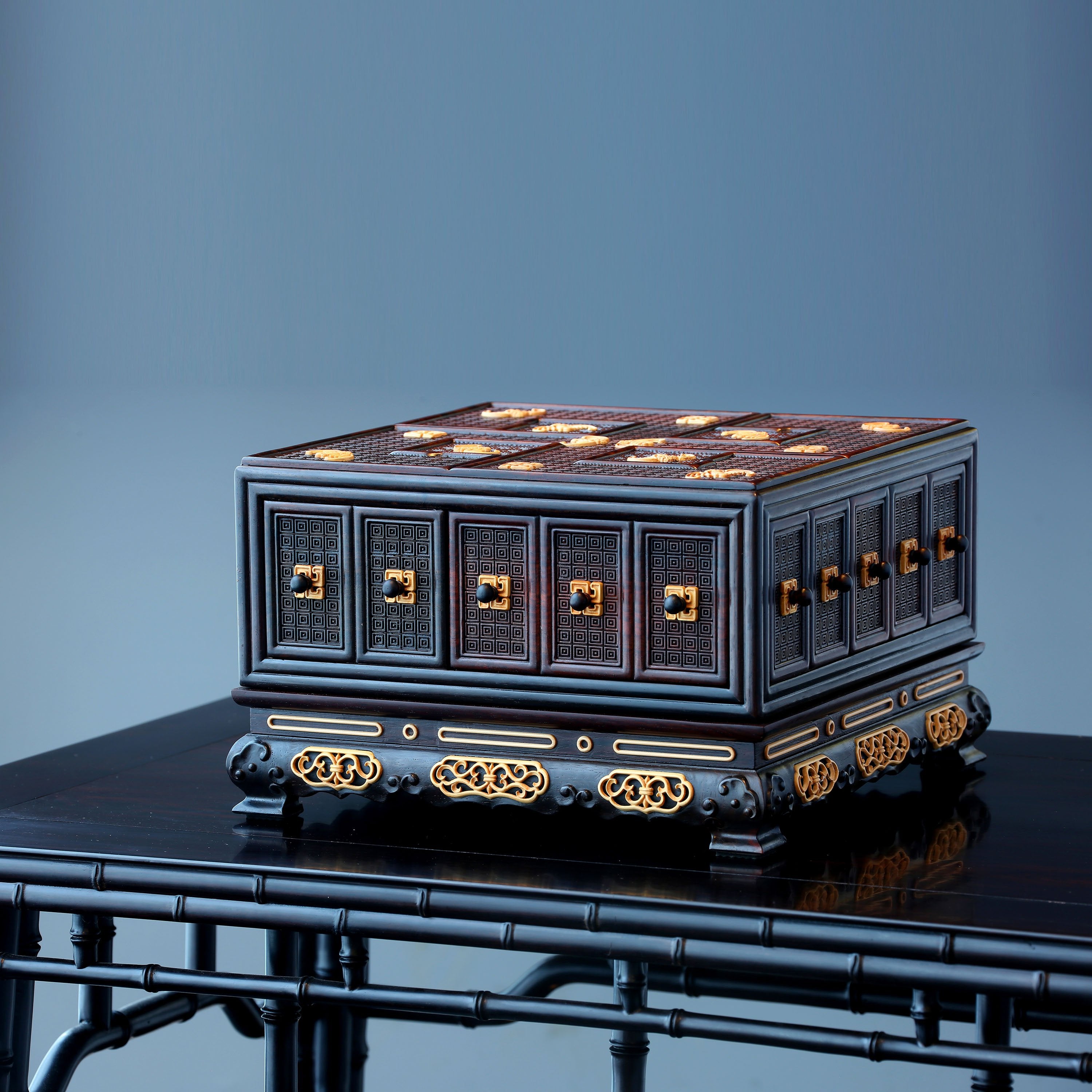
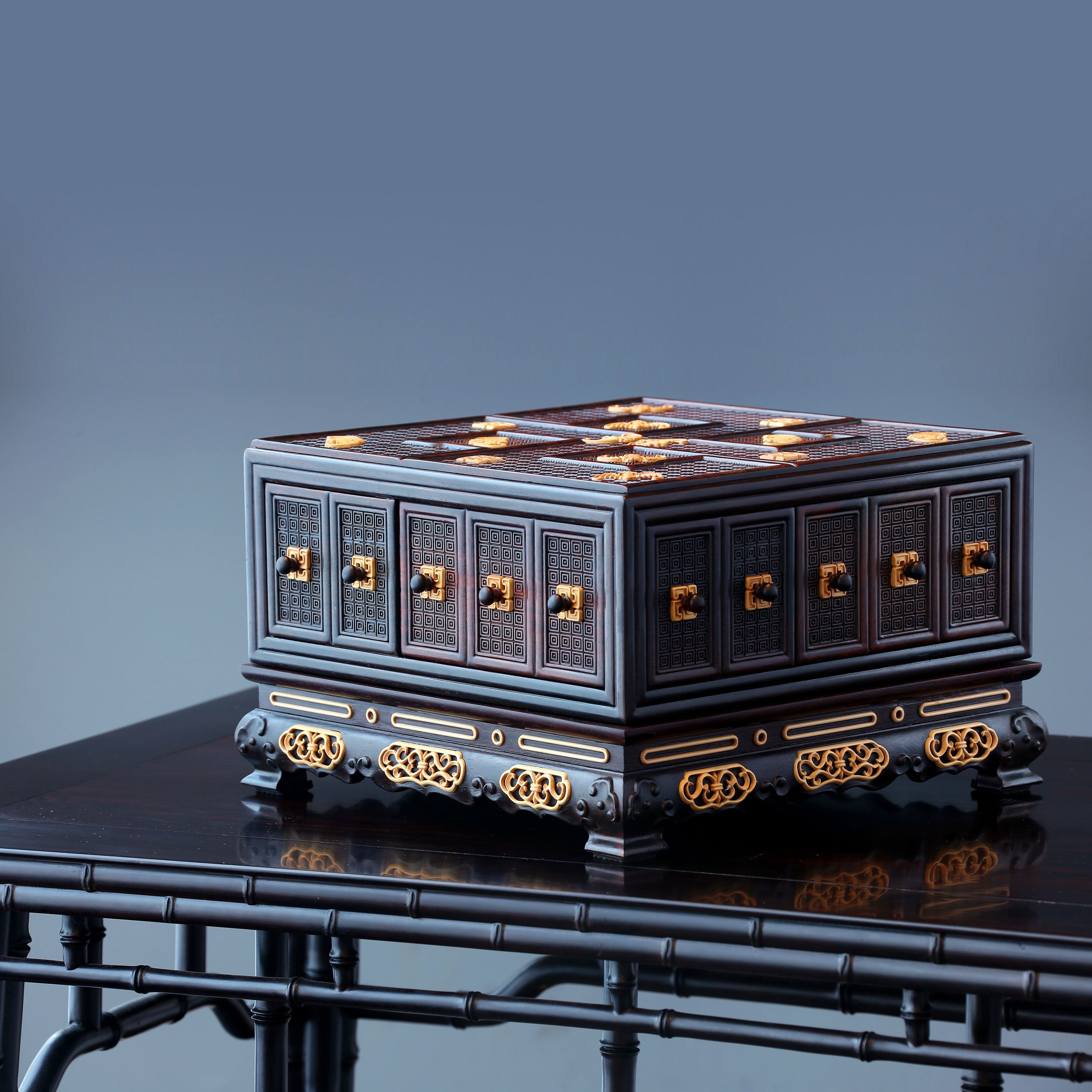
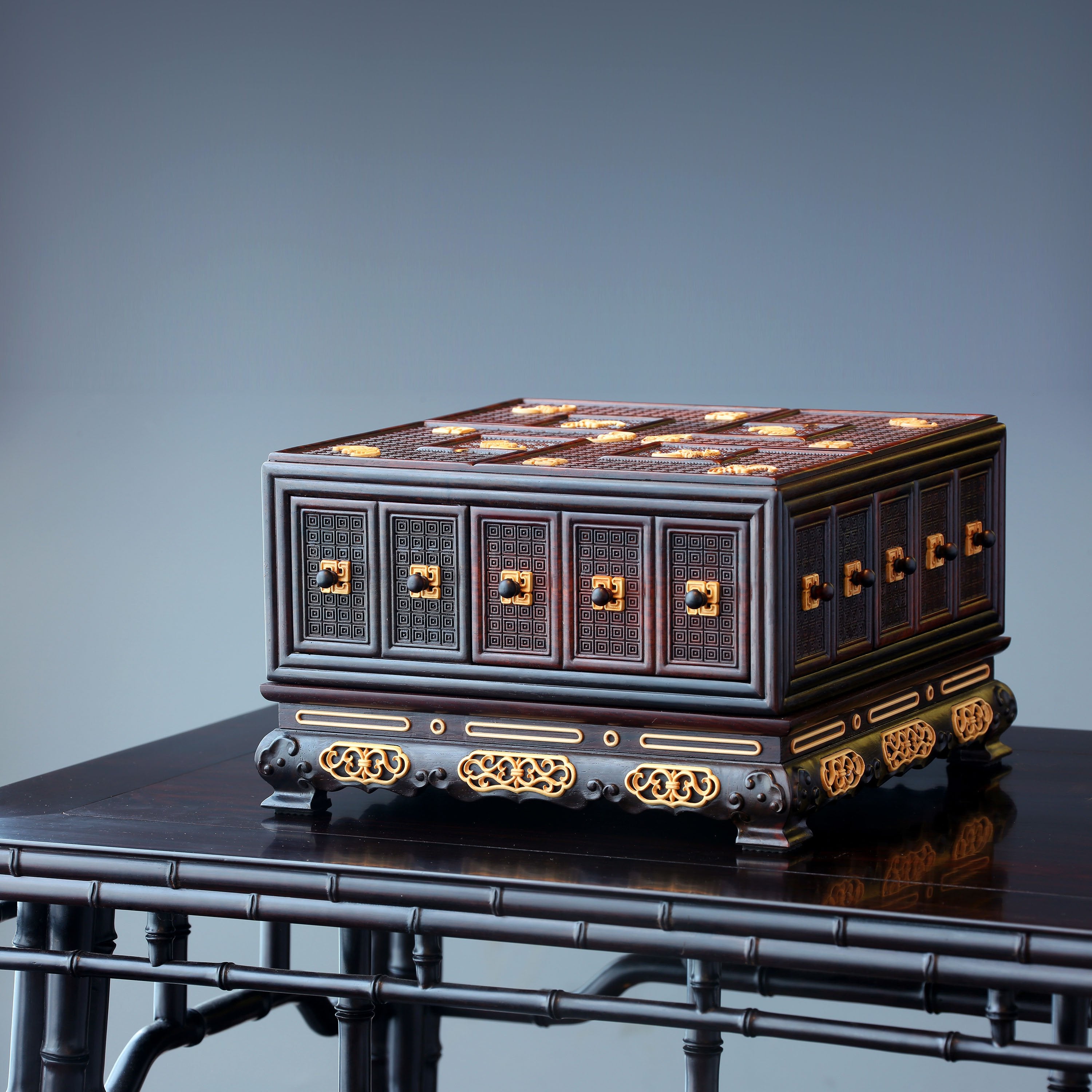
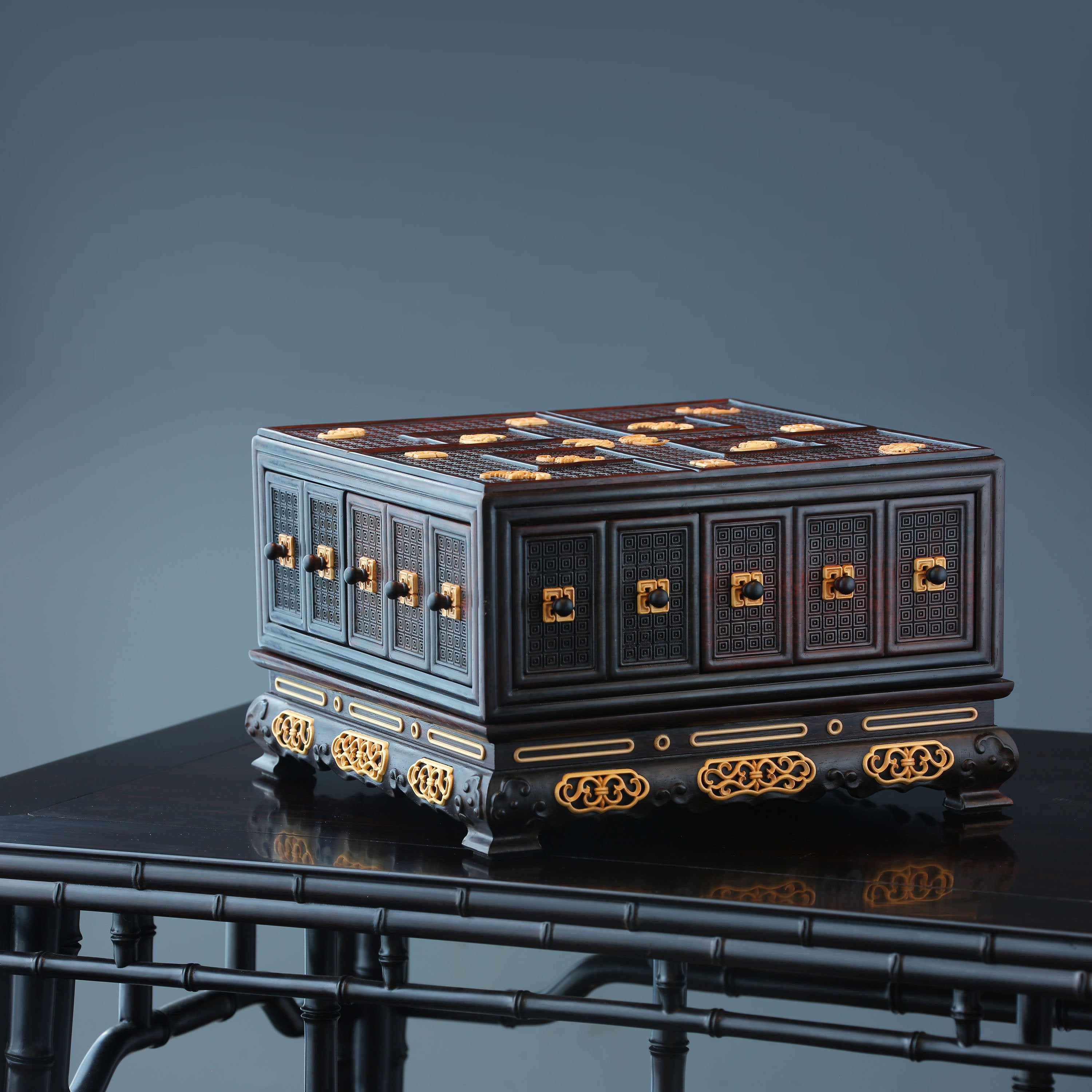
The treasure box is a deep, somber color, adorned with warm-toned boxwood inlaid with bat, swastika, and intertwined floral patterns. The entire piece is meticulously crafted, with a delicate meander pattern as the background. The lid features two bats facing each other at its center, divided by a large swastika pattern. A pair of bats and a swastika form a decorative motif at the four corners, symbolizing "boundless blessings." The body of the box is decorated with two stylized meander patterns, signifying "eternal continuity." Drawers are located on all four sides, each divided into small compartments. The entire piece reflects the opulent style of the Qianlong era and can be used to store small scholar's objects. The stand and box can be stacked and rotated, a clever design that makes it both practical and aesthetically pleasing.
The swastika pattern is the key design element of this piece.
Originating from pre‑historic civilizations, the swastika is a timeless auspicious symbol. It is the sacred mark on the chest of Buddha. Swastika motifs have been unearthed on pottery from Mesopotamia in West Asia, dating back to around 5000 BCE. In China, the swastika pattern can be traced to the Majiayao Culture over 4,000 years ago. It was also widely popular in Europe and frequently appeared in early Christian and Byzantine art. In Sanskrit, swastika means “the collection of all auspiciousness”.
Shape: Qianlong Treasure Box
author: Dayatang
Material 1: Dalbergia cochinchinensis (common name), Dalbergia cochinchinensis (scientific name).
Material 2: Purple sandalwood (common name), East African blackwood (scientific name), Dalbergia melanoxylon (Latin name)
Material 3: Boxwood, small-leaved boxwood (common name), boxwood (scientific name), Buxus sinica (Rehder & EH Wilson) M. Cheng (Latin name)
Specifications: Length : 30cm Width : 30cm Height : 18cm
The treasure box is a deep, somber color, adorned with warm-toned boxwood inlaid with bat, swastika, and intertwined floral patterns. The entire piece is meticulously crafted, with a delicate meander pattern as the background. The lid features two bats facing each other at its center, divided by a large swastika pattern. A pair of bats and a swastika form a decorative motif at the four corners, symbolizing "boundless blessings." The body of the box is decorated with two stylized meander patterns, signifying "eternal continuity." Drawers are located on all four sides, each divided into small compartments. The entire piece reflects the opulent style of the Qianlong era and can be used to store small scholar's objects. The stand and box can be stacked and rotated, a clever design that makes it both practical and aesthetically pleasing.
The swastika pattern is the key design element of this piece.
Originating from pre‑historic civilizations, the swastika is a timeless auspicious symbol. It is the sacred mark on the chest of Buddha. Swastika motifs have been unearthed on pottery from Mesopotamia in West Asia, dating back to around 5000 BCE. In China, the swastika pattern can be traced to the Majiayao Culture over 4,000 years ago. It was also widely popular in Europe and frequently appeared in early Christian and Byzantine art. In Sanskrit, swastika means “the collection of all auspiciousness”.
Frequently asked questions
Use the FAQ section to answer your customers' most frequent questions.
Order
Yes, we ship all over the world. Shipping costs will apply, and will be added at checkout. We run discounts and promotions all year, so stay tuned for exclusive deals.
It depends on where you are. Orders processed here will take 5-7 business days to arrive. Overseas deliveries can take anywhere from 7-16 days. Delivery details will be provided in your confirmation email.
You can contact us through our contact page! We will be happy to assist you.