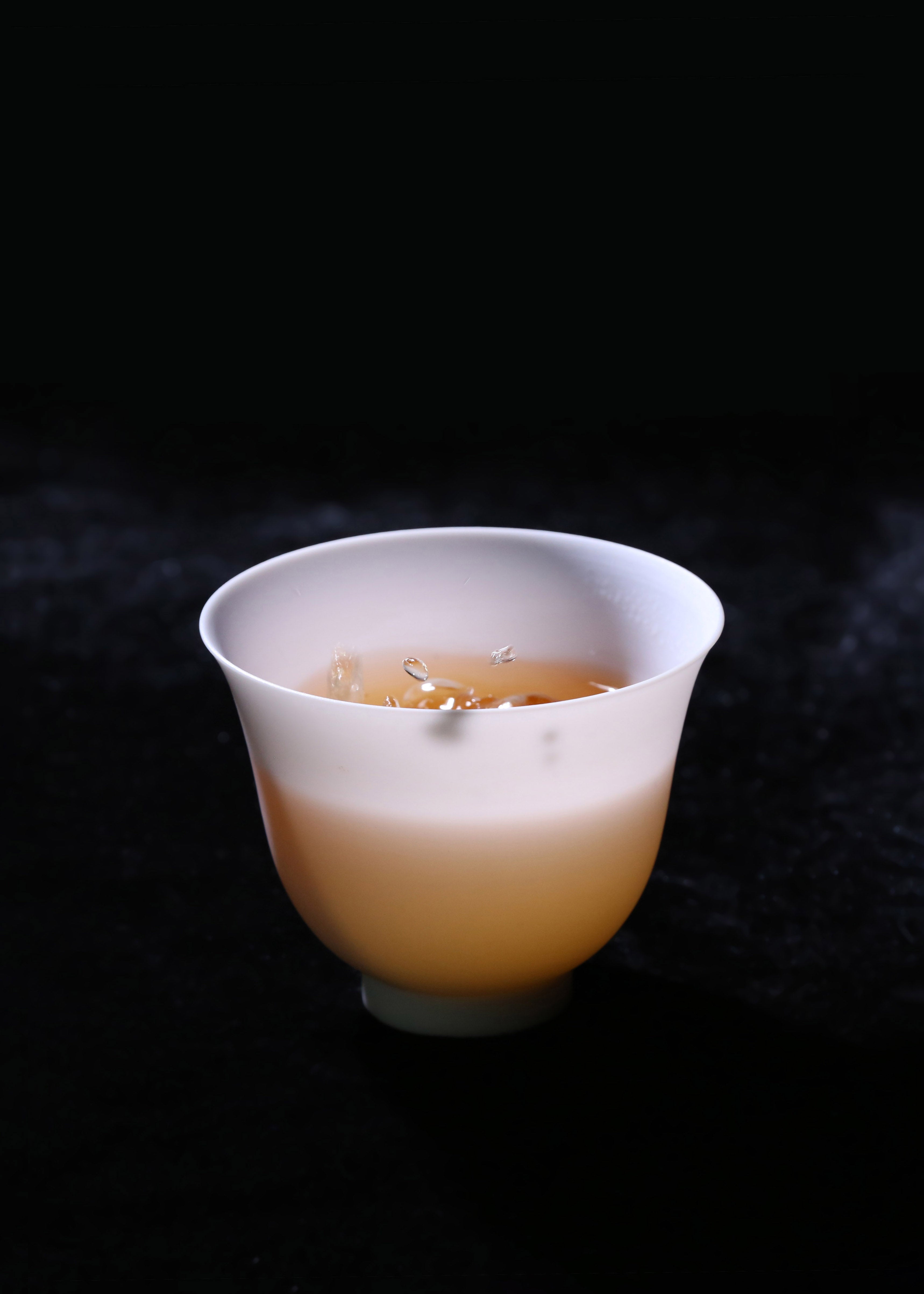
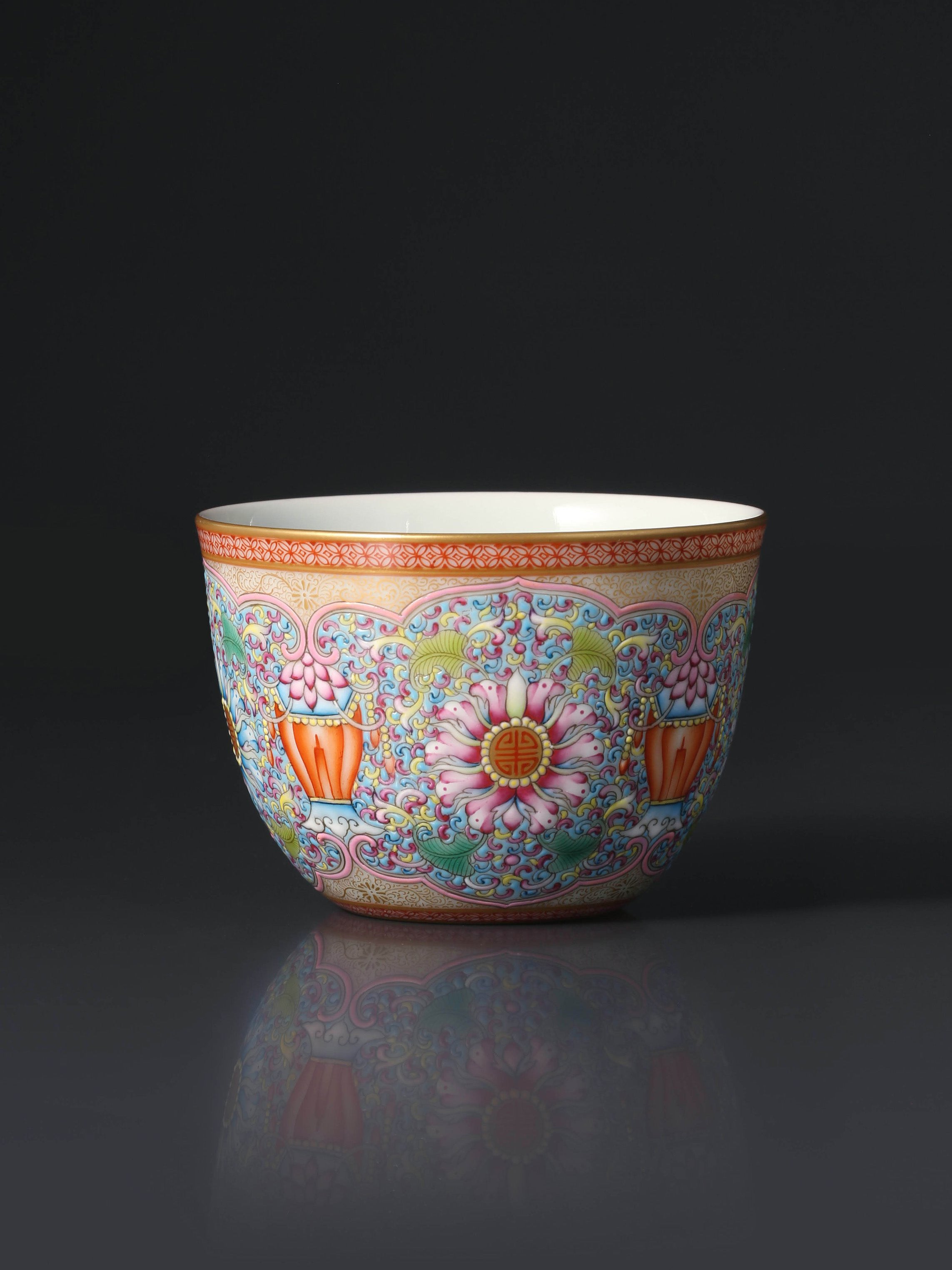
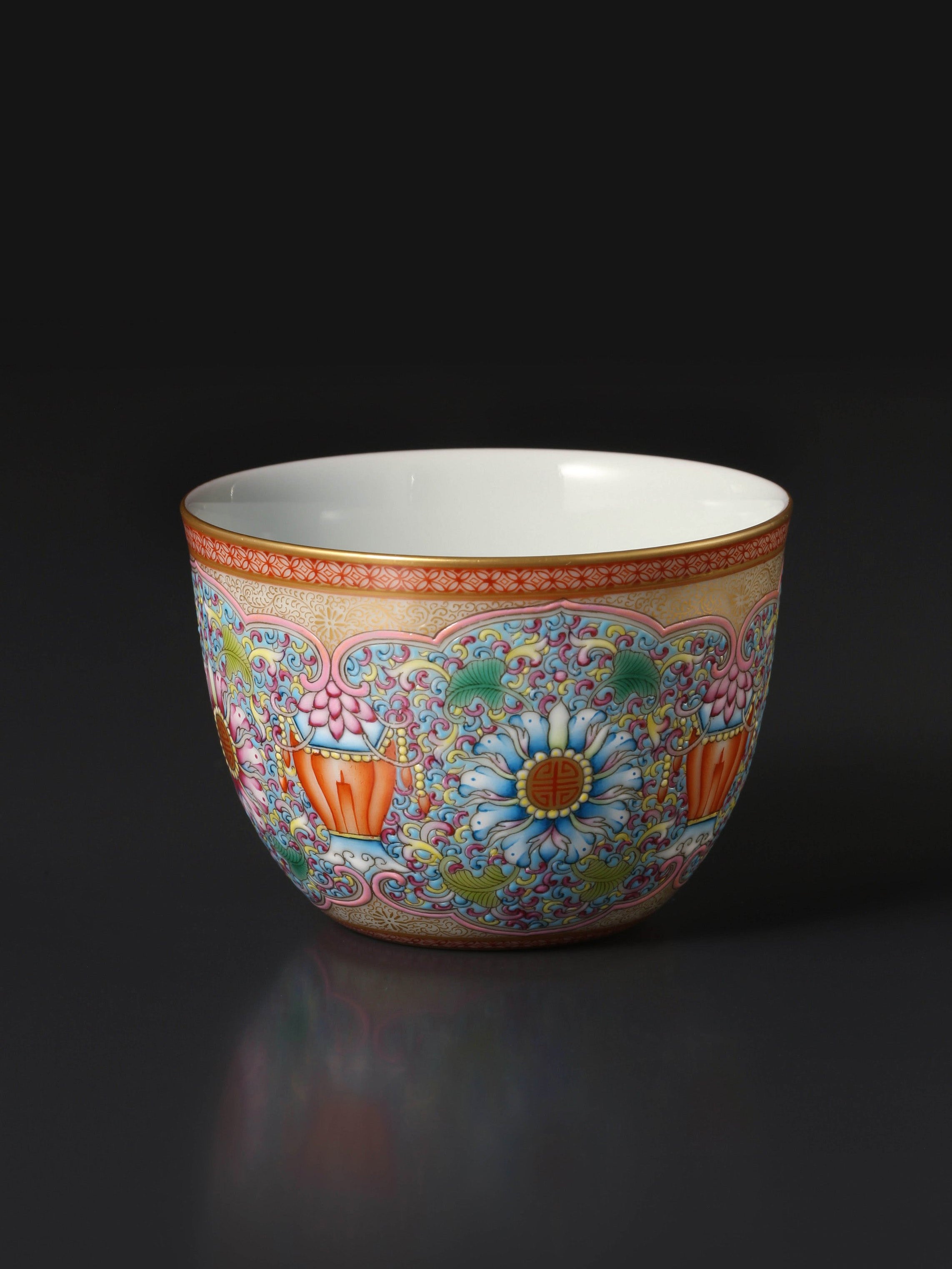
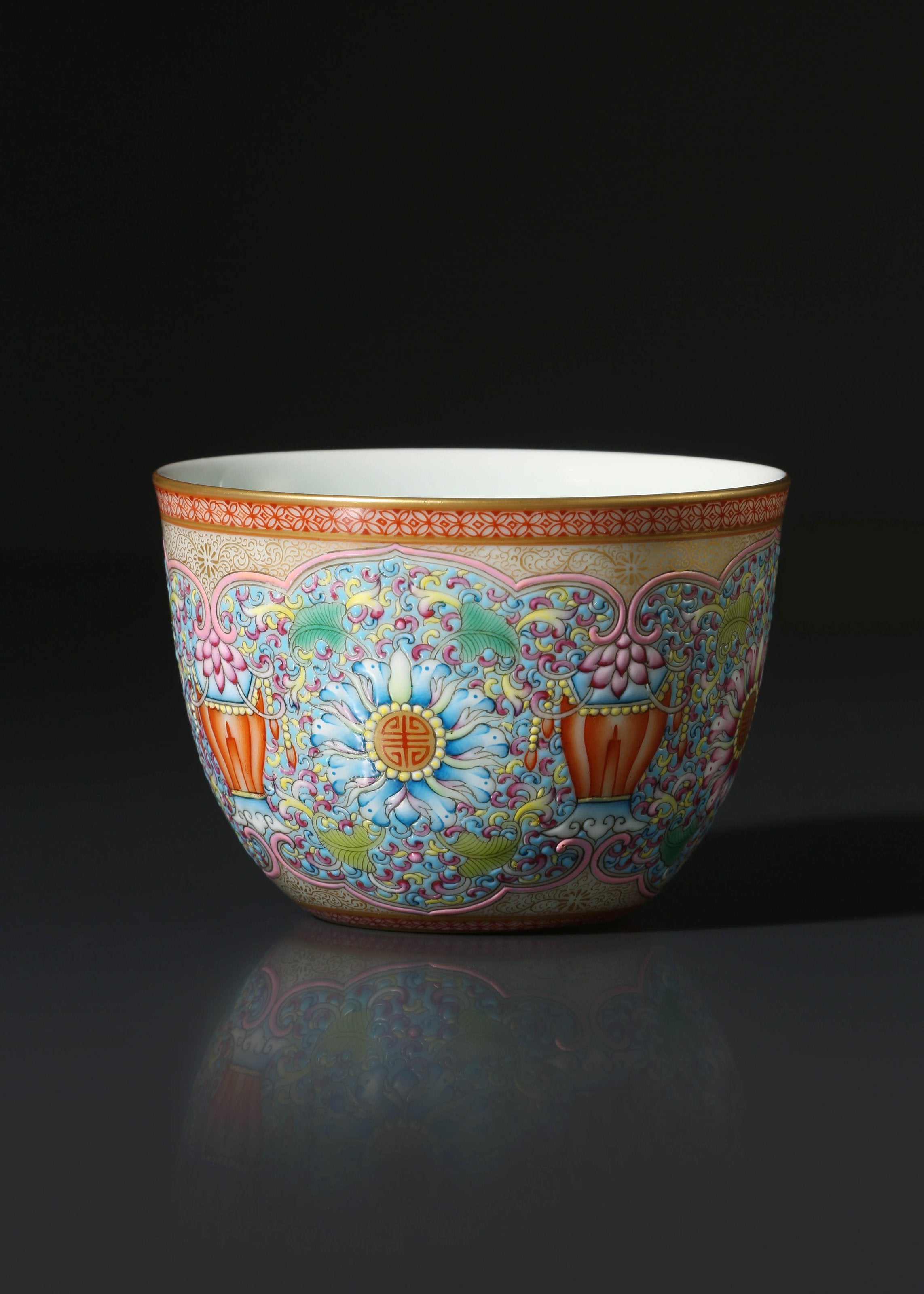
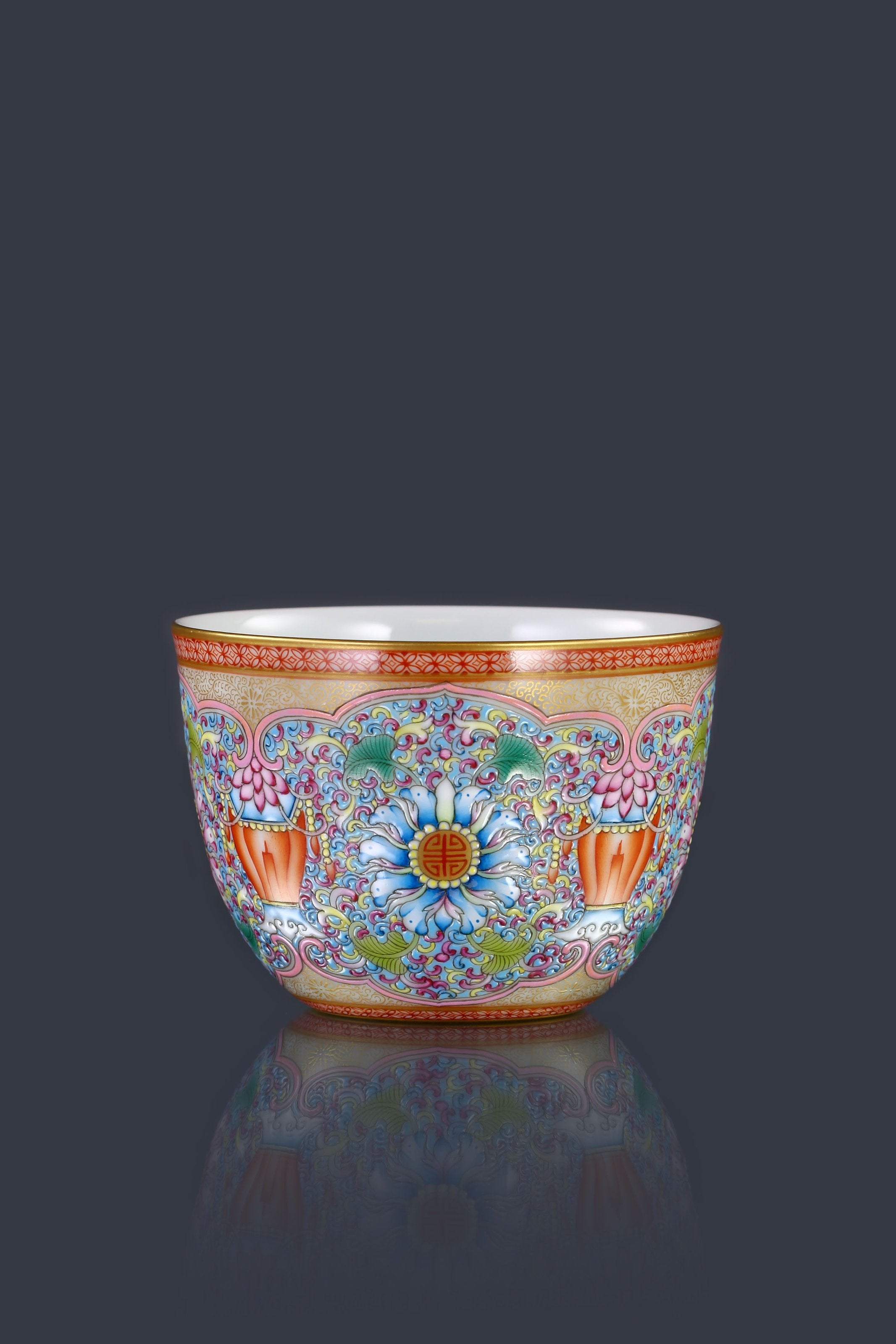
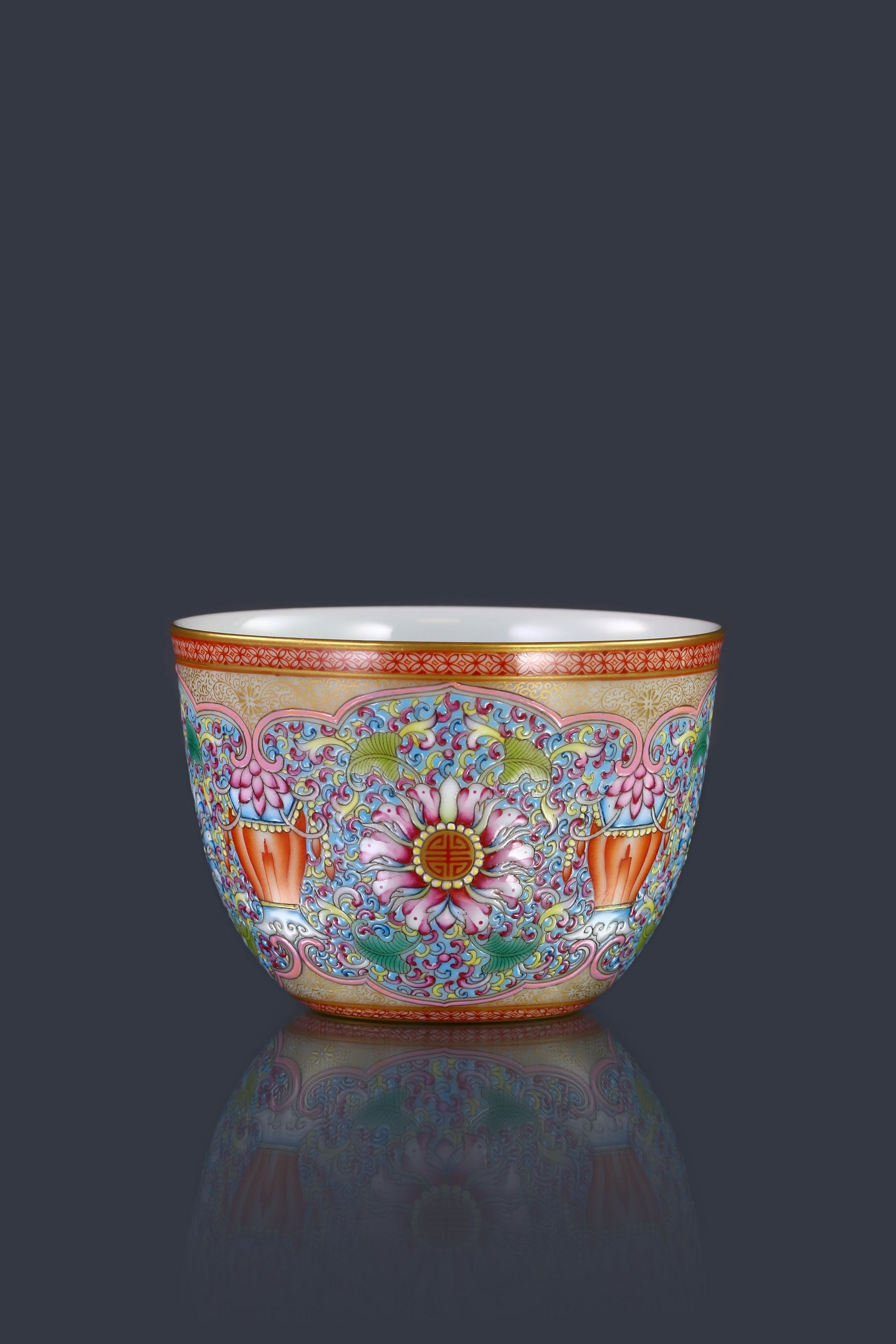
Guyuexuan Longevity Lantern Cylinder Cup
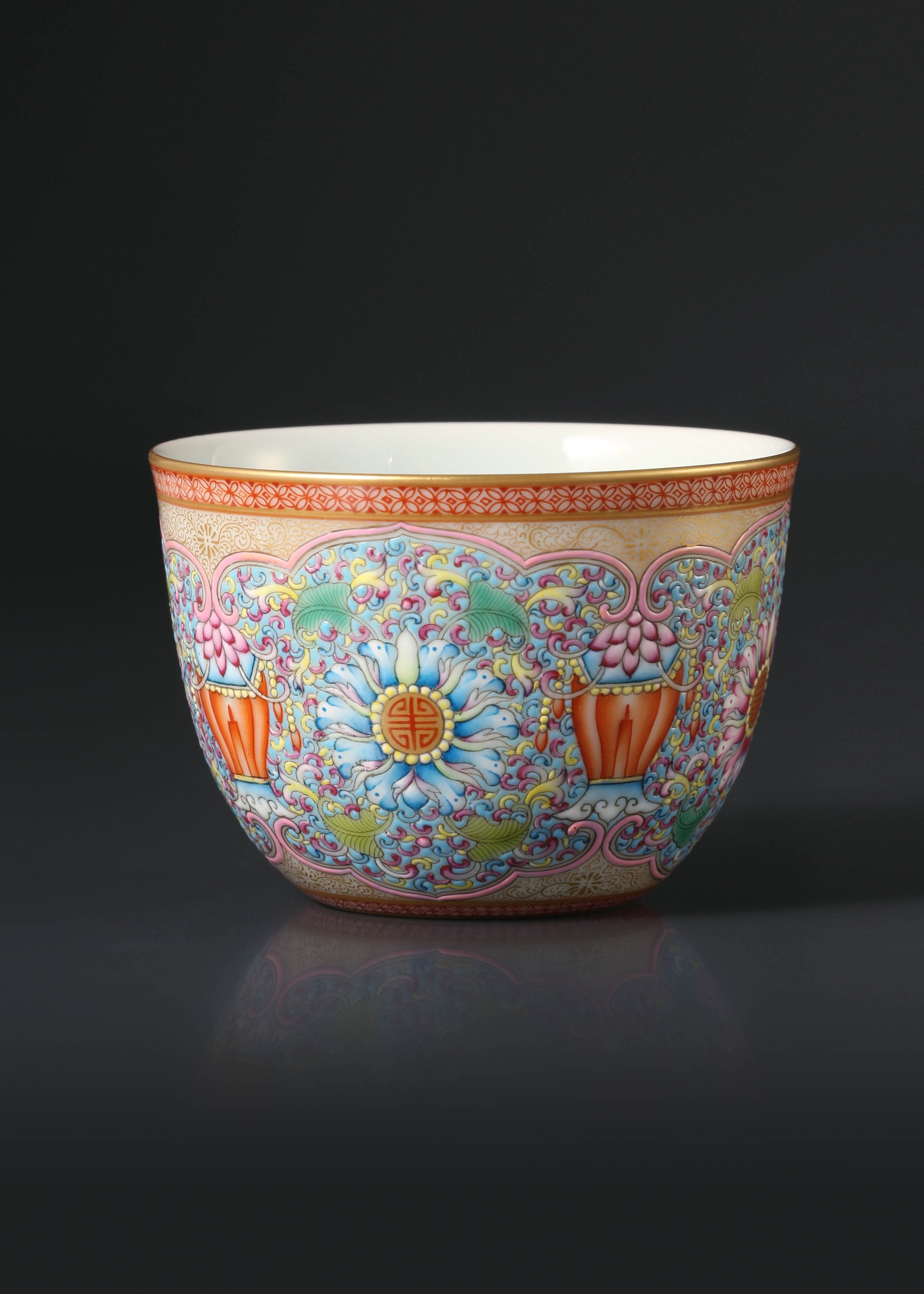
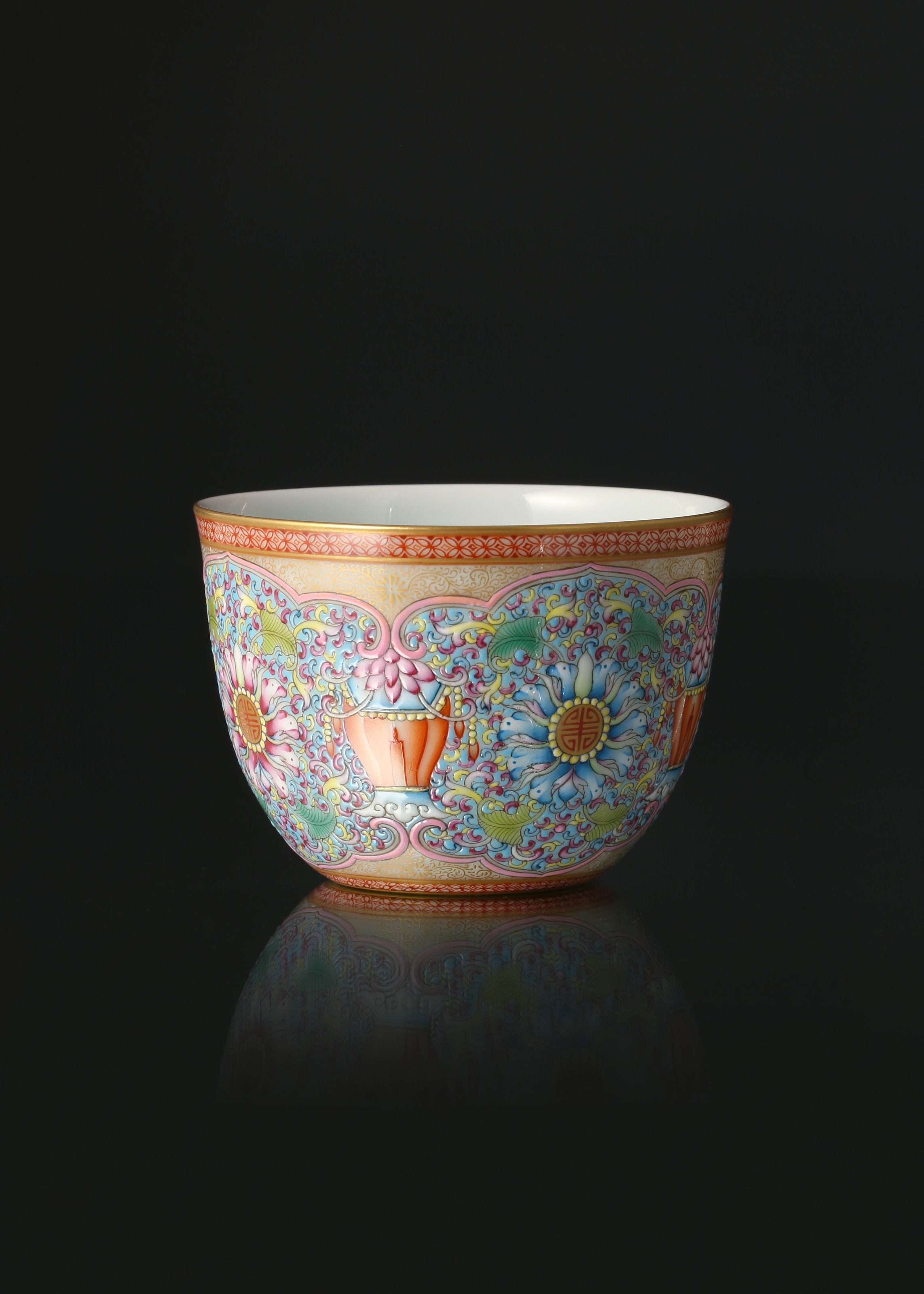
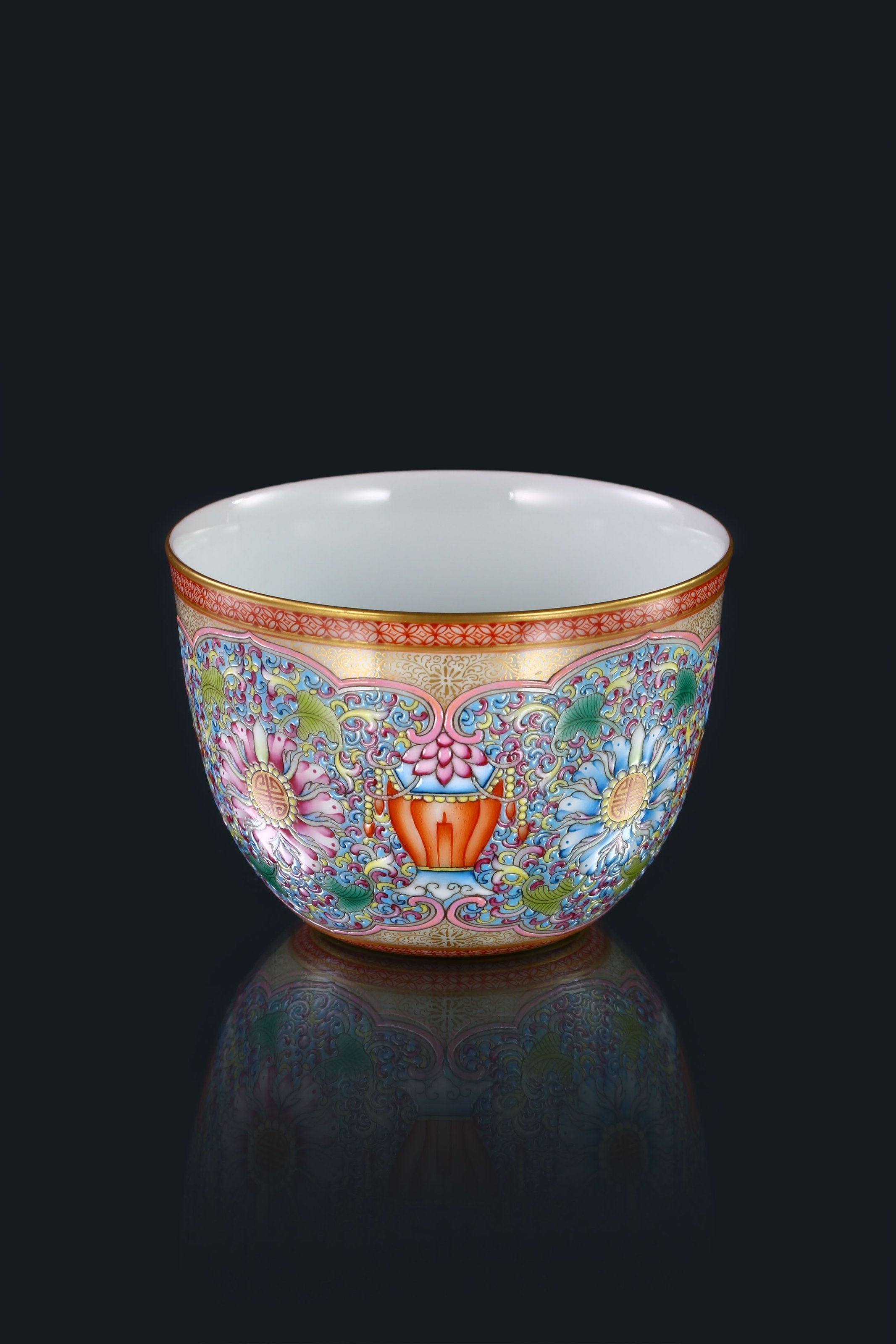
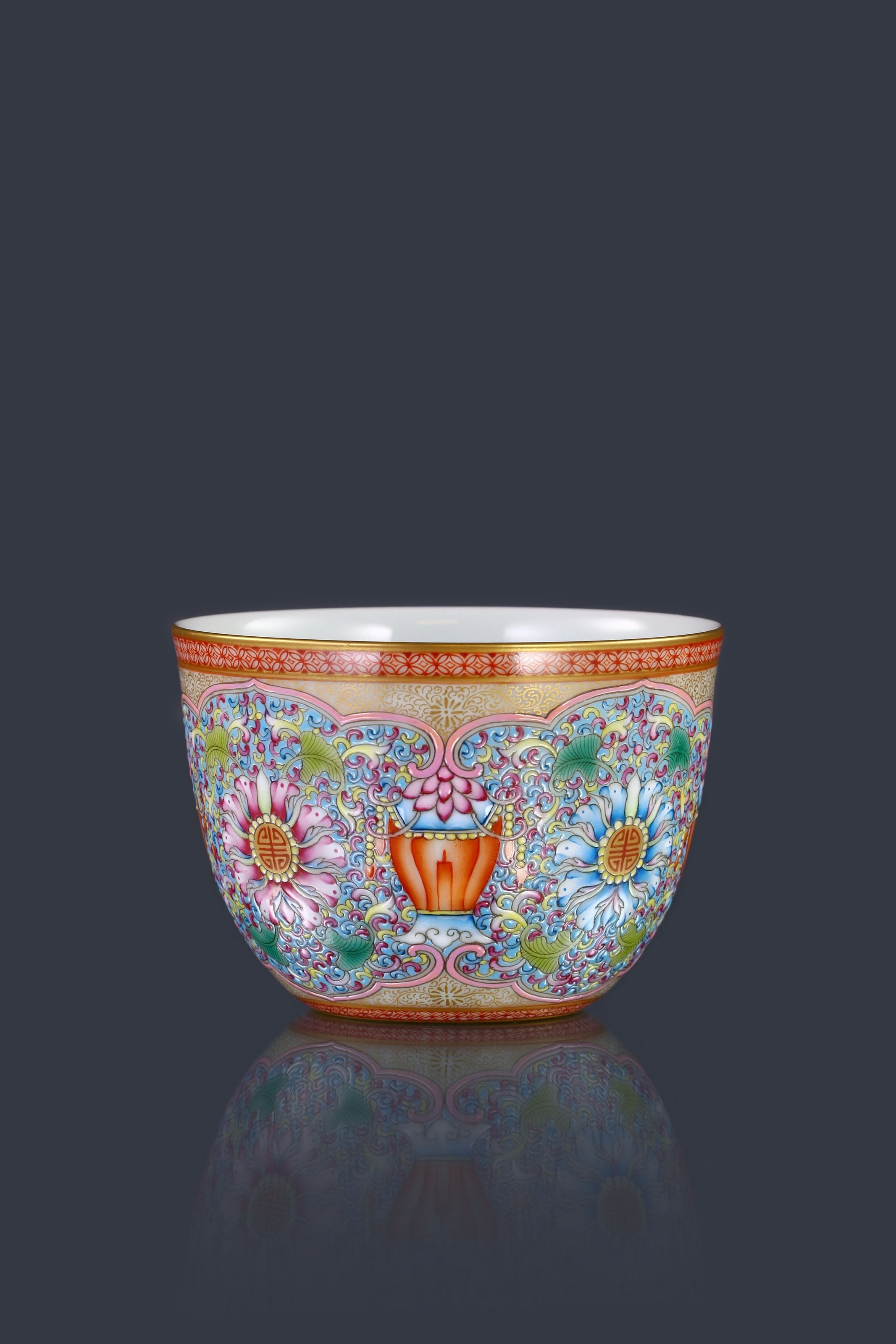
This Guyuexuan Longevity Lantern Cylinder Cup is collaboratively crafted by Master Zhang Jian, a master artisan of Jingdezhen overglaze decoration and piled‑gold technique, together with several other master craftsmen.
Among enamel porcelains, the most elaborate and intricate decorative style is known in the industry as
Guyuexuan.
The porcelain painting of this cylinder cup boasts lines as fine as silk hair — such exquisitely delicate, masterly craftsmanship that it seems to require a magnifying glass to create.
This cylinder cup is custom‑made by Zhao Qingtao, the owner of Dayatang Studio, with a slightly larger form.
Only one pair in pink and one pair in blue were produced, making this piece utterly unique. This is the blue-toned version.
Lantern Pattern
The lantern pattern is a festive and auspicious motif.
Hanging lanterns is a traditional practice to pray for more offspring and greater wealth for the family.
Lanterns are hung during Chinese festivals and joyous occasions, with the Lantern Festival celebrated on the 15th day of the first lunar month.
In many Chinese dialects, the character for “lantern” (灯) is homophonous with “male heir” (丁), so “lighting a lantern” implies “adding a male heir”.
For this reason, in some regions, it is believed that women walking under lanterns will be blessed with many children.
Scrolling Pattern
The exterior is decorated with enamel‑painted longevity characters and scrolling lotus, with distinct veins.
The lotus branches and leaves twist and curl gracefully, full of dynamism, with a splendid color scheme, and the outer wall is adorned with golden string patterns.
For its continuous, unending structure, it symbolizes endless vitality — hence the scrolling pattern is also known as the Longevity Vine.
The lantern pattern prevailed in the Ming and Qing dynasties.
The scrolling pattern originated around the Han Dynasty and flourished in the Southern & Northern Dynasties, Sui, Tang, Song, Yuan, Ming and Qing dynasties.
Enamel Porcelain
Beyond its elaborate and exquisite painting, the Guyuexuan Palace Lantern teapot and cylinder cup require four separate kiln firings to complete, with the risk of damage in each firing.
In the Qing Dynasty, enamel porcelain was originally produced exclusively for the appreciation of emperors and empresses.
Enamel is a special colored pigment made through artificial firing.
Before the 6th year of the Yongzheng reign (1728), enamel materials relied on imports from Europe.
After that period, the
Imperial Workshop of the Qing Court successfully developed more than 20 kinds of enamel pigments, marking the pinnacle of ancient Chinese polychrome porcelain craftsmanship.