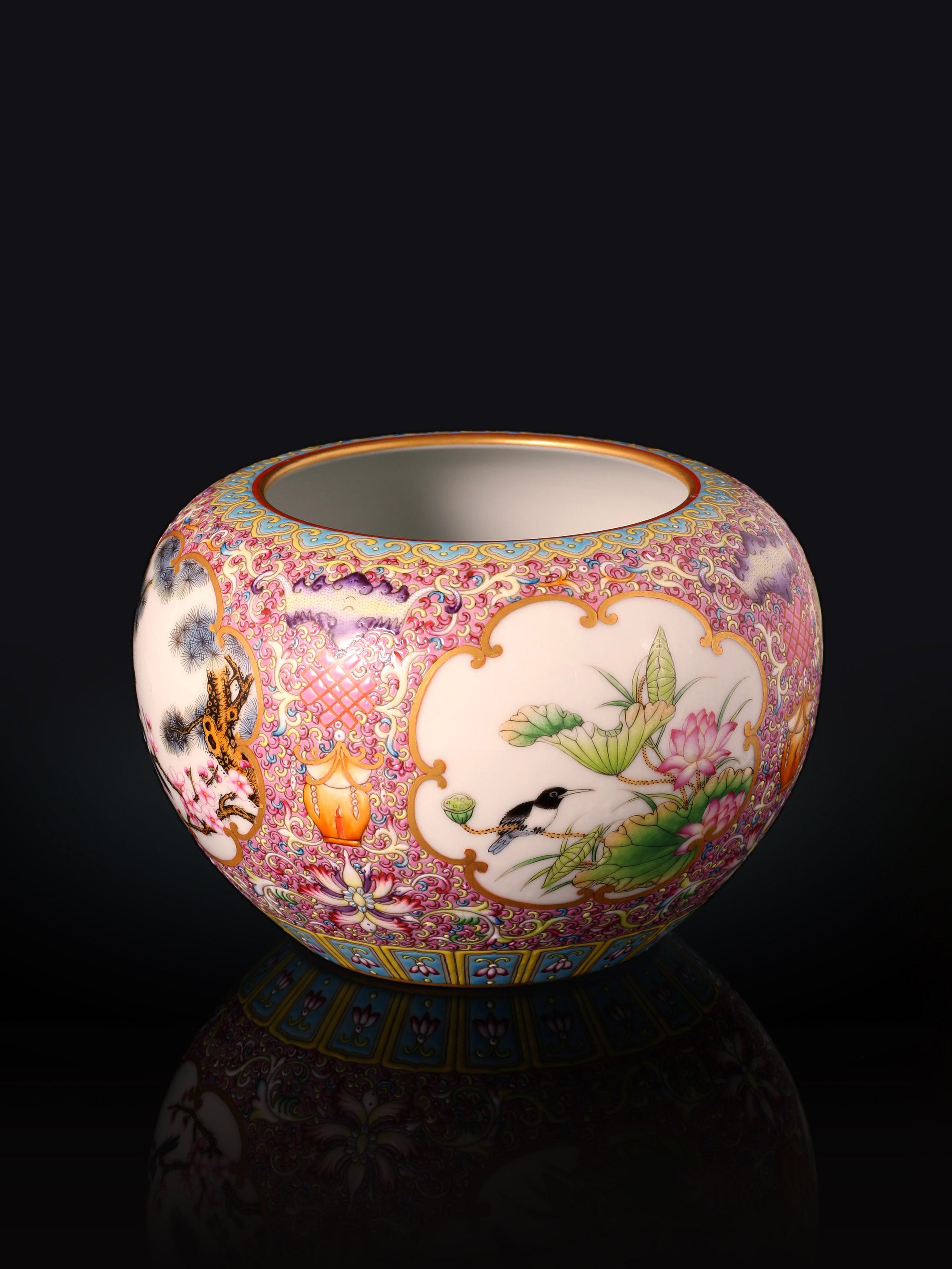
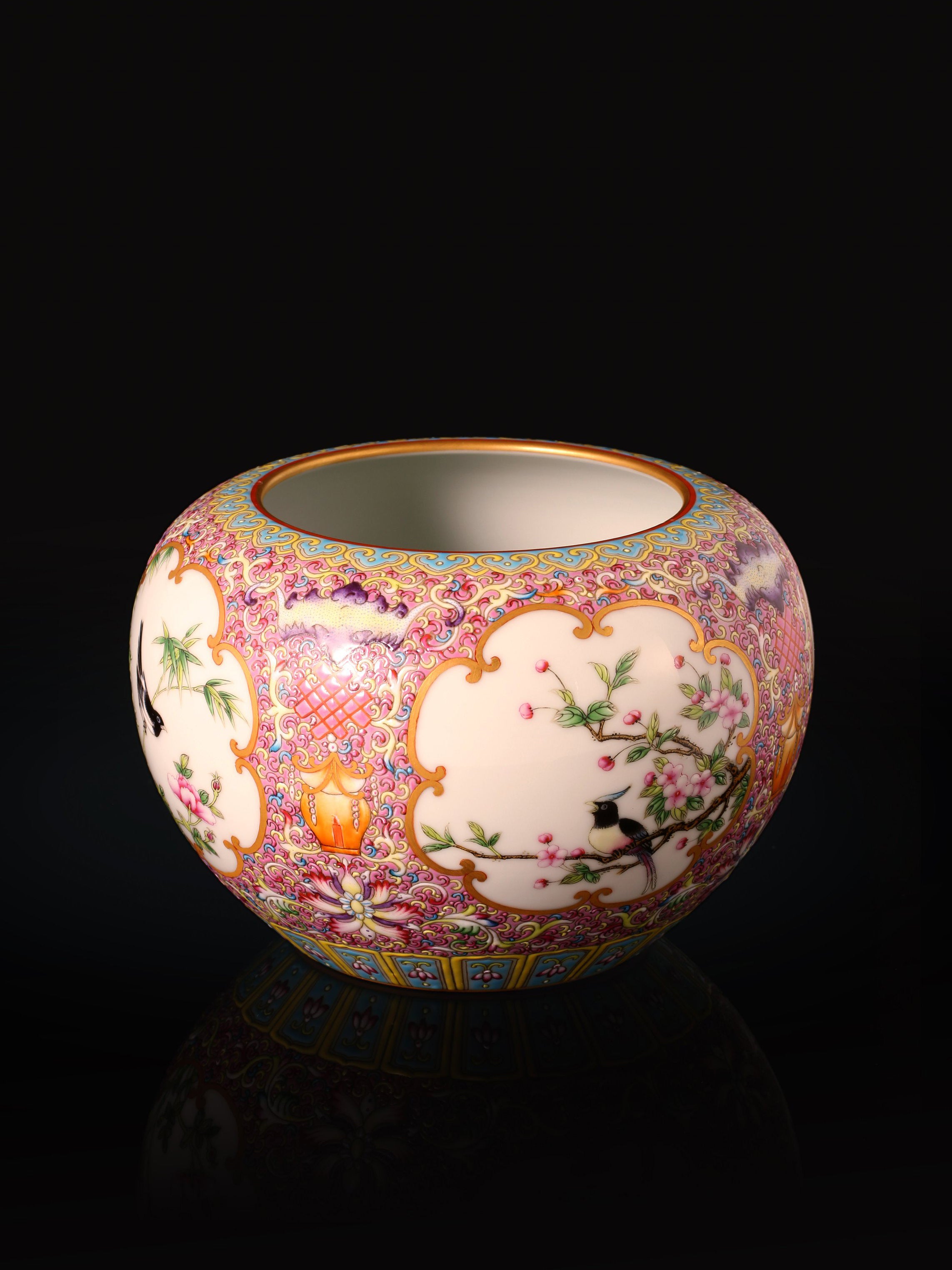
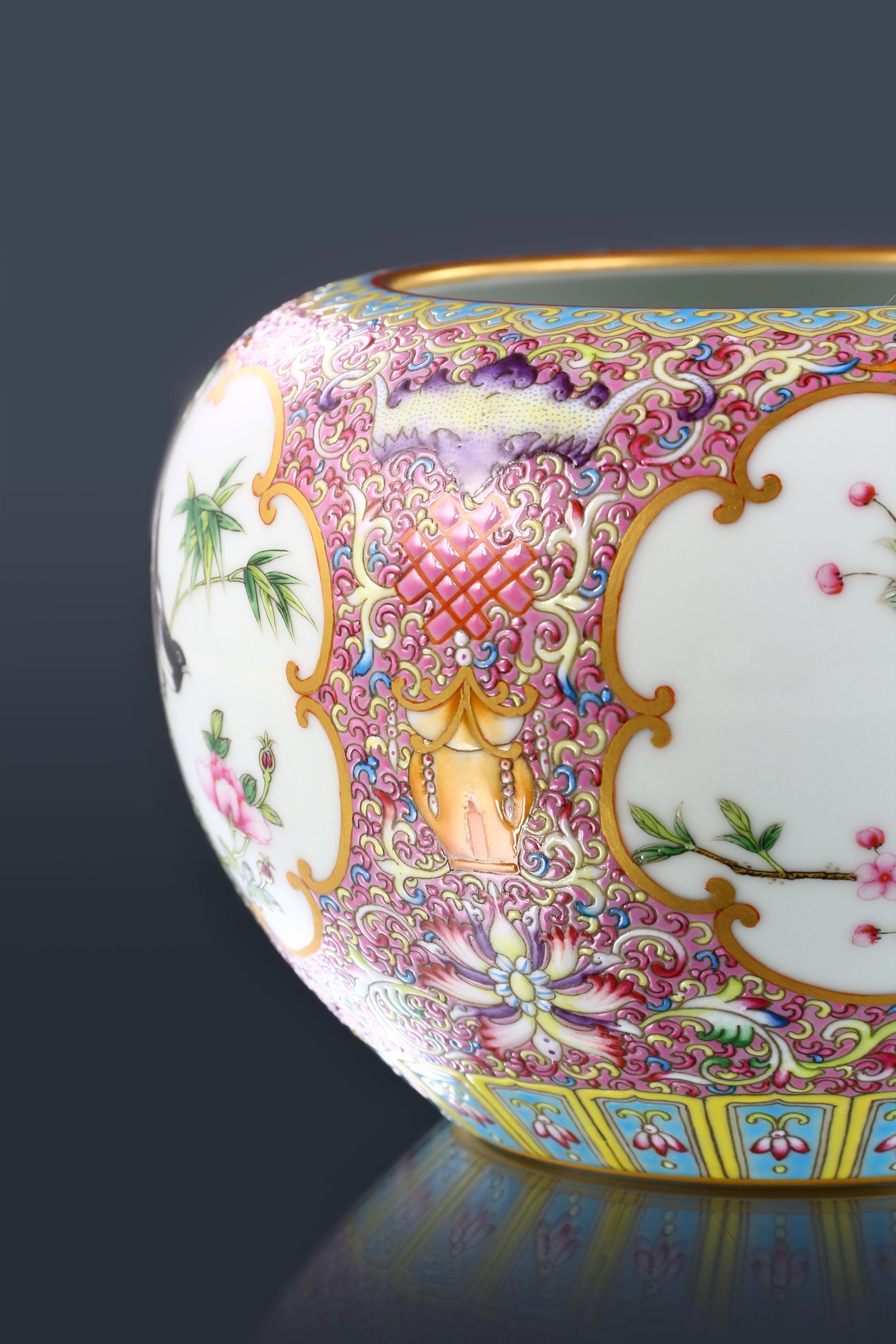
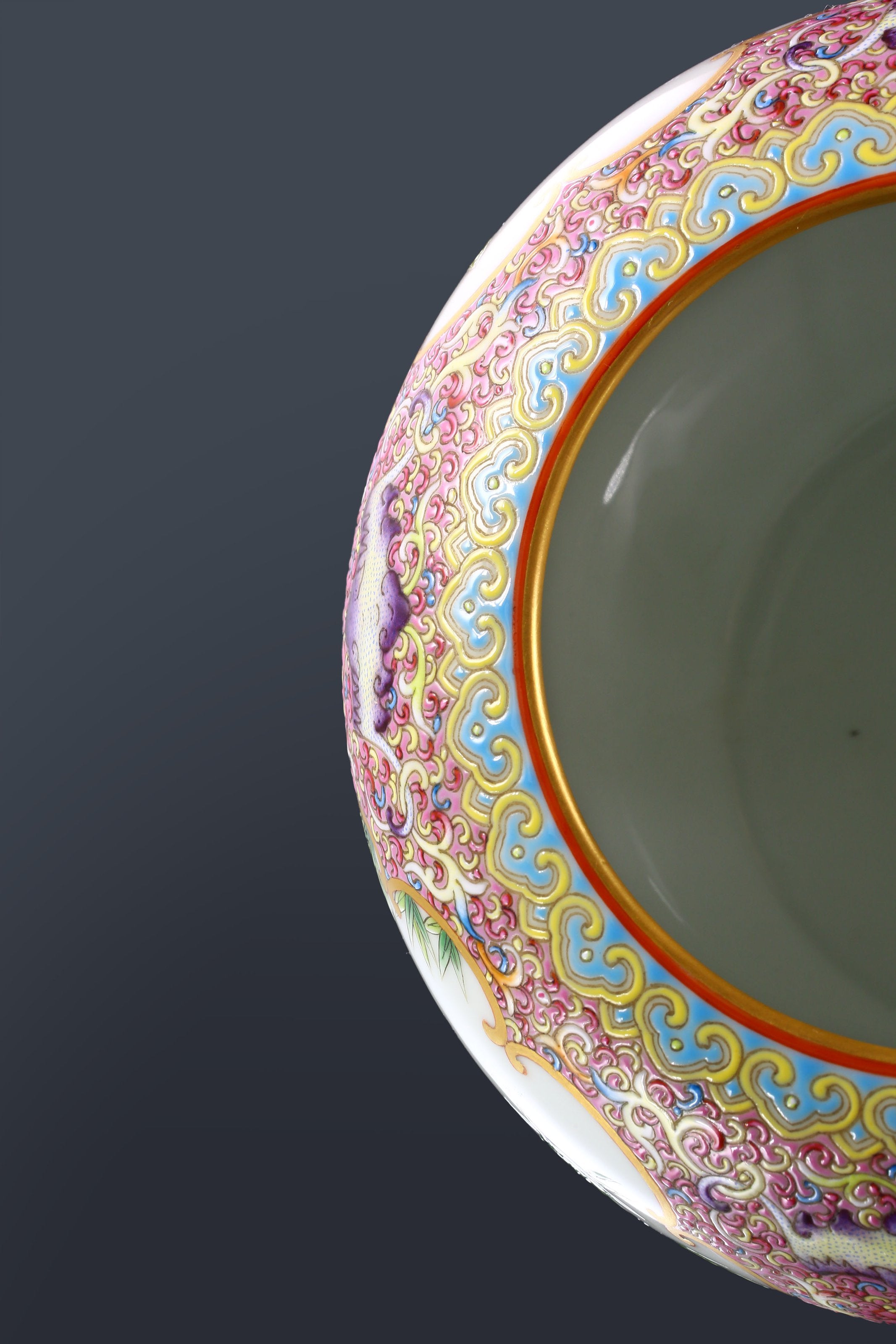
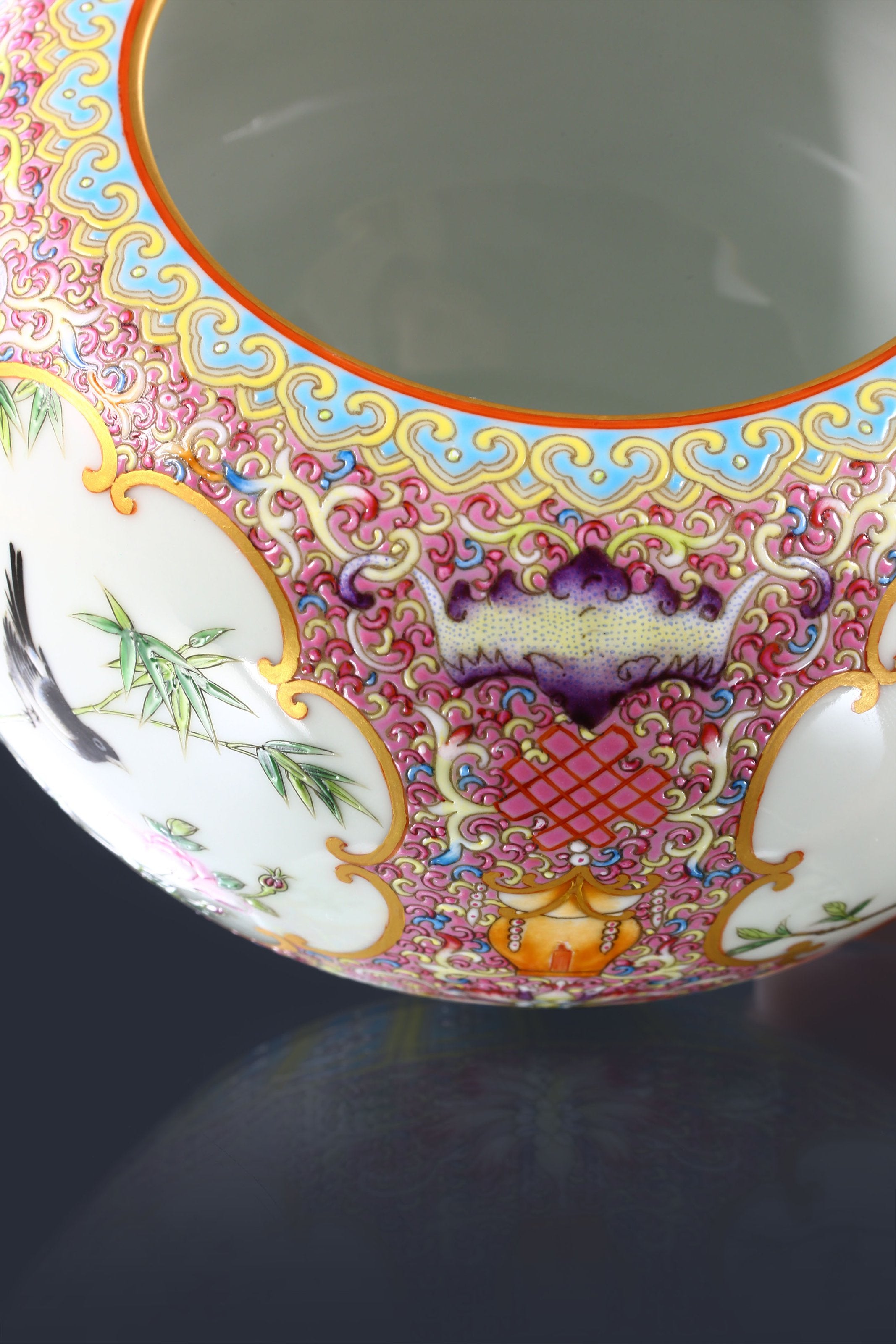
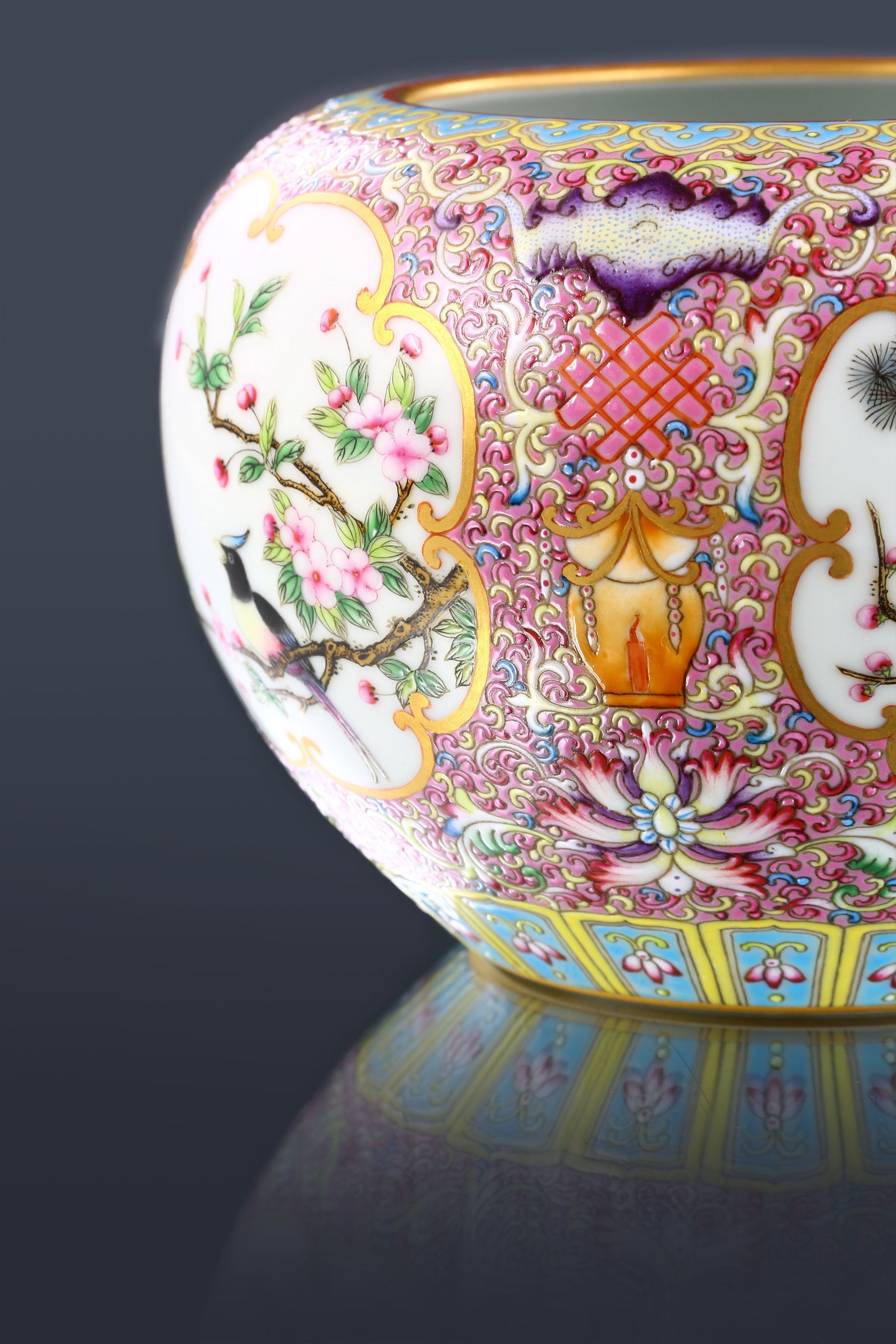
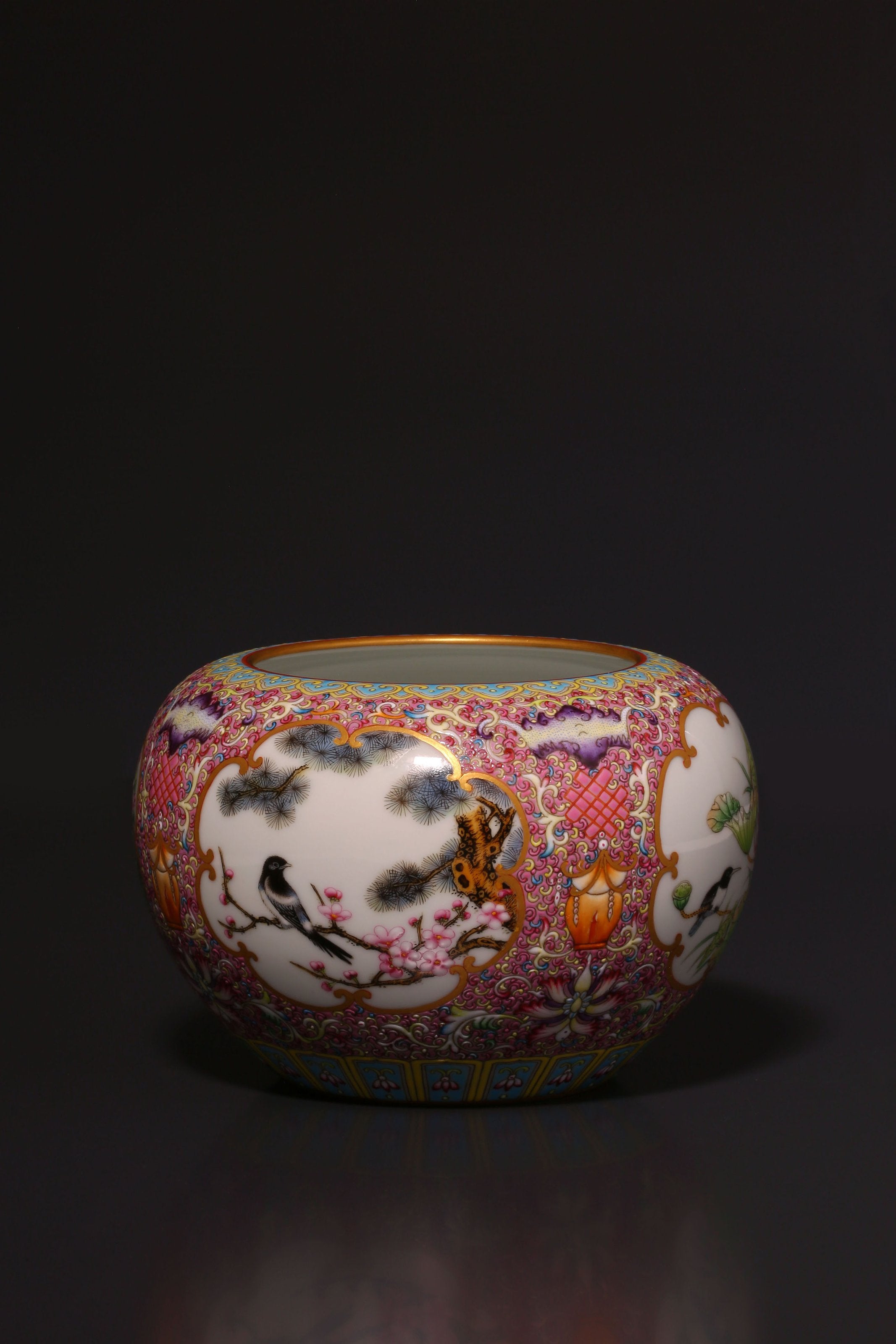
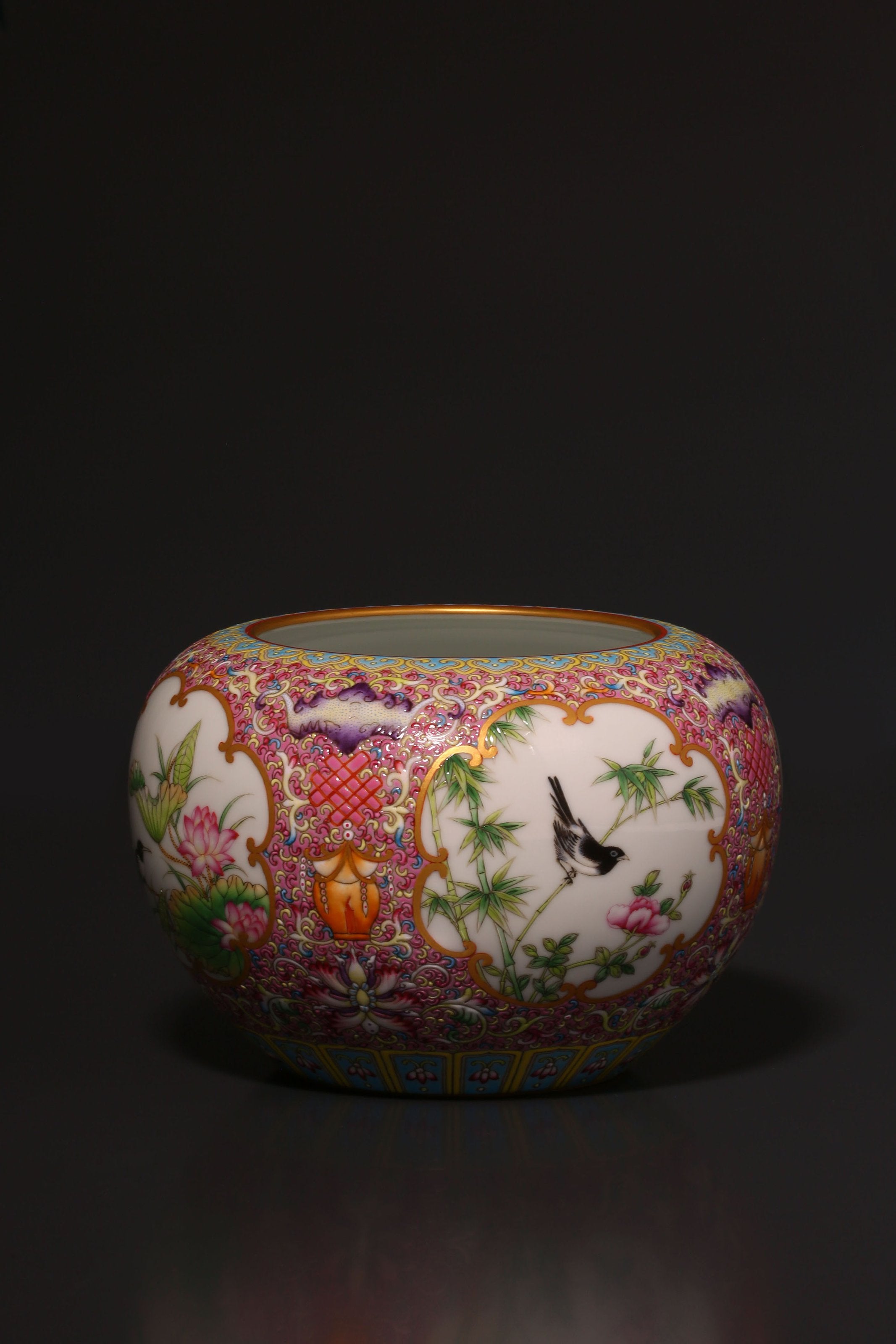
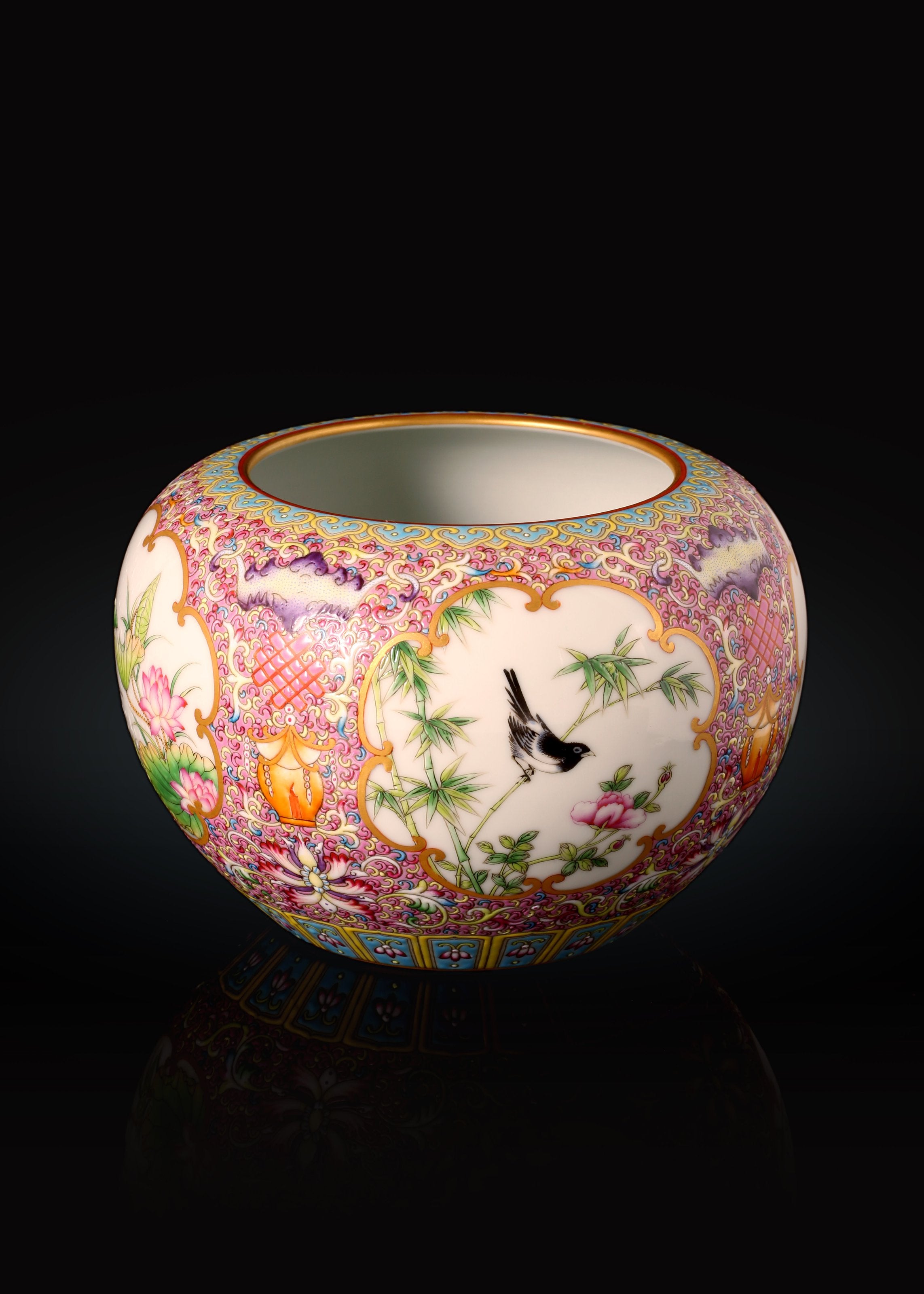
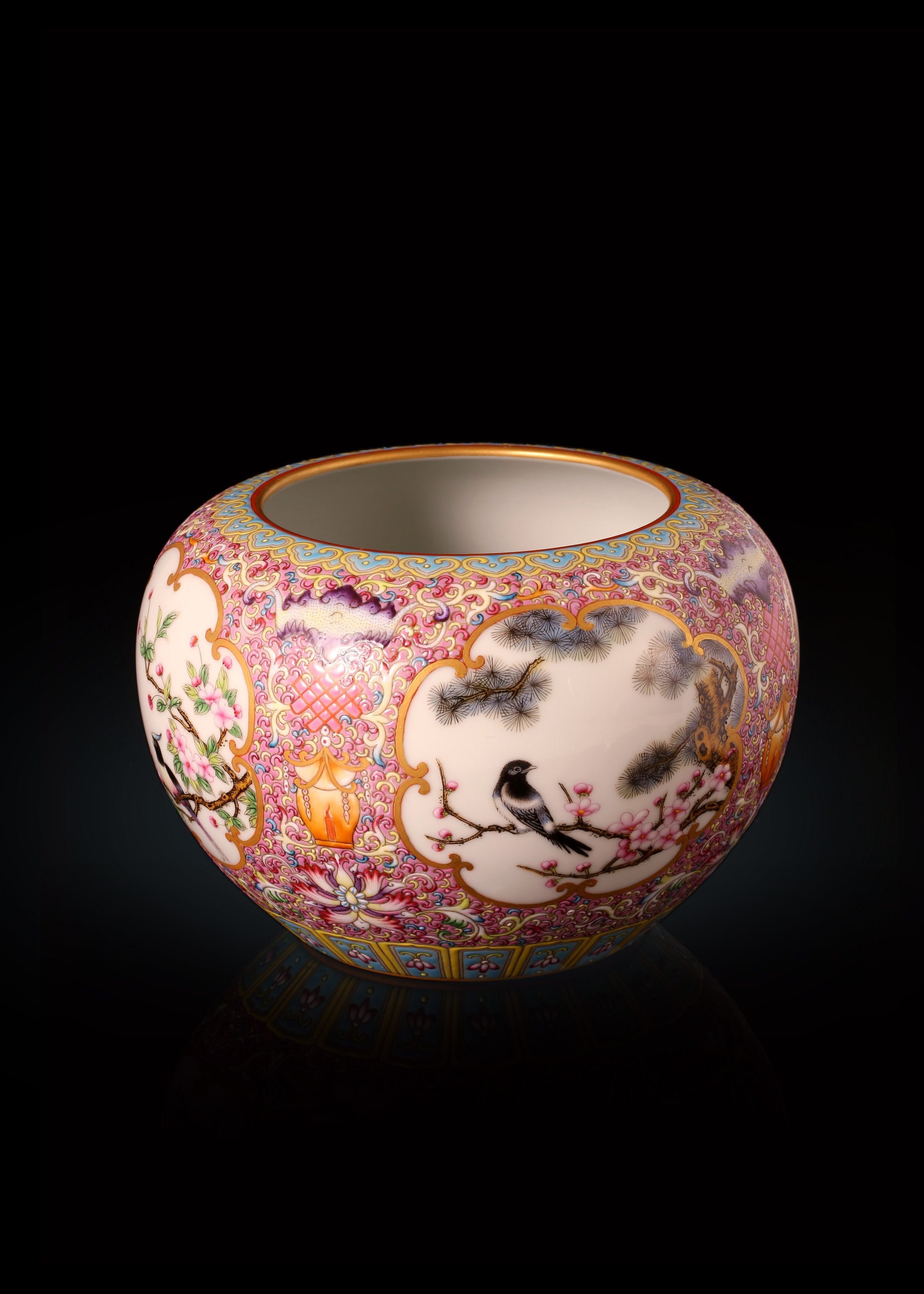
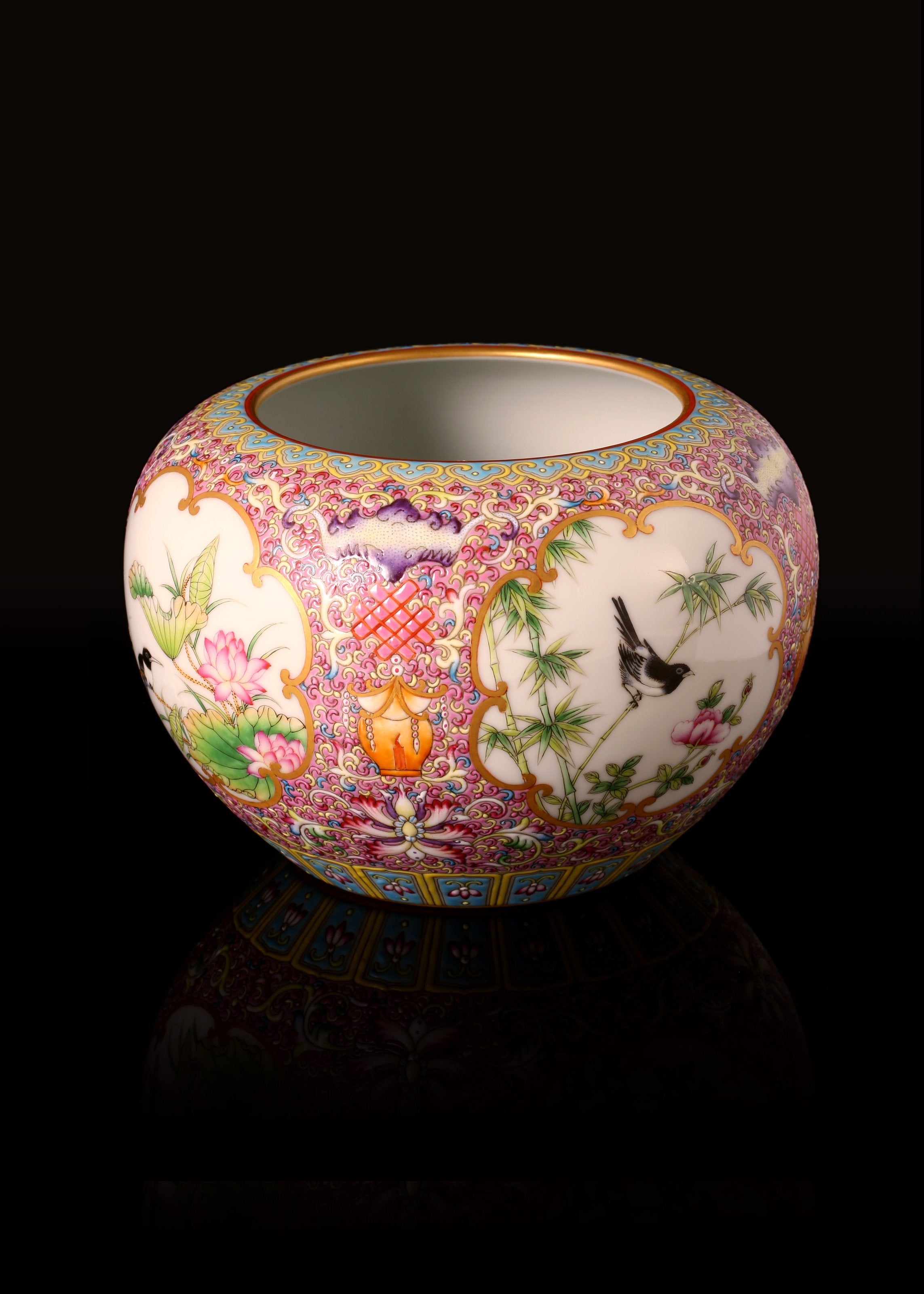
Guyue Pattern Enamel Painted Water Jar with Four Flower-and-Bird Reserve Panels
This water jar is brilliantly colored, gorgeous yet refined.
It is jointly created by a group of renowned masters, including Xu Zhijun — Intangible Cultural Heritage Inheritor of Qing Dynasty Official Kiln Famille Rose (Jingdezhen hand-painted porcelain craftsmanship), and Zhang Jian — Master of Overglaze Color and Gold-piling Craftsmanship.
It is decorated using multiple techniques: enamel painting, iron red coloring and gold piling, and requires
four separate kiln firings to complete.
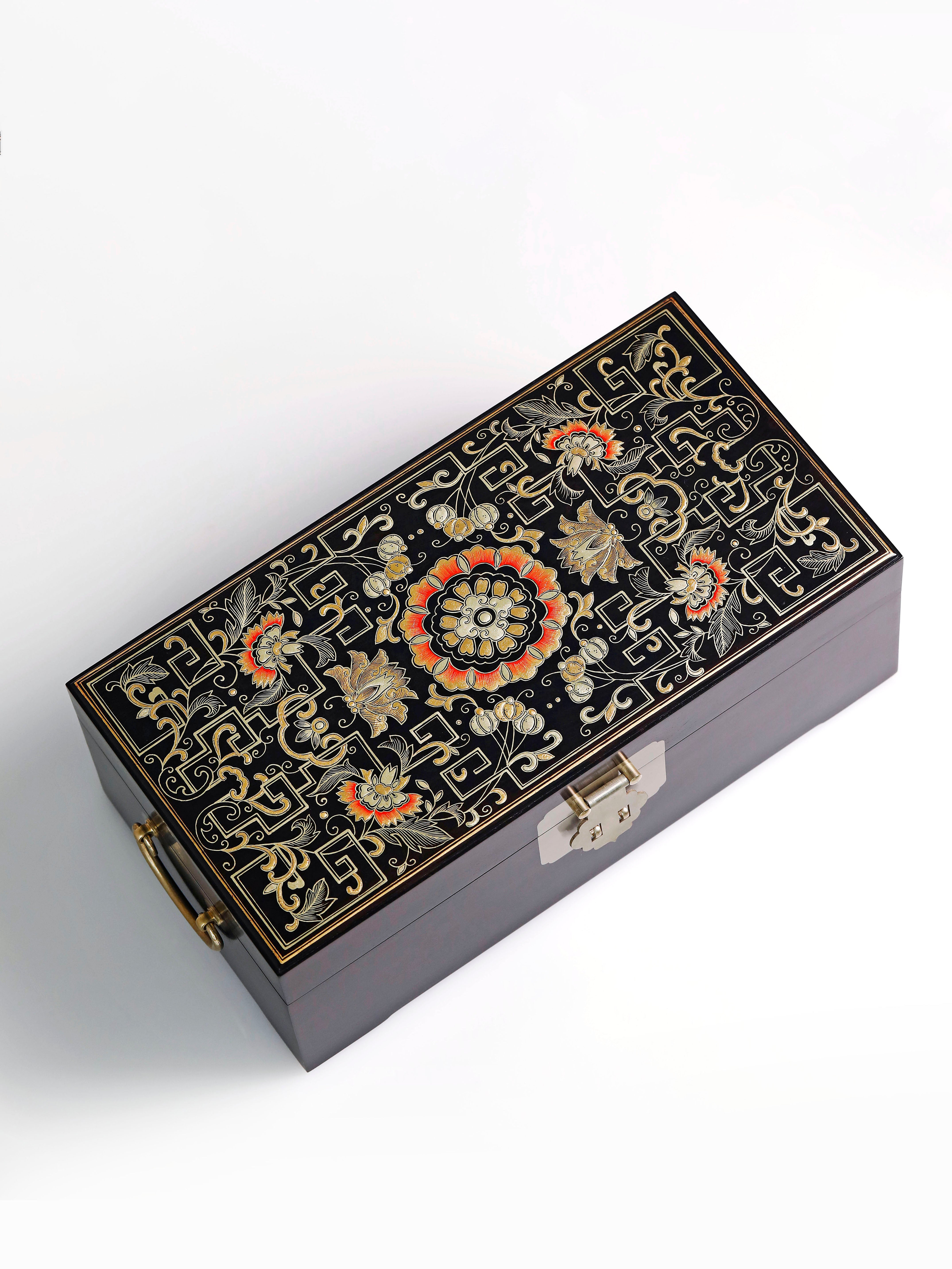
The patterns include lantern motifs, precious lotus flowers and more. In traditional Chinese art,
every pattern bears a meaning, and every meaning carries auspiciousness. The motifs are exquisitely detailed, with gentle and elegant hues that achieve perfect beauty.
Lantern Pattern
The lantern pattern is a festive decorative motif.
Hanging lanterns is a tradition to pray for family prosperity and the arrival of children.
Lanterns are hung during Chinese festivals and joyous occasions, with the Lantern Festival celebrated on the 15th day of the first lunar month.
In dialects, the word for “lantern” sounds the same as “male offspring”.
Thus, “lighting lanterns” carries the implication of “adding sons to the family”.
In some regions, it is believed that women walking under lanterns may be blessed with many children.
The lantern pattern became popular during the Ming and Qing dynasties.
Precious Lotus Flower (Baoxiang Flower)
The term “Baoxiang” originates from Buddhism, as a reverential title for the dignified countenance of the Buddha.
The Precious Lotus Flower is an ideal floral motif that symbolizes purity, dignity and grace.
It does not refer to a single real flower, but a refined artistic design synthesized and refined from elements of the lotus, peony, pomegranate and other blossoms.
The pattern originated and flourished in the Tang Dynasty, inheriting the Tang aesthetic of admiring fullness and national artistic traits.
In the Song Dynasty, it shifted from a luxurious style to a more orderly and simple one. The interlocking Precious Lotus Flower pattern also appeared in this period, with stronger dynamism.
Enamel Painted Porcelain
Beyond its intricate and delicate painting, this enamel painted water jar with four flower-and-bird reserve panels requires four kiln firings, with risks in each firing.
In the Qing Dynasty, enamel porcelain was originally made exclusively for the appreciation of emperors and empresses.
Enamel pigments are special artificially fired coloring materials.
Before the 6th year of the Yongzheng reign (1728), they had to be imported from Europe.
After 1728, the Imperial Workshop of the Qing Court was able to independently refine more than 20 kinds of enamel pigments, marking the peak of ancient Chinese polychrome porcelain craftsmanship.