
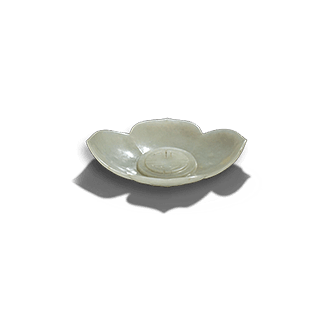
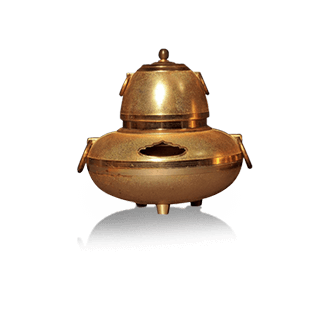


Fahua (Peacock Blue) Square Vase with Elephant Handles
Fahua (Peacock Blue) Square Vase with Elephant Handles
Fahua (Peacock Blue) Square Vase with Elephant Handles
Author: Dayatang / Tu Jinghua,ICH Inheritor of Fahua Glaze Craft
Material: Porcelain
Author: Dayatang / Tu Jinghua,ICH Inheritor of Fahua Glaze Craft
Material: Porcelain
Inheritor of Fa‑cui Glaze Formulation (Intangible Cultural Heritage): Tu Jinghua
Born in 1969 into a Jingdezhen ceramic family, Tu Jinghua is the representative inheritor of Fa‑cui glaze formulation, a municipal‑level intangible cultural heritage of Jingdezhen. He is also the only local artisan who fully masters the whole‑chain techniques for medium‑temperature Fa‑cui glaze: formulation, overglaze colouring and firing.
He apprenticed under his father in 1987; joined Jingdezhen Sculpture Porcelain Factory in 1989. Following enterprise restructuring in 1996, he founded his own studio and has specialised in medium‑temperature Fa‑cui‑glaze ceramic creation ever since.
Lineage: Grandfather Tu Yixin, a glaze‑formulating master of the Republican era, who later worked at the Ceramics Research Institute of the Ministry of Light Industry. Father Tu Jincai, senior artisan at Jingdezhen Sculpture Porcelain Factory.
Technical Features
Hand‑poured glaze and overglaze colouring applied onto pre‑fired biscuit bodies, followed by secondary firing.
Firm bonding between body and glaze. The glaze surface develops fine fish‑roe‑pattern crackle.
Bright and vivid glaze tone with thick, mellow and elegant glaze layer, marked by strong vitreous luster, offering great visual delight.
Traditionally, medium‑temperature Fa‑cui glaze was mainly used to decorate classical‑style ceramics. While inheriting traditional craftsmanship, Tu Jinghua devotes himself to integrating Fa‑cui glaze with modern art ceramics to promote this craft. In 2014, he executed glaze decoration for Chang’e Flying to the Moon by Master Liu Yuanchang and Crowing at Dawn by provincial‑level ICH inheritor Chen Peihuo, earning recognition from industry experts. He also appeared in the documentary Crafting Porcelain with Devotion — The Seventy‑two Procedures of Jingdezhen Porcelain‑making, bringing medium‑temperature Fa‑cui glaze to wider audiences.
About Fa‑cui Glaze
Fa‑cui is a splendid low‑temperature copper‑coloured glaze, named after peacock plumage. The green‑toned variant is known as Peacock‑Green glaze, while the blue‑toned one is Peacock‑Blue glaze. Other aliases include Jade‑Green glaze, Fa‑lan glaze and Ji‑cui glaze. Its brilliant lustre gave rise to the Fa‑hua decorative technique, greatly enriching China’s ceramic repertoire.
Peacock‑Blue glaze originated in West Asia. Pottery vases unearthed from the tomb of Liu Hua of the Five‑Dynasties Min Kingdom represent the earliest surviving imported examples in China. Domestic production began in the Song Dynasty. By the early Ming, the technique matured: glaze was applied to biscuit bodies and refired at low temperature, demanding extraordinary craftsmanship.
Pure & Distant · Radiance along the Silk Road
During the Tang‑Song period, West‑Asian Peacock‑Blue glaze spread to central China via trade and was widely produced in folk kilns of the Jin and Yuan dynasties. Outstanding surviving pieces of blue‑ground black‑painted wares from the Cizhou‑yao kiln‑complex remain extant. Chinese craftsmen absorbed West‑Asian inspiration in the Tang and achieved indigenous production in the Song. Xuande‑period official‑kiln Peacock‑Blue wares of the Ming are extremely rare, with very few intact examples preserved.
Blossoming in the Qing · Perfection Achieved
Early‑to‑mid Qing marks a golden age of Chinese porcelain‑making. After a late‑Ming decline, Peacock‑Blue glaze flourished once more under the Kangxi Emperor, reaching another creative peak. Kangxi‑era glazes show wide tonal variation, ranging from deep lush green‑blue to pale translucent shades. More diverse vessel shapes appeared in the Yongzheng‑Qianlong reigns. Porcelain manufacture gradually declined after the mid‑Qing.
Serene & Noble · Favourite among Collectors
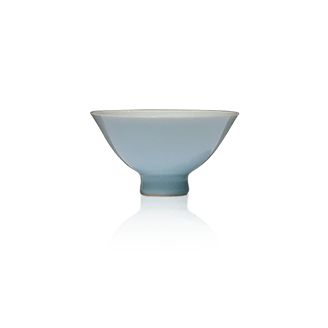
Peacock‑Blue is widely admired by collectors for its sky‑after‑rain hue. As a low‑temperature glaze, perfect uniformity is hard to achieve. Fine crackle, referred to as “fish‑roe crackle” by the inheritor, frequently appears. Glaze pooling creates deep ocean‑like tones with lasting aesthetic appeal.
Traditional pouring allows natural glaze flow, producing thinner upper layers and thicker lower layers on ceramic bodies. All coloured glazes used by Tu Jinghua are hand‑formulated. Hand‑made processes yield unique firing results; every piece is one‑of‑a‑kind.
Three defining features of Fa‑cui glaze: bright verdant colour; translucent clean glaze layer with few bubbles or crystallised impurities; pervasive fine fish‑roe crackle. Its production is complex: biscuit bodies are high‑temperature‑fired first, then glazed and refired at medium temperature. Low yield renders such wares highly prized by collectors.
Numerous ancient ceramic techniques faded into history. By retrieving raw materials and ancient procedures, modern artisans revive lost craft brilliance. Glaze formulation remains highly specialised, unfamiliar even to seasoned collectors. Beyond superficial observation of crackle and glaze appearance, reviving forgotten skills unlocks the mysteries of Fa‑cui glaze — a mission Tu Jinghua pursues through hands‑on practice.
Nomenclature of the Gu‑shaped Flower Vase
Based on artefact forms and textual records, Northern‑Song scholar Li Gonglin named a type of bronze ritual vessel with flared mouth, slender body and tall foot as gu. Lü Dalin adopted this designation in his Illustrated Antiquities, and the term persisted for over a thousand years. Nevertheless, no Shang‑Zhou excavated vessel bears an original self‑inscription reading “gu”. In 2009, the Western‑Zhou bronze Nei‑Shi Bo Tong was unearthed in Xi’an. Its shape matches the Song‑defined “gu”, yet its cast inscription names it tong. The text records King Cheng’s libation gift and ritual casting, corroborating the “tong‑mao” passage in Book of Documents · Gu Ming and resolving long‑standing questions on ritual‑vessel nomenclature. Though scholarship has reassessed Song‑dynasty antiquarian naming conventions, archaeologists still conventionally retain the term “gu”.

Frequently asked questions
Use the FAQ section to answer your customers' most frequent questions.
Order
Yes, we ship all over the world. Shipping costs will apply, and will be added at checkout. We run discounts and promotions all year, so stay tuned for exclusive deals.
It depends on where you are. Orders processed here will take 5-7 business days to arrive. Overseas deliveries can take anywhere from 7-16 days. Delivery details will be provided in your confirmation email.
You can contact us through our contact page! We will be happy to assist you.