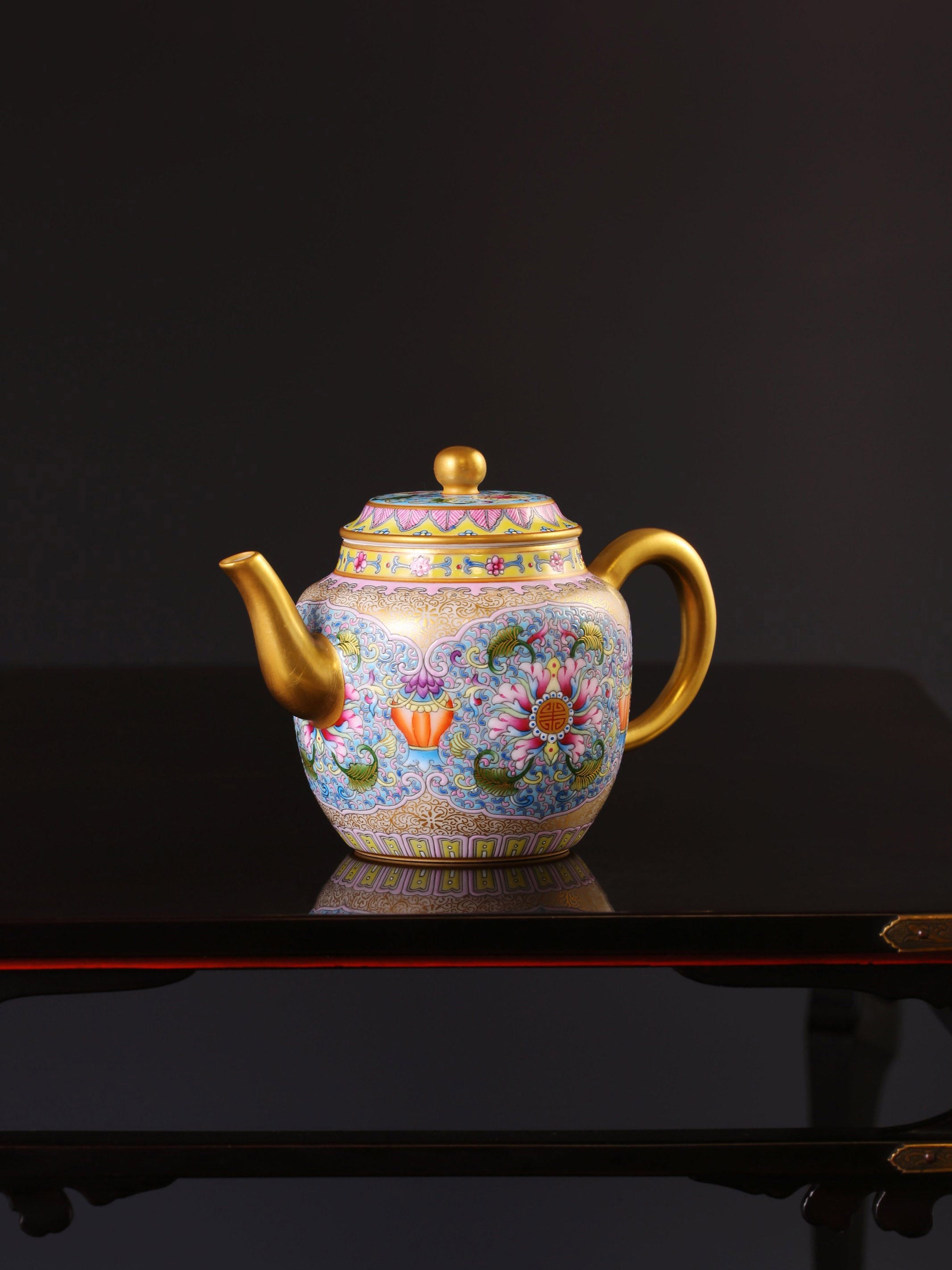
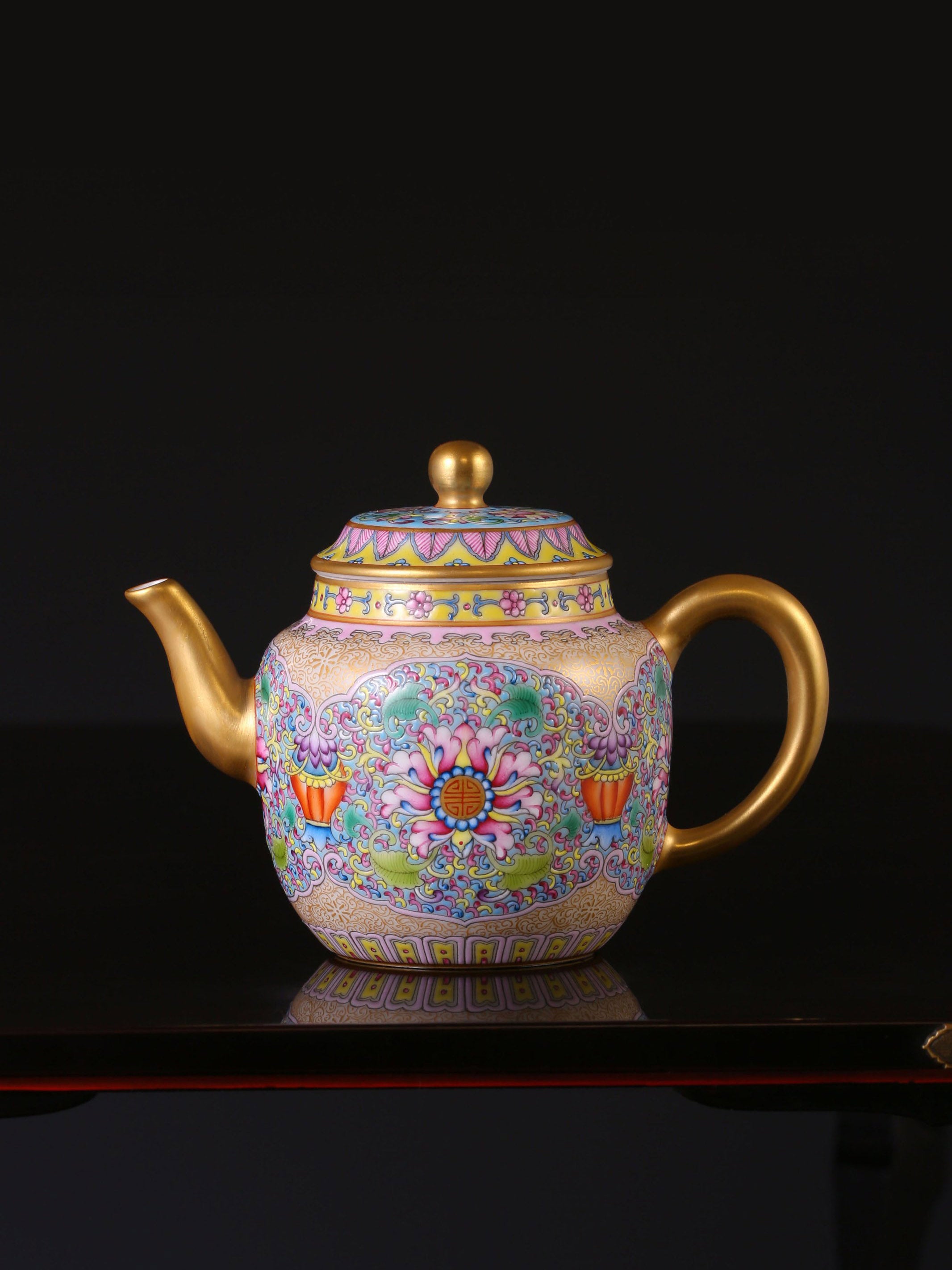
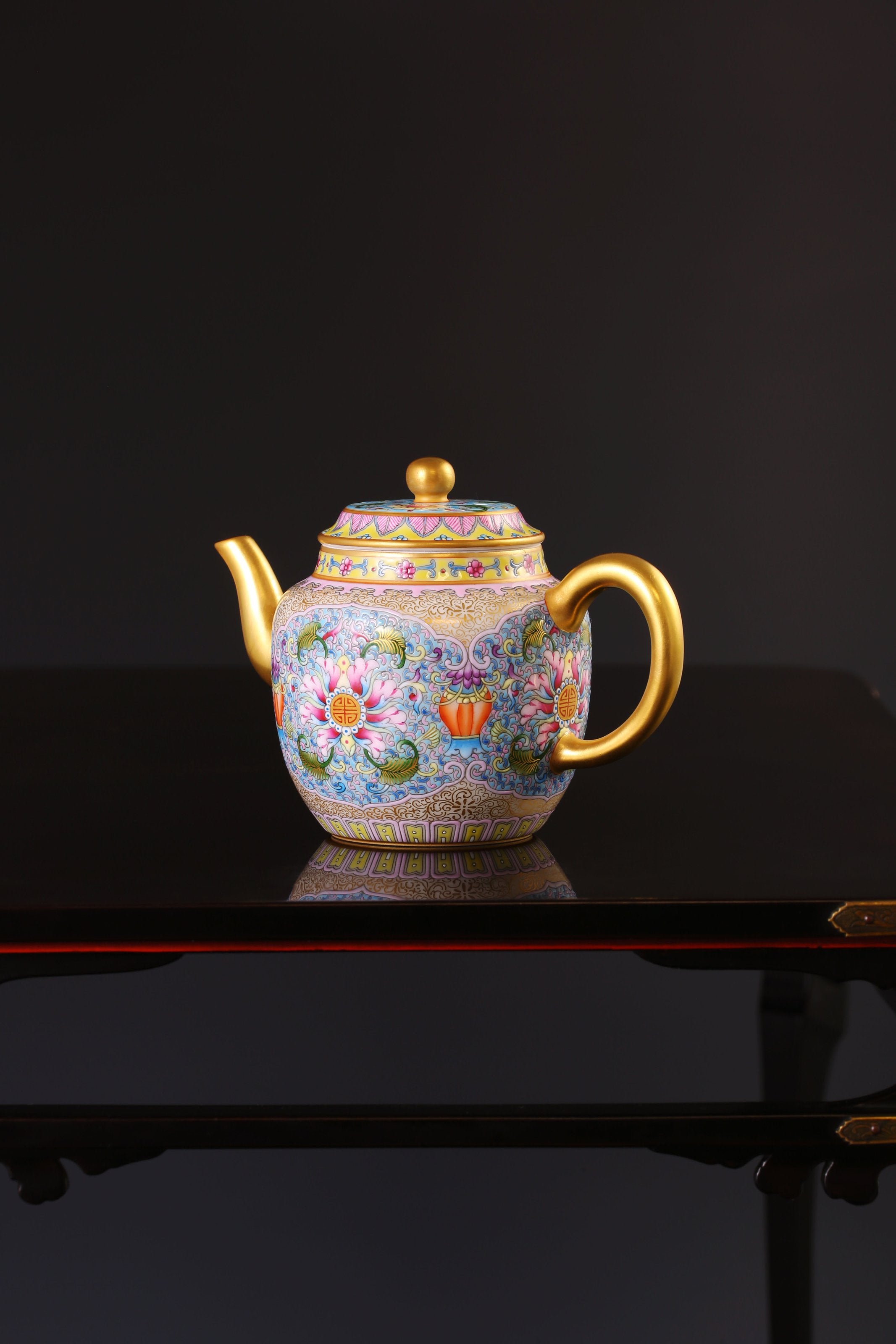
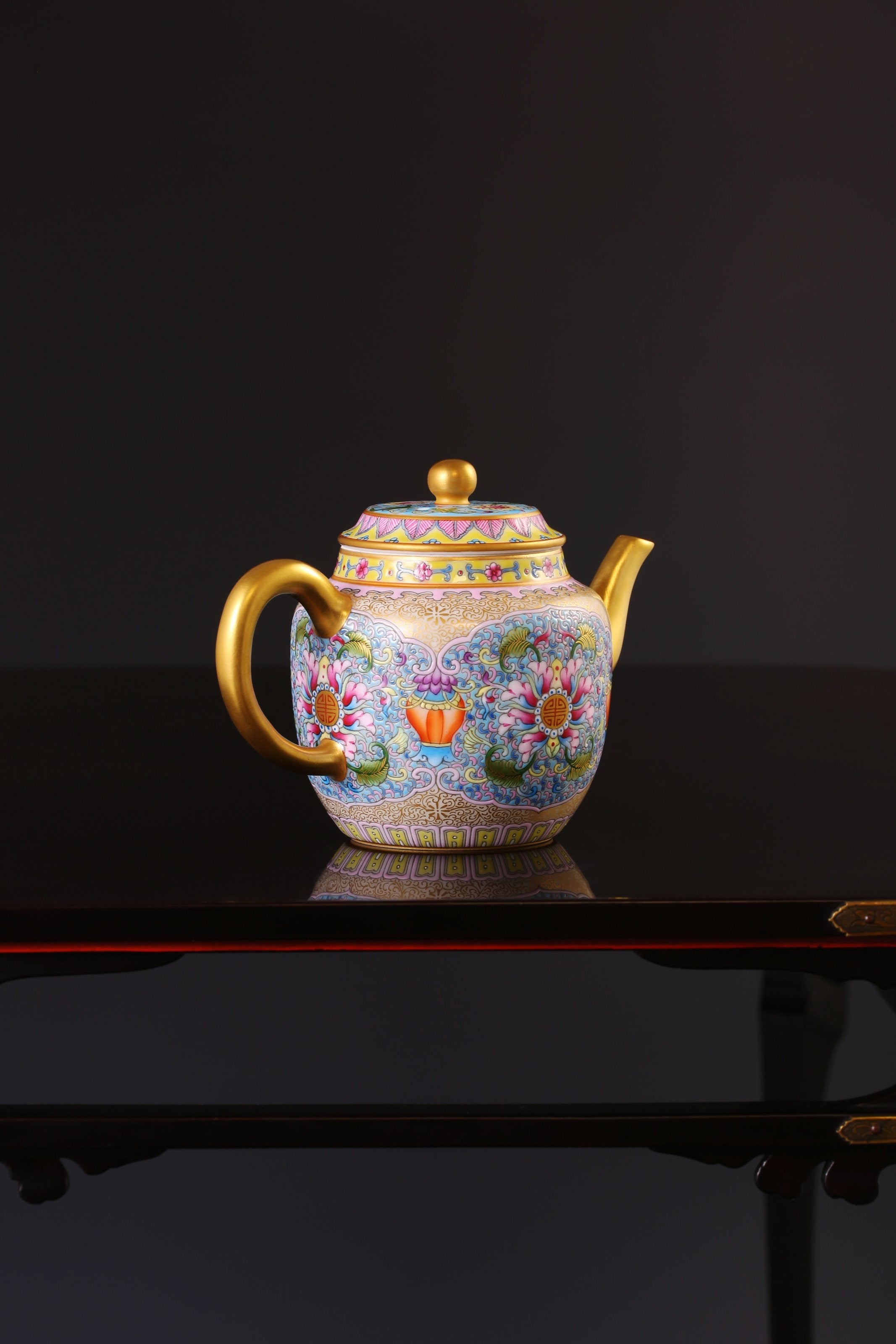
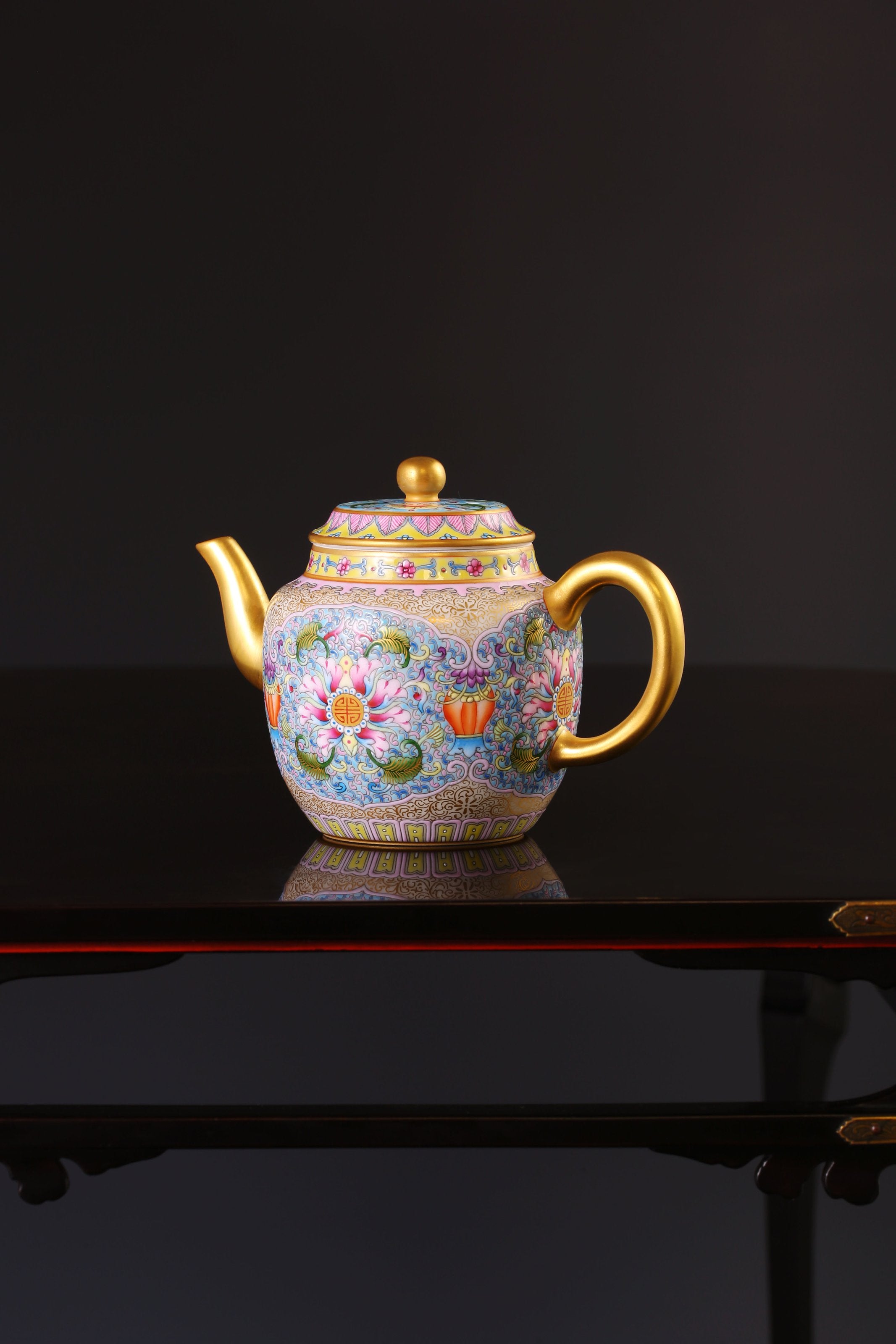
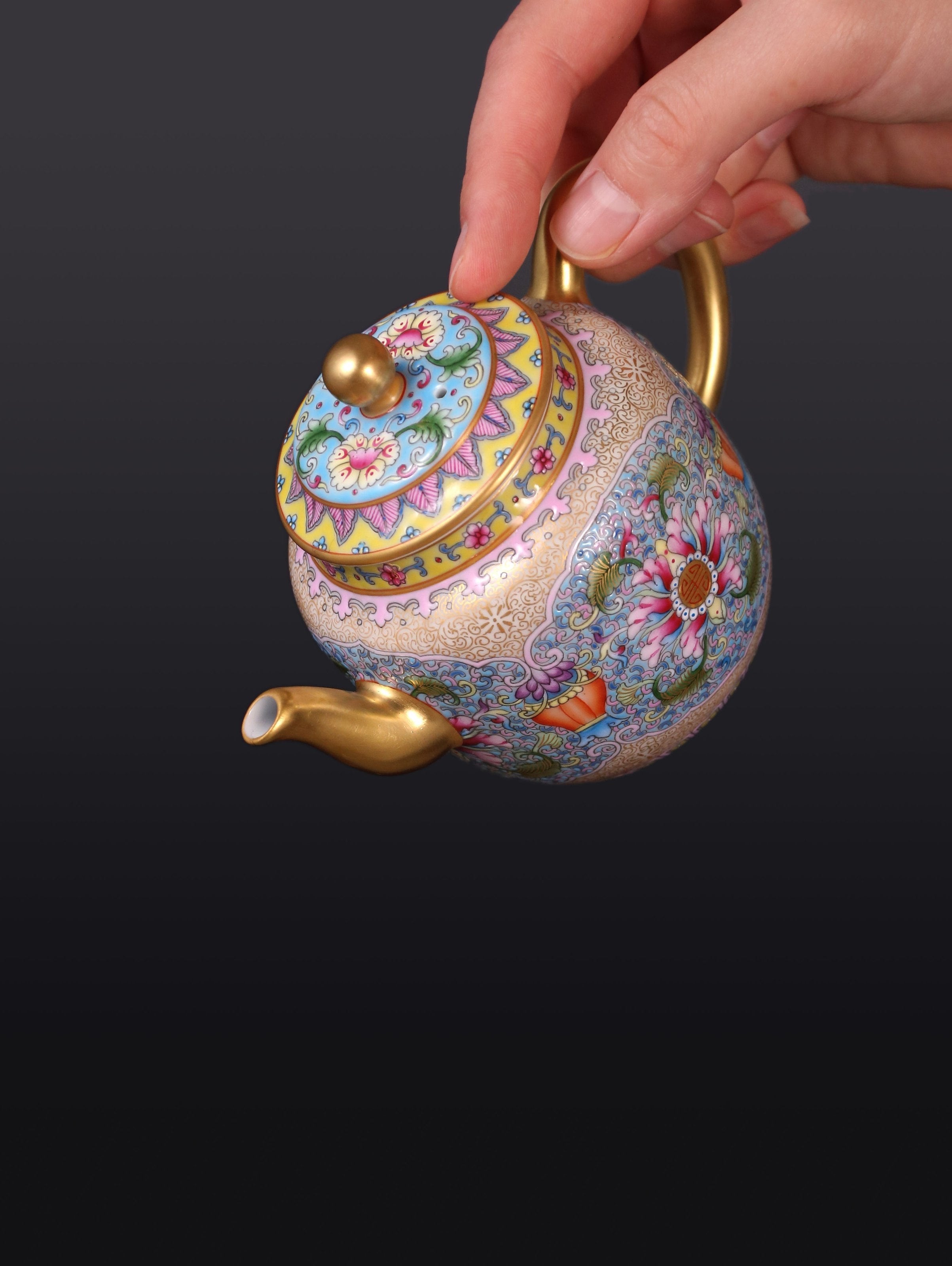
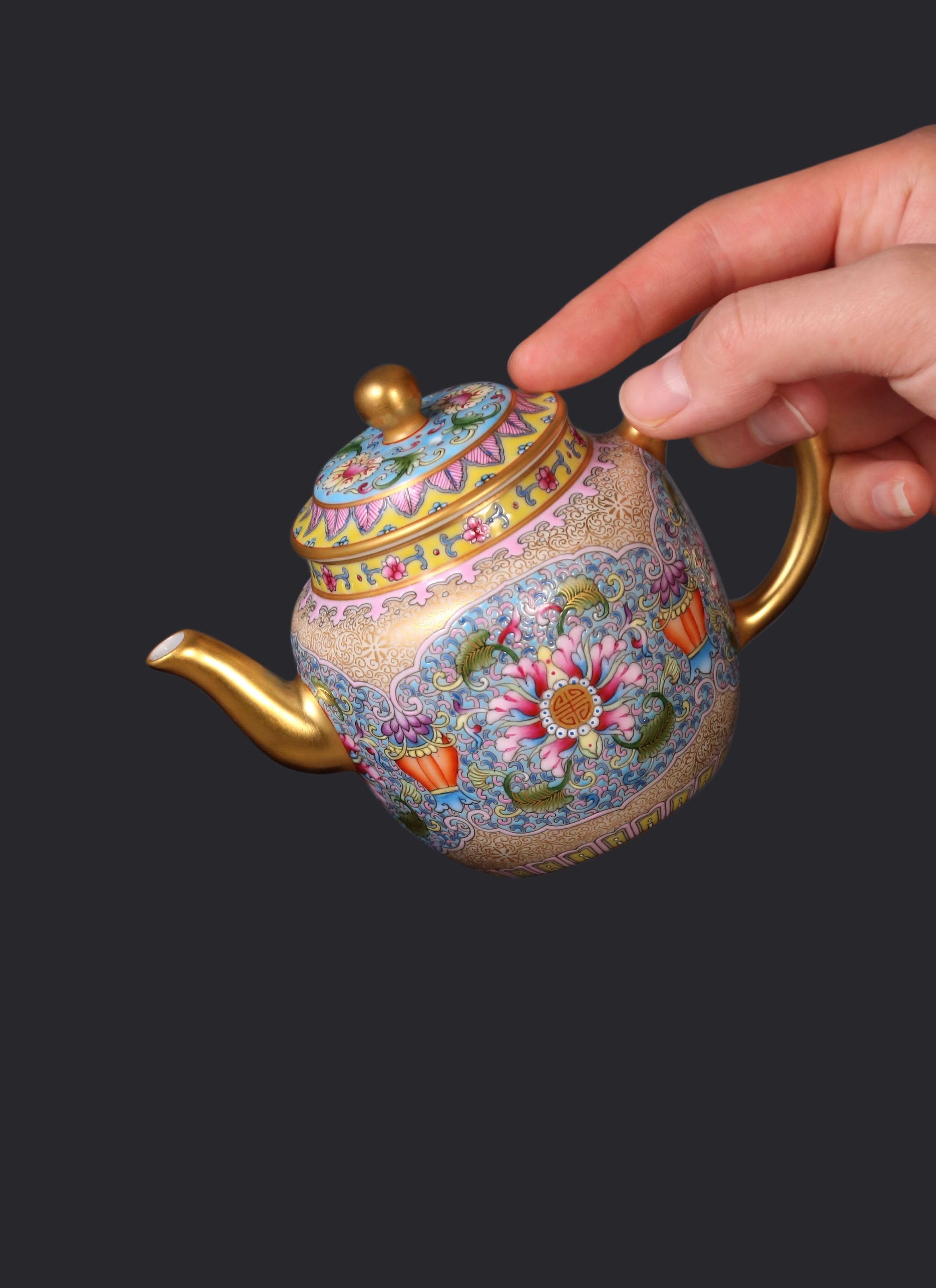
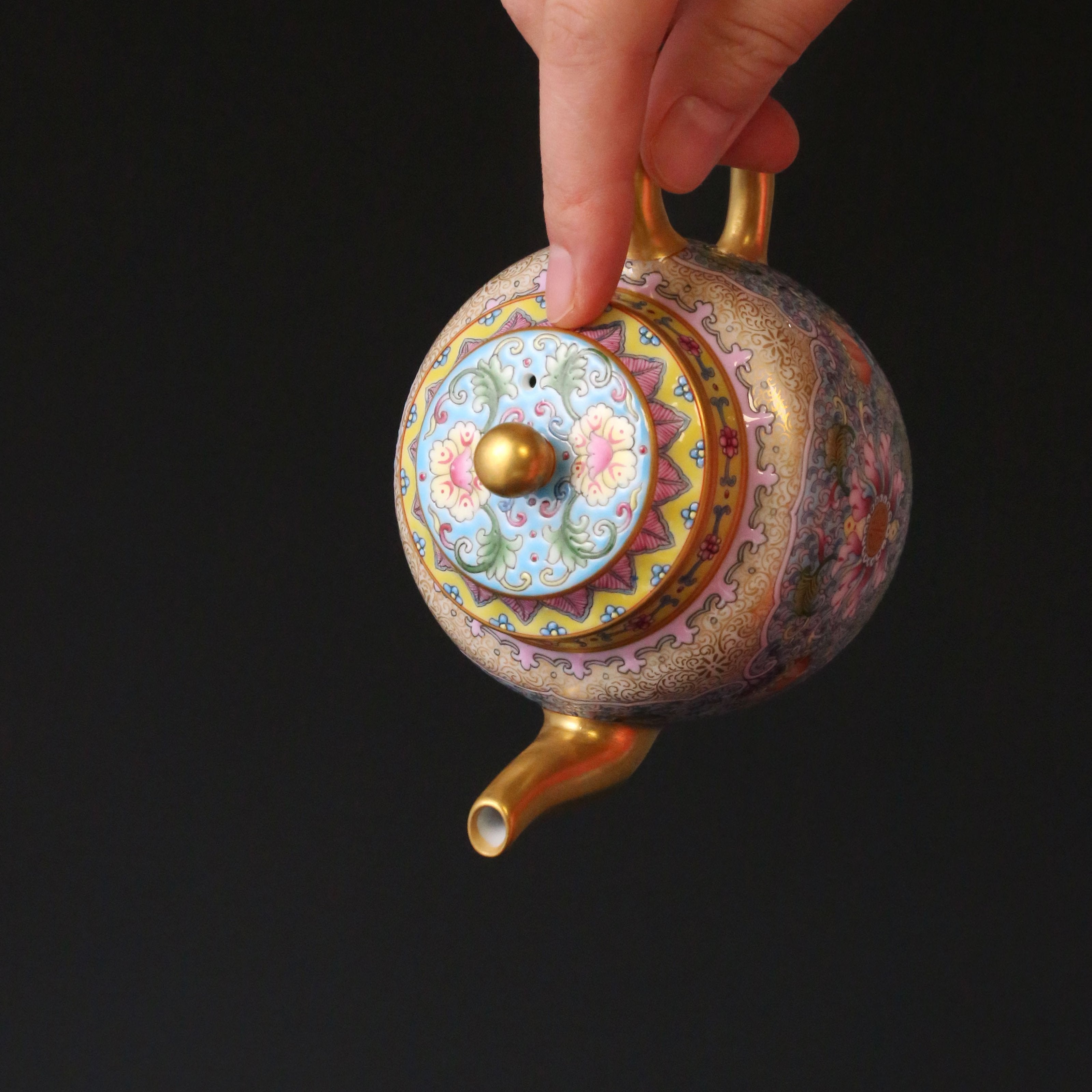
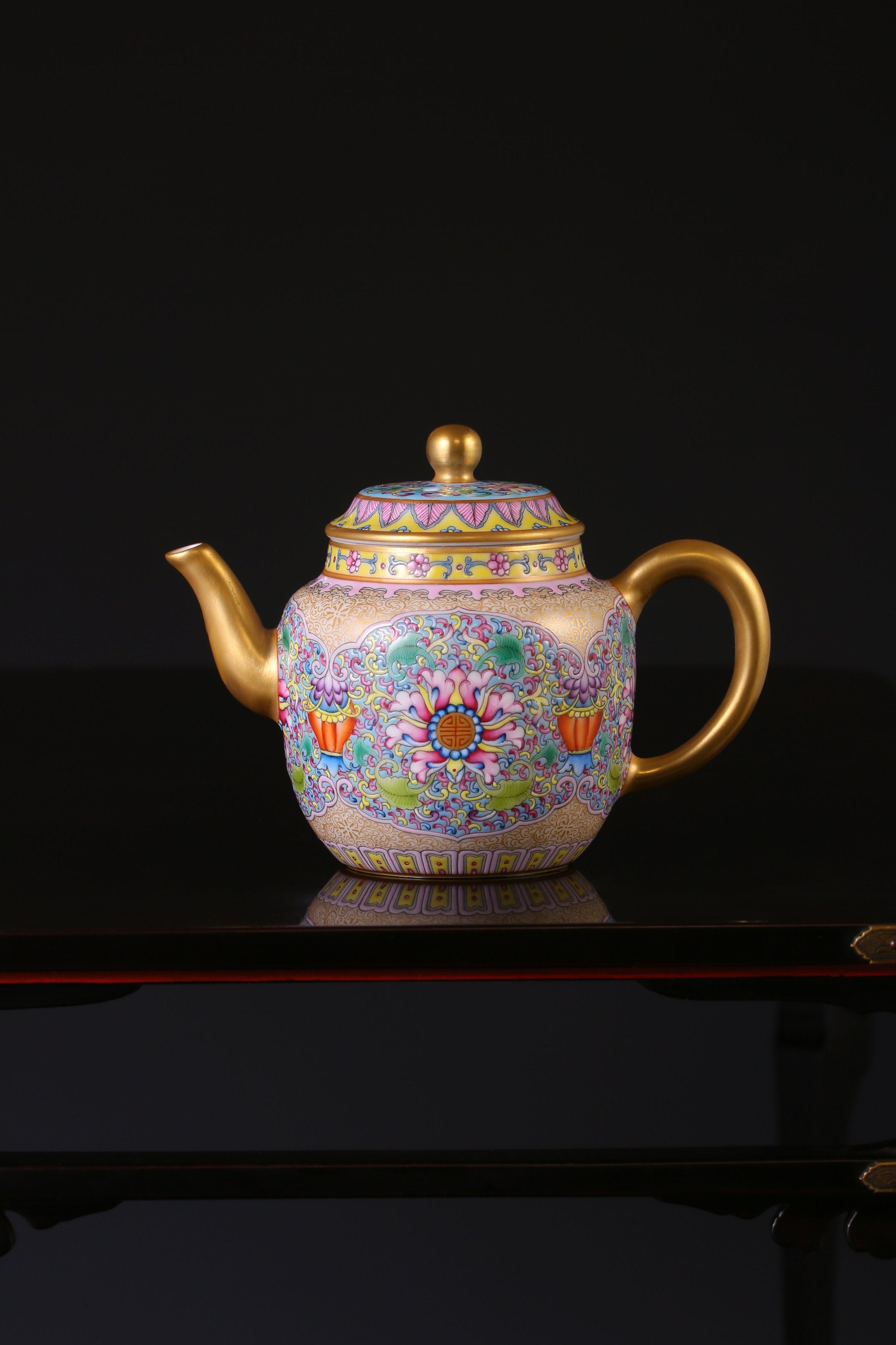
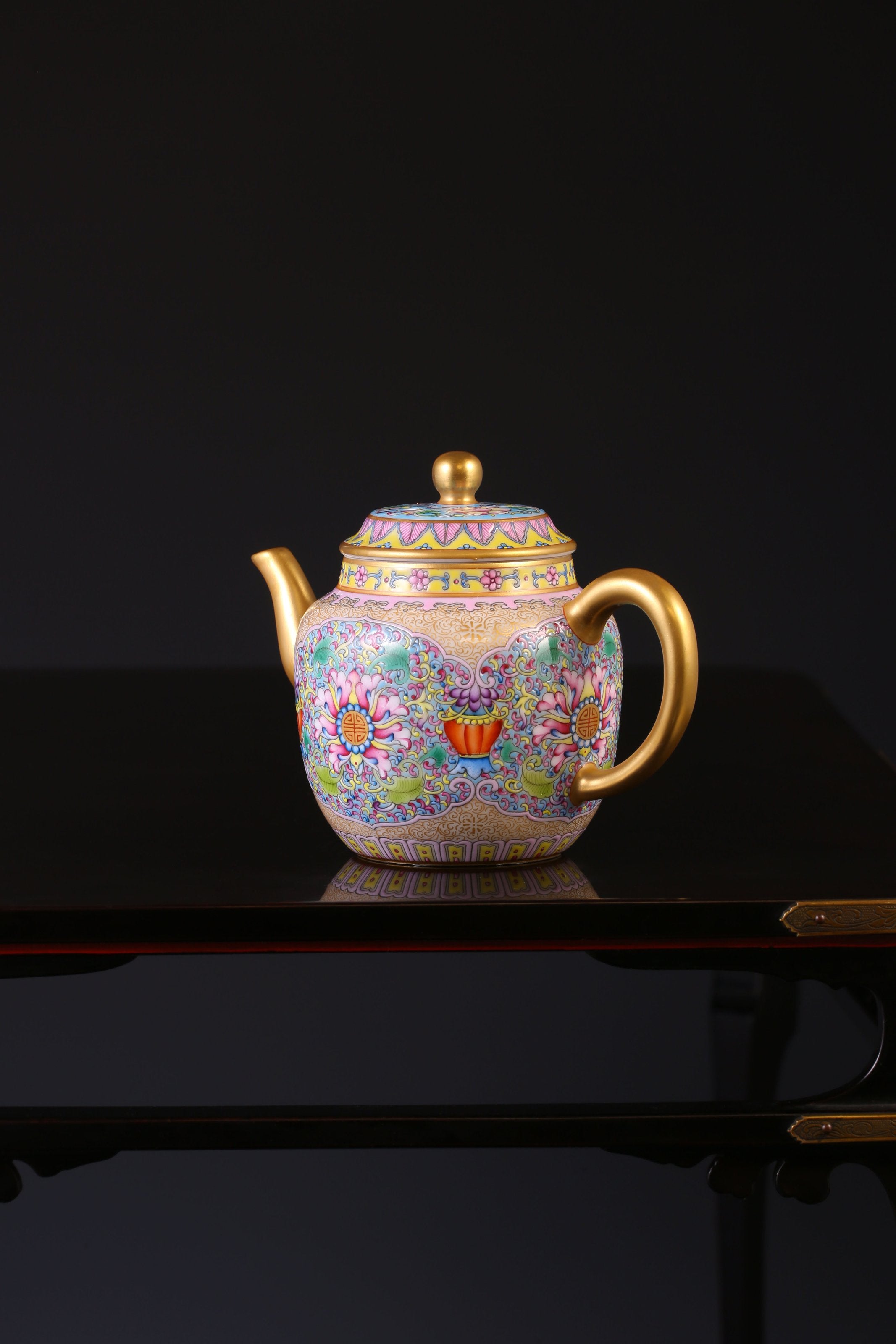
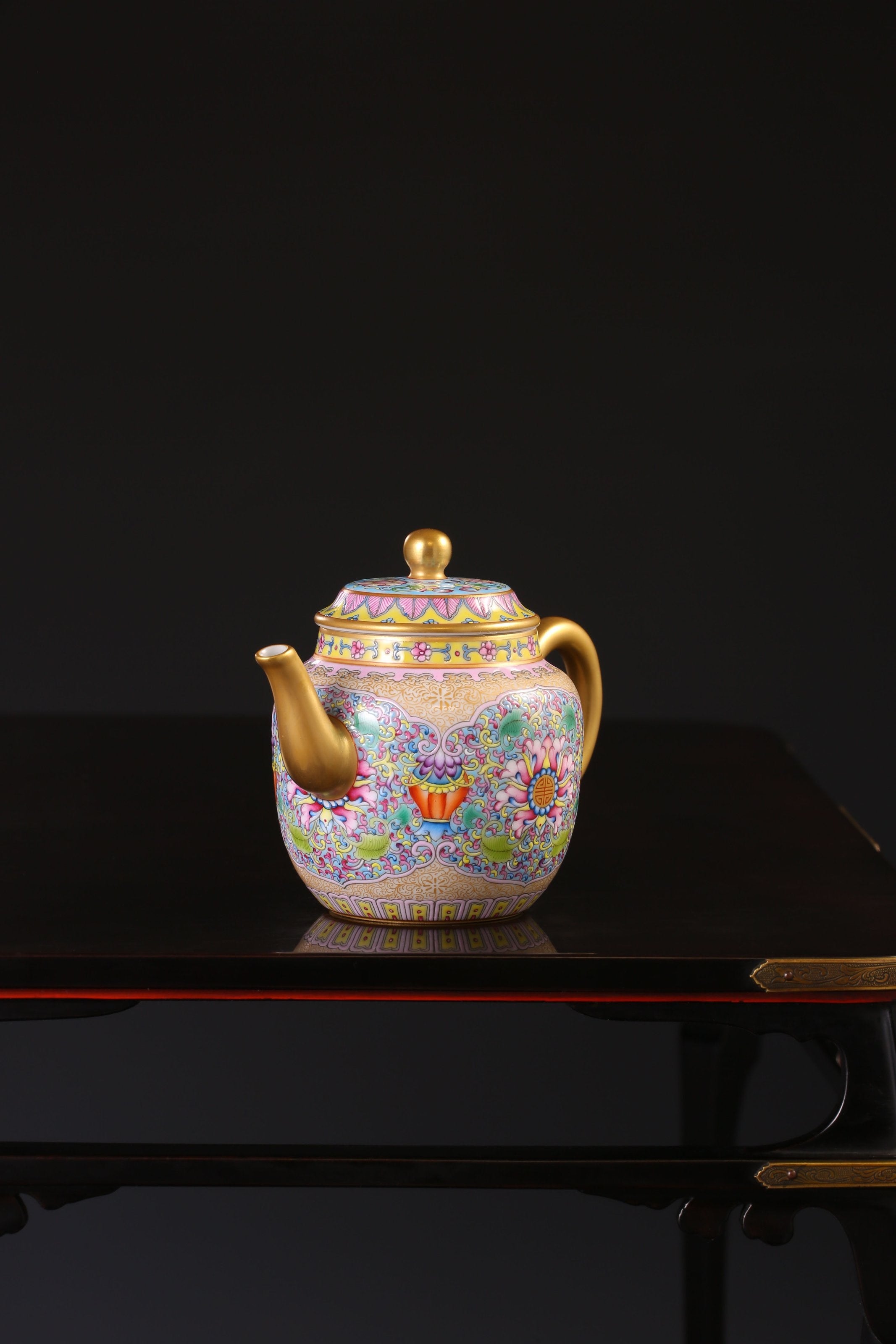
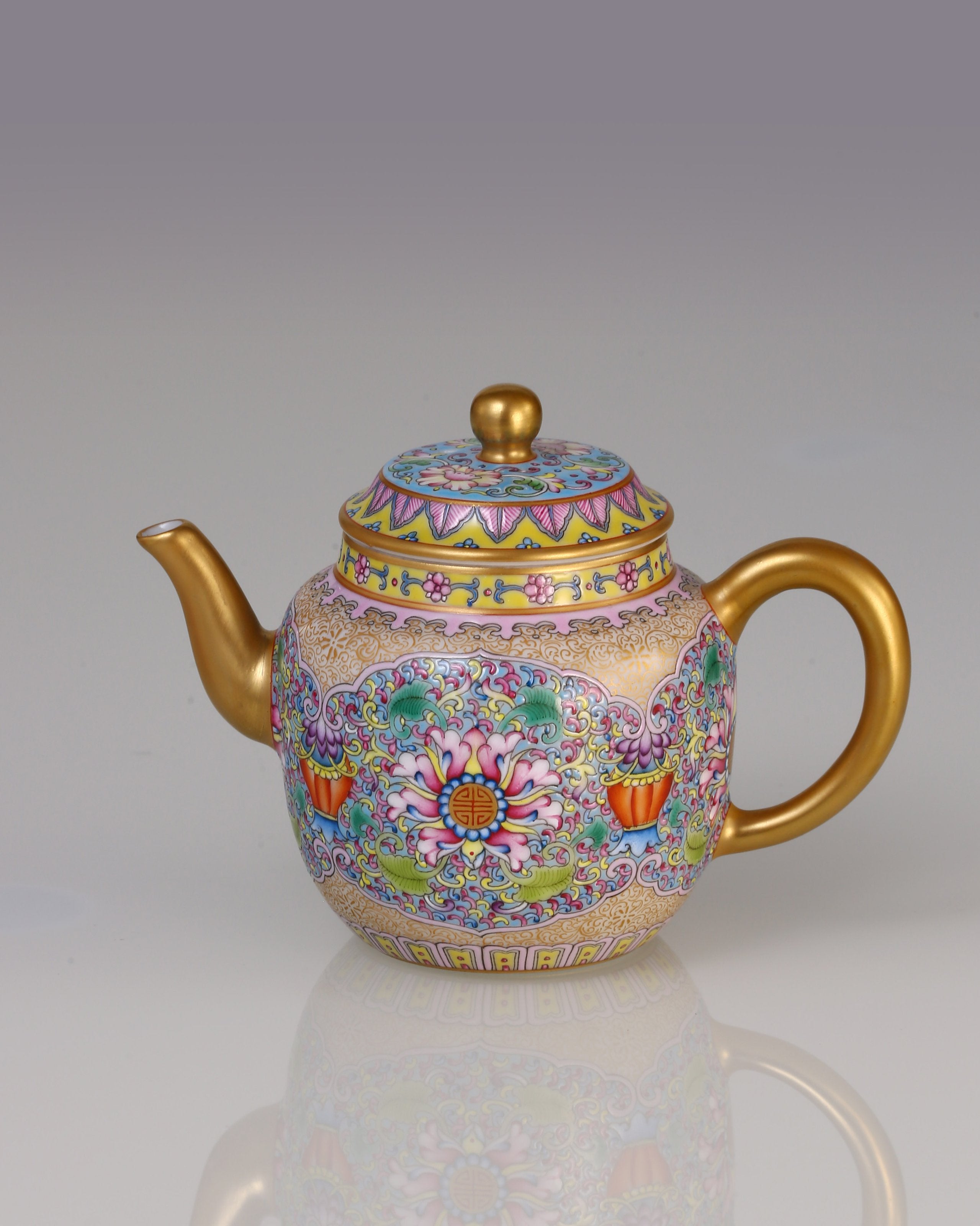
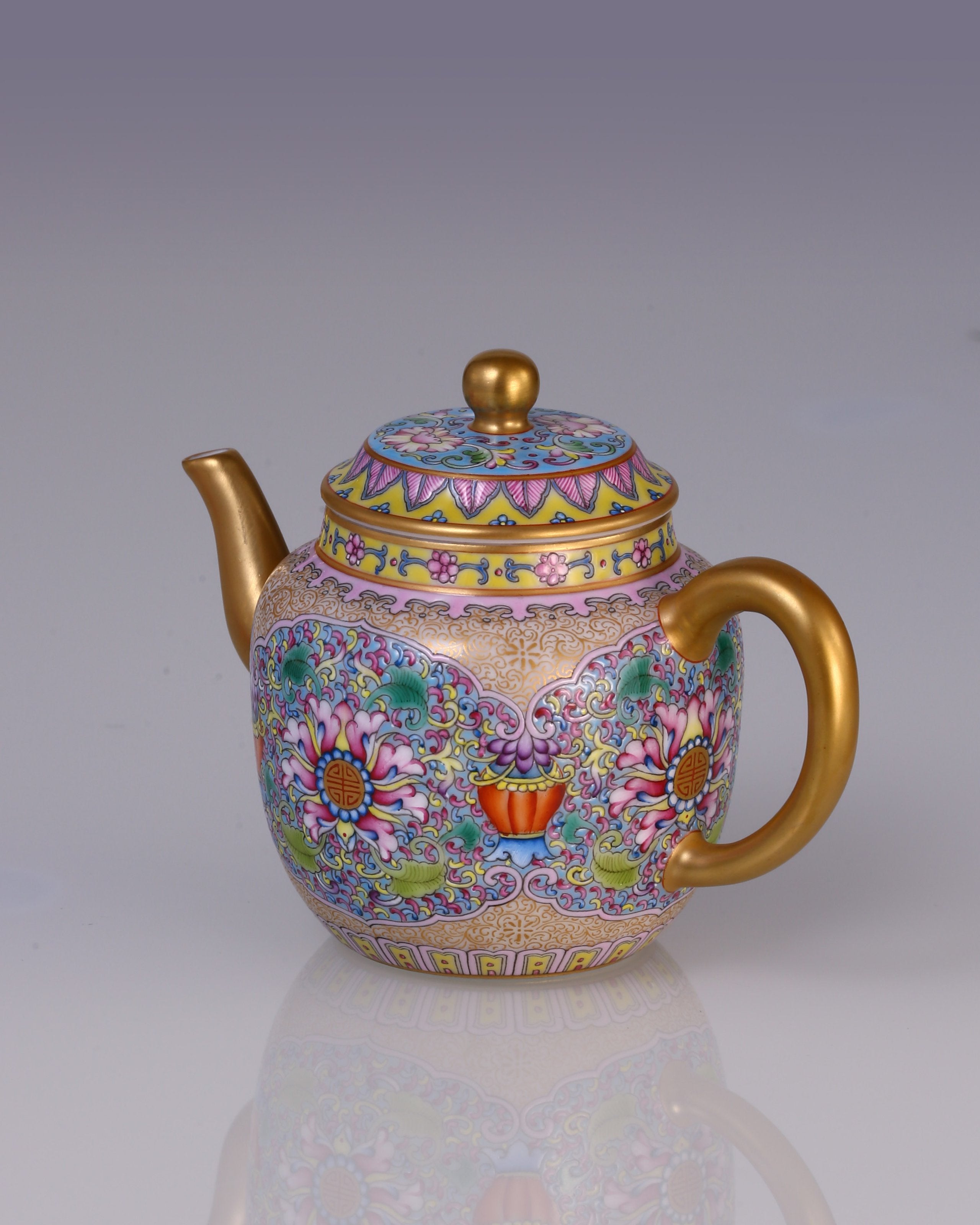
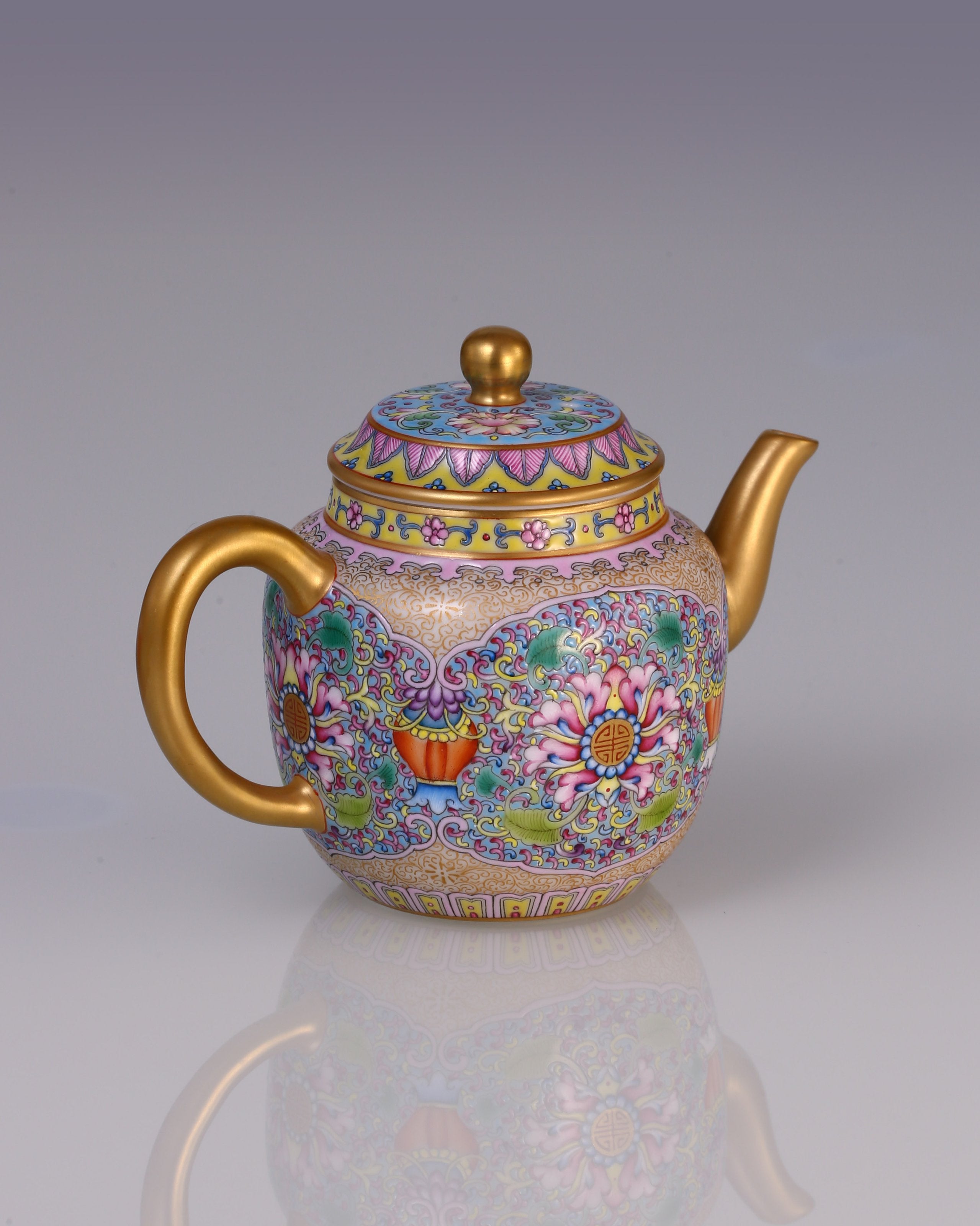
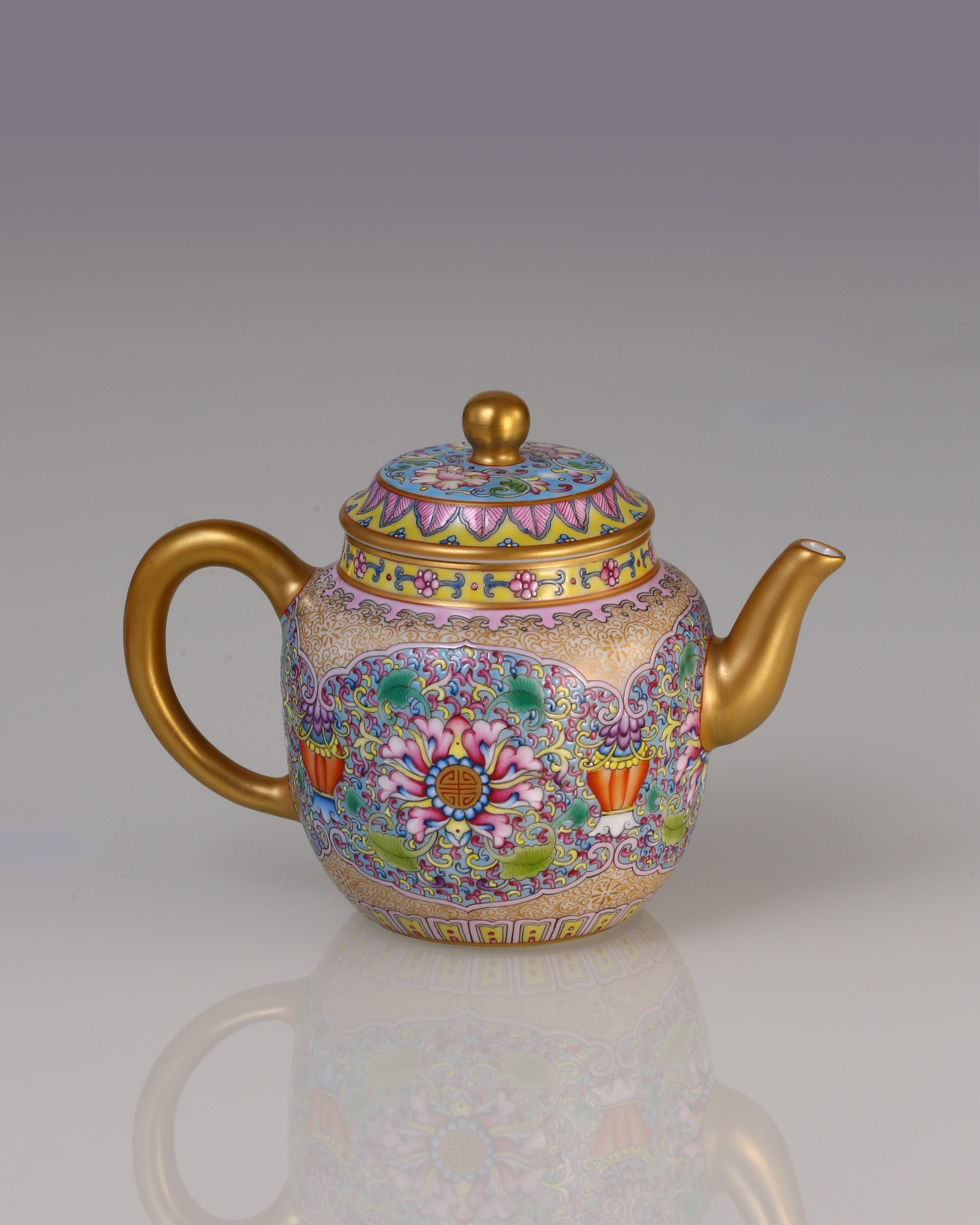
The Guyuexuan Palace Lantern Teapot is a collaborative work by Master Zhang Jian and other master artisans specializing in Jingdezhen overglaze decoration and gold-stacking techniques.
The brush lines of Guyuexuan porcelain painting are as fine as hair, a masterstroke of exquisite delicacy.
Palace Lantern Shape
Originating in the Yongzheng period of the Qing Dynasty, the “Palace Lantern” (also known as “Tribute Lantern”) shape is modeled after a traditional lantern. It features a flat lid, straight neck, three-curved spout, and a handle like a silver hook with restrained, poised strength. Its form is fresh and natural, with an elegant and refined aura.
Lantern Pattern
The lantern pattern is an auspicious motif. Hanging lanterns is a custom to pray for more children and greater family wealth. Lanterns are hung during Chinese festivals, with the Lantern Festival on the 15th day of the first lunar month.
In many Chinese dialects, “lantern” (dēng) sounds the same as “male heir” (dīng). “Lighting a lantern” thus implies “adding a male heir”. For this reason, in some regions, people believe women walking under lanterns will be blessed with many children.
Interlocking Branch Pattern
The exterior is decorated with enamel-painted longevity characters and interlocking lotus branches, with clear leaf veins. The winding lotus vines are graceful, dynamic and flowing, matched with brilliant colors, and accented with gold string patterns.
Thanks to its continuous, unbroken structure, it symbolizes “endless vitality”. Hence the interlocking branch pattern is also known as the Longevity Vine.
The lantern pattern prevailed in the Ming and Qing dynasties. The interlocking branch pattern originated around the Han Dynasty and flourished during the Northern and Southern Dynasties, Sui, Tang, Song, Yuan, Ming and Qing dynasties.
Enamel Decoration
Besides its elaborate and delicate painting, the Guyuexuan Palace Lantern Teapot requires four separate kiln firings, each carrying the risk of failure.
In the Qing Dynasty, enamel porcelain was originally made exclusively for the enjoyment of emperors and empresses. Enamel is a special kind of artificially fired color pigment.
Before the 6th year of the Yongzheng reign (1728), enamel materials had to be imported from Europe. After that year, the Imperial Workshop of the Qing Court successfully developed more than 20 kinds of enamel pigments on its own.
This craft represents the pinnacle of ancient Chinese polychrome porcelain art.