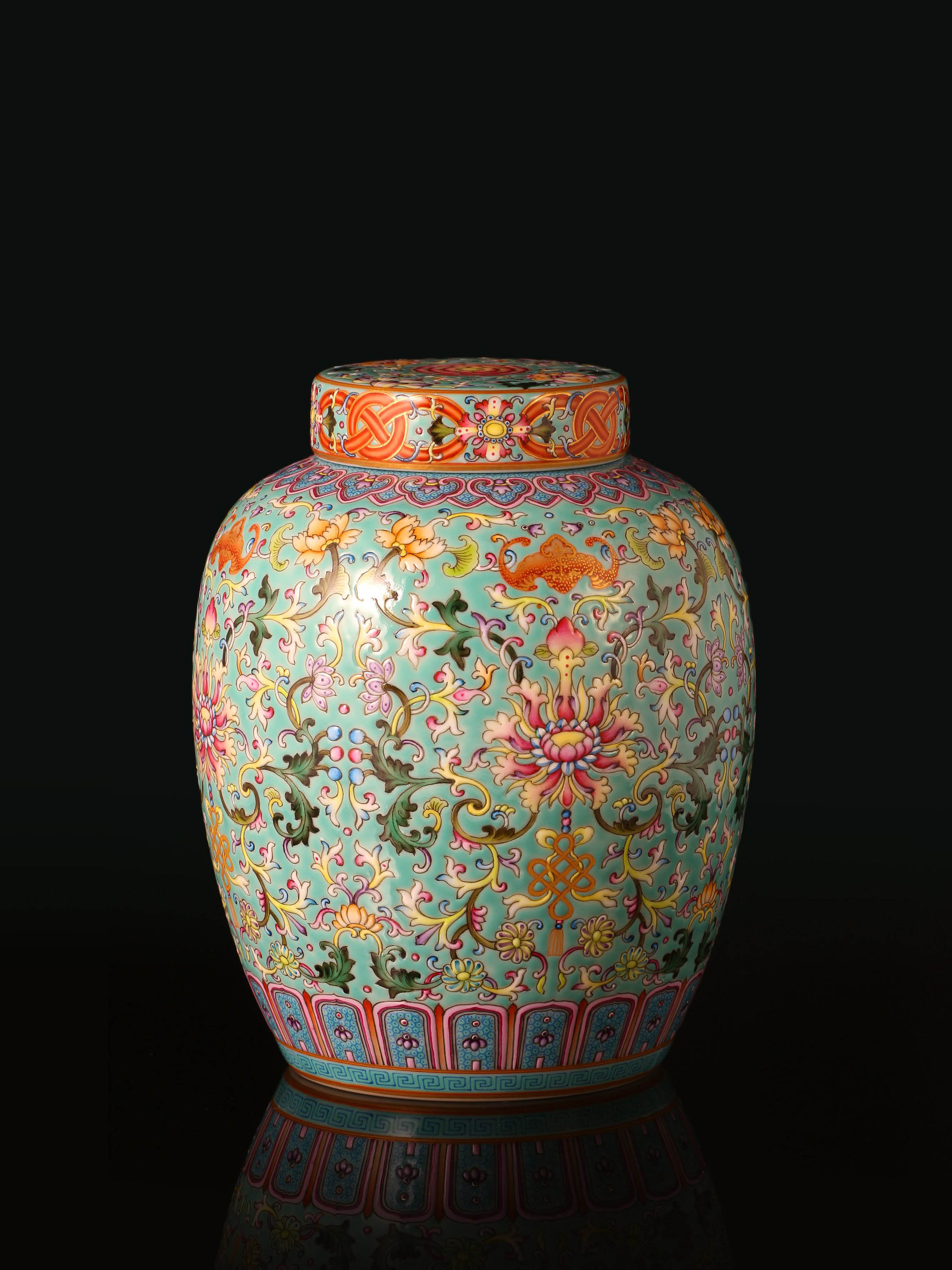
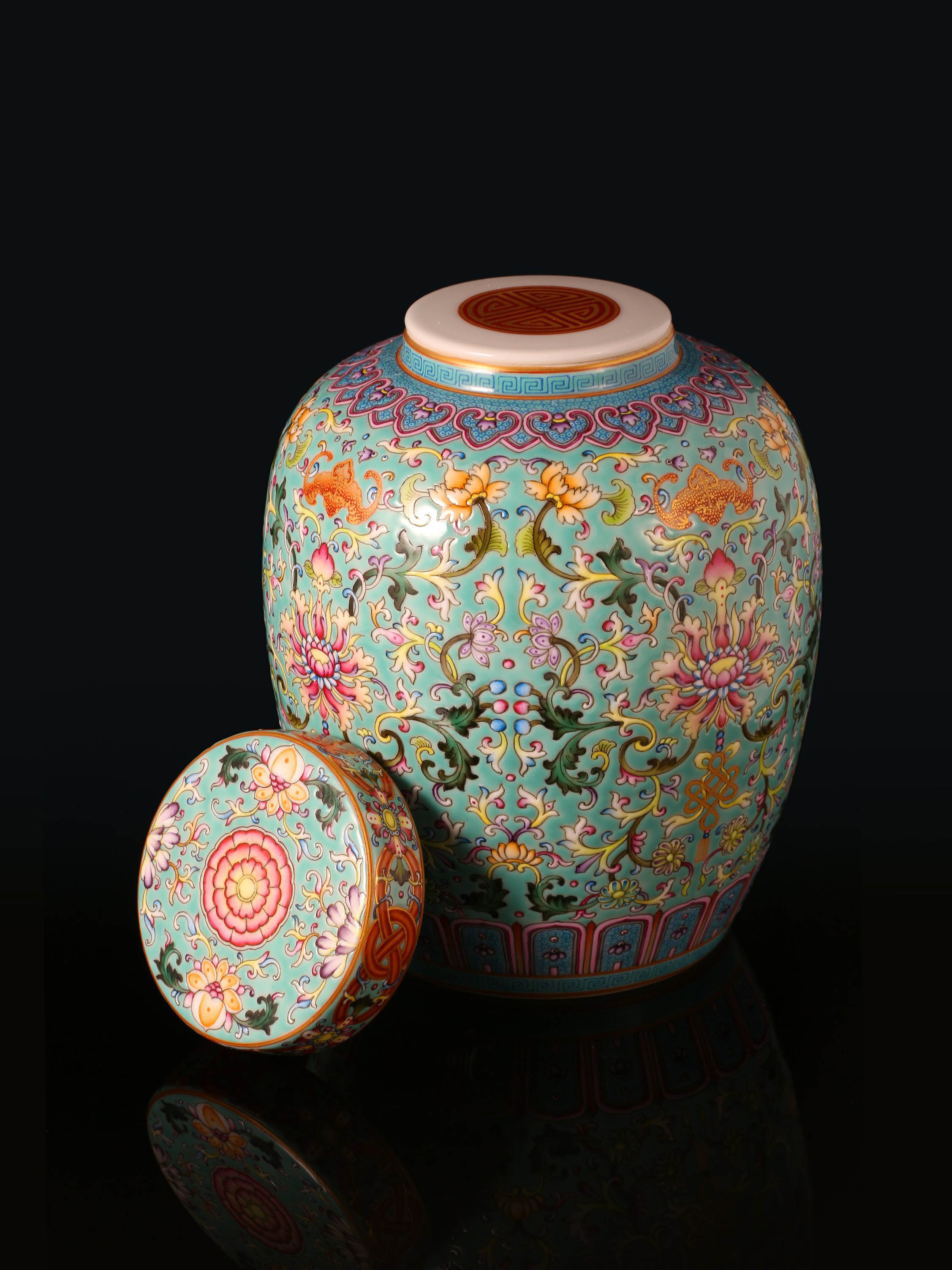
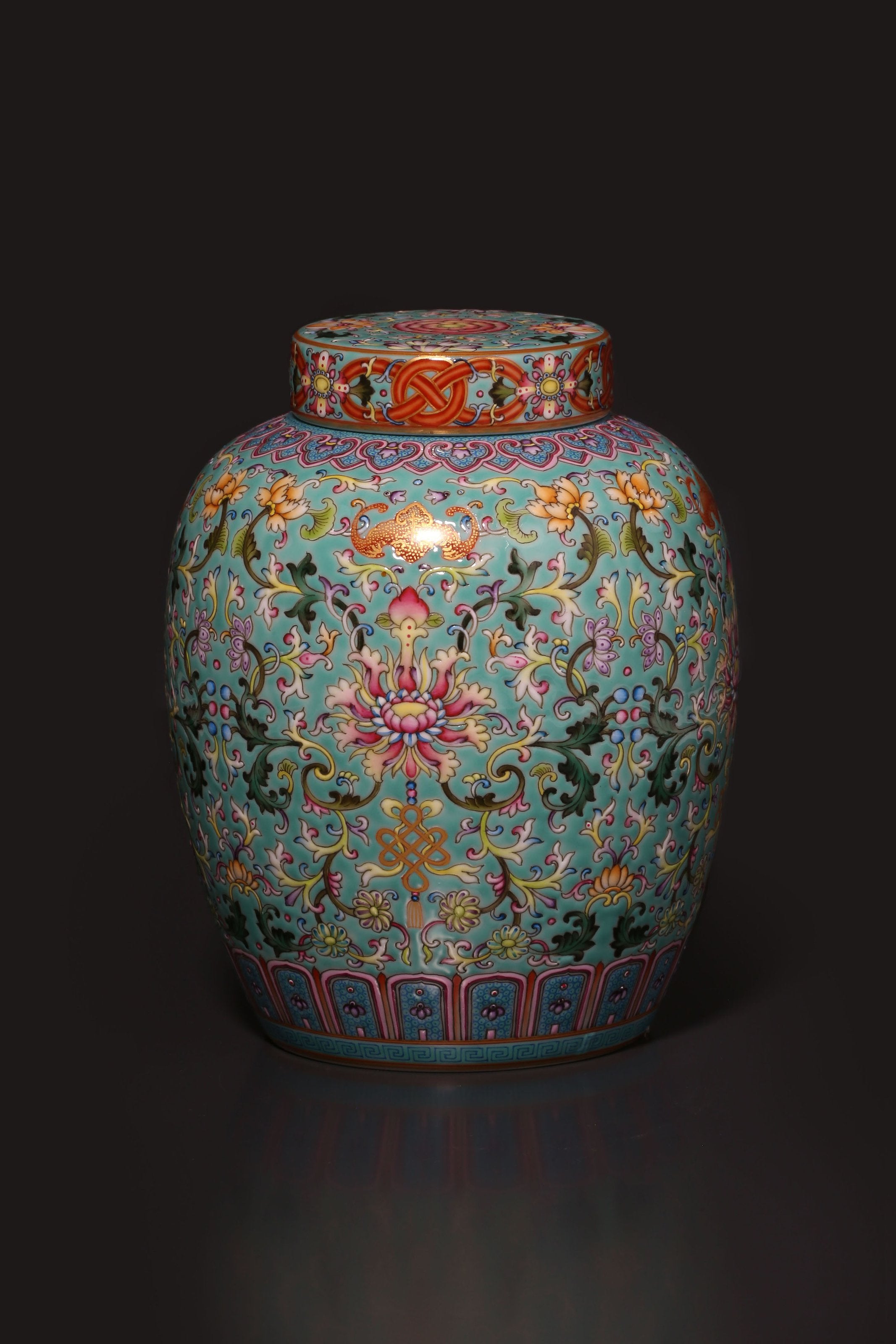
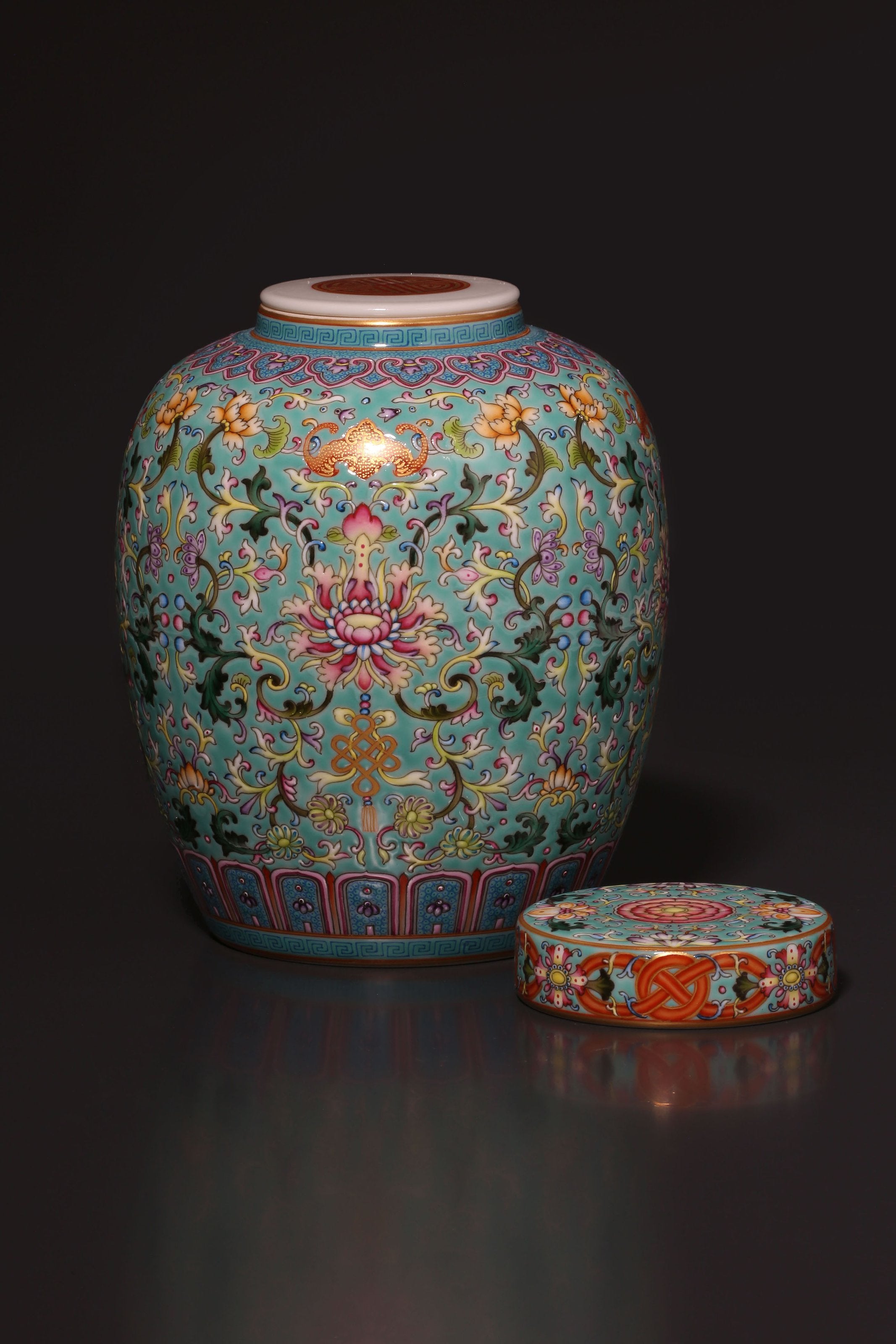
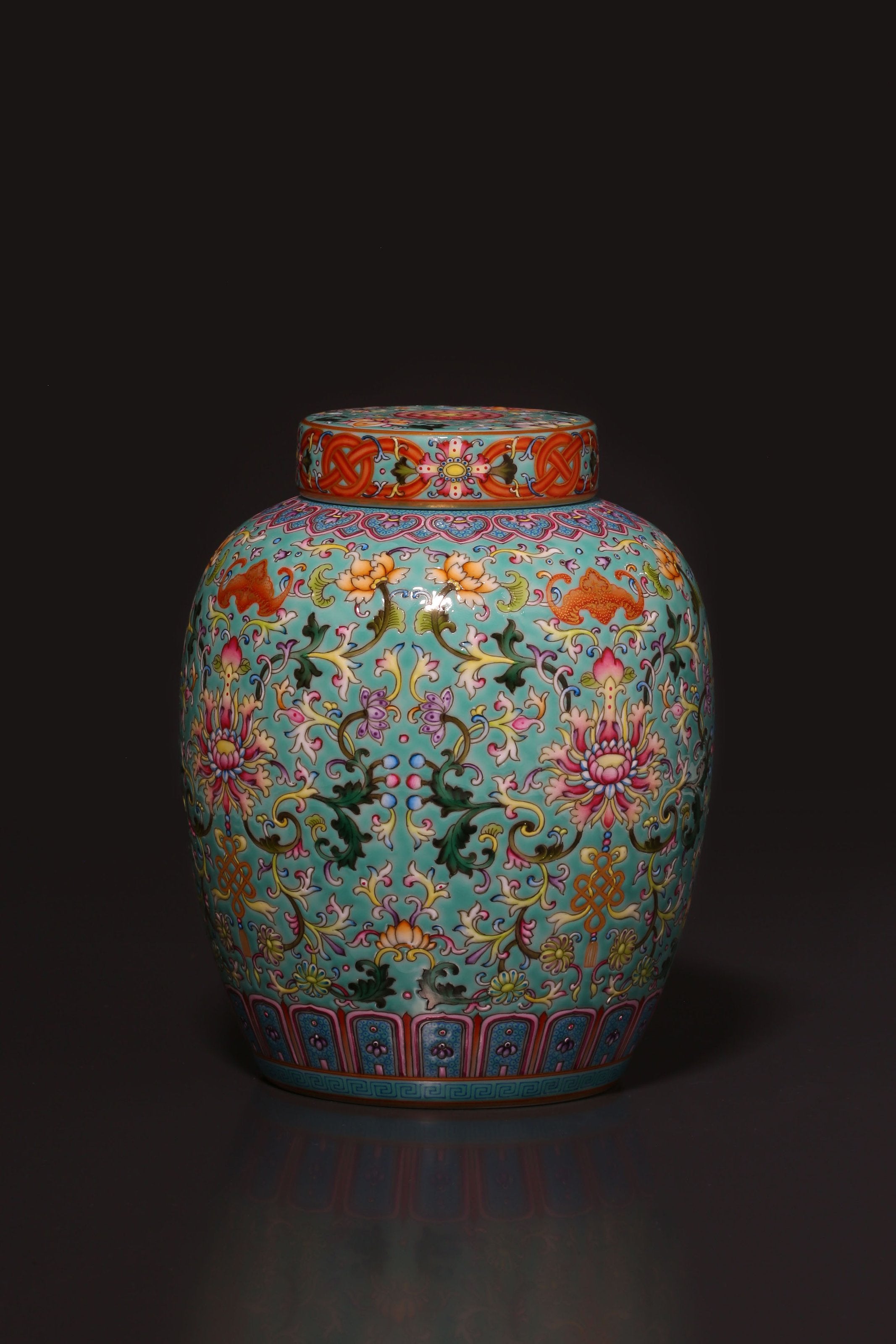
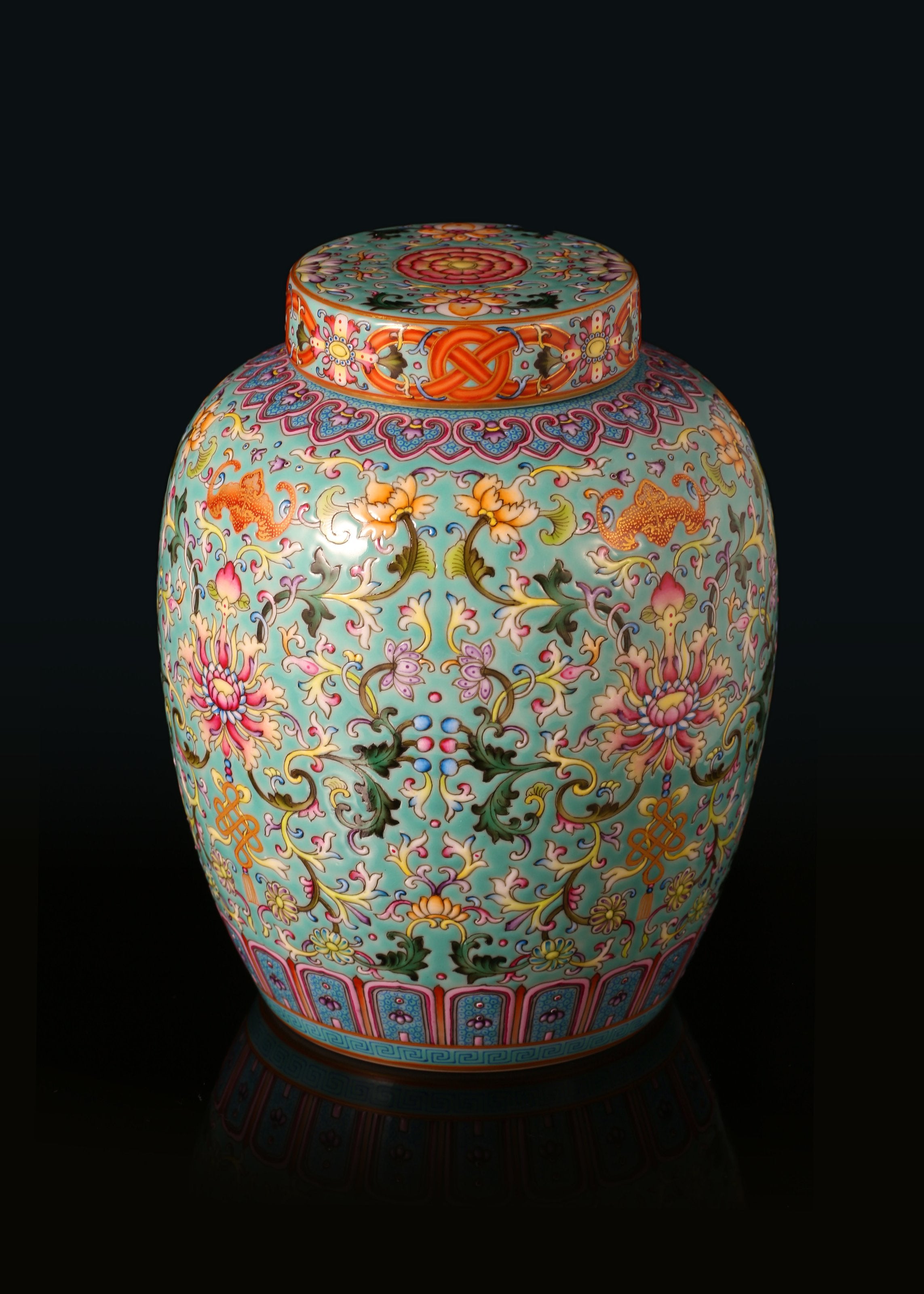
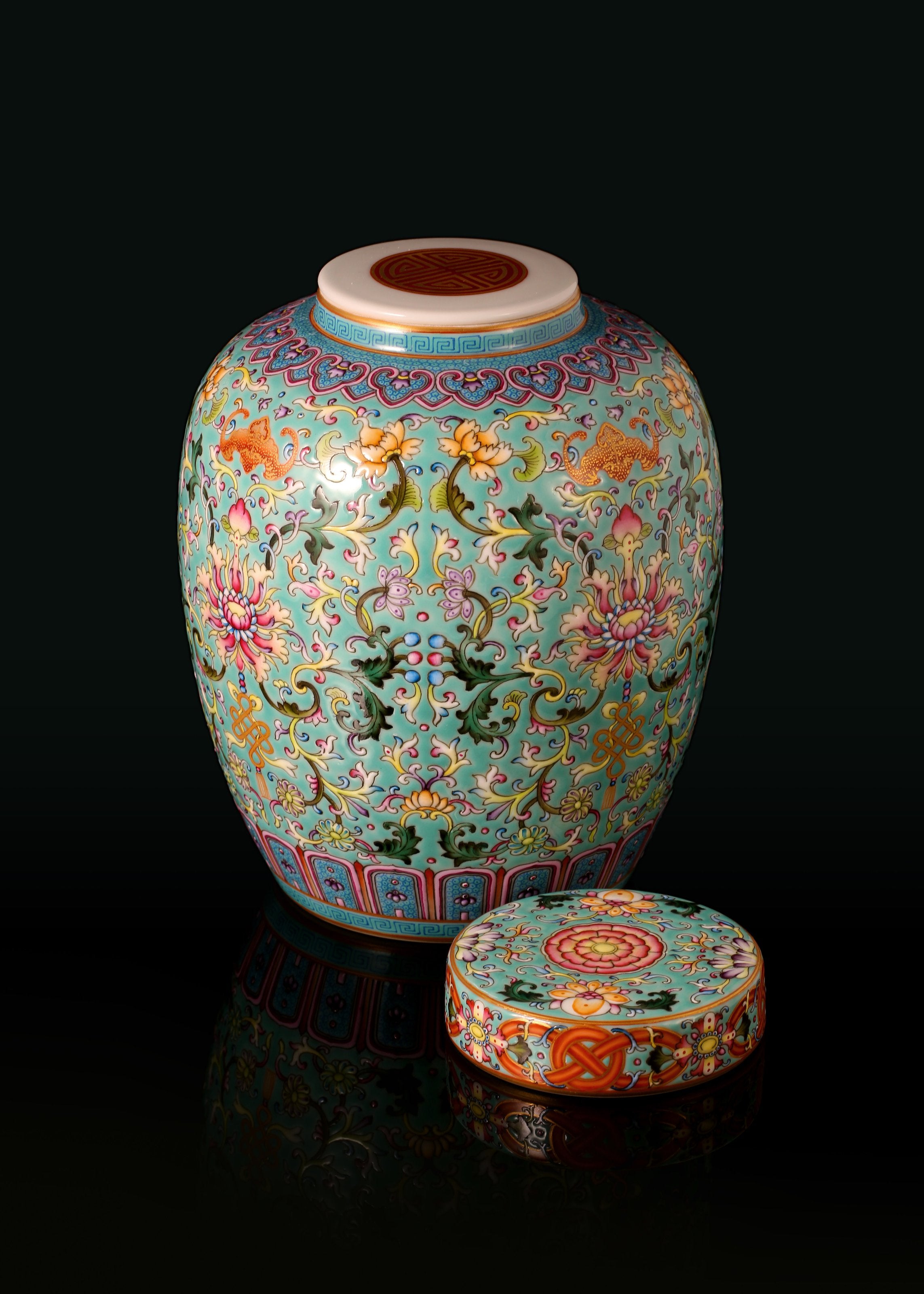
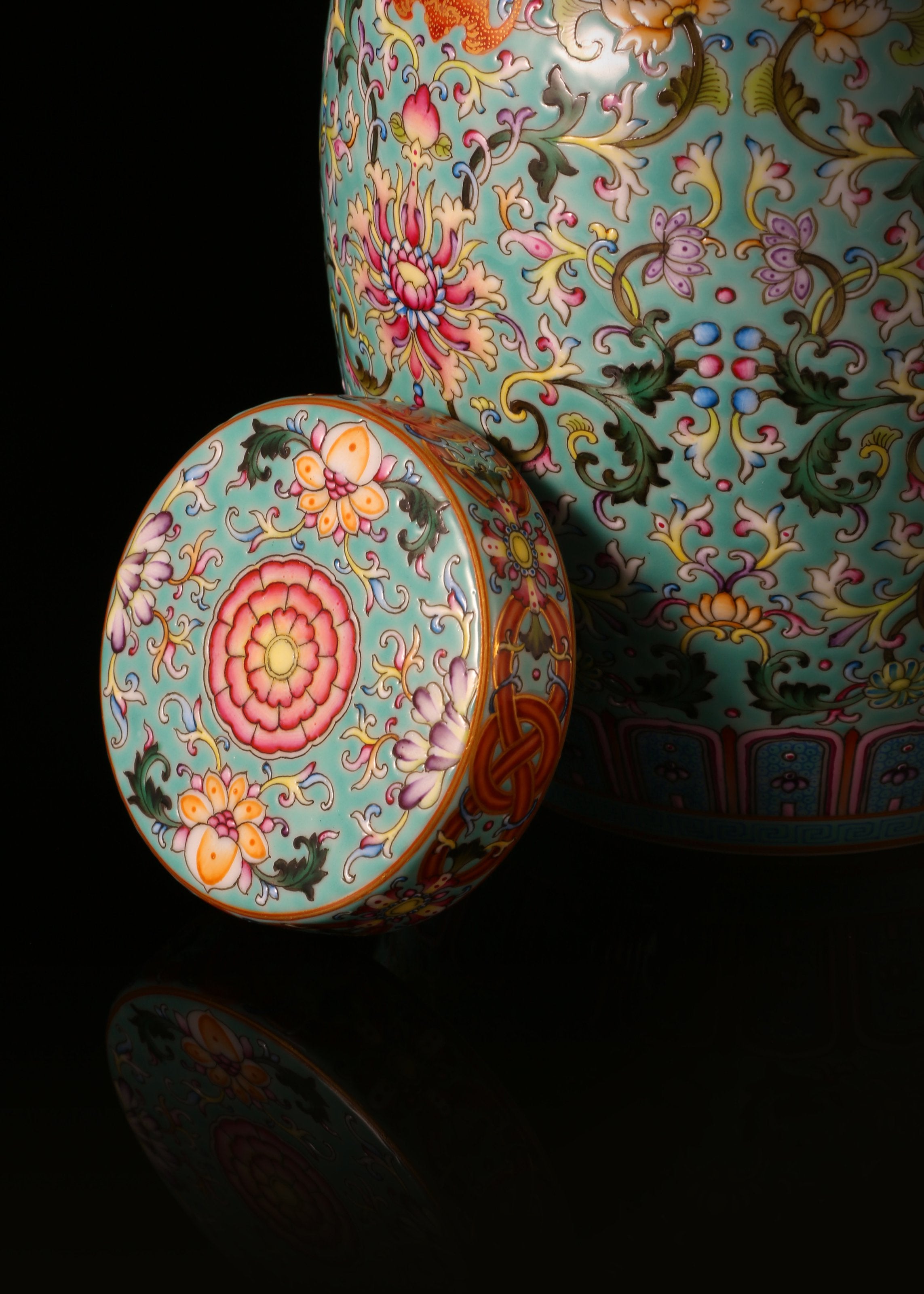
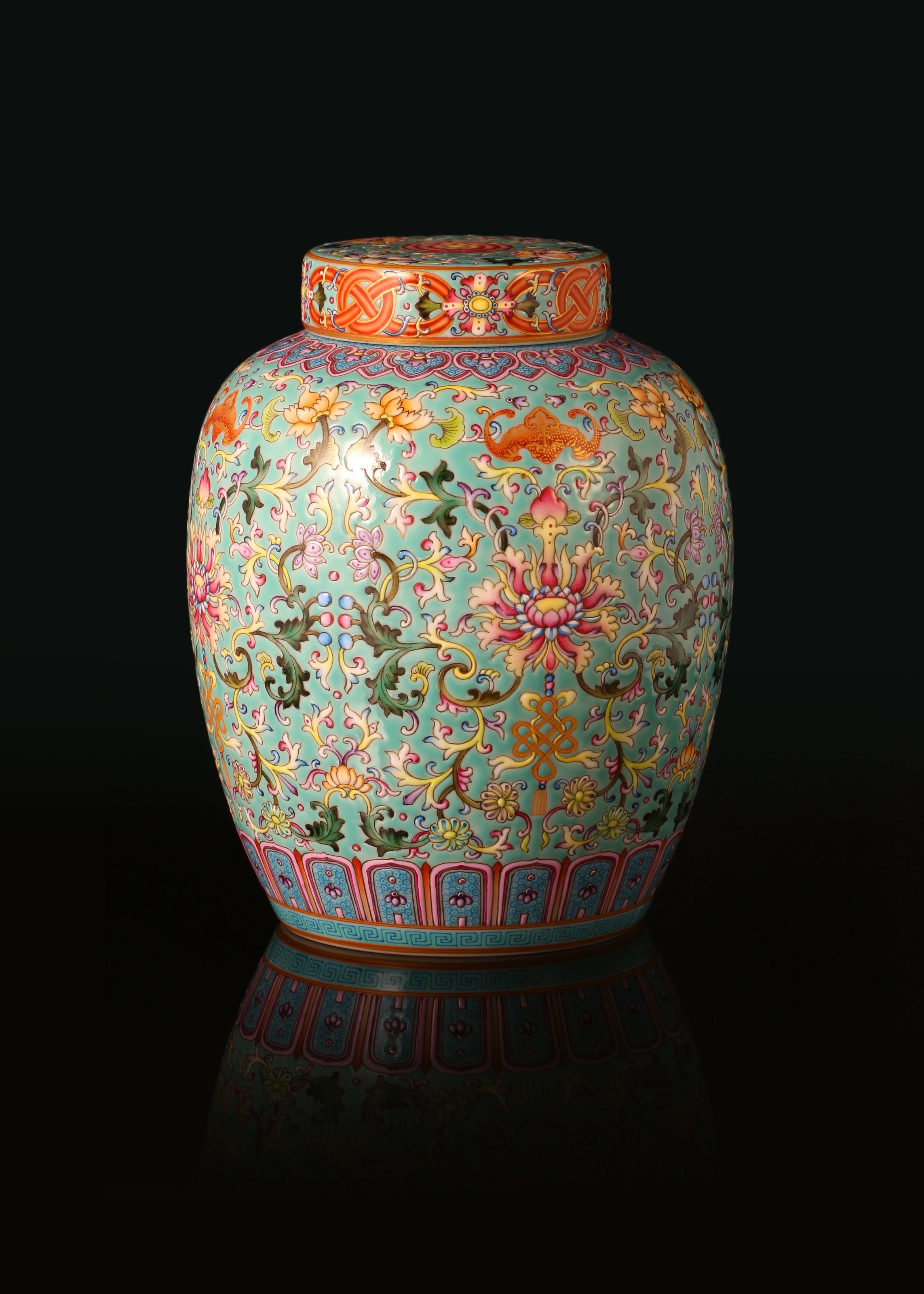
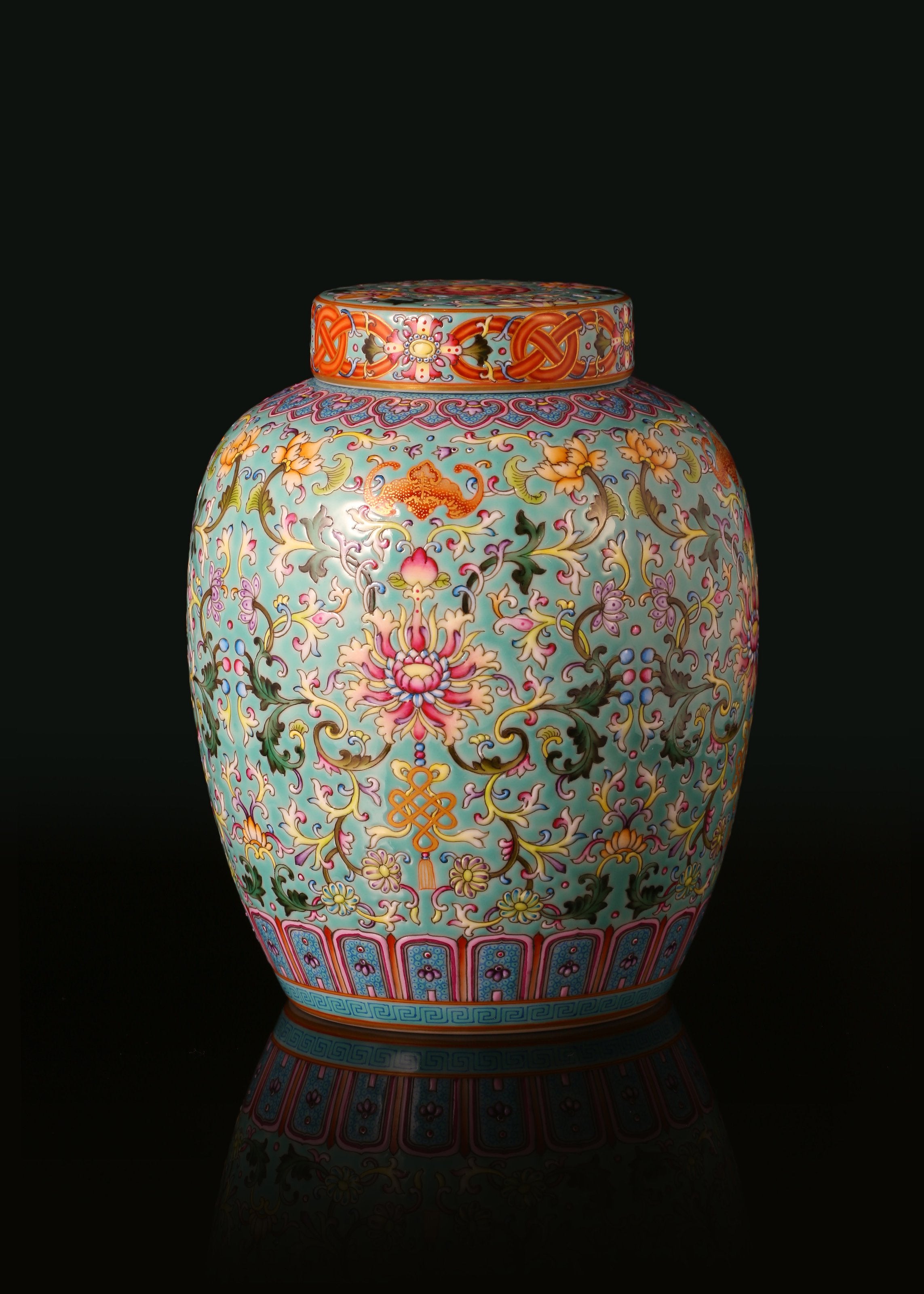
Enamel Painted Tianzi Jar with Continuous Blessings and Fortune
Dayatang Collection
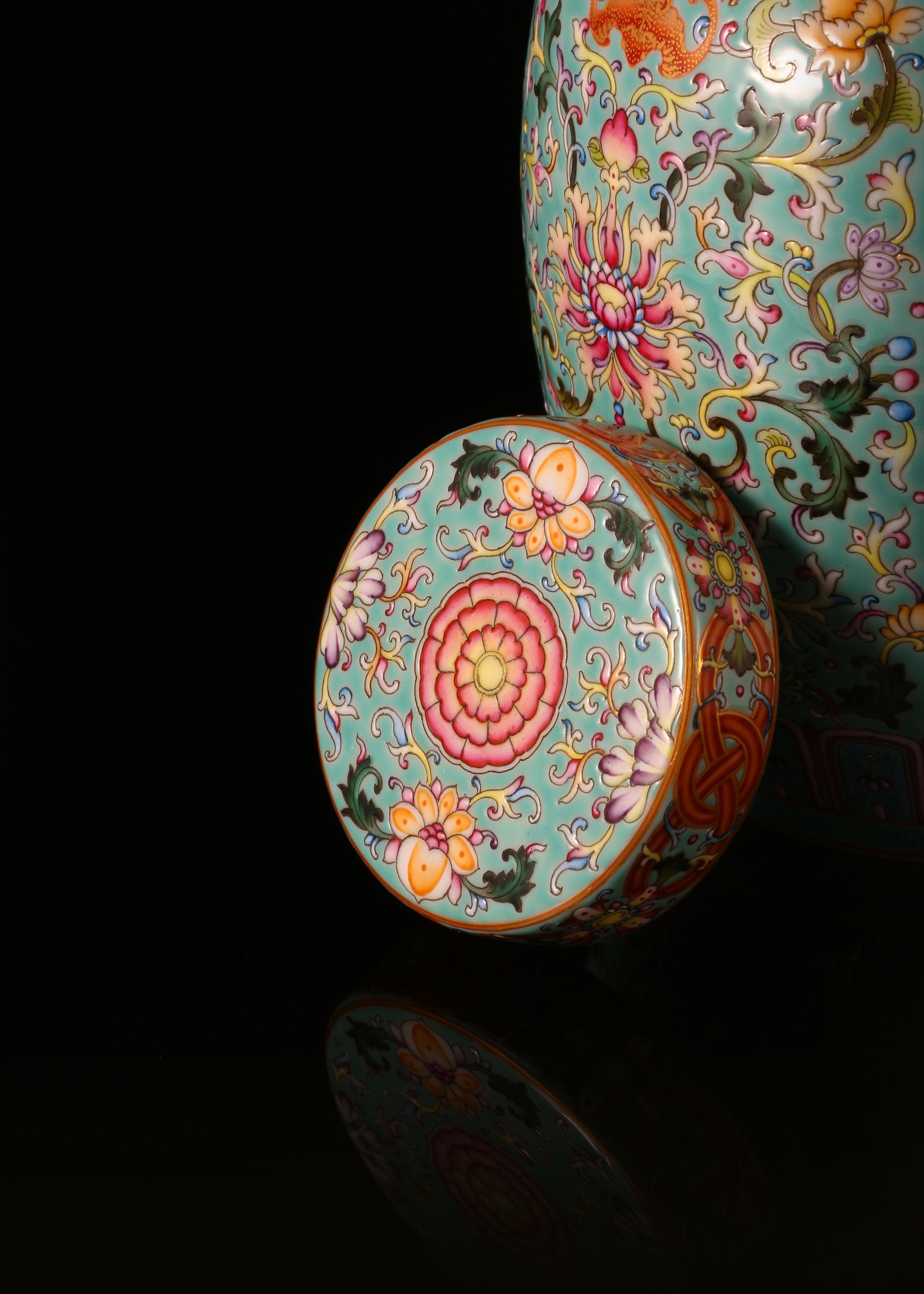
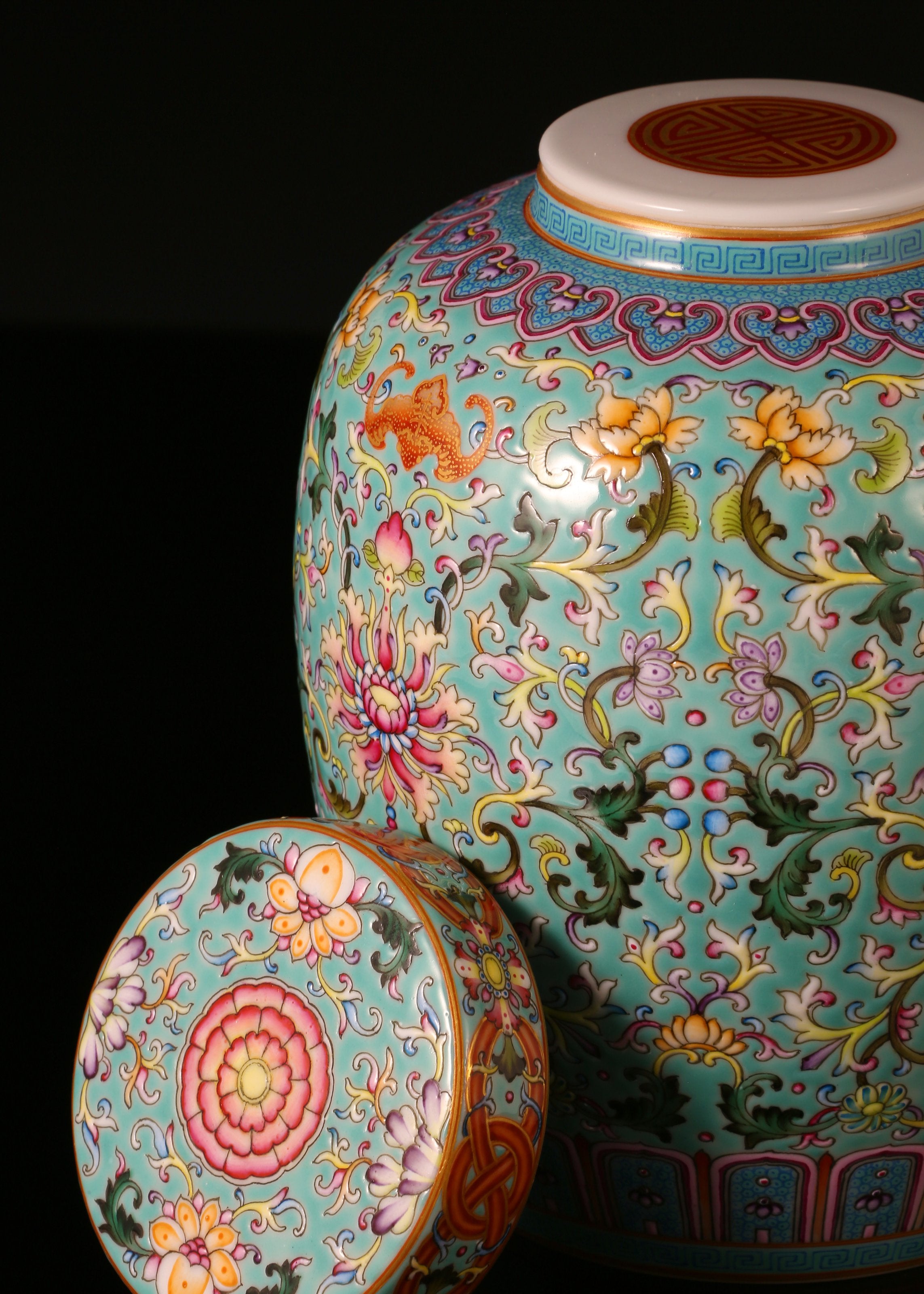
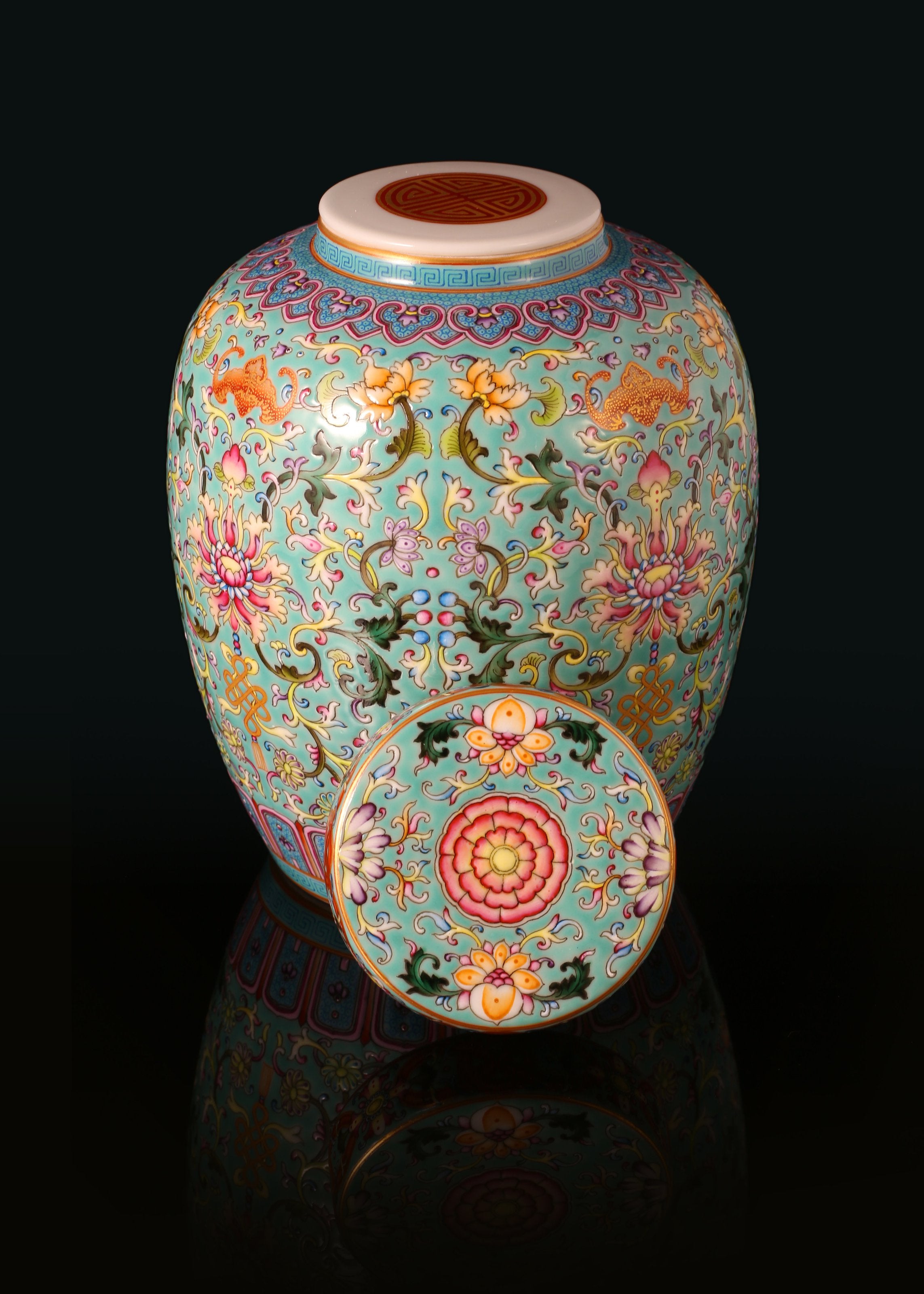
This Dayatang Enamel Painted Tianzi Jar with Continuous Blessings and Fortune is collaboratively crafted by a group of renowned masters, including Xu Zhijun — Intangible Cultural Heritage Inheritor of Qing Dynasty Official Kiln Famille Rose (Jingdezhen hand-painted porcelain), and Zhang Jian — Master of Overglaze Color and Gold-piling Craftsmanship.
It is decorated using multiple techniques: enamel painting, iron red coloring, and gold piling, and requires
four separate kiln firings to complete.
The patterns feature
Boundless Blessings from Heaven, interlocking branches, heart unity knots, and more.
In traditional Chinese art,
every pattern bears a meaning, and every meaning carries auspiciousness, symbolizing enduring fortune and longevity. The decoration is exquisitely detailed, with gentle, elegant colors that achieve perfect beauty.
Bat Auspicious Pattern
Also known as
Fu Rui (Blessing and Auspiciousness), it is regarded in Confucianism as an auspicious sign of divine favor.
Such omens include colorful clouds, favorable weather, double-grain ears, sweet springs from the earth, and the appearance of rare birds and mythical creatures.
Precious Lotus Flower (Baoxiang Flower)
The term “Baoxiang” comes from Buddhism, originally a respectful title for the dignified countenance of the Buddha.
The Precious Lotus Flower is an ideal floral motif that represents purity, grace and elegance.
It does not refer to a single real flower, but a highly refined artistic design, synthesized and refined from elements of the lotus, peony, pomegranate and other blossoms.
The pattern originated and flourished in the Tang Dynasty, inheriting the Tang aesthetic of admiring fullness and national artistic character.
In the Song Dynasty, it shifted from a luxurious style to a more orderly and simple one. The interlocking Precious Lotus Flower also appeared in this period, with stronger rhythmic dynamism.
Interlocking Branch Pattern
The exterior is painted with enamel interlocking branch patterns, with clear leaf veins, winding vines and graceful, lively foliage.
Its continuous, unbroken structure symbolizes
endless vitality and perpetual growth.
Heart Unity Knot
The Heart Unity Knot is an ancient and deeply meaningful Chinese knot.
With its two interlocked knots, it is widely used as a symbol of love, representing the wish of
“eternal union of hearts”.
Enamel Painted Porcelain
Beyond its intricate and delicate painting, this Enamel Painted Tianzi Jar requires four separate kiln firings, each carrying the risk of flaws.
Its formal name is
Porcelain-body Painted Enamel, later known as
Guyuexuan in China and
Rose Color abroad.
Enamel painted porcelain was created in the late Kangxi period of the Qing Dynasty and further perfected during the Yongzheng reign.
In the Qing Dynasty, enamel porcelain was originally made exclusively for the appreciation of emperors and empresses.
Enamel pigments are special artificially fired coloring materials.
Before the 6th year of the Yongzheng reign (1728), they had to be imported from Europe.
After 1728, the Imperial Workshop of the Qing Court successfully developed over 20 types of enamel pigments on its own — marking the peak of ancient Chinese polychrome porcelain craftsmanship.