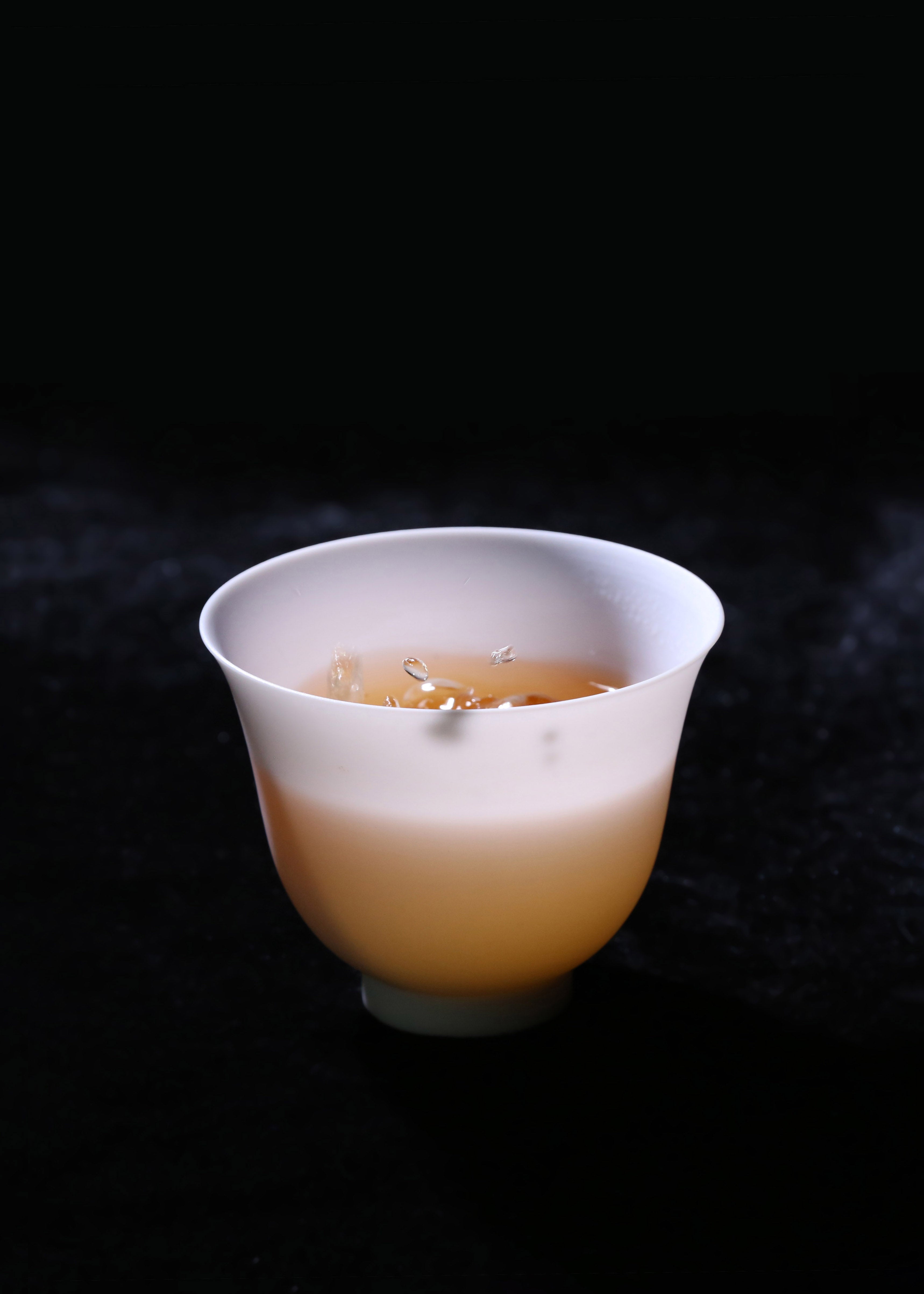
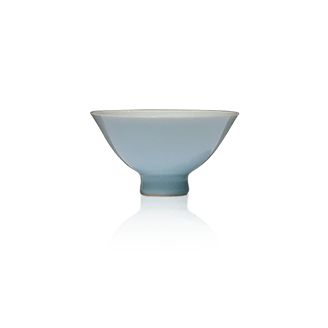
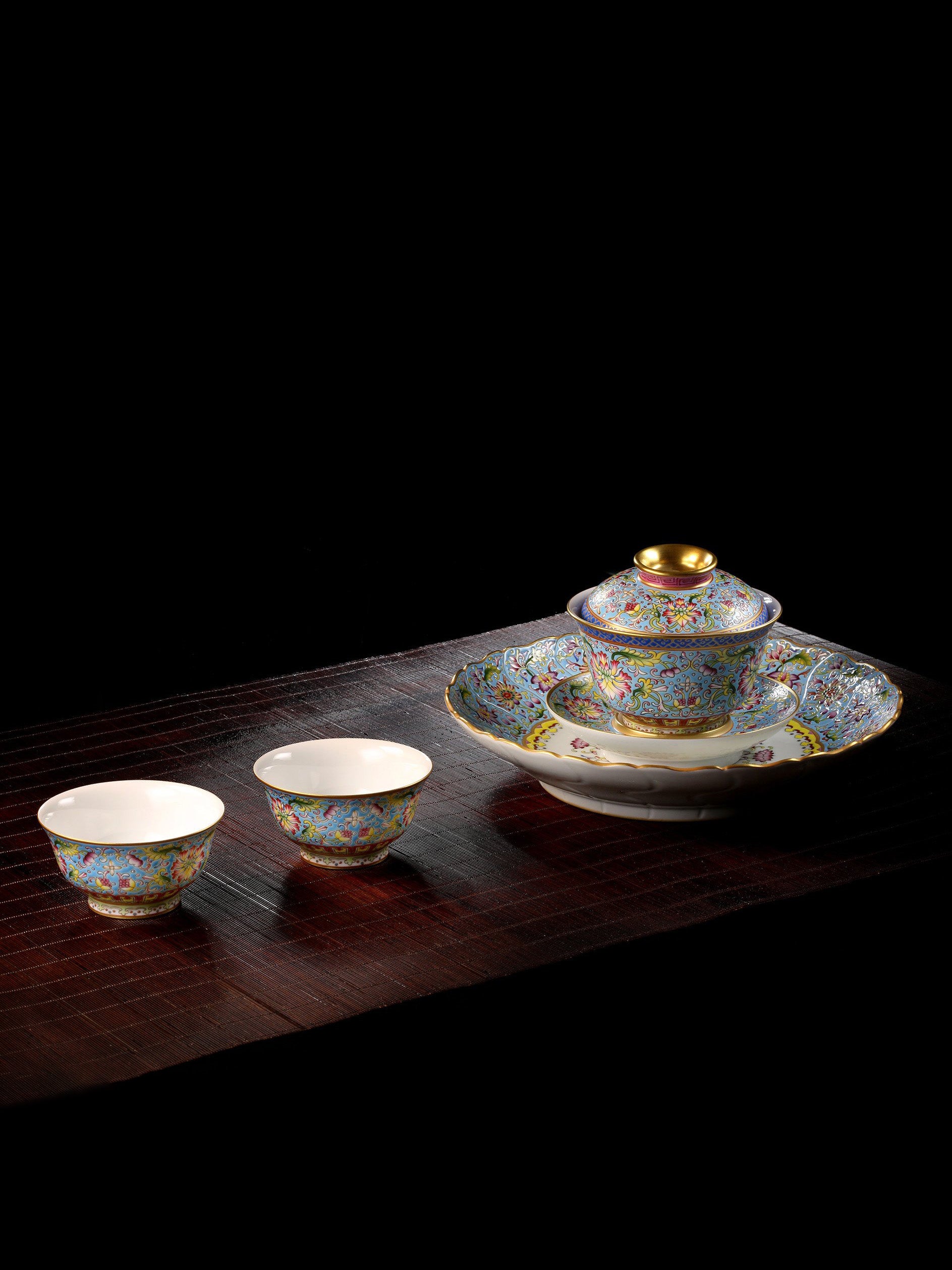
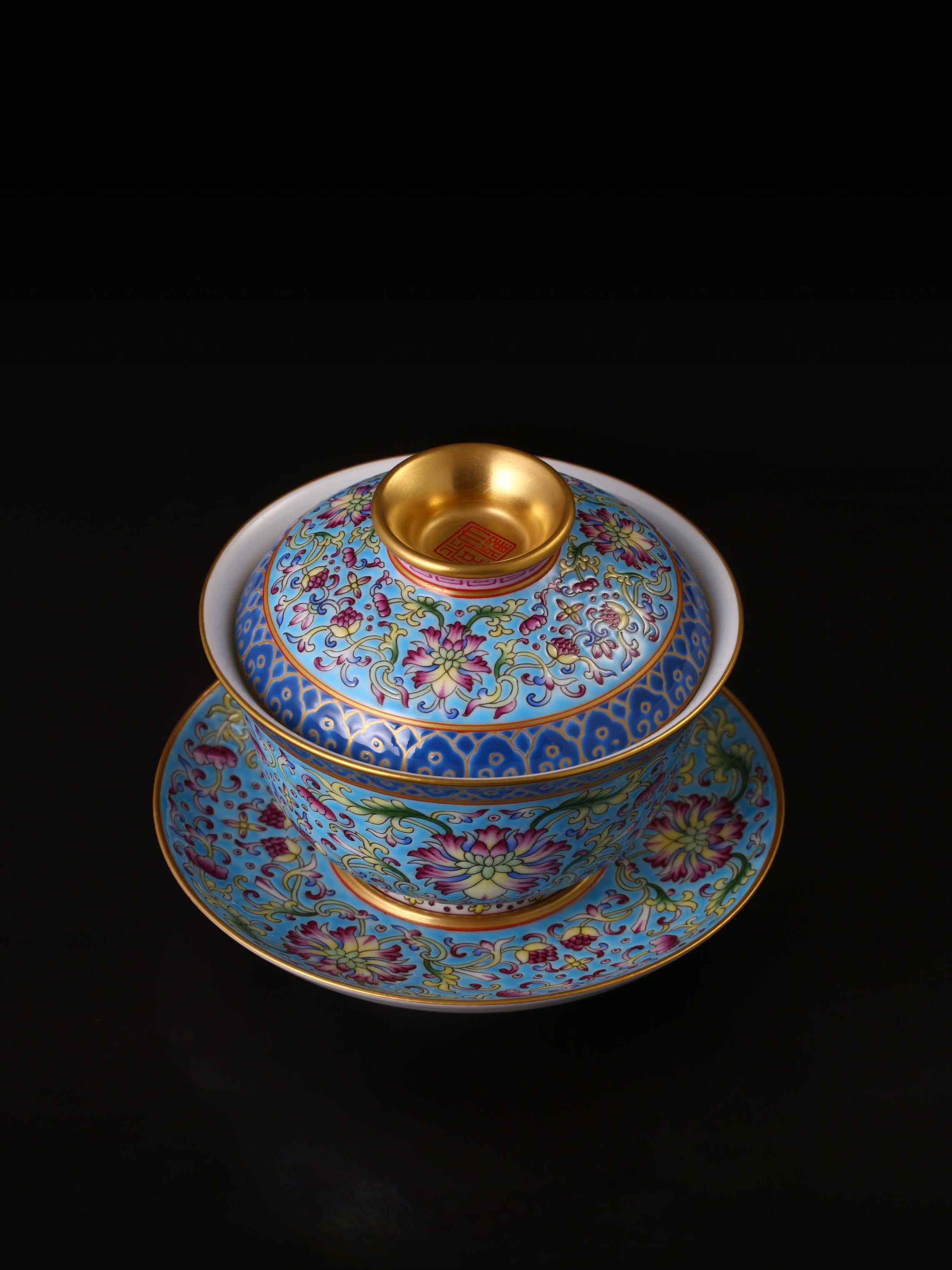
This blue ground famille rose gaiwan with interlocking lotus patterns is painted by
Master Zhang Jian, a renowned craftsman specializing in Jingdezhen overglaze decoration and gold-piling craftsmanship.
(Master Zhang Jian once represented Jingdezhen to create the
Longevity Dragon Vase for President Hu Jintao as a birthday tribute.)
It is custom-made by the owner of Dayatang Hall and
not available in the open market.
Enamel porcelain refers to an overglaze decorative technique that transfers cloisonné painting skills onto porcelain bodies.
It is later known as
Guyuexuan in China and
Rose Porcelain abroad.
Originating in the late Kangxi reign of the Qing Dynasty, enamel porcelain was further developed during the Yongzheng reign.
Enamel porcelain was a new type of polychrome porcelain created under the order of Emperor Kangxi in the late Kangxi period.
It saw the largest output during the Yongzheng and Qianlong reigns, and production declined sharply after the Qianlong Dynasty.
According to Qing court archives and the inscriptions on the original caskets of enamel wares, its official name in the Qianlong period was
Porcelain-body Enamel Painting.
Enamel porcelain was a rare artwork exclusively for the appreciation of emperors and empresses, under strict imperial control.
The plain white porcelain blanks were produced at the
Jingdezhen Imperial Kiln and transported to the imperial palace.
Under the emperor’s instruction, court painters meticulously decorated them in the Enamel Workshop of the Imperial Household Department, with court calligraphers inscribing poems and signatures.
The pieces were finally fired at around 600°C in a charcoal kiln.
Representative enamel porcelain of the Yongzheng and Qianlong periods is a masterpiece integrating
poetry, calligraphy, painting and seal carving, representing the pinnacle of ancient Chinese polychrome porcelain craftsmanship.
This enamel gaiwan requires
four separate firings in kilns at different temperatures with special artificially refined enamel pigments.
The blue hue of this enamel work boasts the texture of natural sapphires, while the golden patterns are painted with
pure gold.
The pink tones are layered and vivid, with a relief-like color and texture, making it utterly exquisite and magnificent.