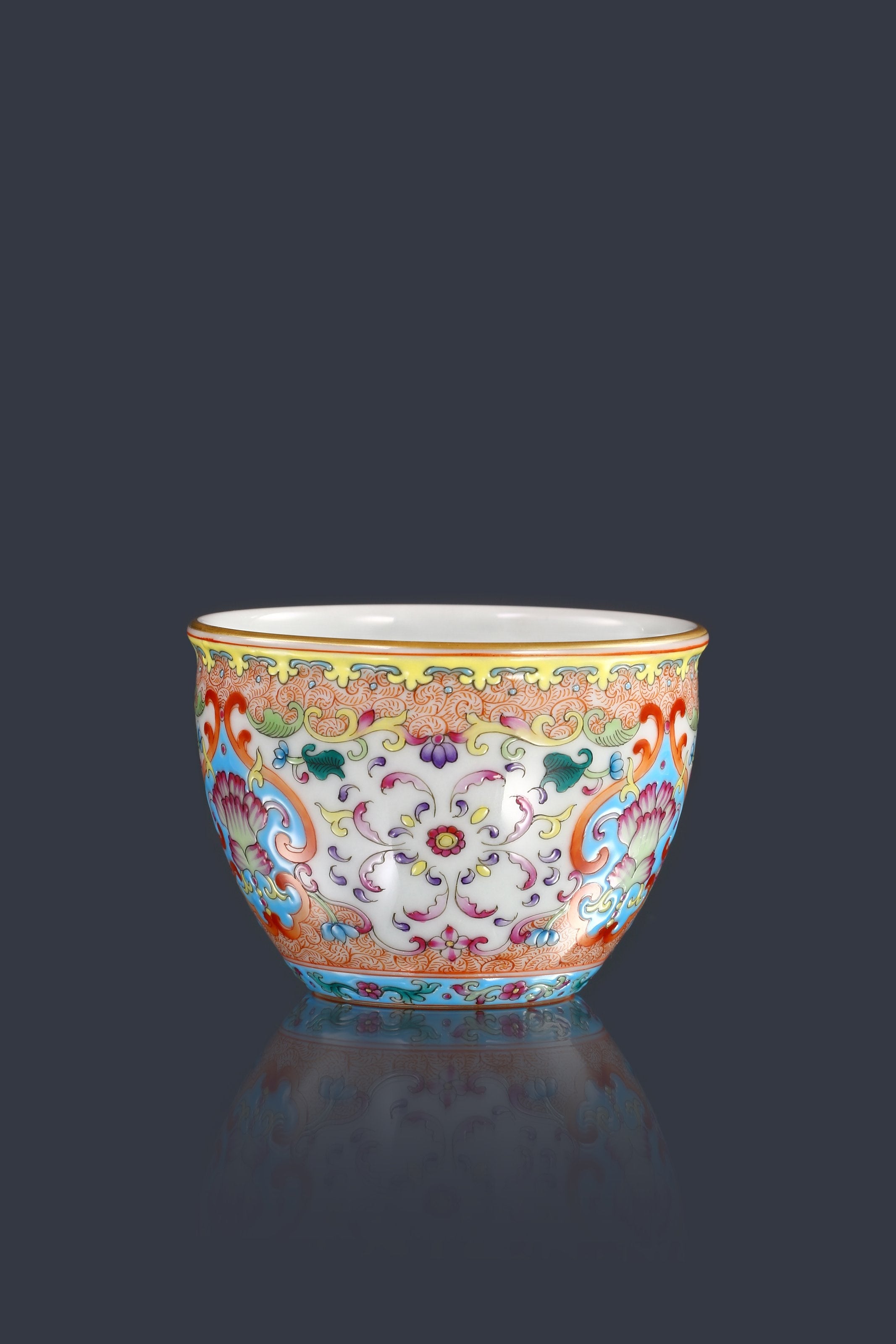
Enamel-Decorated Cylinder Cup with Baoxiang Flowers,
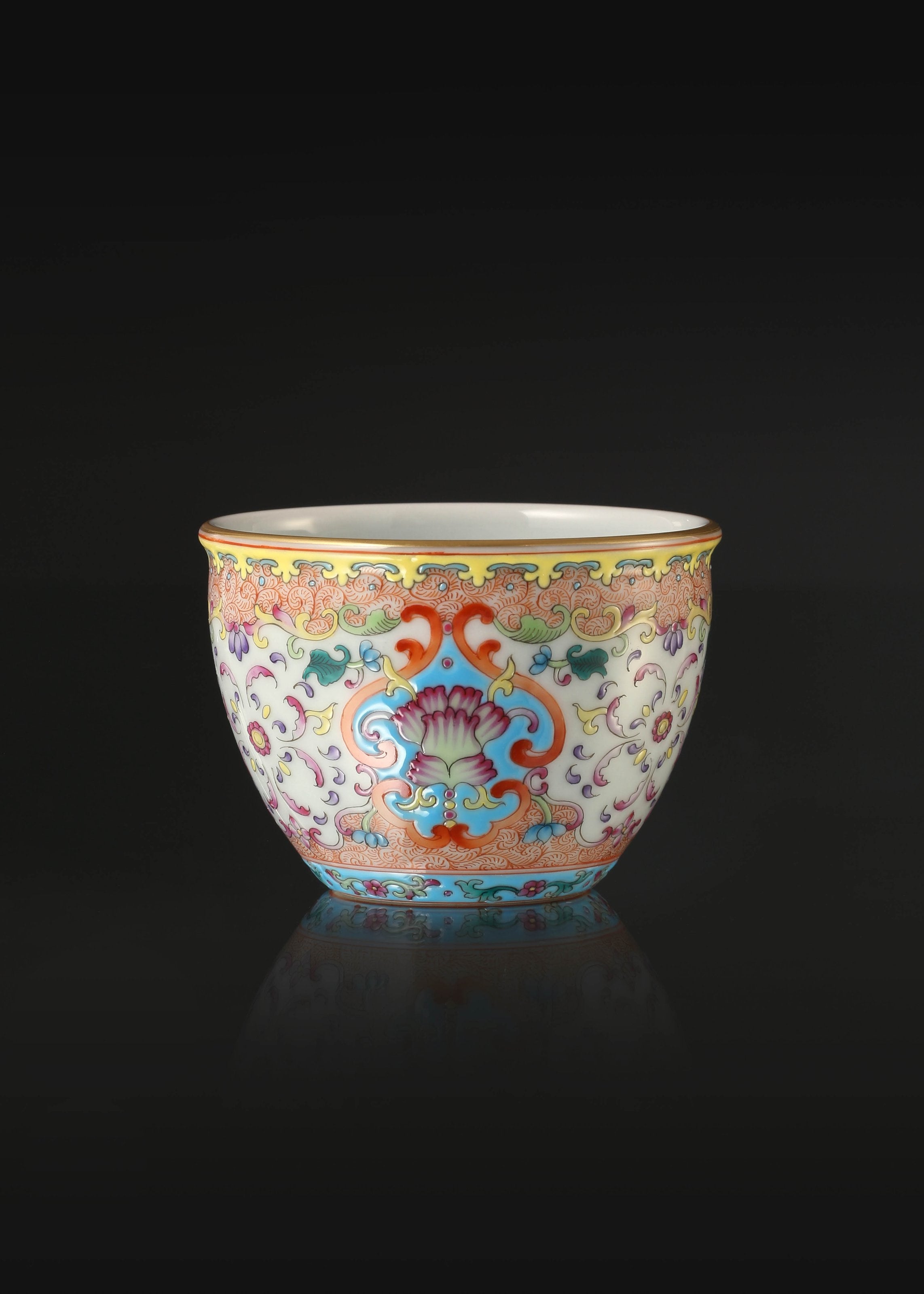
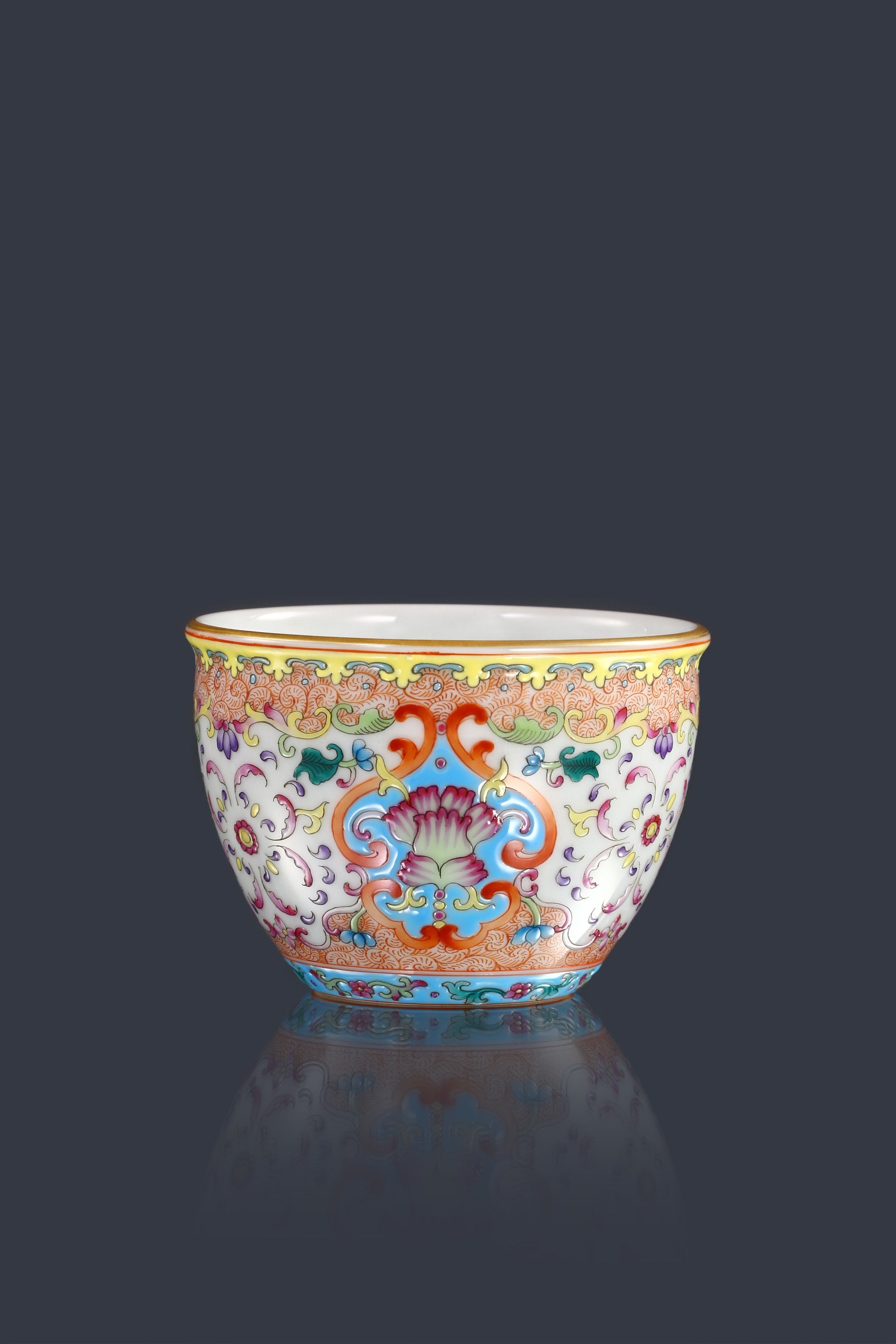
This enamel-decorated cylinder cup with baoxiang flowers is collaboratively crafted by Master Zhang Jian, a master artisan of Jingdezhen overglaze decoration and piled‑gold technique, together with several other master craftsmen.
The porcelain painting on this cylinder cup features lines as fine as silk hair, of extraordinary delicacy.
This cup is custom‑made by Zhao Qingtao, the owner of Dayatang Studio, with a slightly larger shape.
Scrolling Baoxiang Flower Pattern
The exterior is decorated with enamel‑painted scrolling baoxiang flower patterns.
The patterns are freely and openly shaped, with abstract flowers and clear veins.
The lotus branches and leaves twist and curl gracefully, elegant and full of dynamism.
The color scheme is gorgeous, and the outer wall is adorned with golden string patterns.
The baoxiang flower pattern originated in the Tang Dynasty, and its social background may be traced to international exchanges between the Tang Dynasty and the Western regions.
The scrolling pattern originated around the Han Dynasty and prevailed in the Southern & Northern Dynasties, Sui, Tang, Song, Yuan, Ming and Qing dynasties.
Enamel Porcelain
Beyond its elaborate and exquisite painting, this enamel‑decorated cylinder cup with baoxiang flowers requires four separate kiln firings to complete, with the risk of damage in each firing.
In the Qing Dynasty, enamel porcelain was originally made exclusively for the appreciation of emperors and empresses.
Enamel is a special colored pigment produced through artificial firing.
Before the 6th year of the Yongzheng reign (1728), enamel materials had to be imported from Europe.
After that year, the
Imperial Workshop of the Qing Court successfully developed more than 20 kinds of enamel pigments on its own.
Enamel porcelain represents the pinnacle of ancient Chinese polychrome porcelain craftsmanship.