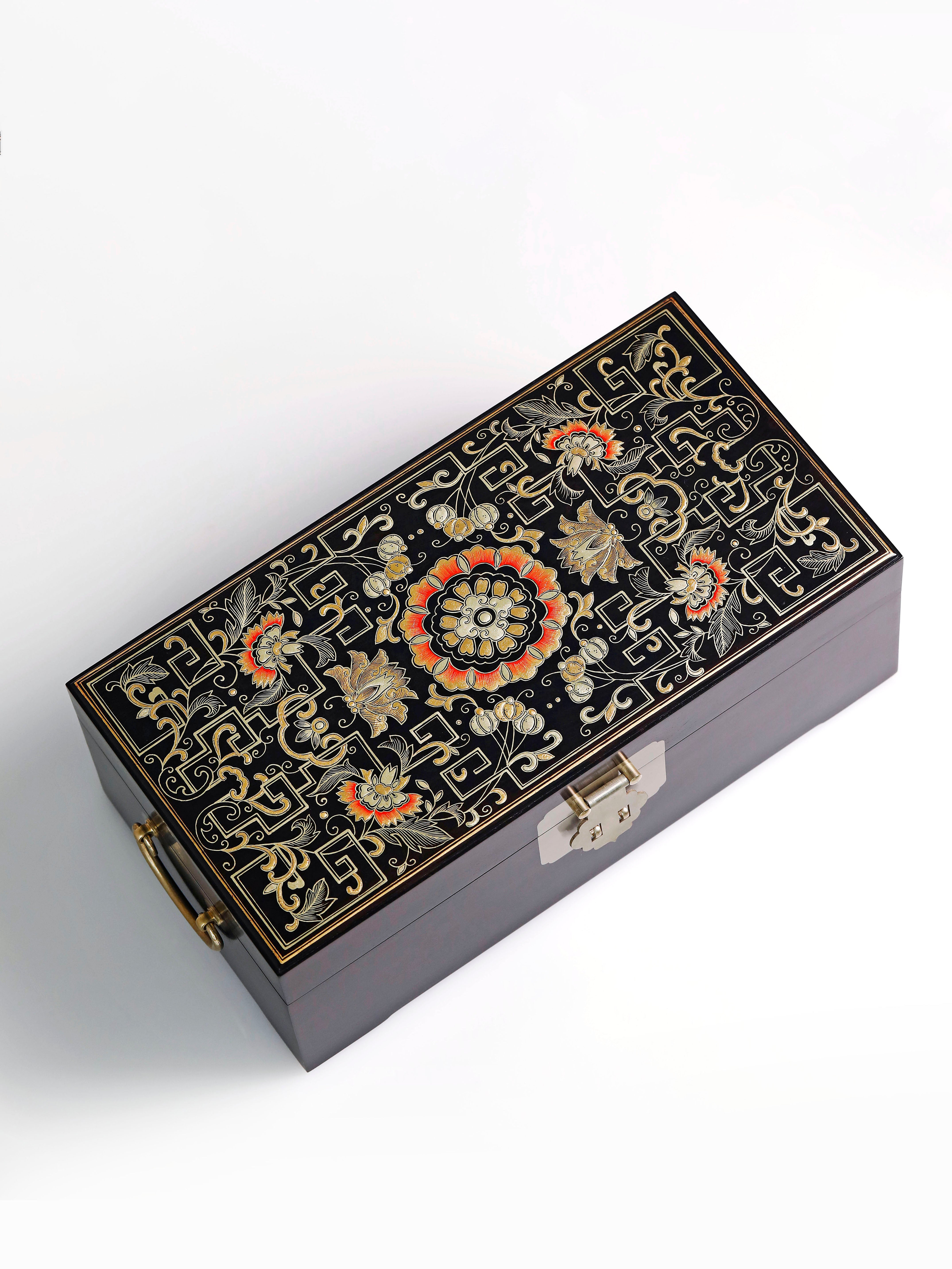
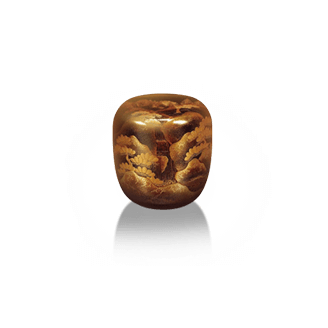
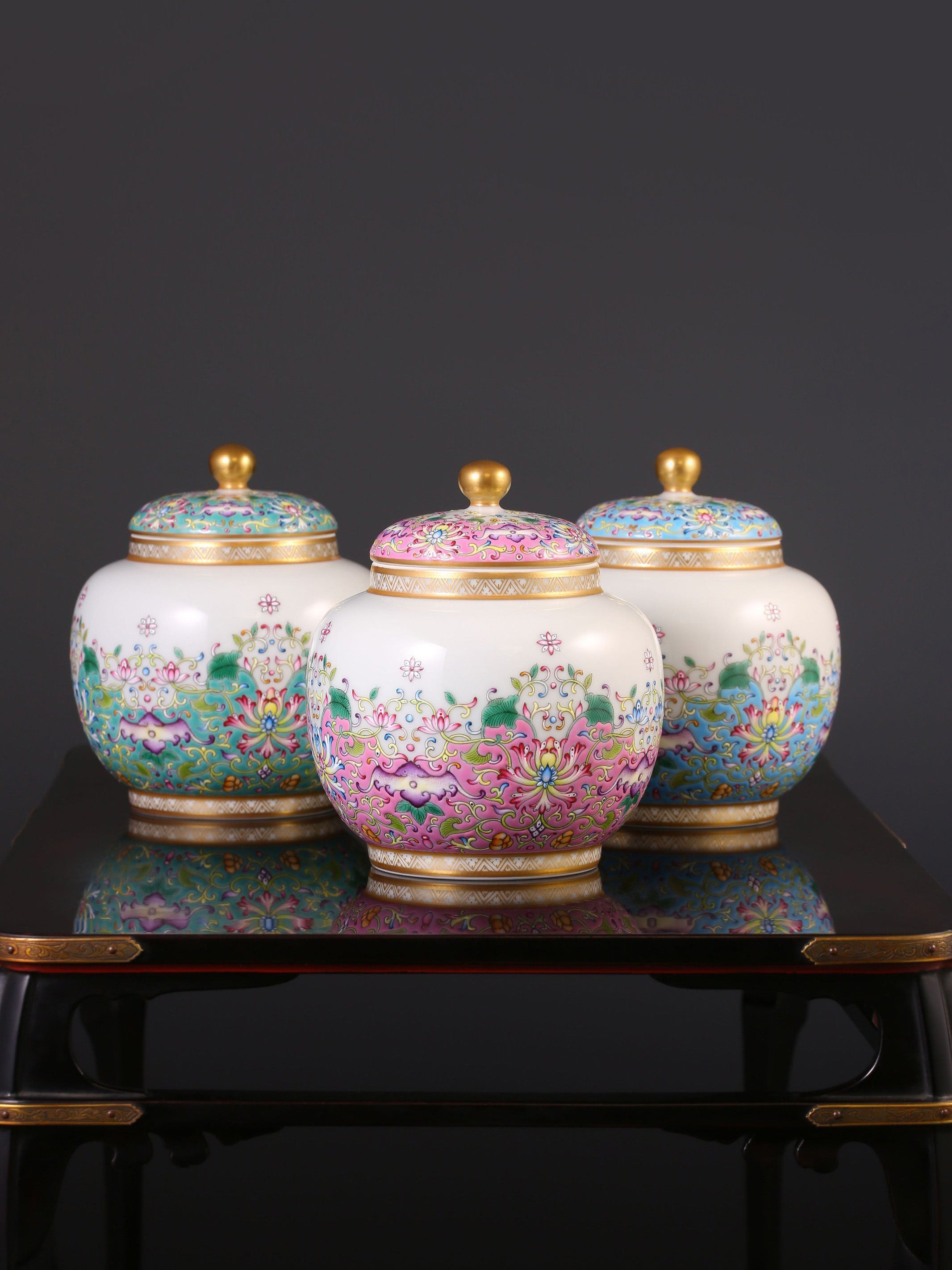
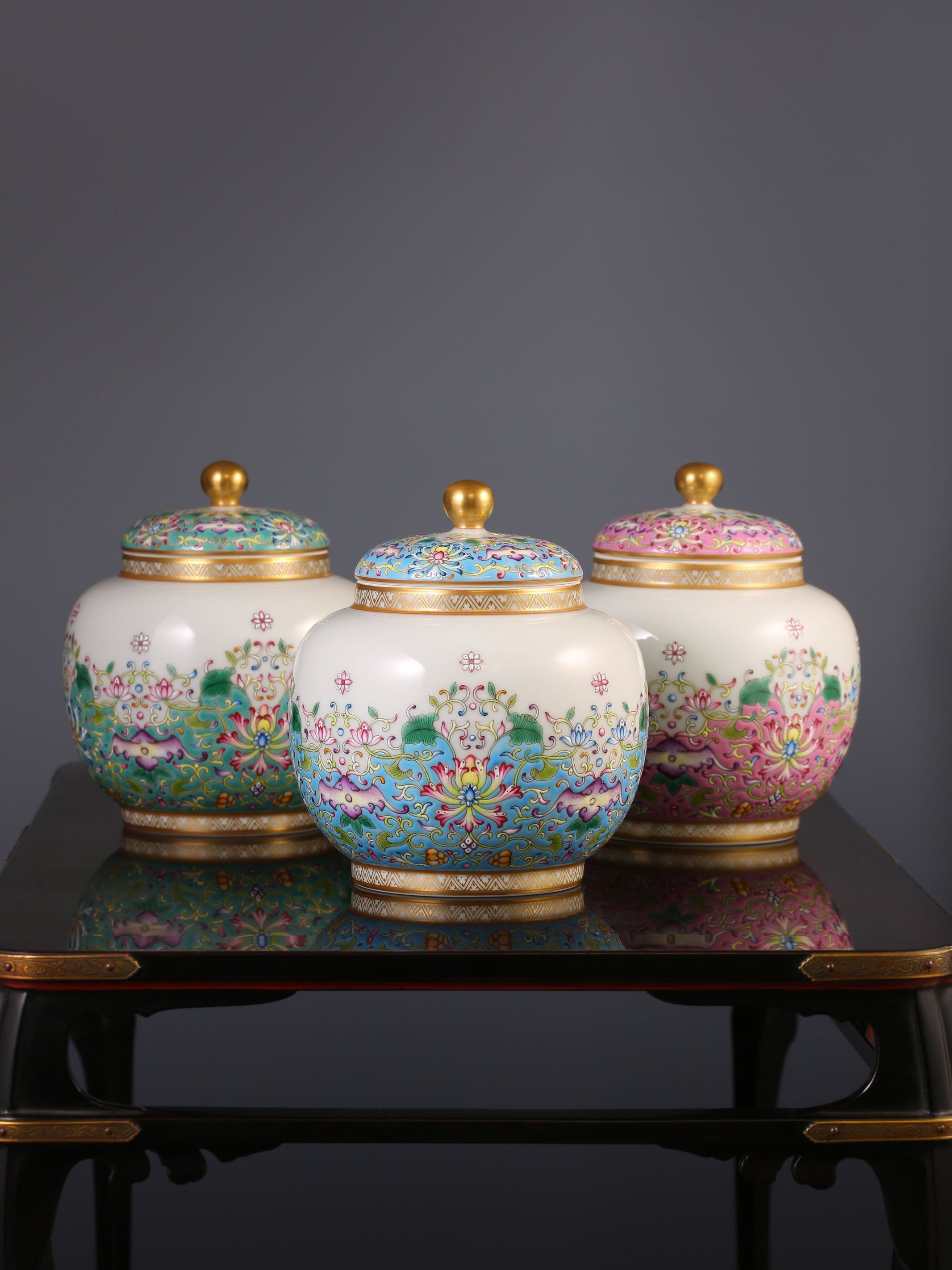
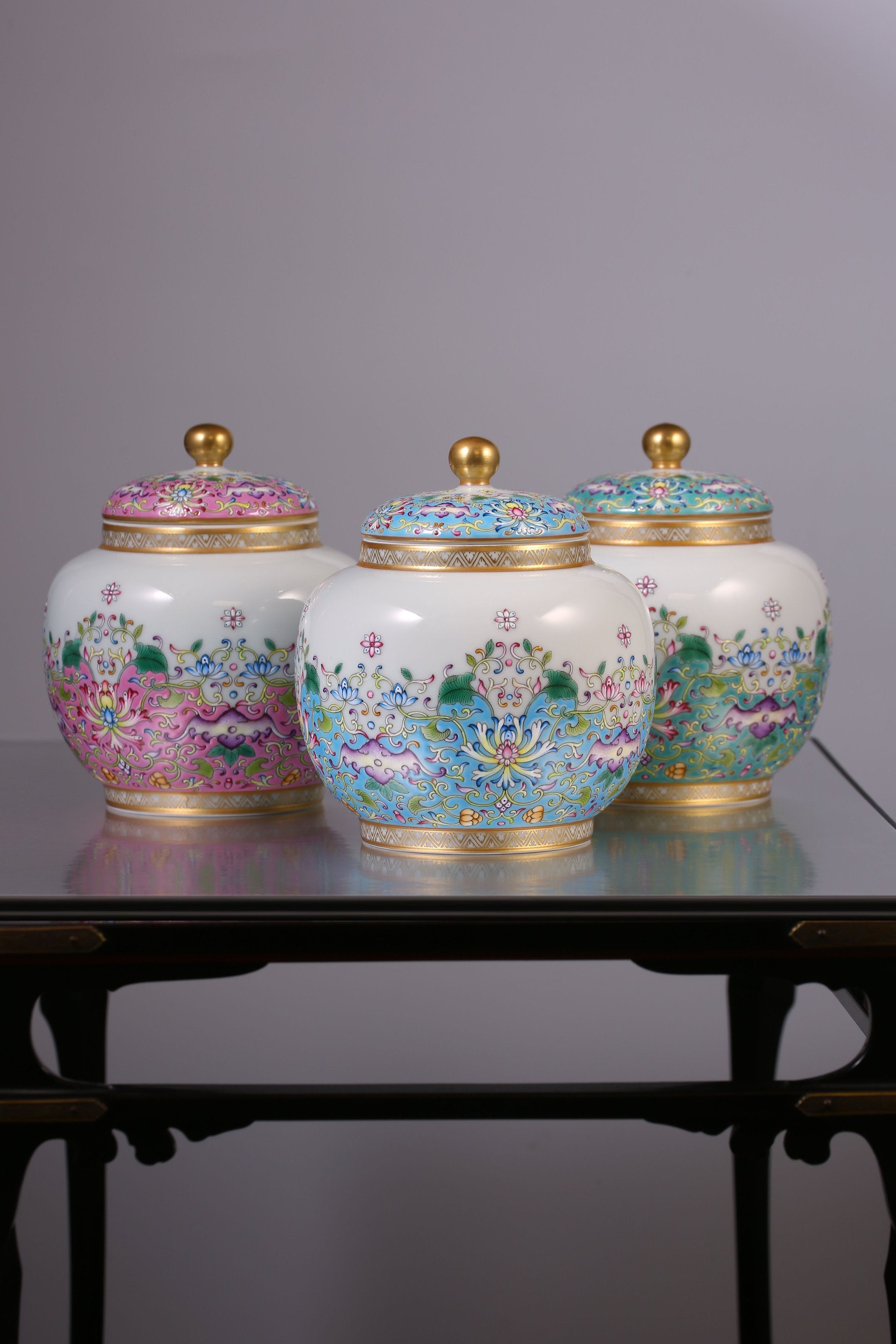
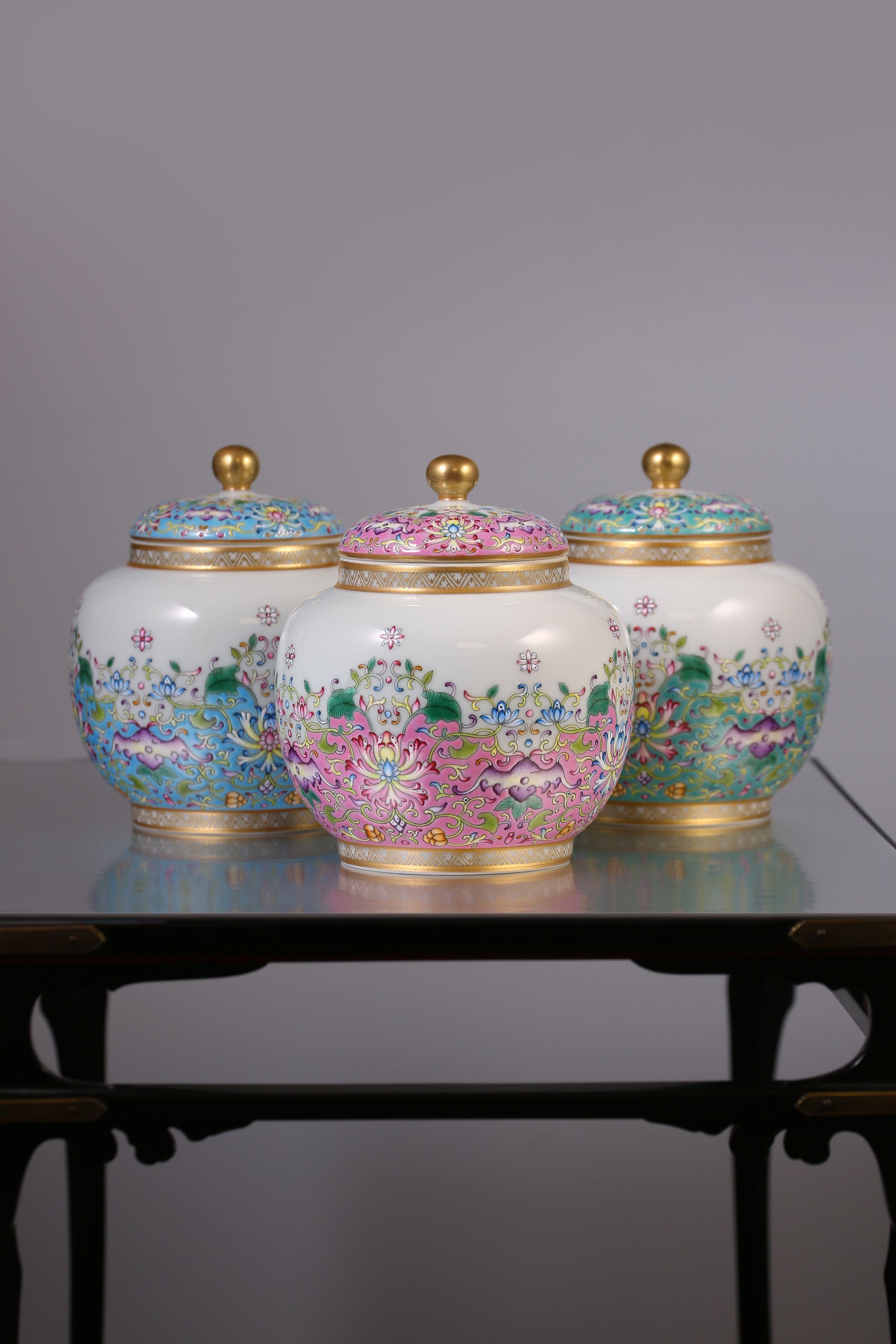
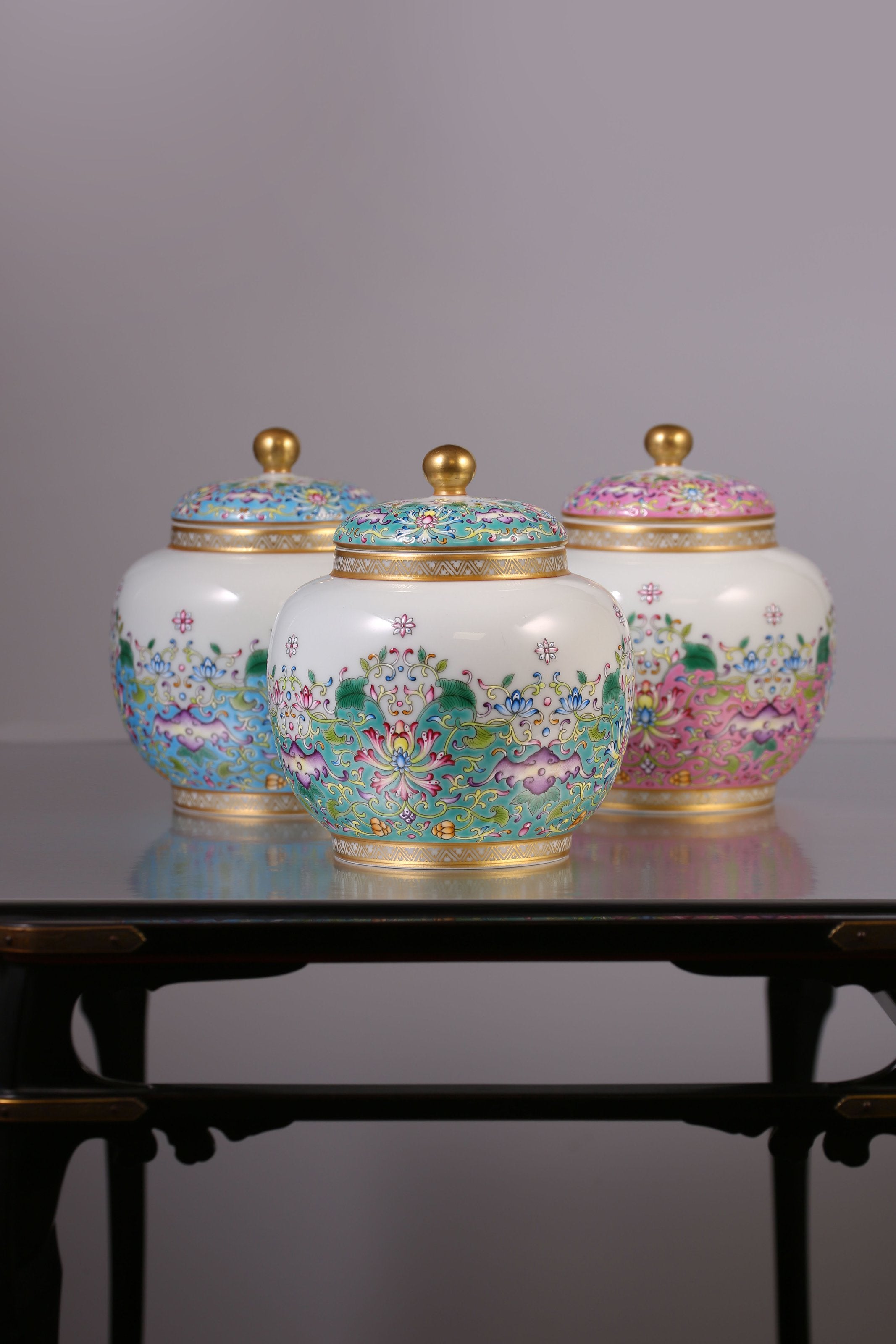
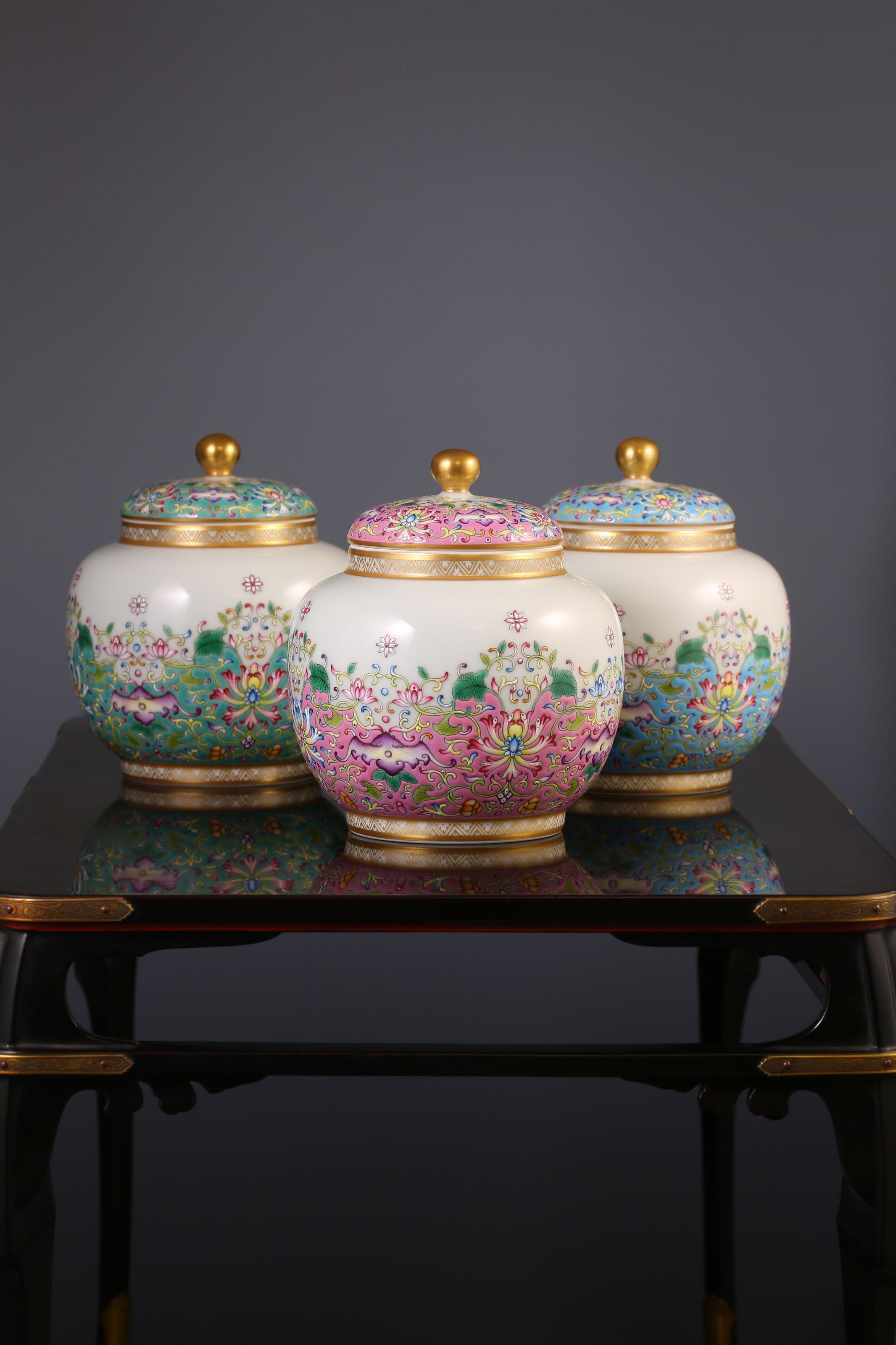
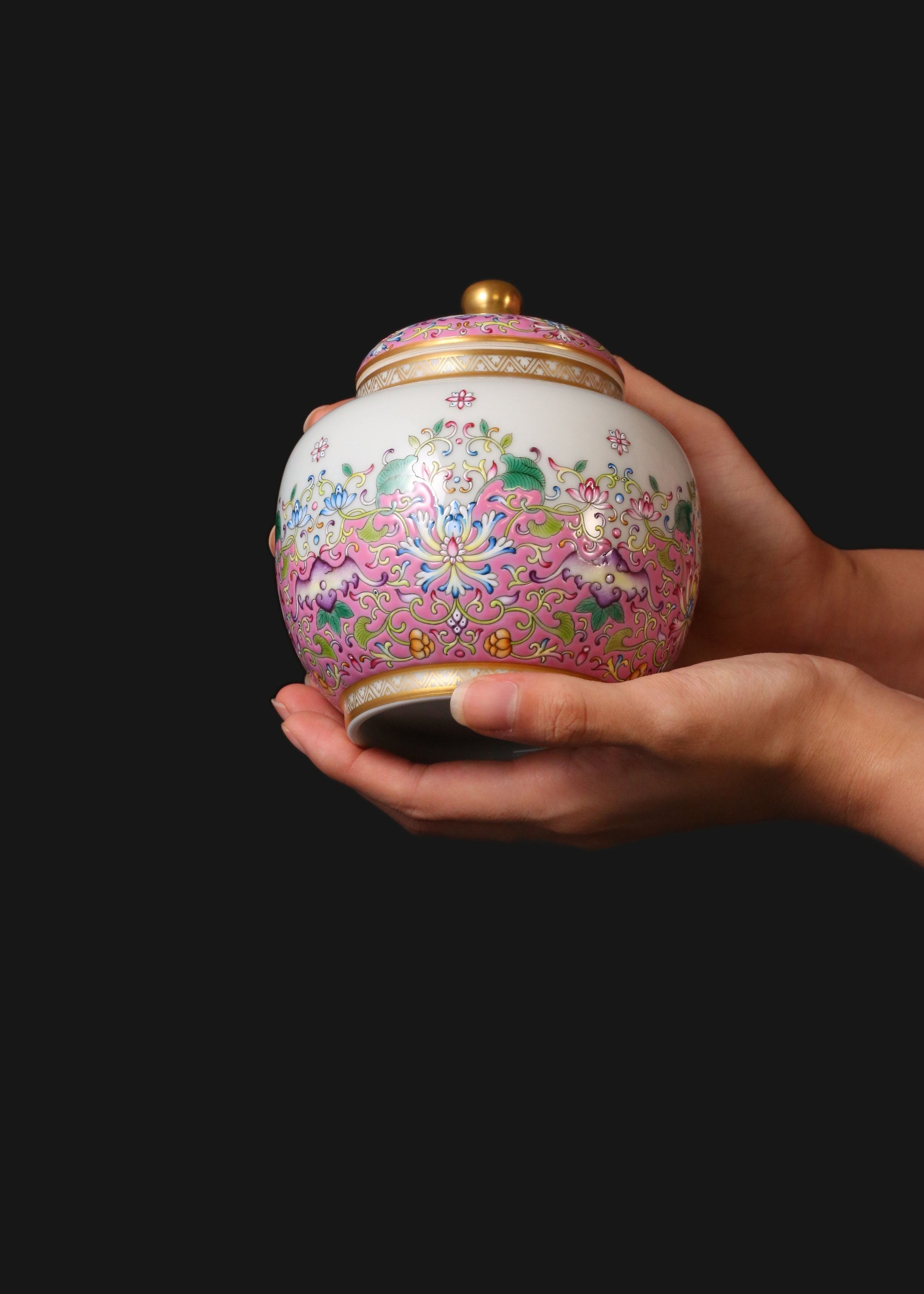
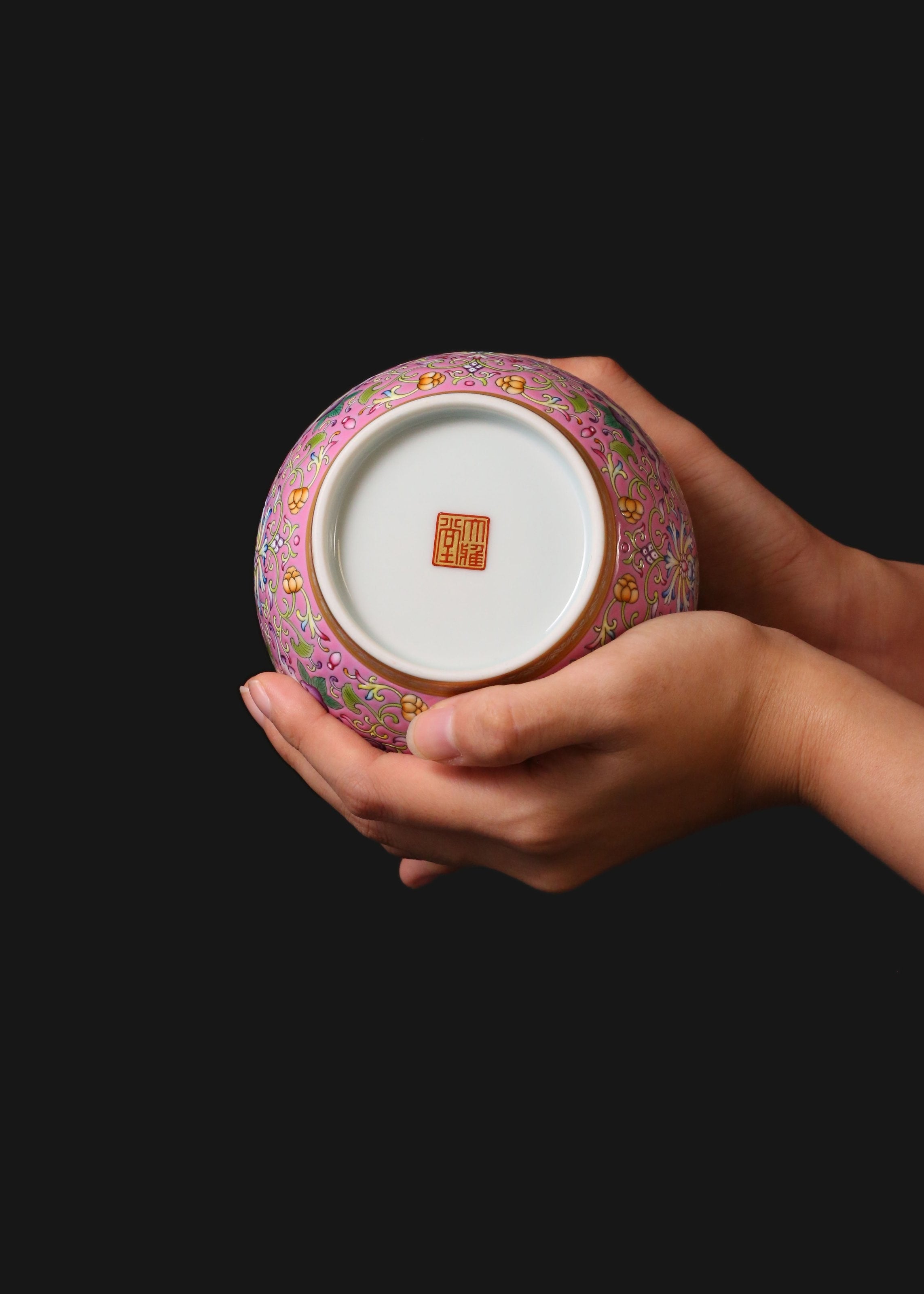
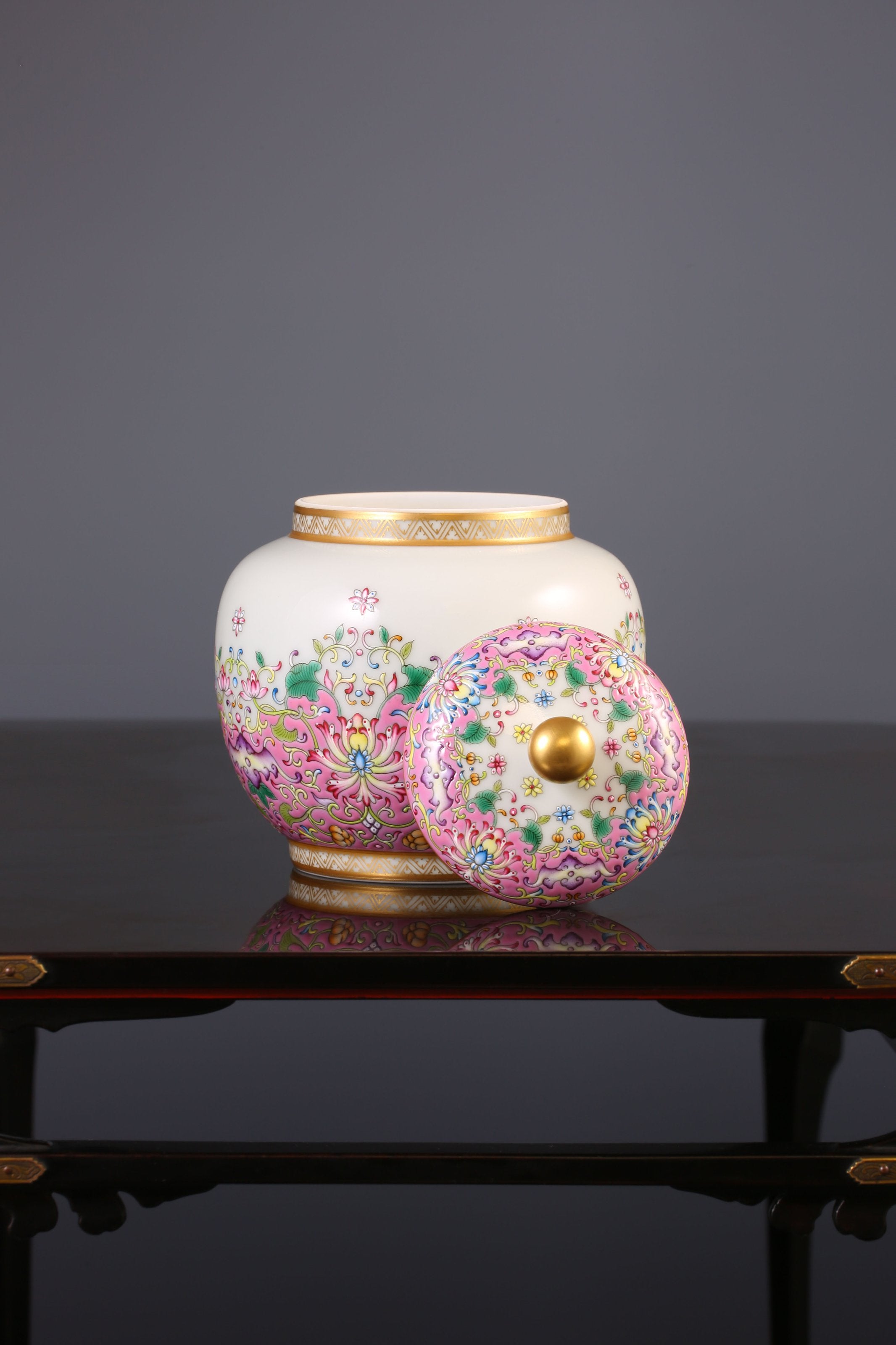
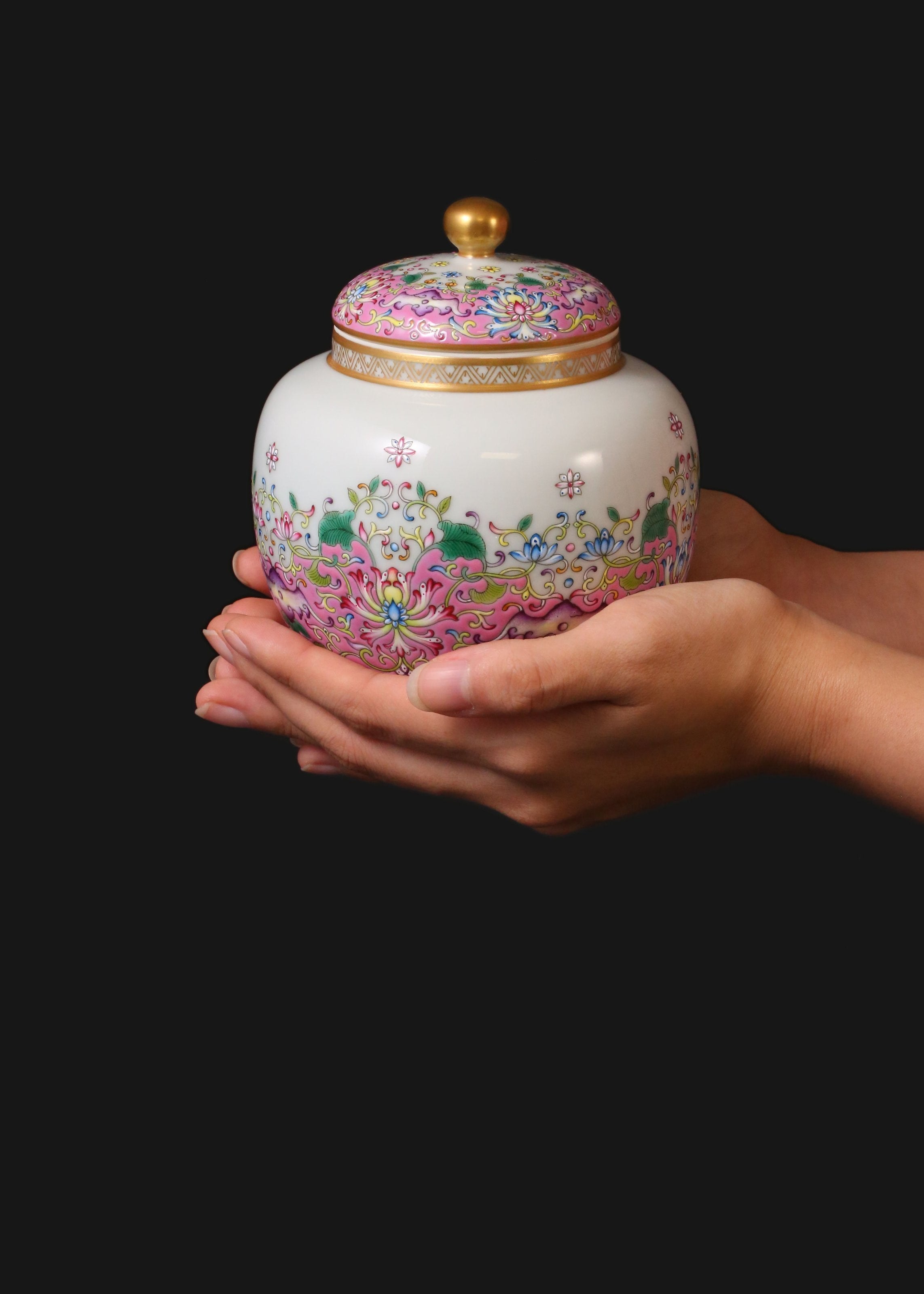
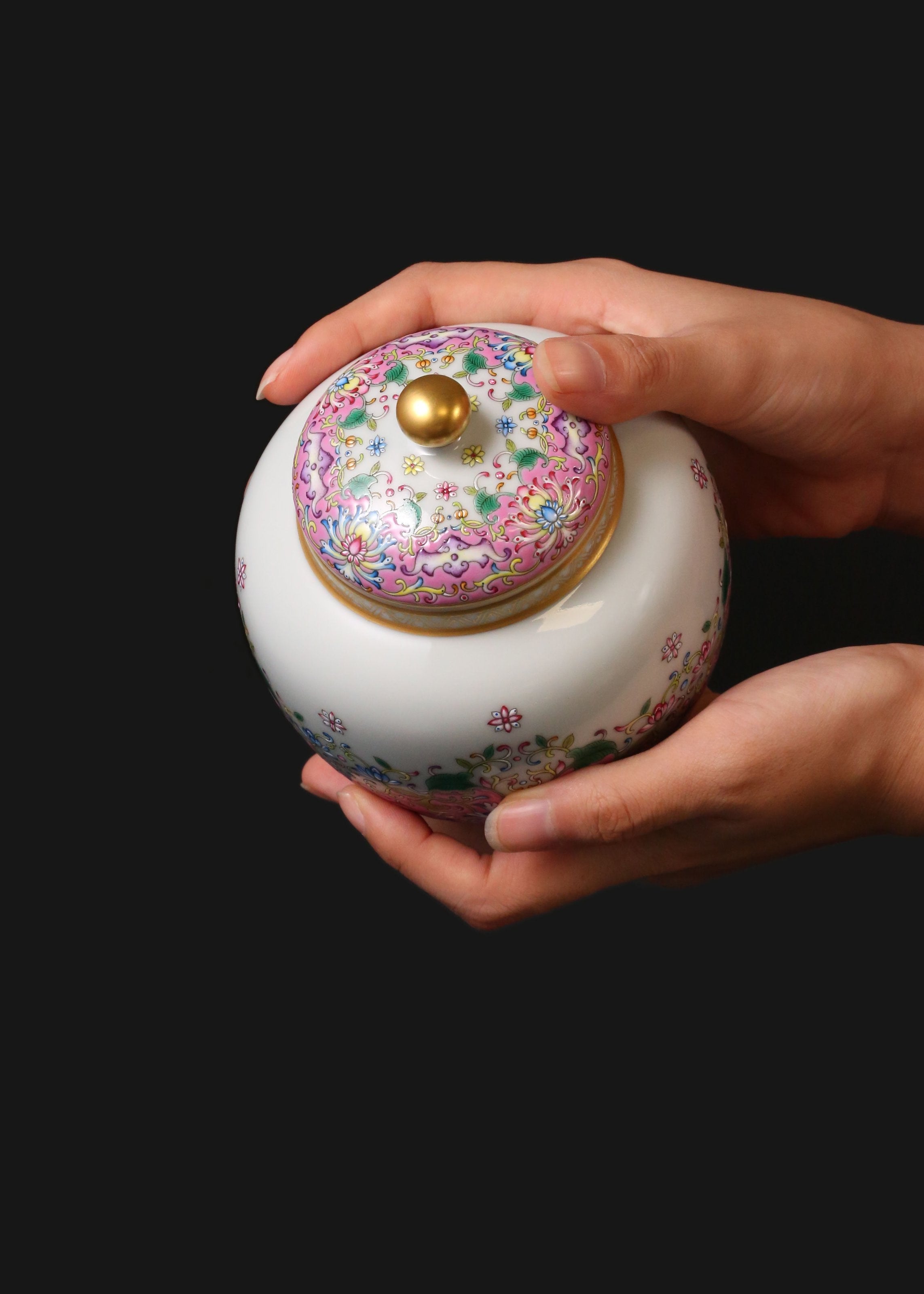
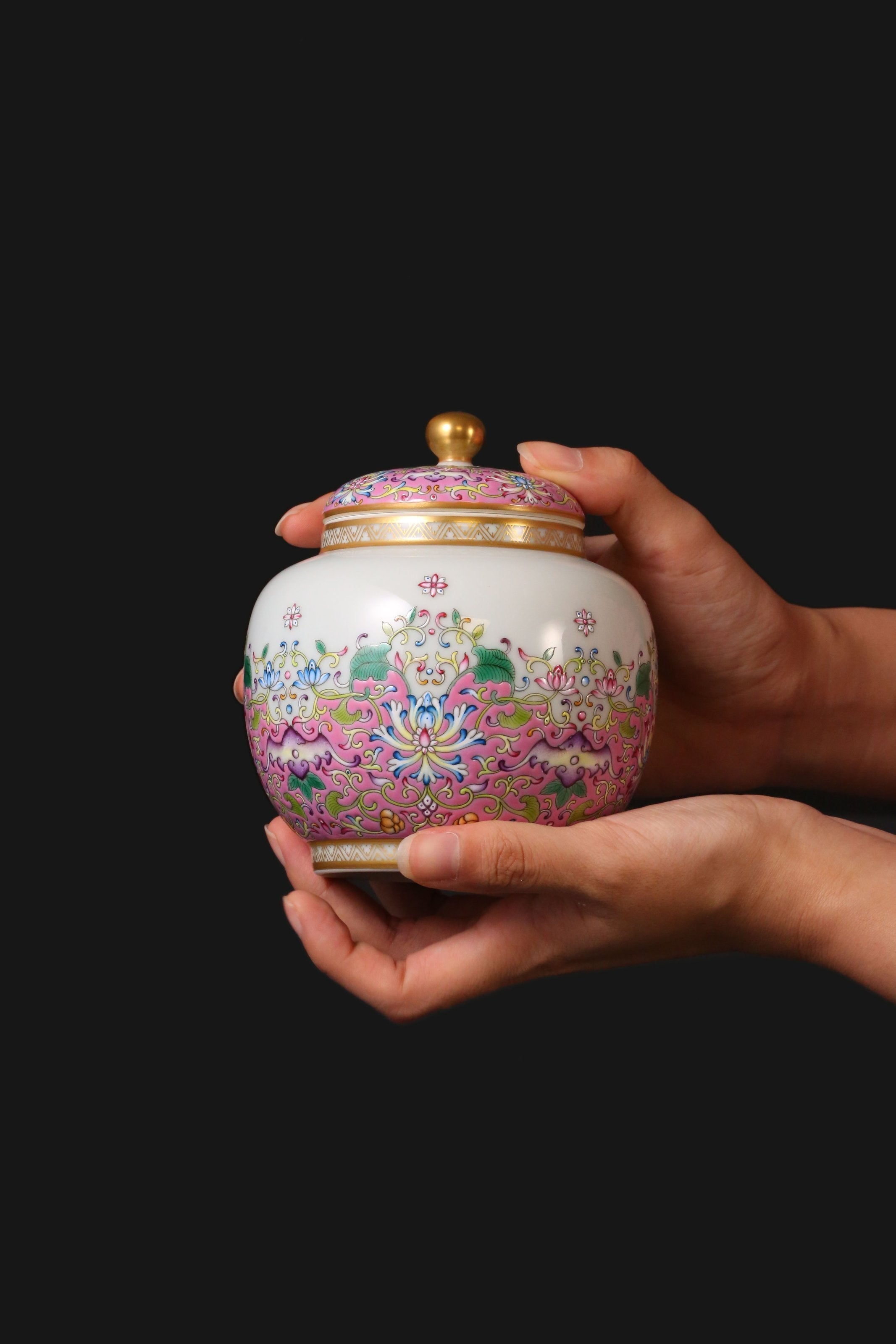
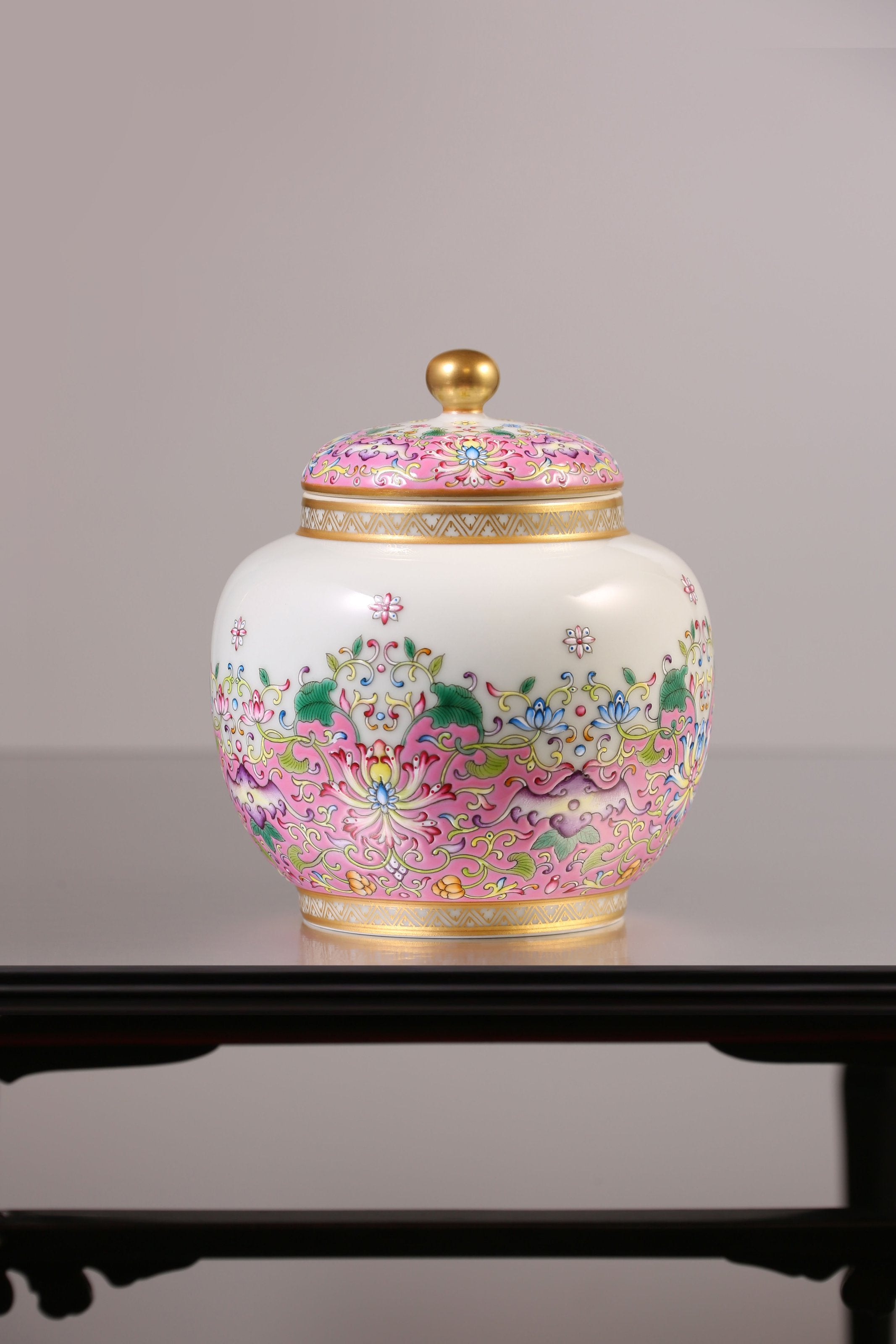
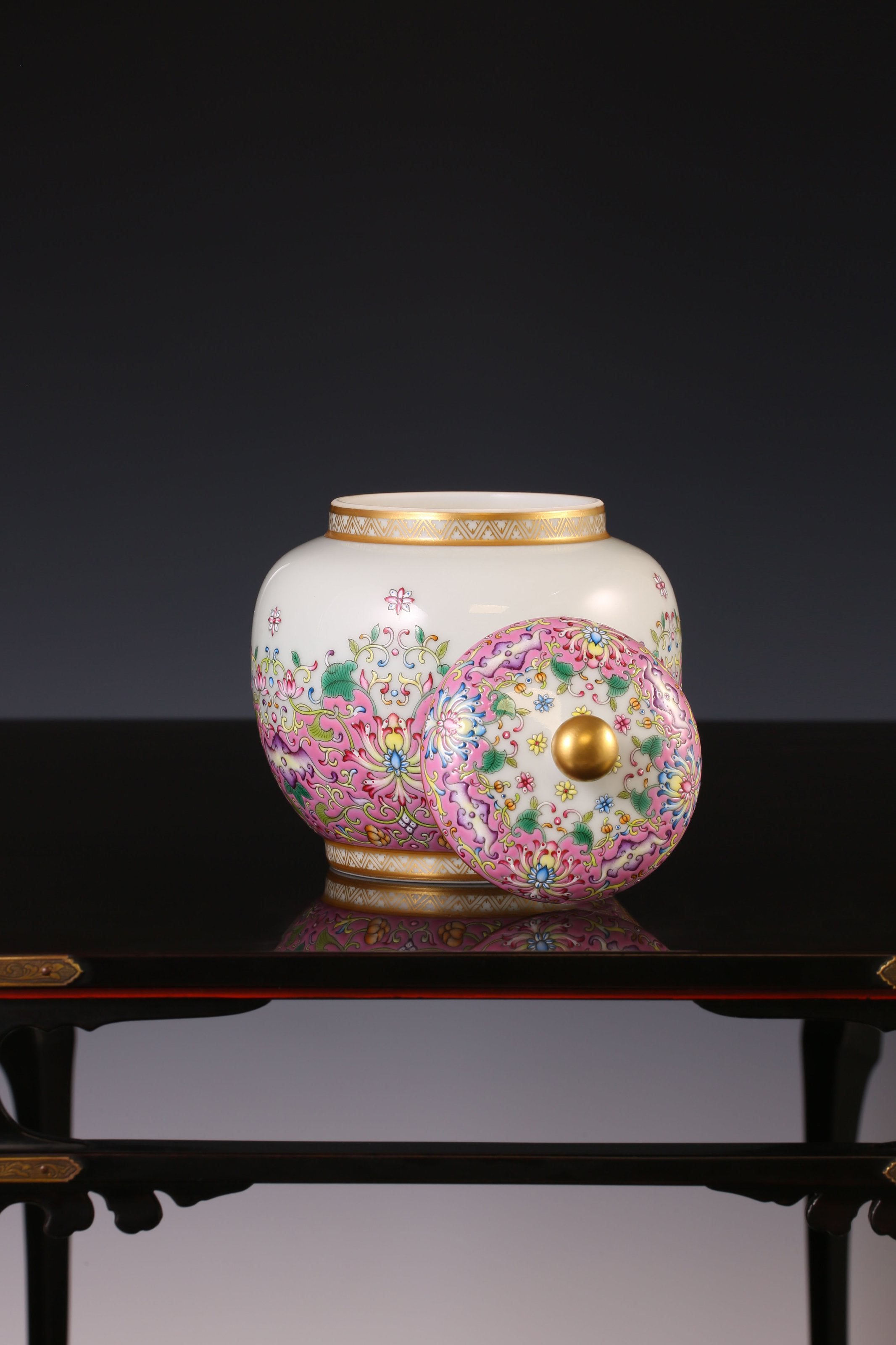
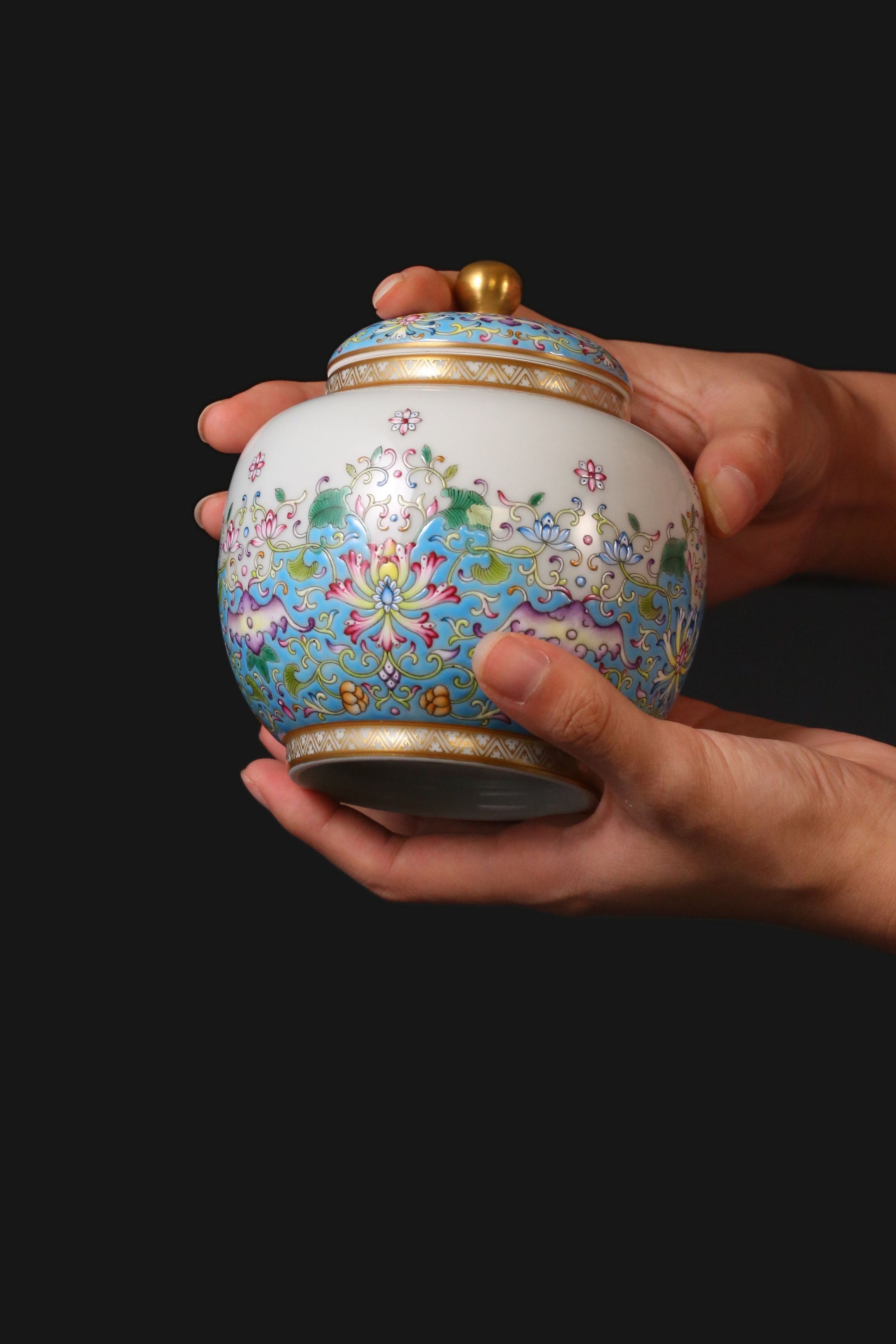
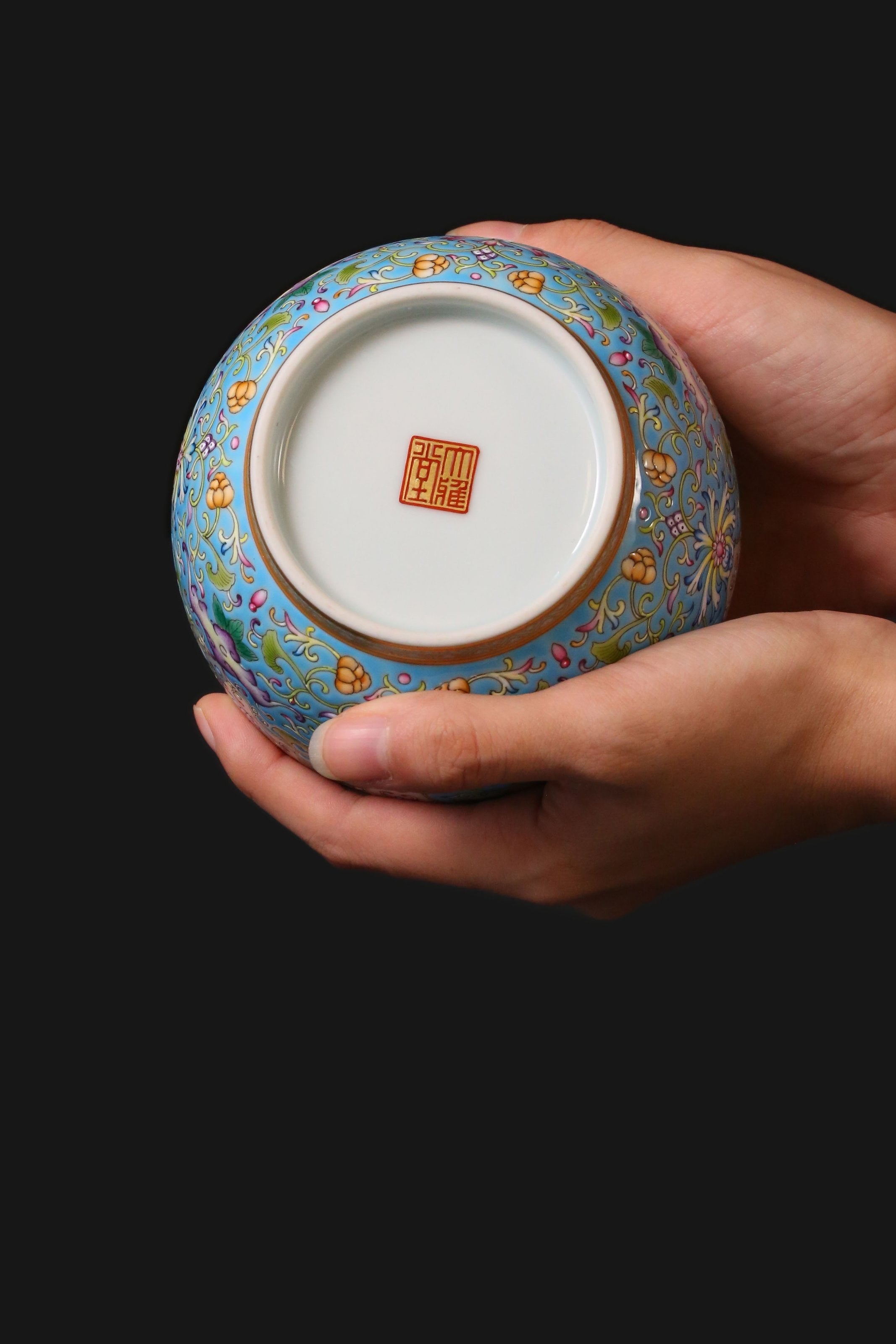
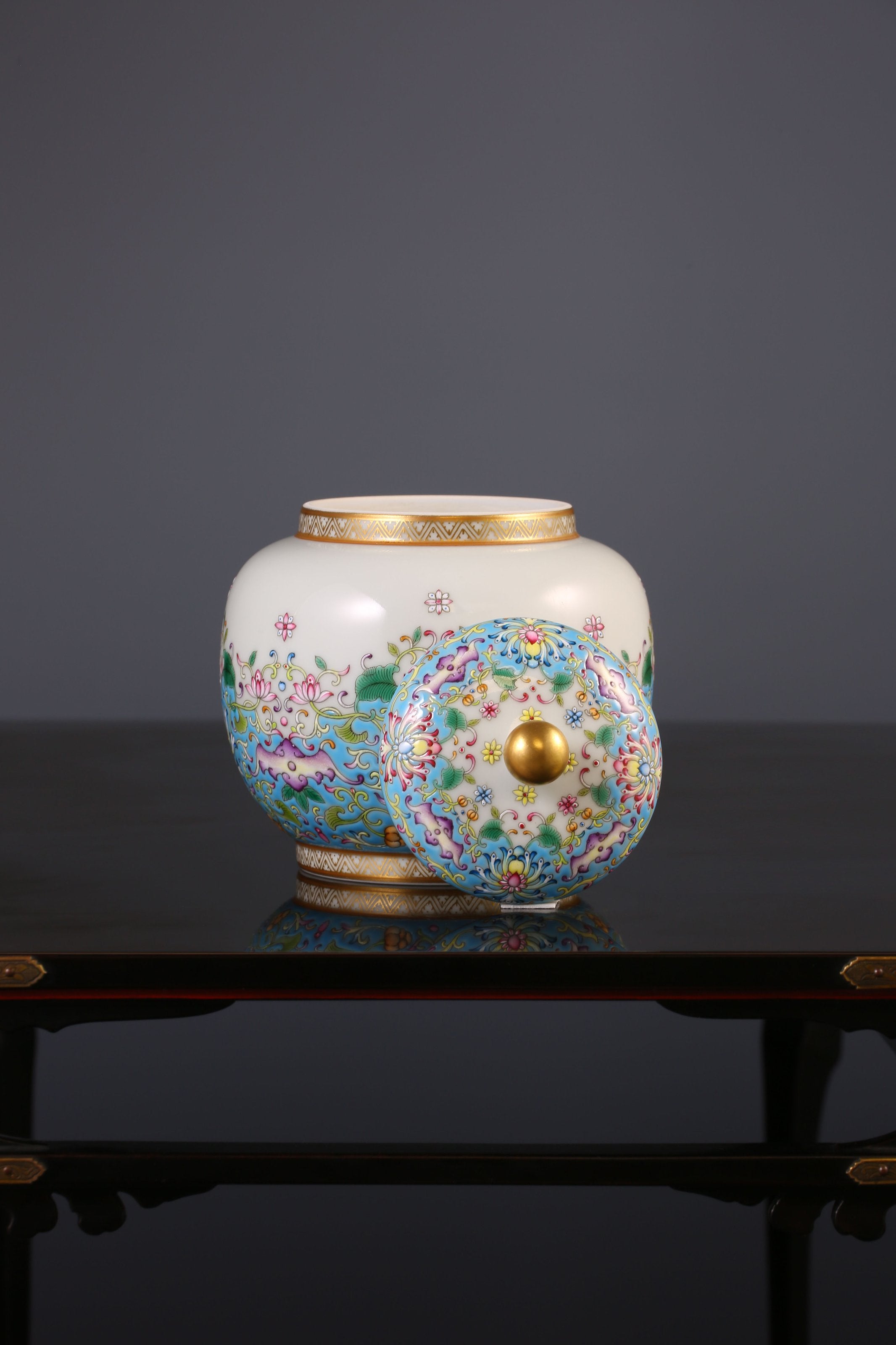
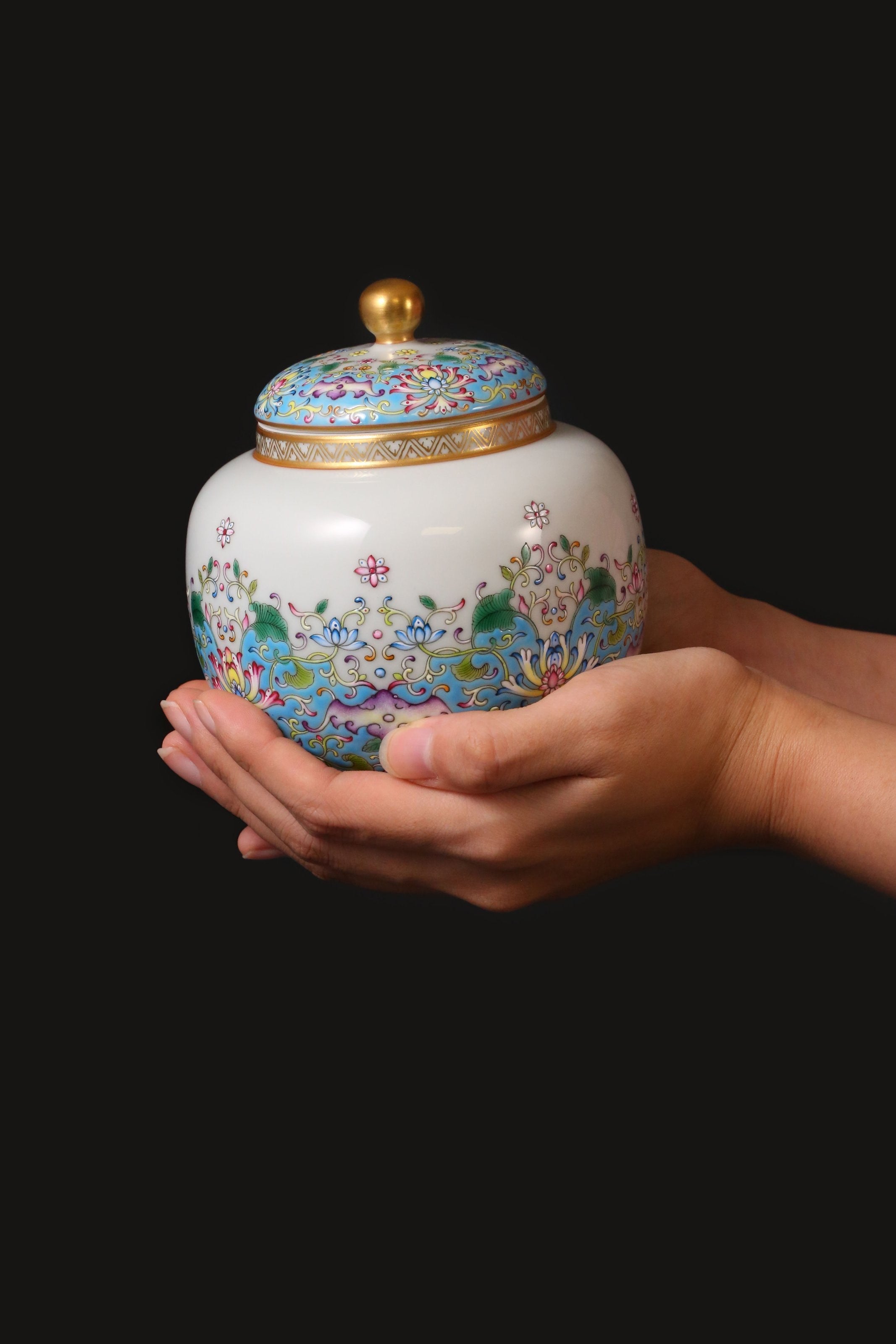
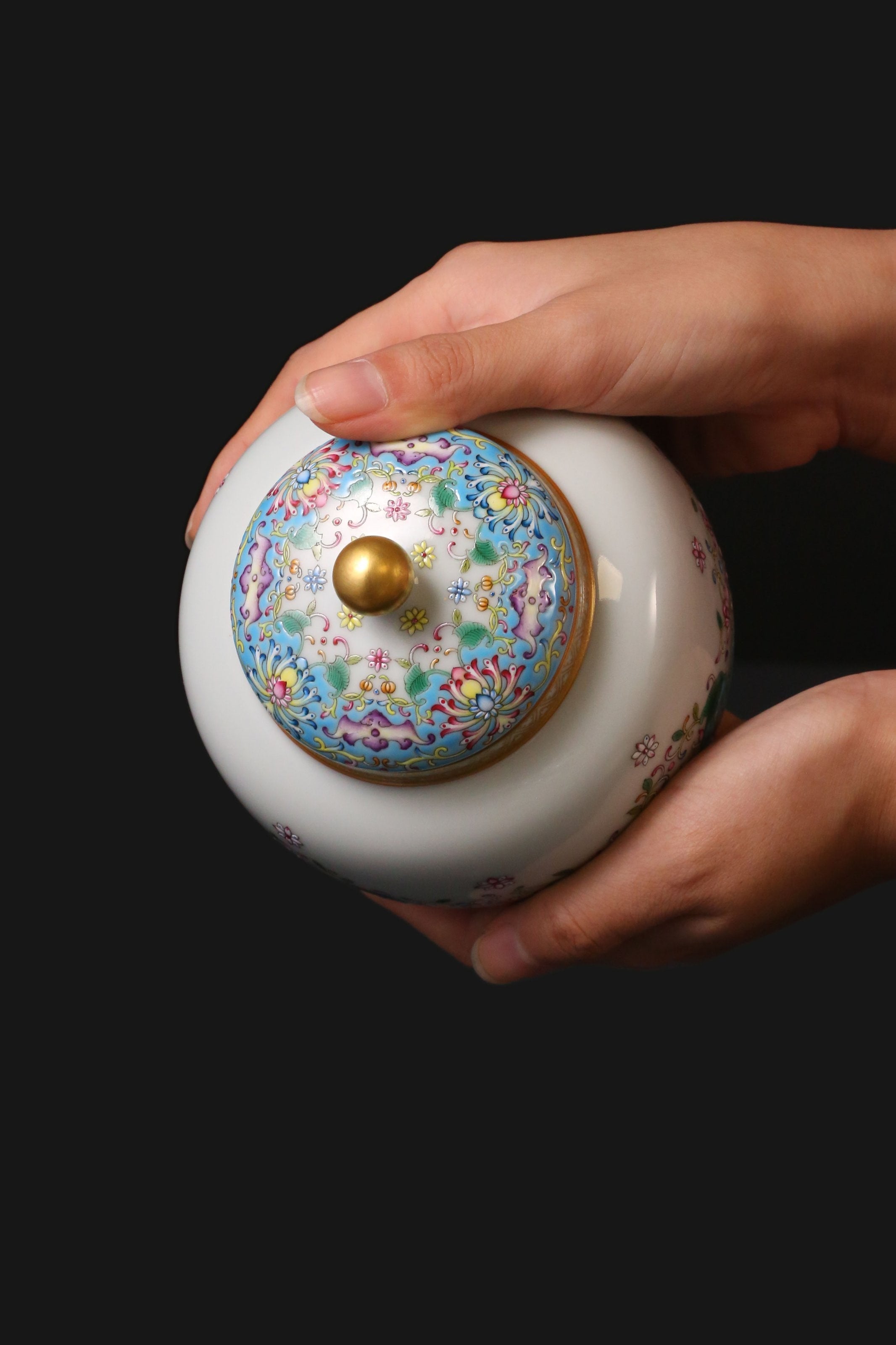
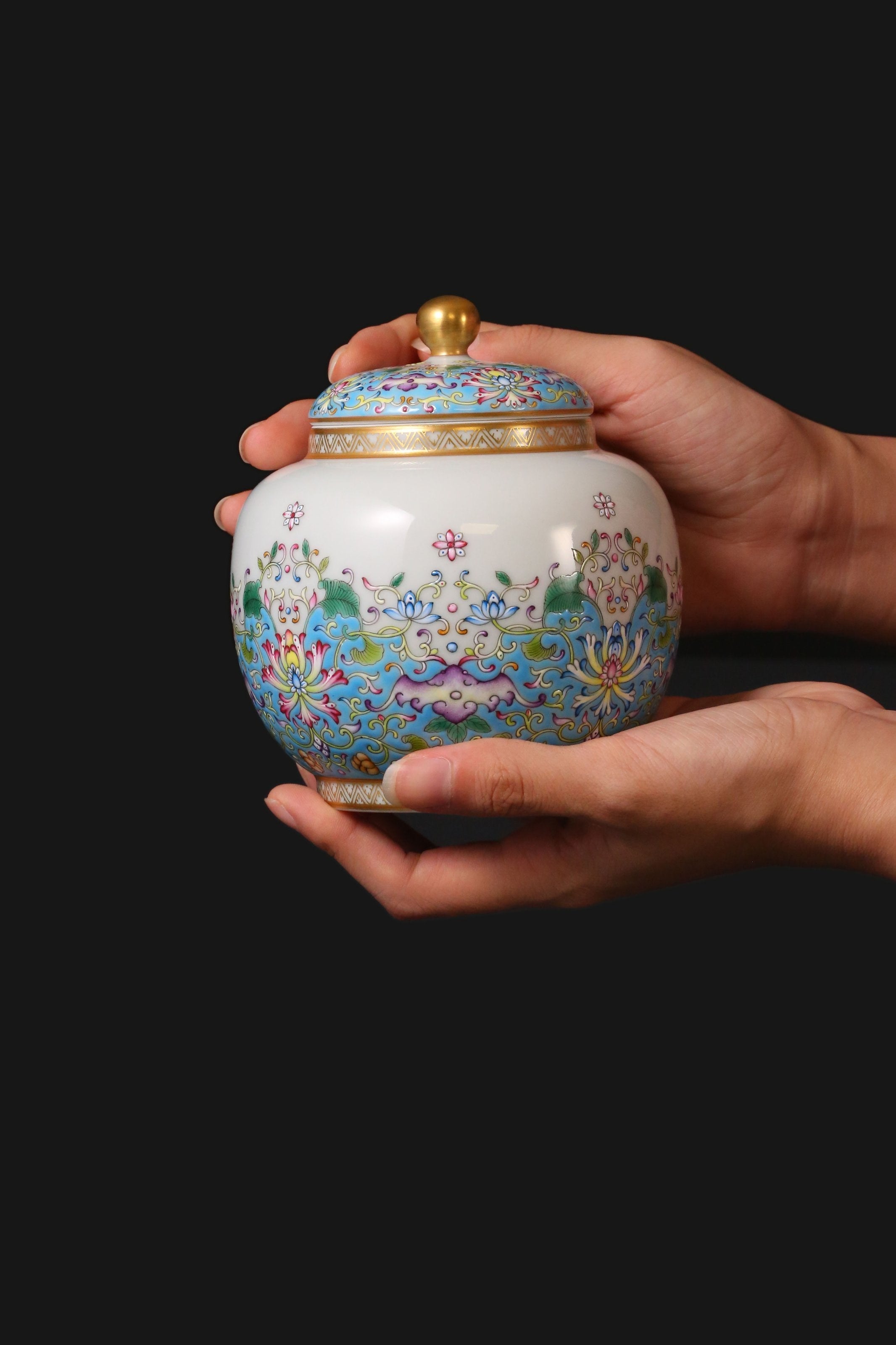
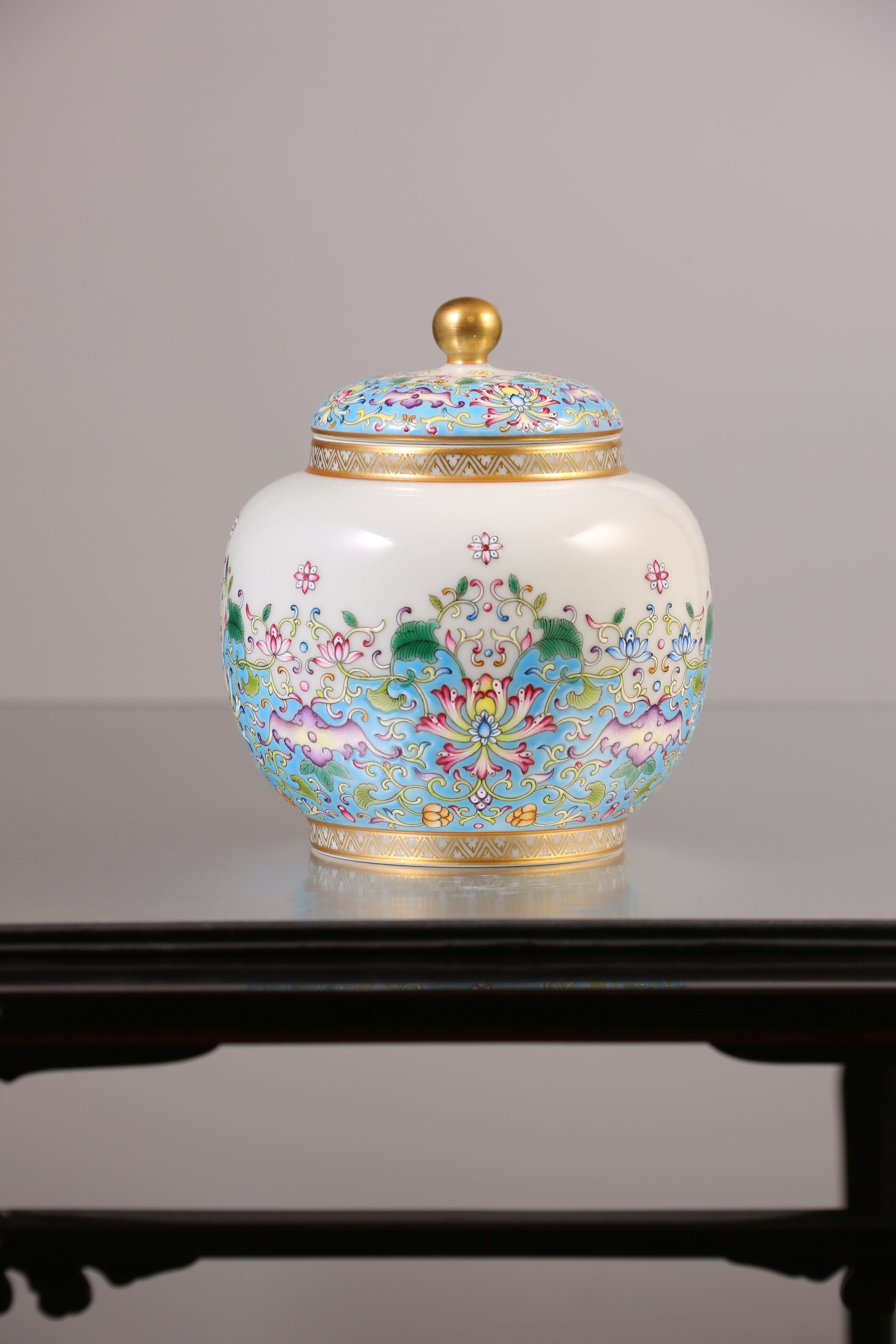
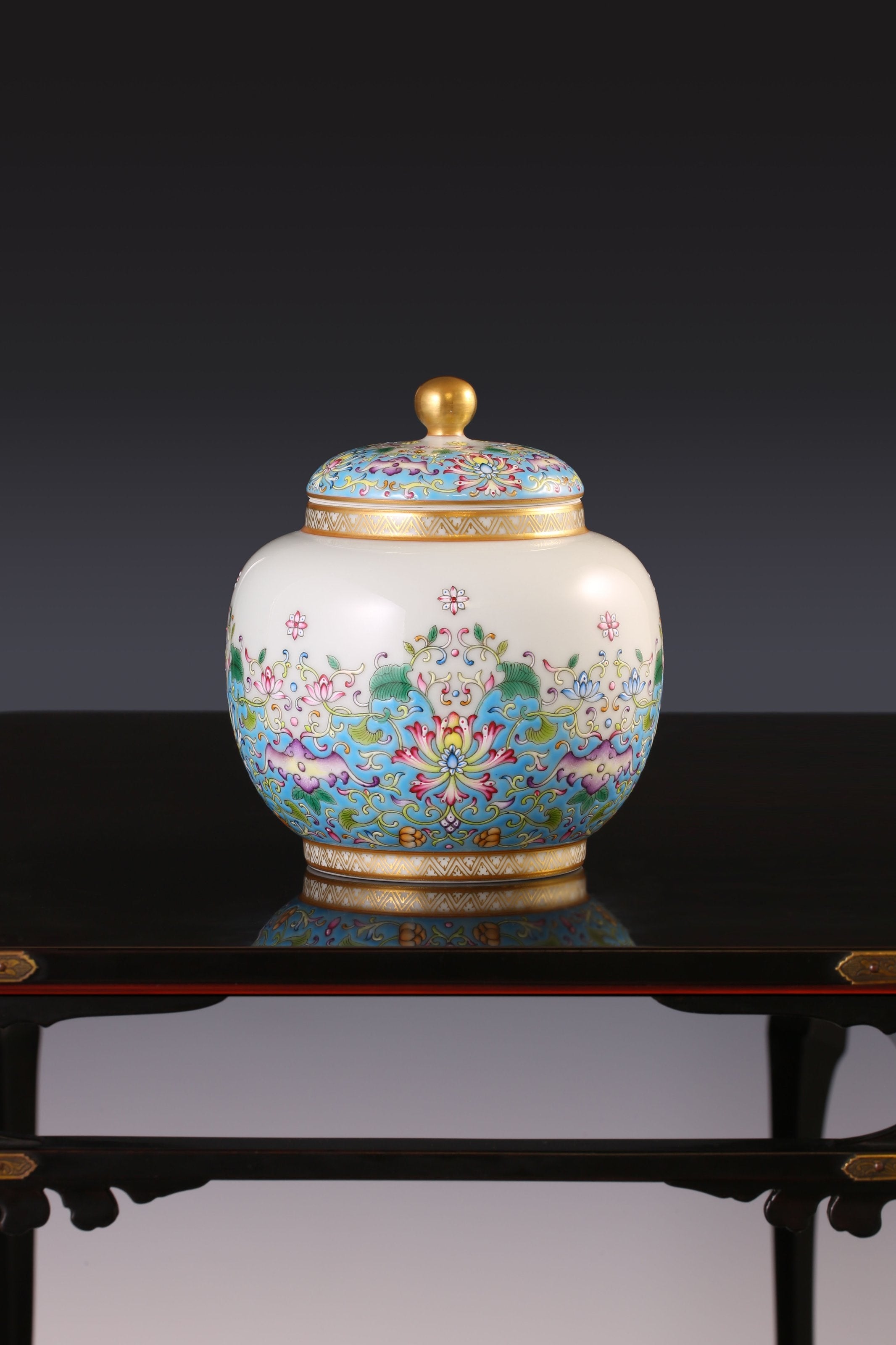
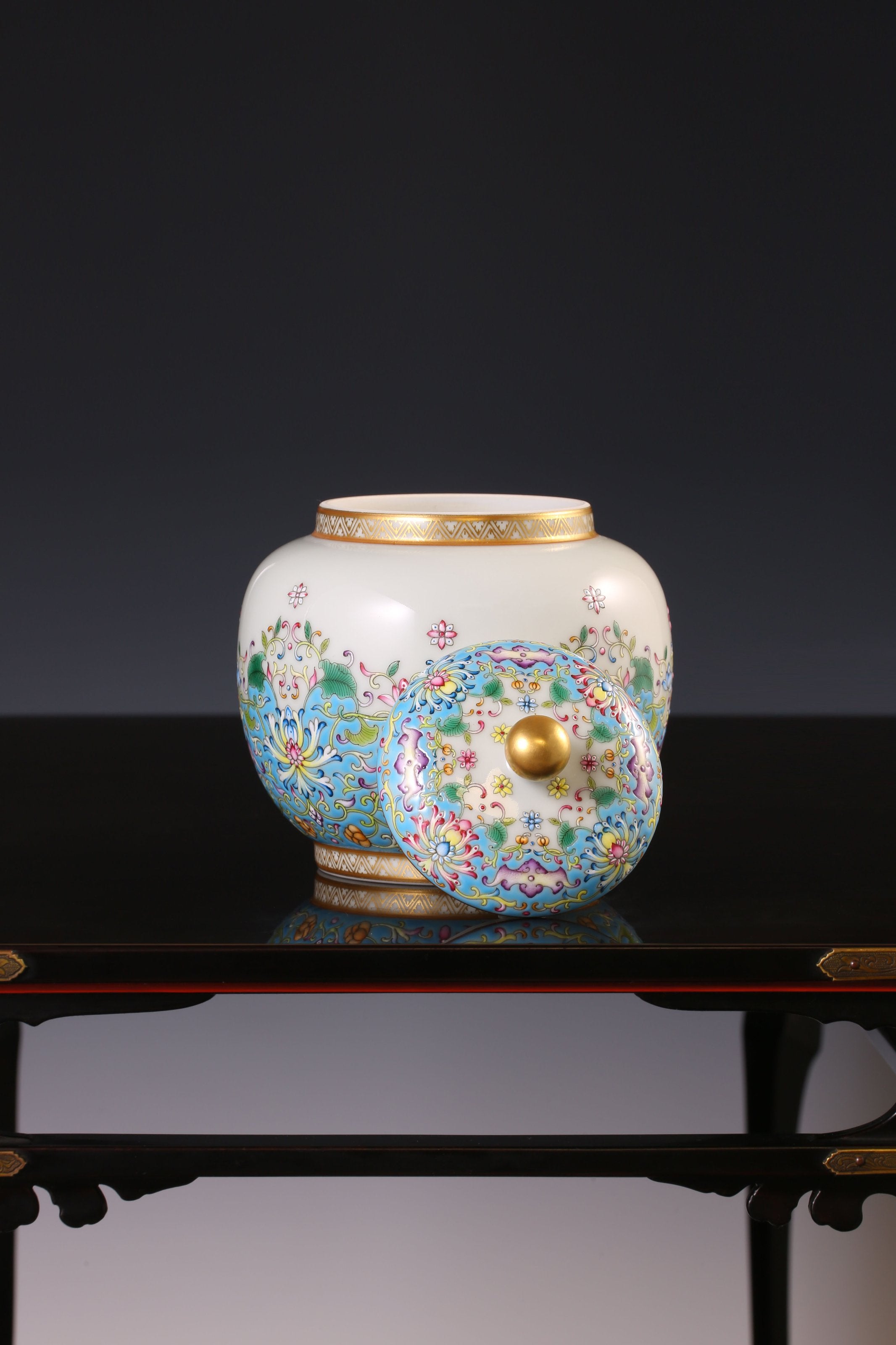
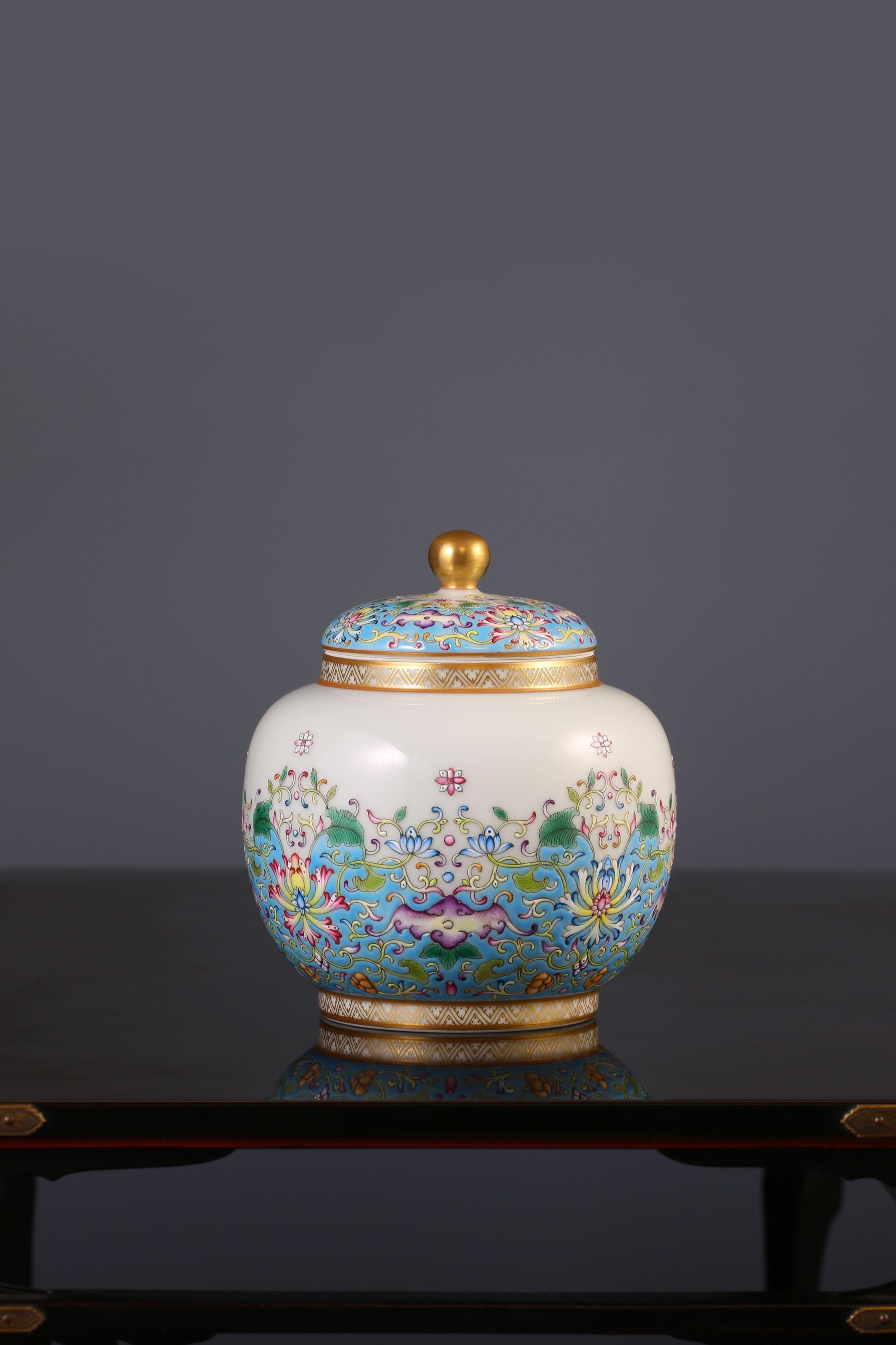
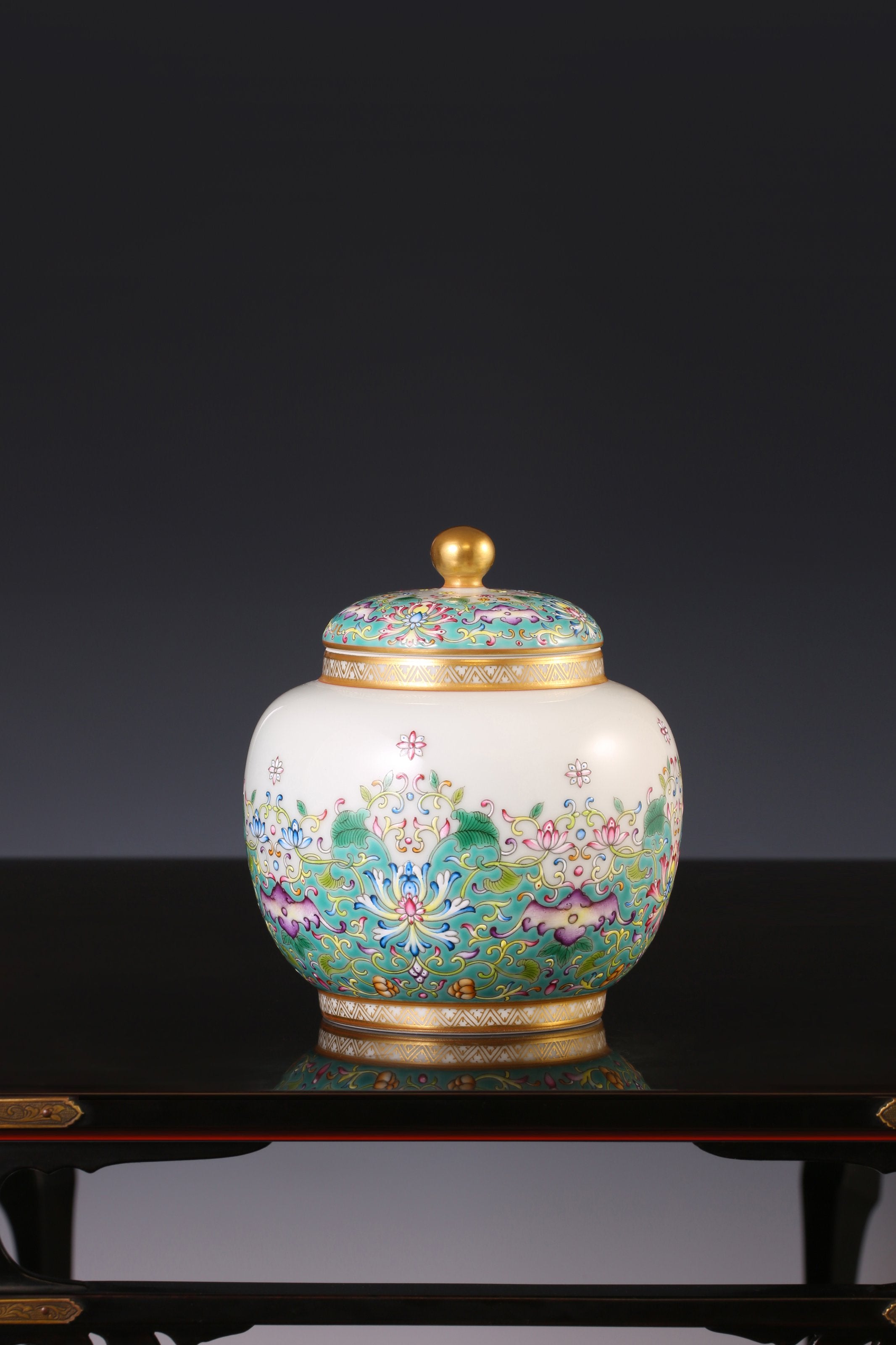
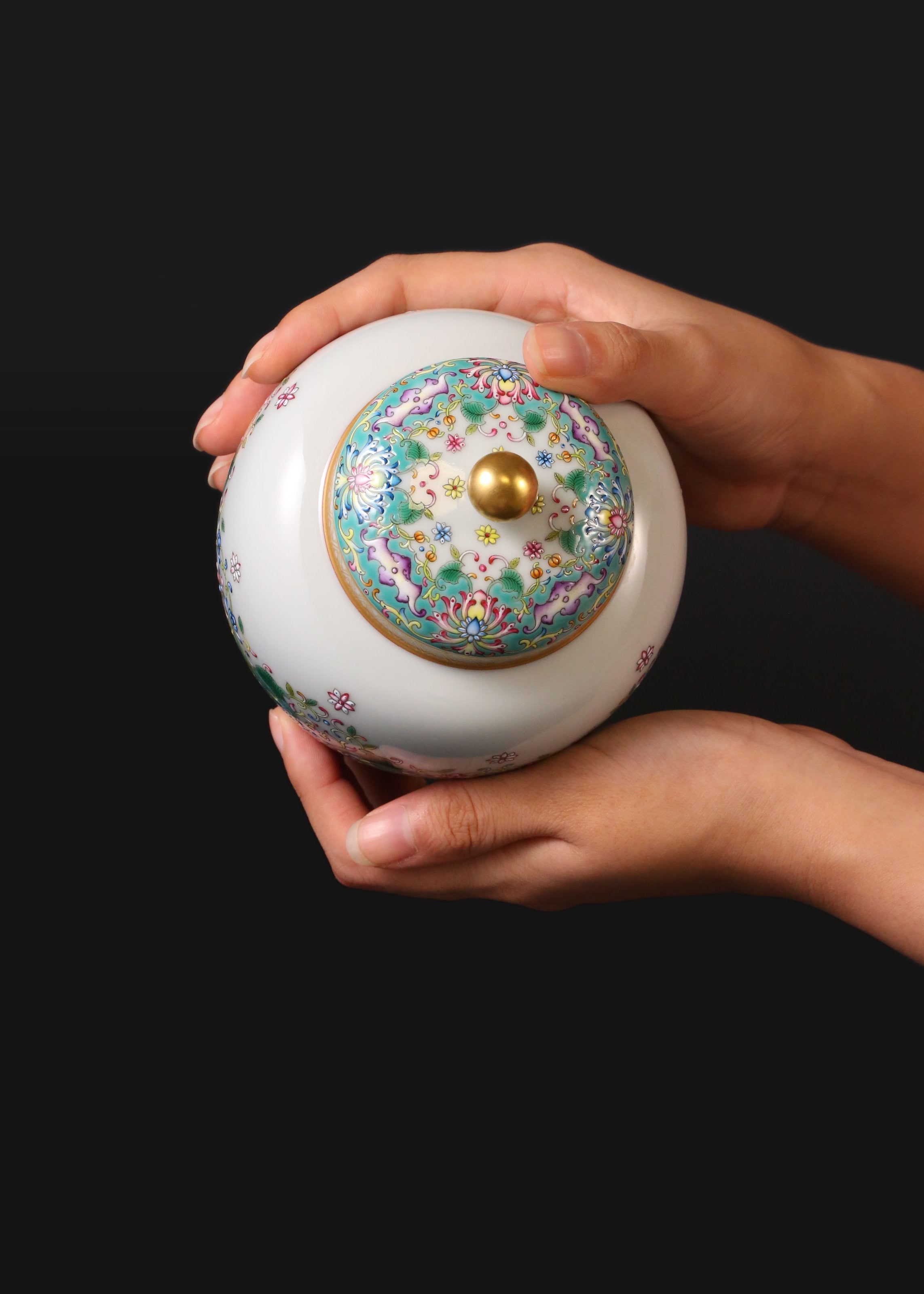
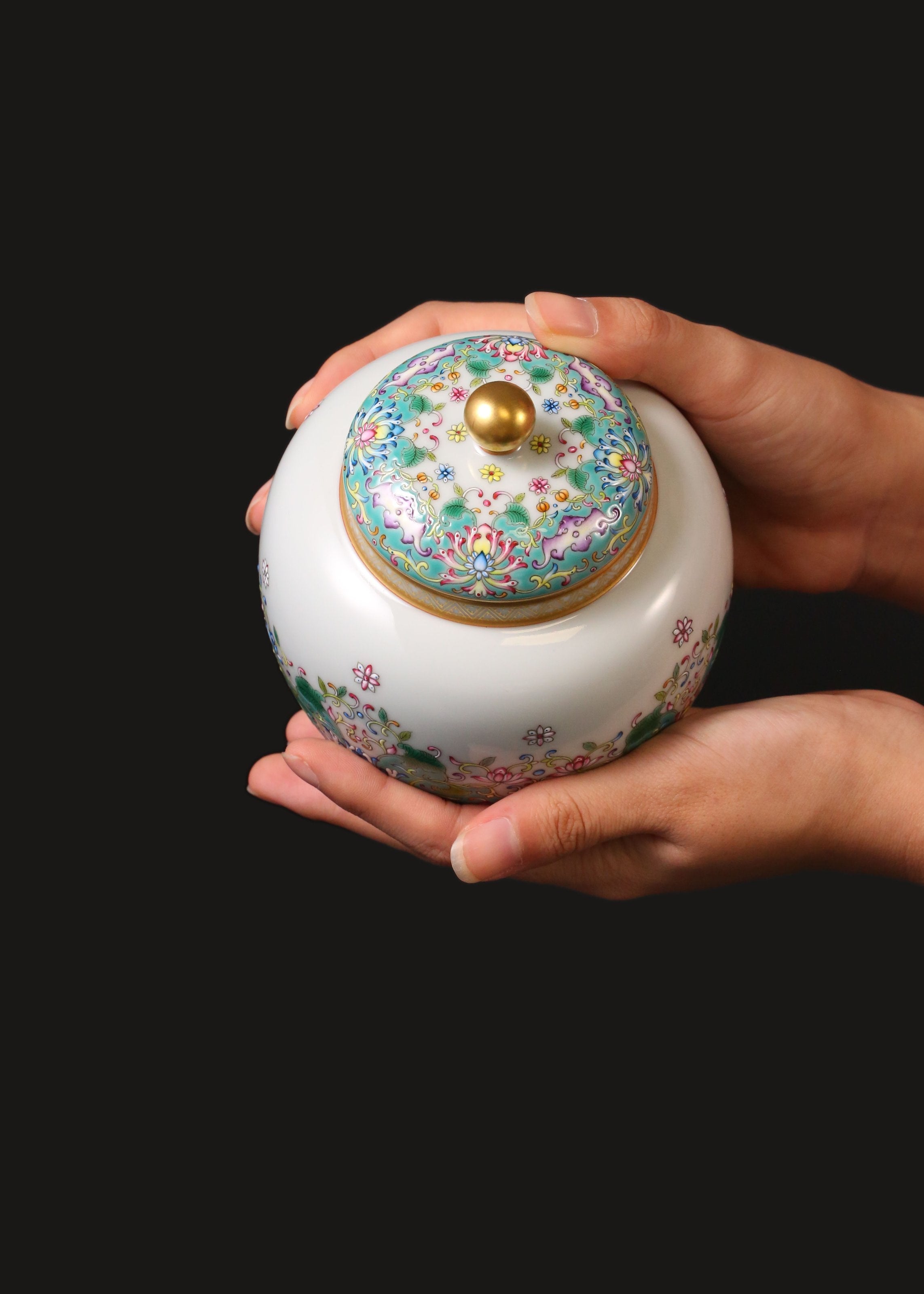
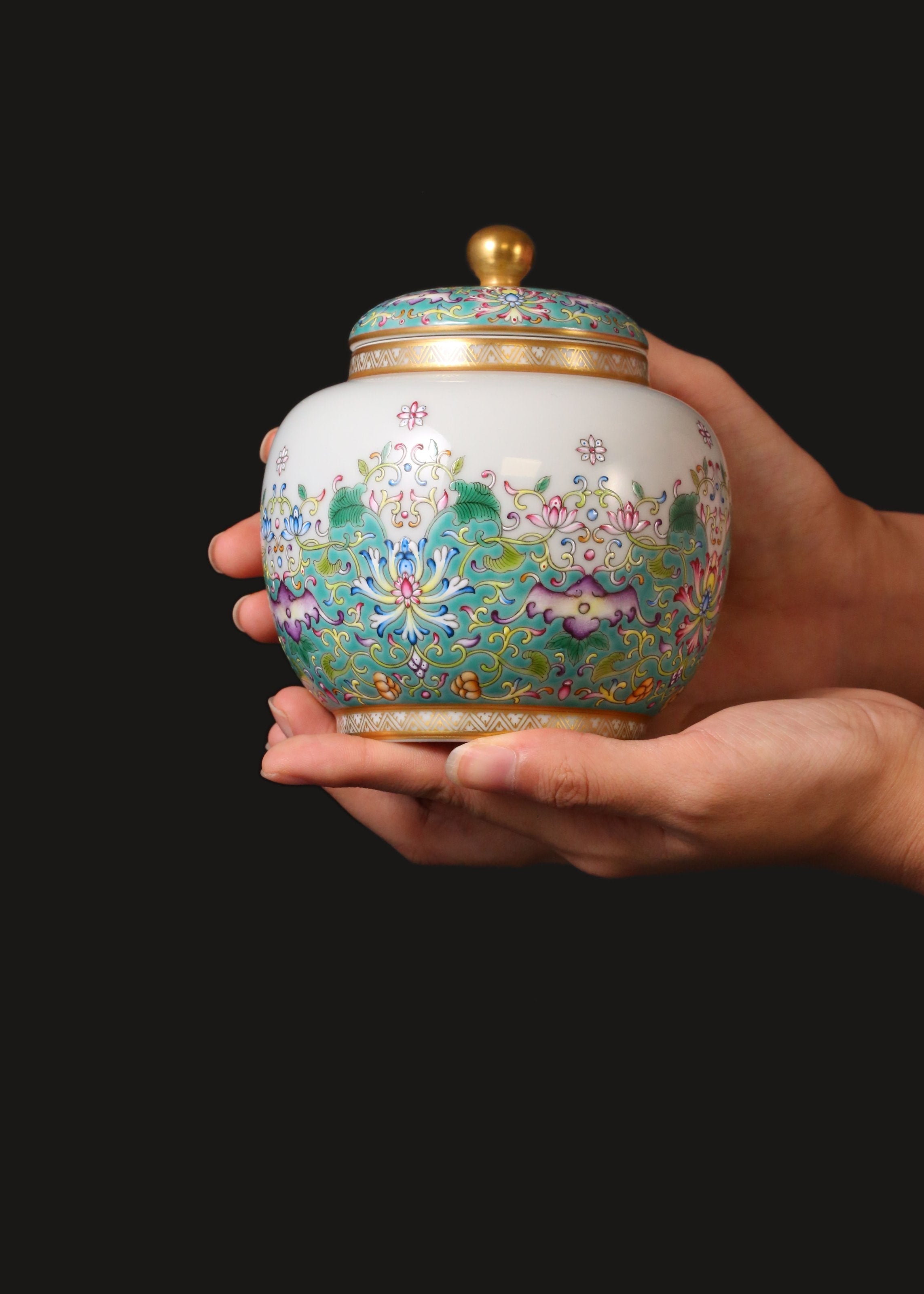
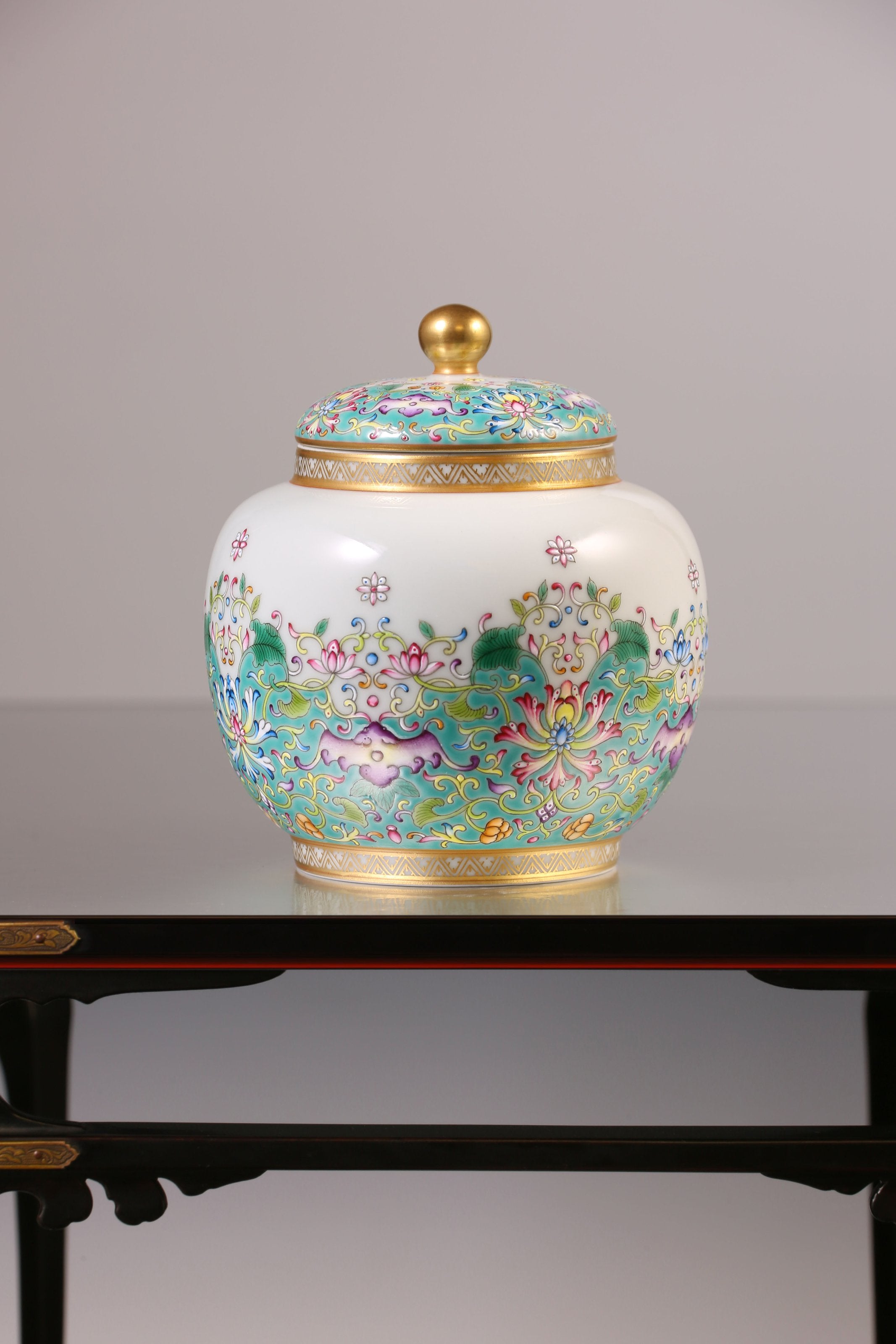
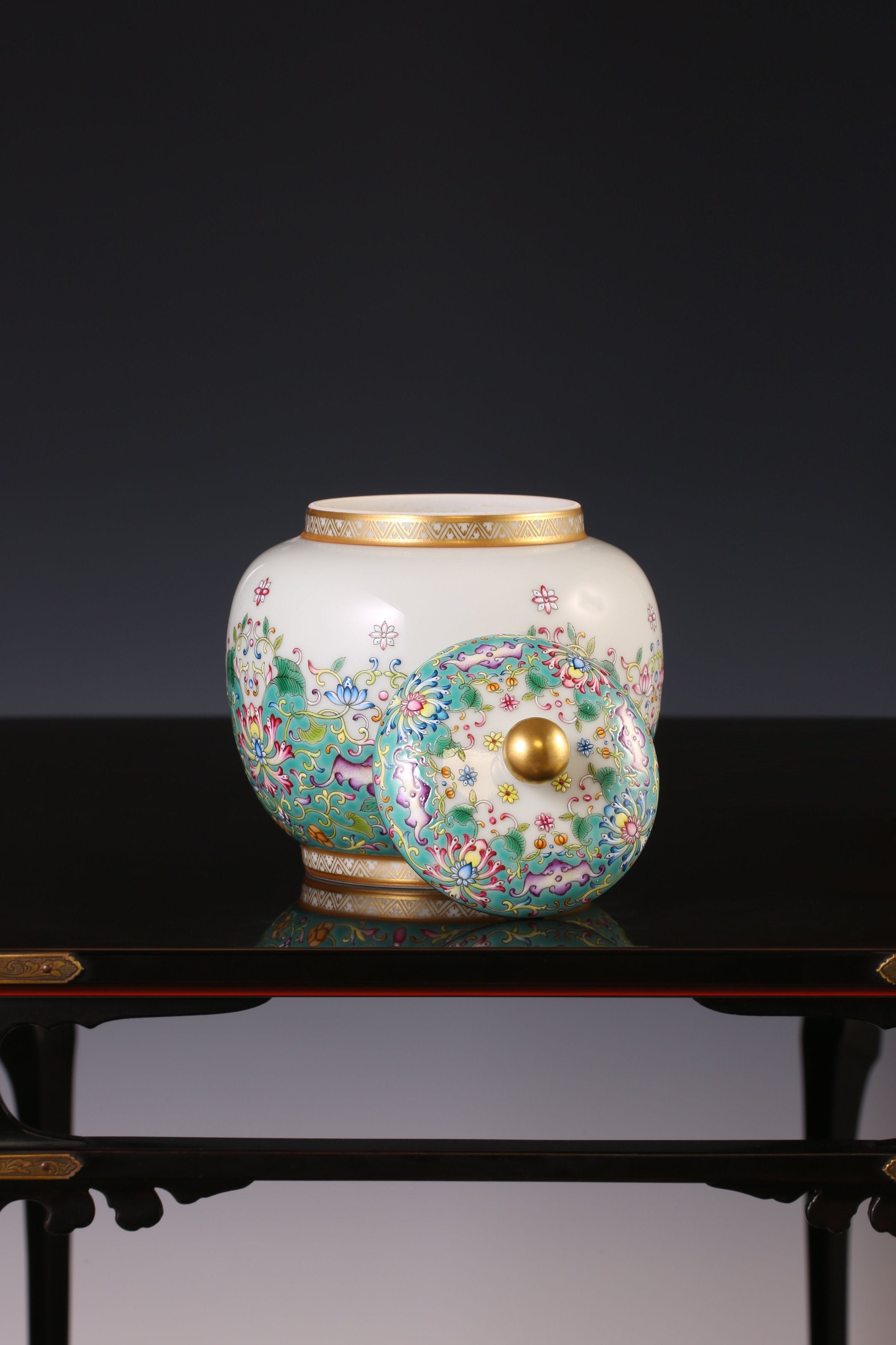
Auspicious Fortune Scrolling Baoxiang Flower Tea Caddy,
This tea caddy is jointly crafted by Xu Zhijun, inheritor of the intangible cultural heritage of Qing Dynasty imperial kiln famille rose hand-painted porcelain craftsmanship of Jingdezhen, Master Zhang Jian, master of overglaze decoration and piled gold technique, and several other renowned artisans.
It is decorated with multiple techniques including enamel colour, iron-red and piled gold, and requires
four separate kiln firings to complete.
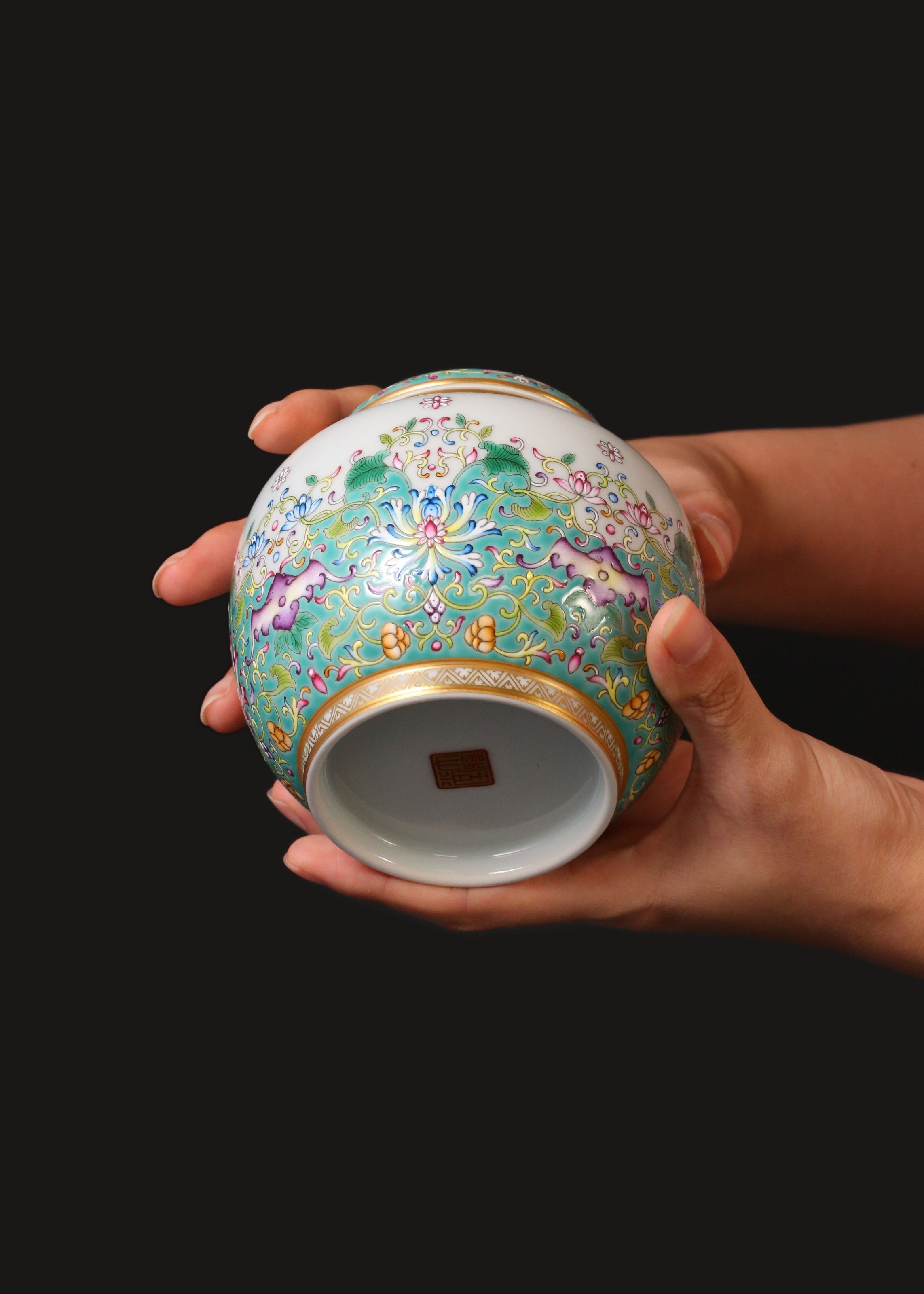
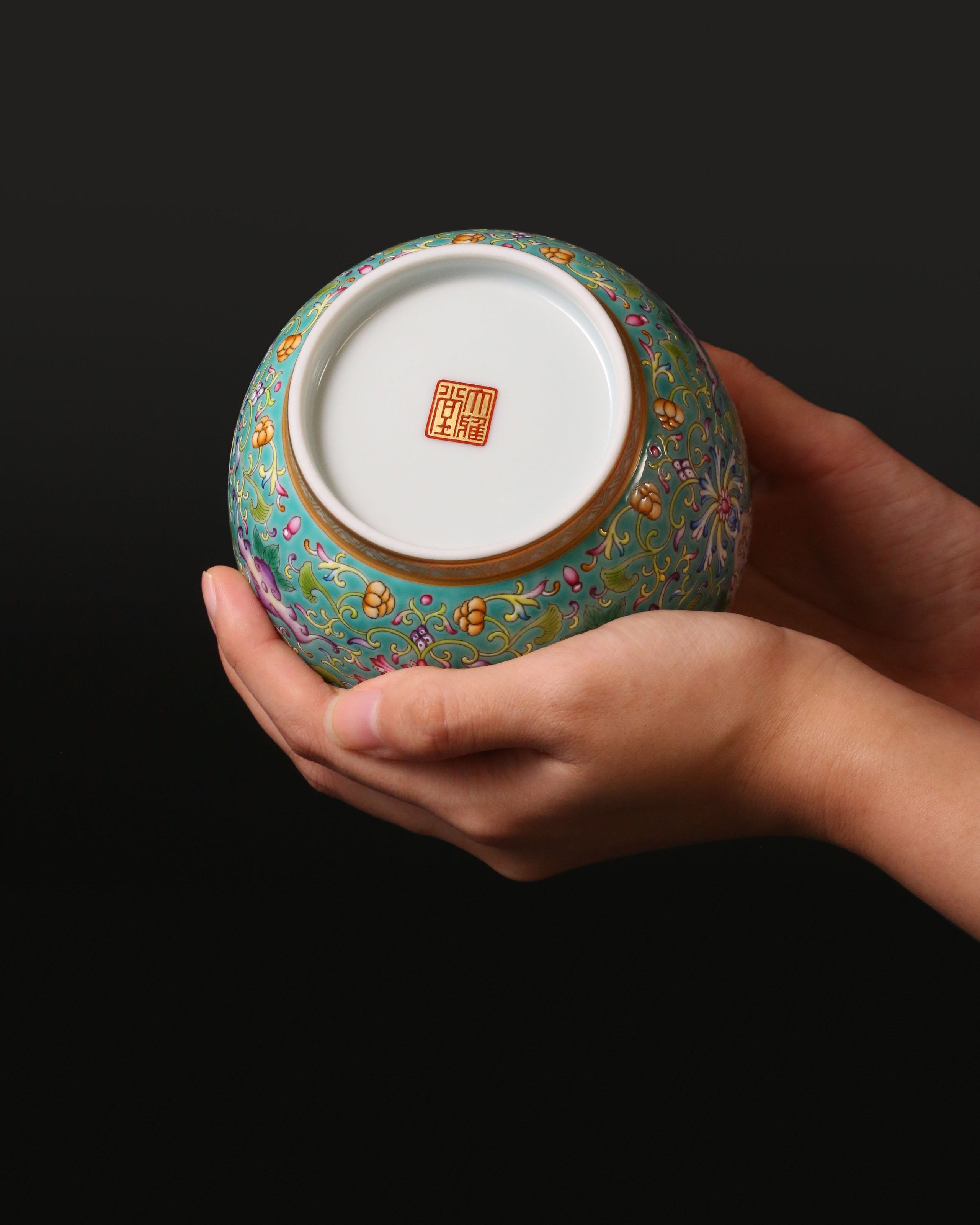
The patterns include scrolling patterns, baoxiang flowers, bat auspicious patterns and more.
Every pattern carries a profound meaning, and every meaning embodies auspiciousness.
The decoration is exquisitely rendered, and the colours gentle, elegant and perfectly refined.
Bat Auspicious Pattern
Also known as “Fortune Auspicious Pattern”, it is regarded in Confucianism as an auspicious omen of divine will, alongside colorful clouds, favorable weather and smooth harvests, double-eared crops, sweet springs emerging from the earth, and the appearance of rare birds and exotic animals.
Baoxiang Flower
The term “baoxiang” originated from Buddhism, as an honorific title for the Buddha among Buddhist believers.
Baoxiang flower is an ideal floral form representing purity, dignity and grace.
It does not refer to a single type of flower, but an artistically refined pattern that integrates and abstracts elements from various flowers such as lotus, peony and pomegranate.
The baoxiang flower motif emerged and flourished in the Tang Dynasty, inheriting the Tang aesthetic of favouring fullness and the characteristics of national art and culture.
In the Song Dynasty, the pattern shifted from a luxurious and opulent style to a more orderly and minimalist one.
The scrolling baoxiang flower pattern also appeared in the Song Dynasty, with more distinct dynamism.
Scrolling Pattern
The exterior is decorated with enamel-painted scrolling patterns, with clear leaf veins.
The branches and leaves twist and curl gracefully, elegant and full of dynamism.
Thanks to their continuous, unbroken structure, they symbolise
endless vitality.
Enamel Porcelain
Beyond its elaborate and exquisite painting, the enamel-decorated auspicious fortune scrolling lotus tea caddy requires four separate kiln firings to complete, with the risk of damage in each firing.
Its formal name is
Painted Enamel on Porcelain. Later generations named it
Guyuexuan, while it is known as
Rose Porcelain overseas.
Enamel porcelain first appeared in the late Kangxi period of the Qing Dynasty and was further developed during the Yongzheng reign.
In the Qing Dynasty, enamel porcelain was originally made exclusively for the appreciation of emperors and empresses.
Enamel is a special colored pigment produced through artificial firing.
Before the 6th year of the Yongzheng reign (1728), enamel materials had to be imported from Europe.
After that year, the
Imperial Workshop of the Qing Court successfully developed more than 20 kinds of enamel pigments on its own.
Enamel porcelain represents the pinnacle of ancient Chinese polychrome porcelain craftsmanship.