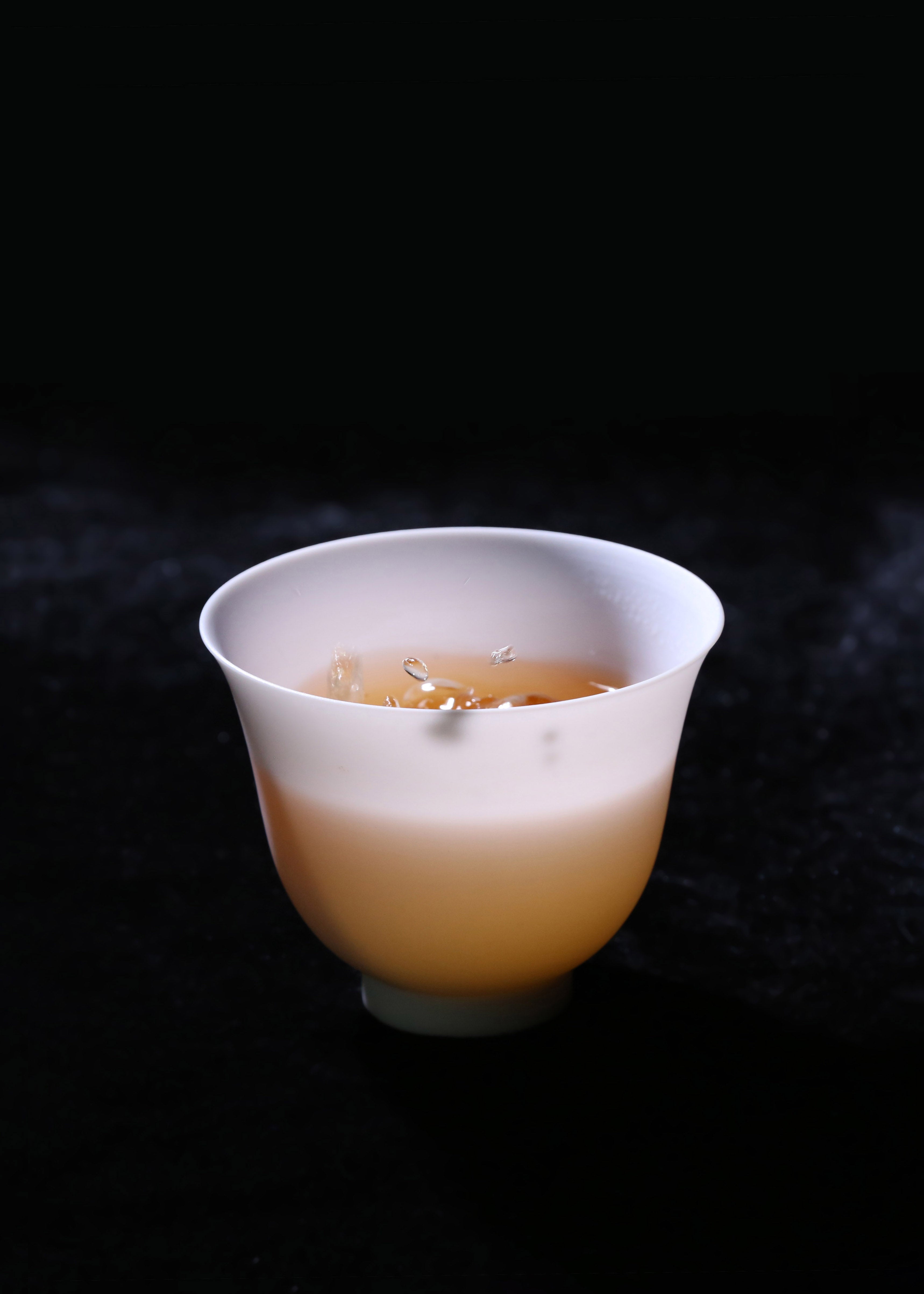
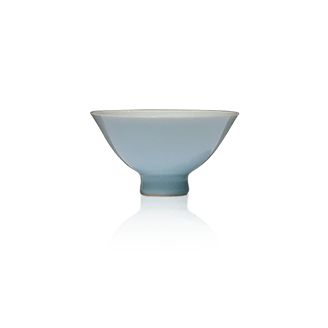
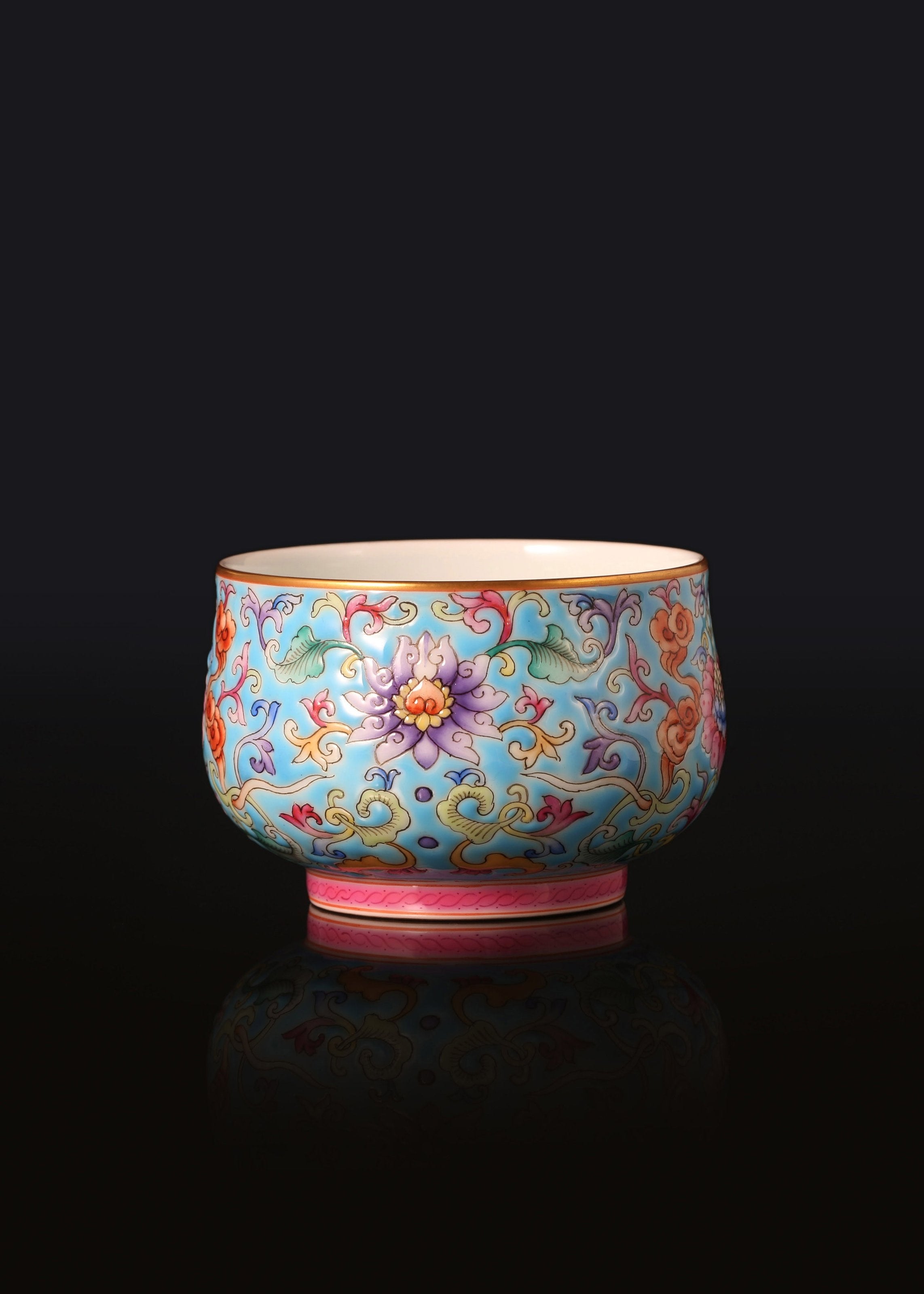
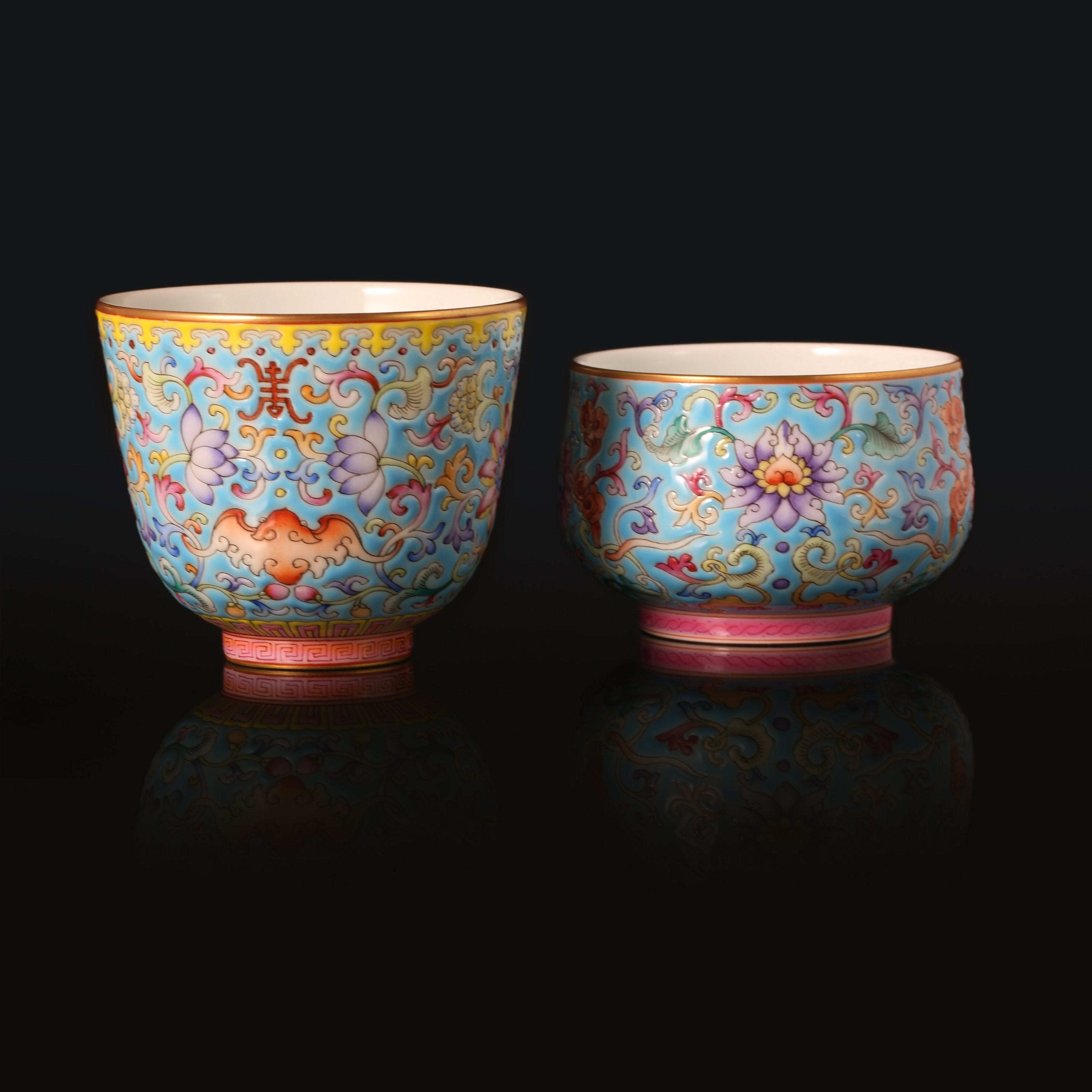
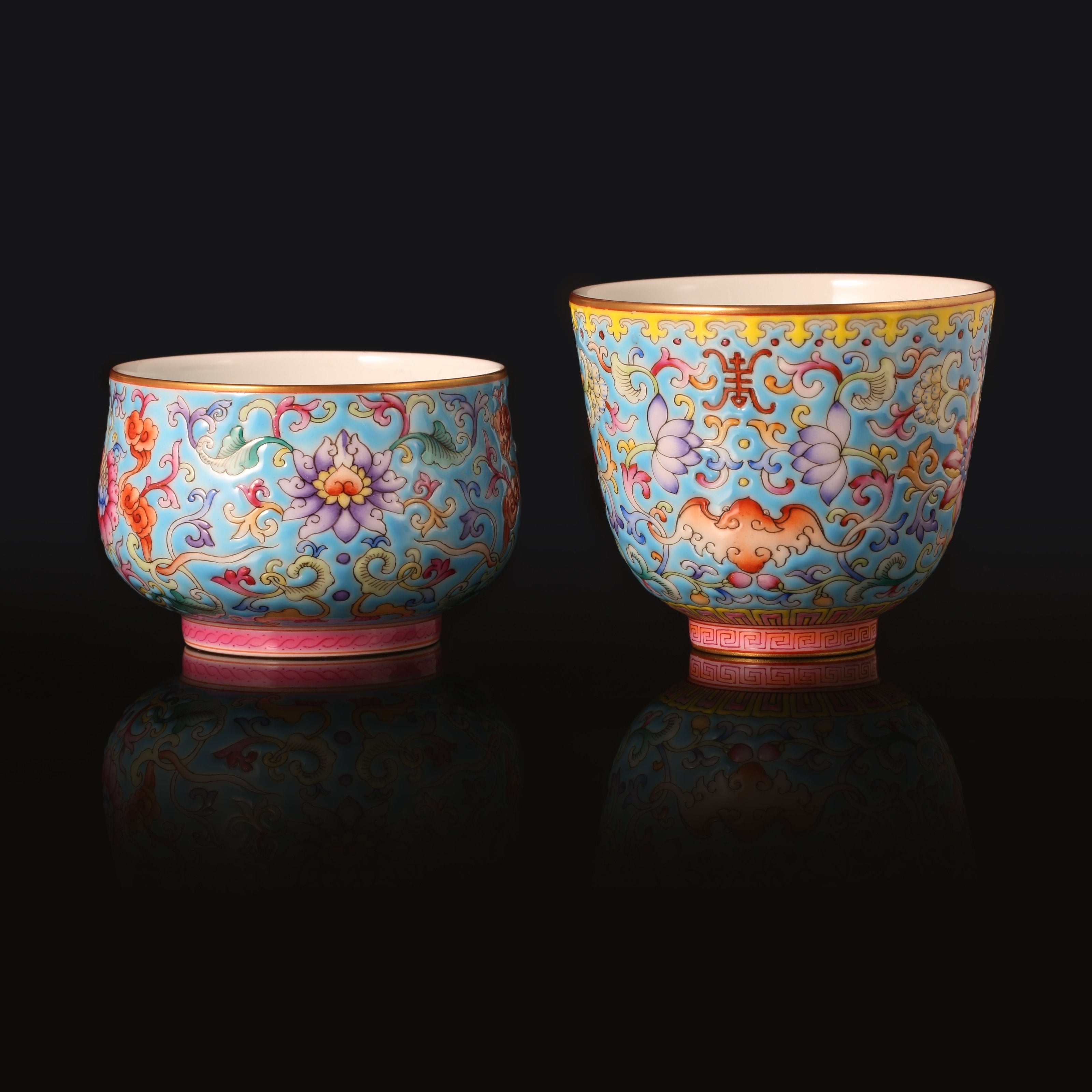
Enamel Arhat Cup with Scrolling Baoxiang Flowers,
This Enamel Painted Arhat Cup with Interlocking Branches and Precious Lotus Flowers is collaboratively crafted by Master Zhang Jian and other senior artisans, who specialize in Jingdezhen overglaze color and gold-piling techniques.
The term "Baoxiang" (Precious Countenance) originates from Buddhism, serving as a respectful title for Buddha images among Buddhist believers. The Precious Lotus Flower is an ideal floral pattern that symbolizes purity, dignity and grace.
The earliest record of "Baoxiang" in Chinese literature can be traced back to the Wei, Jin, Southern and Northern Dynasties. As written in
Inscription on the Toutuo Temple by Wang Jian of the Southern Qi Dynasty:
"The golden and precious Buddha countenance, eternally dwelling in peace and calm, quenches the inner turmoil, and gathers all virtues in repose."
Though depicted as a flower, the Precious Lotus Flower does not refer to any single real flower. It is an exquisitely refined artistic design, existing mythically in traditional Chinese culture just like dragons and phoenixes, with no actual equivalent in nature.
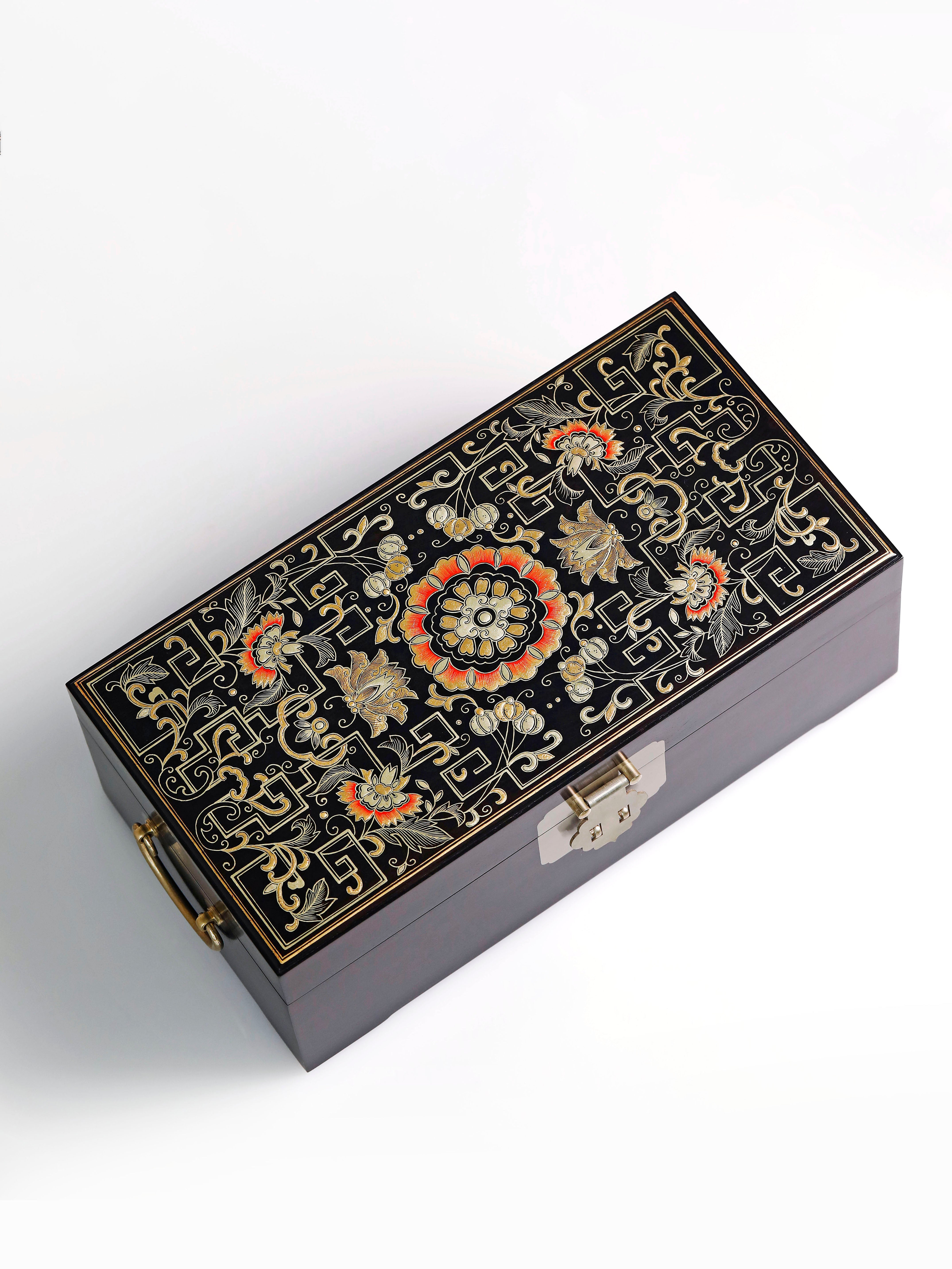
The Precious Lotus Flower pattern is a composite motif integrating elements from lotus, peony, pomegranate and other flowers. It presents a radially symmetrical structure spreading outward from the center, forming a nearly round and independent floral design.
It can be used as a standalone pattern, combined with interlocking branch patterns to create Interlocking Branches and Precious Lotus Flowers, or matched with scrolling grass patterns to form integrated decorative motifs.
The Precious Lotus Flower pattern originated and flourished in the Tang Dynasty. Its petal details feature rich and varied combinations, and were widely applied. Especially in the murals of the Mogao Grottoes in Dunhuang, it was used not only in Buddhist art but also to decorate non-religious artifacts such as brocades, gold and silver wares, bronze mirrors and porcelain.
Inheriting the Tang aesthetic of admiring plumpness and the national artistic traits, the pattern is magnificent and elegant, deeply favored by the people. It exerted a profound influence on decorative motifs of the Song, Yuan, Ming and Qing dynasties, evolving with the times, economic shifts and changes in social aesthetics, and has been passed down to this day.
In the Song Dynasty, the pattern shifted from a luxurious and ornate style to a more orderly and minimalist one. The Interlocking Branches and Precious Lotus Flower pattern also emerged in this period, with delicate composition, intricate details and vivid dynamism.
The Yuan Dynasty version fully reflects the bold and unrestrained character of nomadic peoples. The Ming Dynasty style is simple and more daily-life oriented. In the Qing Dynasty, the pattern became increasingly elaborate, magnificent, delicate and refined, with free and flexible combinations of various designs.
Traditional Chinese culture is highly inclusive. It excels at integrating fine elements from different ethnic groups and cultures, then creatively shaping them into forms that fit its own needs and aesthetics.
The Precious Lotus Flower pattern is a typical product of cultural integration, carrying rich cultural connotations among traditional Chinese auspicious motifs. Applying it to porcelain is not only a pursuit of beauty, but also a spiritual sustenance for people’s longing for good fortune and blessings.