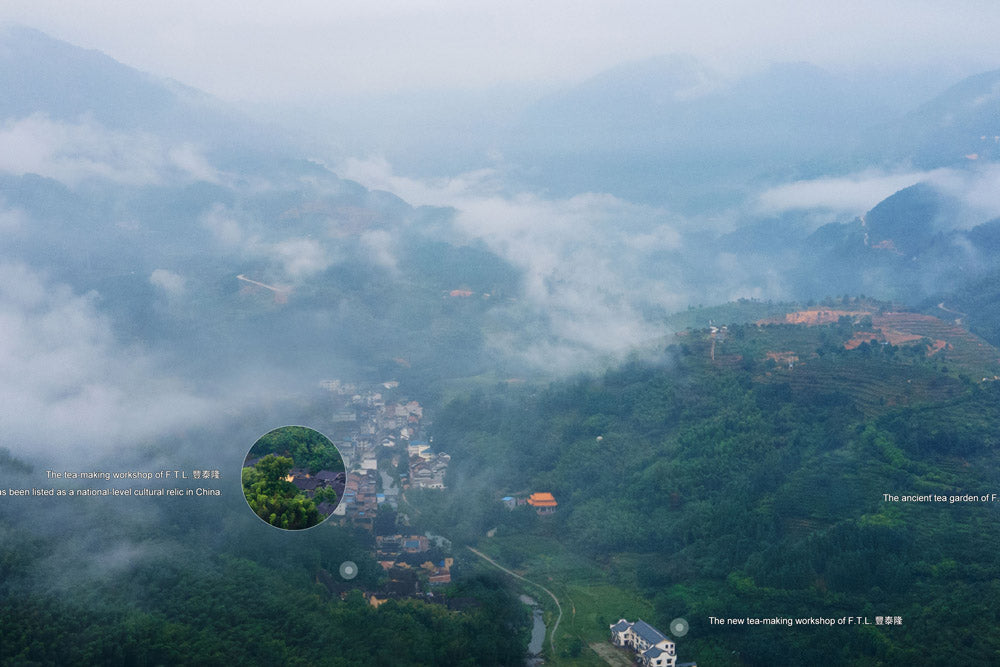
Master Taimushan Yipianwa Zen Temple

Master Shi Changxin's master at Yipianwa Temple is a little-known nun. She is seventy-seven years old this year, and for the past sixty years, she has always taken advantage of early spring to process the first batch of fresh Silver Needle white tea. No one dares to say how professional she is, but no one dares to say that their understanding of white tea is deeper than that of the nun.
Before the morning fog had even lifted, the nun, carrying a whisk and tea-frying utensils, headed towards Hongxue Cave.

Fate brings us together, fate separates us.
That year, Yipianwa Temple was no longer just a shelter from the wind and rain for passersby. Several reclusive monks had transformed it into a square Zen monastery using the natural barrier. No matter how heavy the rain or how desolate the rocky mountain, people seeking shelter would easily knock on the monastery's door.

The Zen temple is located on Mount Taimu. This mountain is unpredictable, as if a god in heaven casually threw down a stone, which just stood there firmly. The name of the Zen temple is also unpredictable. A huge rock shelters from the wind and rain, which is a tile, a piece of land where one can settle down and make a living.

Accompanied by the carefree and natural attitude of a hermit, the white tea grown from it also exudes a nonchalant and casual charm.

All tea is inherently healthy, but tea growers and producers make trade-offs between natural ingredients and profits, which has led to the concept of healthy organic tea.


The white tea leaves are not large enough, the color is not bright enough, the flavor is not strong enough, and even when they are disturbed by insects and birds during their growth, the monks drive them away by chanting sutras. However, they are receiving the baptism of Mount Taimu in their most authentic form and growing and flourishing in the most natural way.

Every morning, the master performs his morning prayers, and the white tea is nourished by natural rain and dew; at noon, the master sweeps the courtyard, and the white tea enjoys the warmth of the sun; at night, the master practices meditation, and the white tea remains silently and peacefully.

They bear witness to the four seasons on the rocky mountain through the cycle of life, making the passage of time in the temple quiet, like dew glistening on the water.

It was another rainy day. The monks of the Zen temple welcomed a group of people seeking shelter from the rain and a young girl. The girl looked to be about sixteen or seventeen years old, with long hair reaching her waist and a pretty face. She said that she had come here to become a nun.

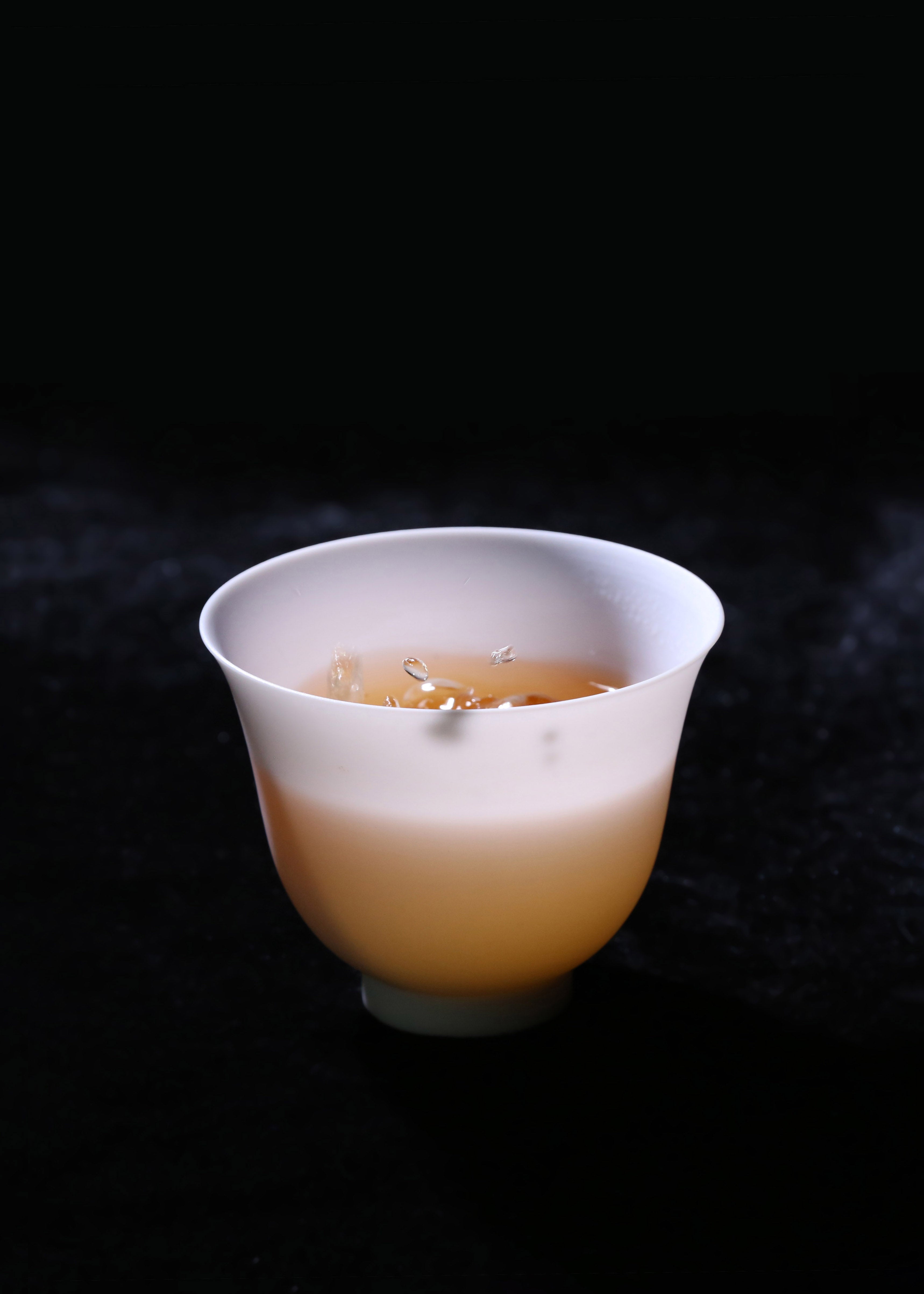
The monks in the temple gave her a bowl of white tea and told her to stay and think it over. Unlike many famous teas the girl had tasted before, the tea in the Zen temple had a unique flavor—not strong, not bitter, but with a light fragrance and a subtle aftertaste. The rain gradually subsided, then became more frequent, and the people seeking shelter left, but the girl stayed.

The girl settled down in the Zen monastery. The monks never inquired about her life, only giving her a bowl of white tea each day. The flavor of the tea became clearer day by day. Watching the tea trees by the window grow and die, the girl had an indescribable understanding. She began to learn to carefully care for each white tea leaf and learned the skills of picking, processing, and brewing tea from the monks.

Tea connoisseurs are serene and leisurely; when they reach the end of the watercourse, they sit and watch the clouds rise.

Drinking tea is a form of spiritual practice, a state of being. When people and tea become one, tea is people, and people are tea. When people are among plants and trees, they find a pure land.

The girl lived a monotonous life, silently dealing only with white tea, using tea as a means of self-cultivation, offering a cup of white tea to passersby seeking shelter from the rain, or using white tea to entertain tourists from afar; she would occasionally give the finished silver needle tea to her regular customers.

Her unspoken obsession has vanished with the wind, scattered among the unchanging rocks that stand tall amidst the changing times; scattered in the quiet days far removed from the world; scattered in the contemplation of white tea amidst the serene passage of time; and finally, scattered in this all-encompassing universe.

Finally, one morning when the girl was seventeen, she gave up her waist-length black hair, put on a plain gray robe, and became an ordinary bhikkhuni in Yipianwa Temple. All the conditions were right, and she was destined to embark on this path of spiritual practice.

Sixty years is a cycle, and the calendar has moved from the 20th century into the new millennium. The outside world has undergone earth-shaking changes.

Hongxue Cave, nestled quietly beside the Wazhan Temple, remains sheltered by the giant rocks, keeping company with the old master, oblivious to the ever-changing world, guarding this pure land, and leisurely nurturing the Taimu Mountain white tea for the next sixty years...

The past mind is unattainable, the present mind is unattainable, the future mind is unattainable; let go of all attachments, and you will attain Zen in the present moment.
Read more

More than 40 years of deep cultivation in the tea industry Adhering to traditional handcrafting methods, Anji white tea possesses unique techniques in processes such as spreading and sifting the l...

Master Shi Changxin of Yipianwa Temple on Mount Taimu has been studying and practicing tea cultivation and processing under the guidance of his teacher since childhood. In his own way, he protects...