Anji White Tea Making Technique Intangible Cultural Heritage Inheritor
Yan Ronghuo

An inheritor of the intangible cultural heritage of Anji white tea making techniques. He has developed his own theoretical system and operational techniques for the cultivation, harvesting, refining, tasting, preservation, and brewing of white tea, playing a significant role in improving the quality of Anji white tea and promoting its spread throughout China and the world.

As a native of Daxi Village in Anji County, Yan Ronghuo is undoubtedly a pivotal inheritor of the local tea industry.

Anji white tea is a very special type of tea. It is a mutated tea tree that has grown under specific and excellent ecological conditions, a precious species bestowed upon mankind by nature. It originated in the high mountains and was created by the unique climate and soil.
Yan Ronghuo has been making tea for over 40 years. He started picking and learning about tea from his father at the age of 13. Under his influence, he mastered the entire set of techniques for cultivating, picking, refining, preserving, brewing, and tasting Anji white tea during his youth.
The title of "Intangible Cultural Heritage Inheritor" is a summary of Yan Ronghuo's extraordinary skills. His exceptional craftsmanship lies in his control over the process and his meticulous attention to detail. He has his own unique, even "unique," understanding of sifting the "milk leaves" before spreading the leaves, manually pressing them before shaping them, and even the subtle temperature differences between the two baking processes.

It is this dedication to craftsmanship, evident in the smallest details of the process, that gives Anji white tea its intoxicating taste, described as "fresh and refreshing like chicken soup." In this era of mechanization and industrialization, only traditional frying techniques can still produce excellent Anji white tea entirely by hand.

Hand-frying is not just about the quality of the tea; it's about the cultural heritage passed down from our ancestors, and I cannot lose it. I want to pass on Anji white tea to future generations! — Yan Ronghuo

His tea plantation's core focus is "protection".
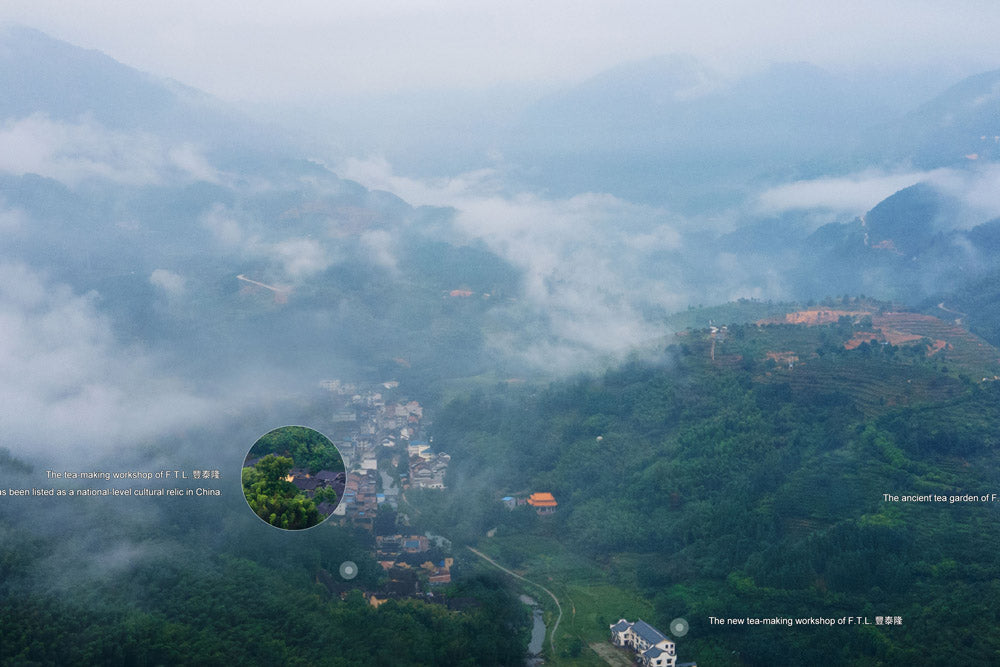
Master Yan Ronghuo's tea garden, covering more than 100 acres, is located in Daxigou, the ancestral home of the mother white tea tree, at an altitude of 670-800 meters. It is a "protected area" within the core production area, and no one is allowed to redevelop it.

The Anji white tea here, whether in terms of the amino acid content of the leaves, the degree of whitening, or the taste of the tea, represents the first-class level of Anji white tea.
Anji white tea in China, propagated through grafting and cutting, traces its roots back to the ancestral white tea tree in Mr. Yan Ronghuo's own tea garden area. The Tianhuangping Daxigou Tea Garden can be considered the origin of Anji white tea in China.

Extremely meticulous about details
The title of "Intangible Cultural Heritage Inheritor" perfectly encapsulates Master Yan Ronghuo's extraordinary skills accumulated over 40 years. Master Yan Ronghuo's exceptional craftsmanship lies in his precise control over every process, his extreme meticulousness towards every detail, and his ability to patiently and patiently refine tea.
It is this unwavering dedication to craftsmanship, evident in the smallest details of the process, that gives Anji white tea its intoxicating taste, characterized by its "chicken soup-like freshness."

Top-grade Anji white tea requires strict control of the withering temperature.
The standard for drying is a moisture content of less than 6%. After the first drying, the tea leaves should be allowed to rehydrate for a while, and then dried again after the moisture in the tea stems has been absorbed into the leaves.
Tea dried in this way is easier to preserve and its quality is guaranteed. The re-drying temperature needs to be controlled at a relatively low temperature. Most Anji white tea producers will maintain a temperature similar to the initial drying temperature to speed up the production process. Yan Ronghuo, however, controls the re-drying temperature at around 85 degrees Celsius. Although the drying process is slower, the quality is better.
Many people do not apply pressure when making Anji white tea, but Yan Ronghuo applies pressure by hand after the initial processing and before shaping the leaves. This makes the tea leaves flatter and gives them a pleasant orchid fragrance.

Genuine Anji white tea is harvested only for 20 days each spring when it remains in its white state. Once the color turns green, it is no longer "Anji white".
Regarding Anji white tea, the picking standard is from one bud and one leaf just beginning to unfold to one bud and two leaves. There are four grades: Special Grade, Special Grade 1, Grade 1, and Grade 2.
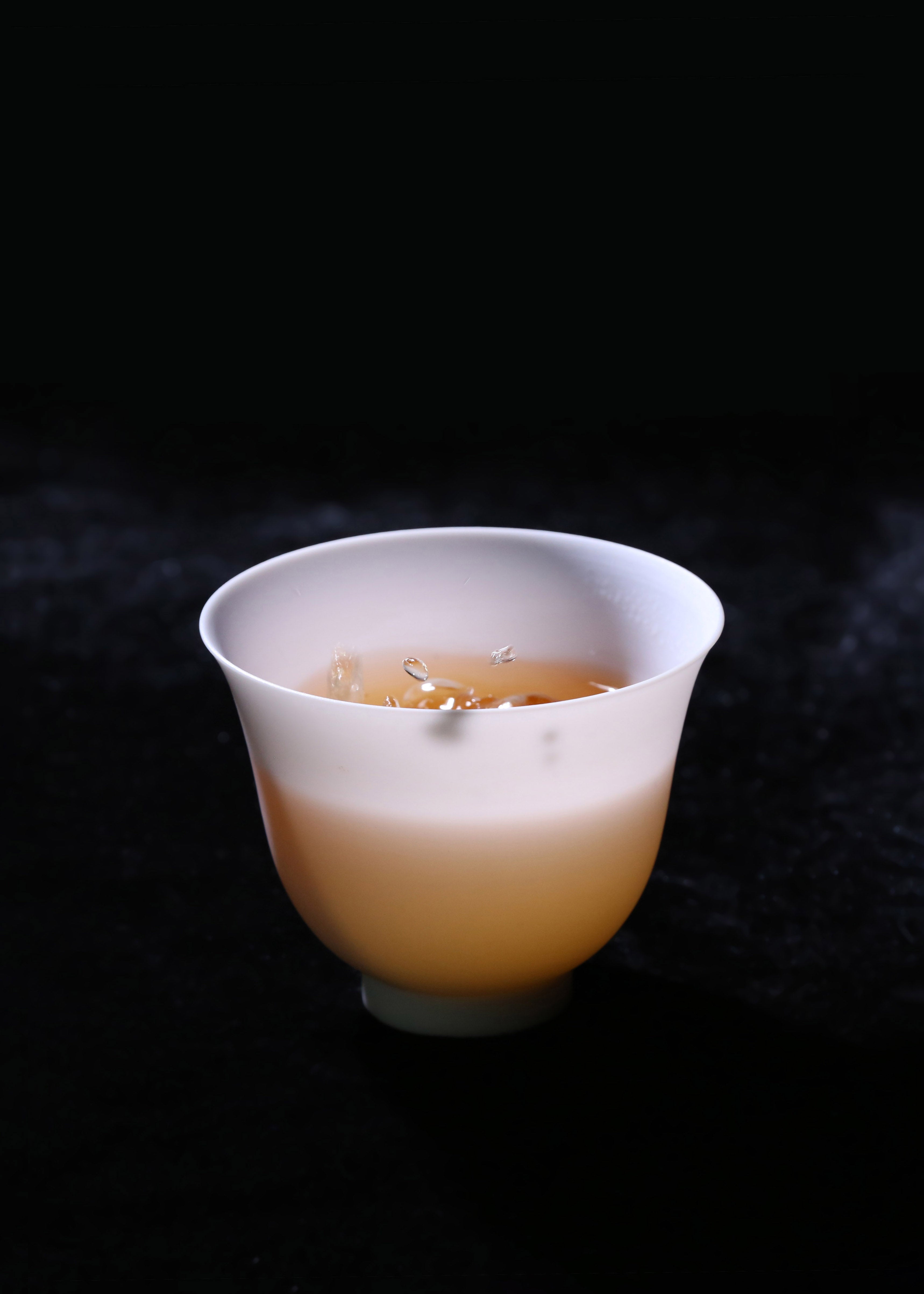
Good Anji white tea should have a light fragrance, a refreshing taste, and a pleasant aftertaste. The brewed tea should have a pale yellow color, not too green, and the tea leaves should be white with green veins.
Yan Ronghuo's tea garden also has many wild mixed varieties. These tea varieties have been passed down in the tea garden for generations, which greatly enhances their aroma and flavor. Mr. Yan Ronghuo said, "I want to pass on Anji white tea. My son is now working with me in the tea industry, and I hope that it can be passed down to my descendants."
I hope that young people today will learn about, understand, and enjoy drinking our Anji white tea.