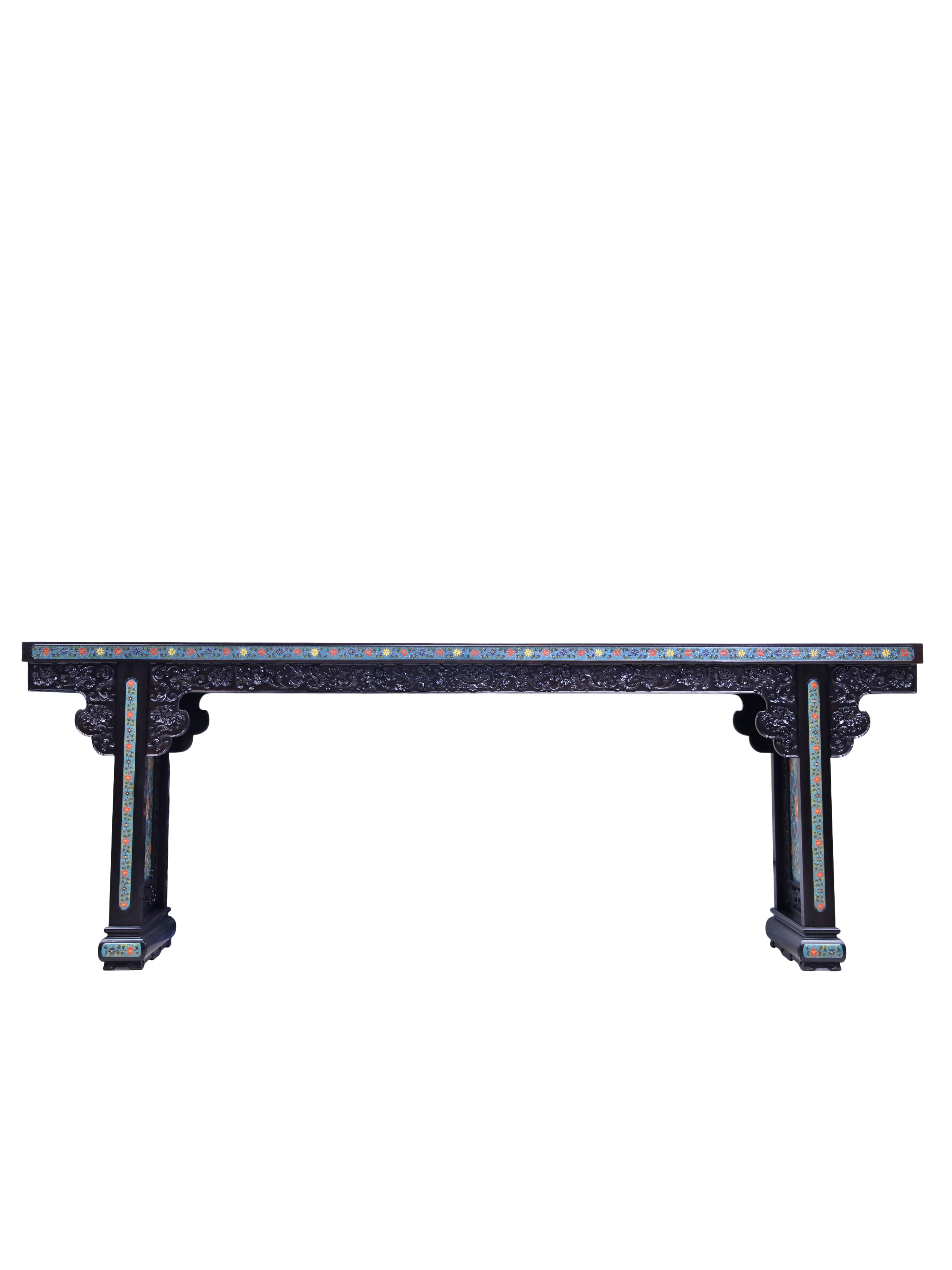
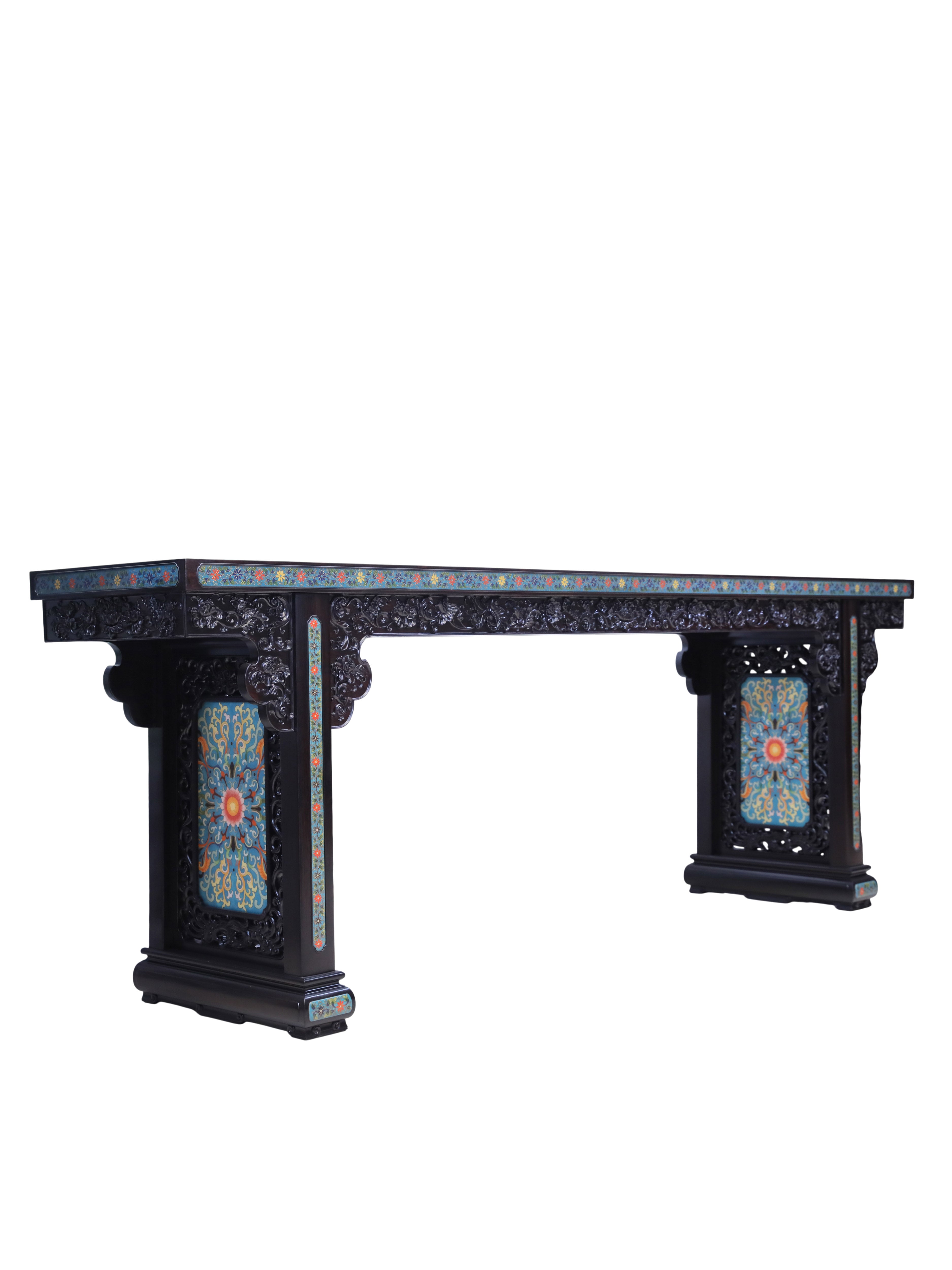
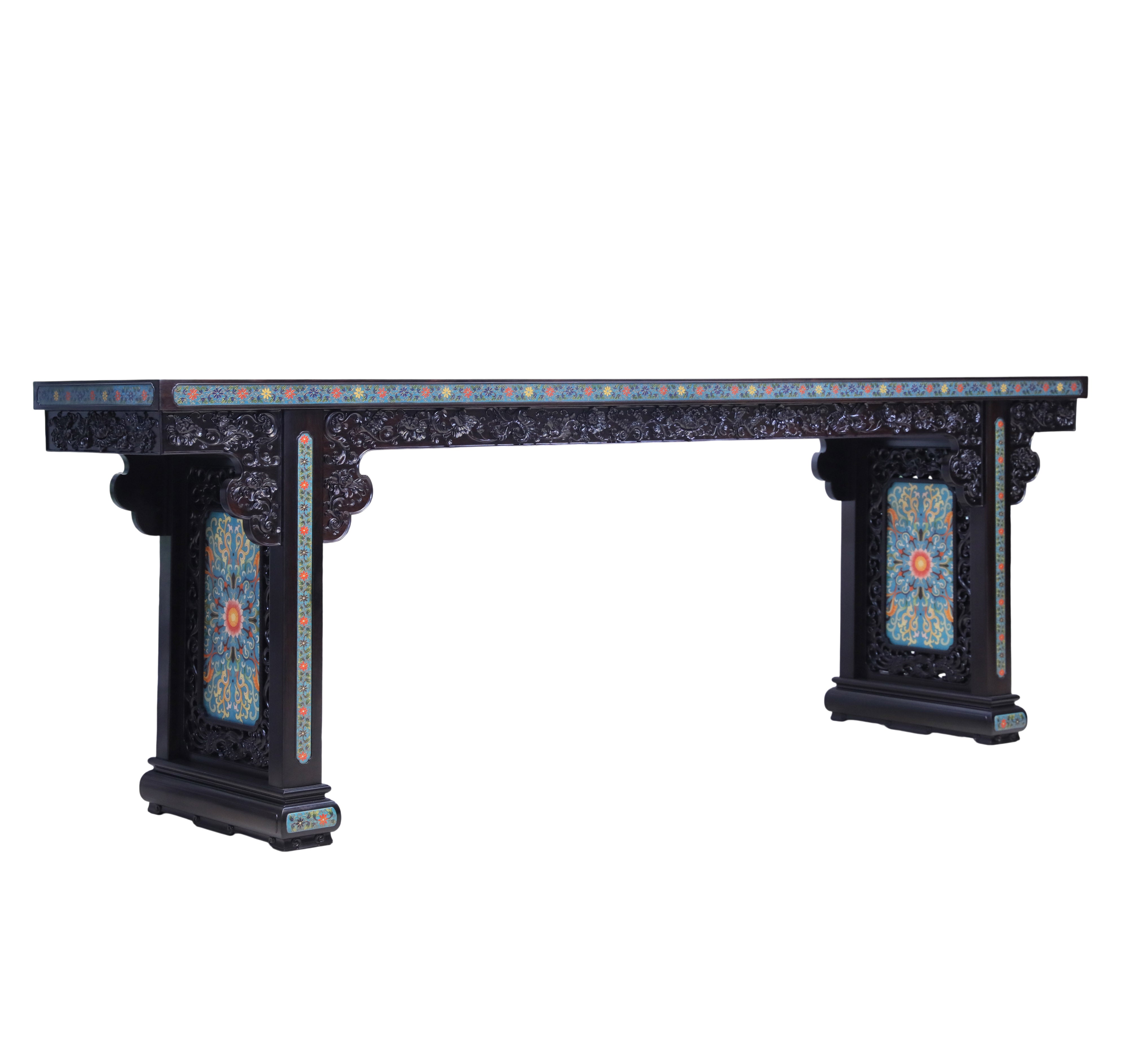
Furniture Form: Flat-top table
Author : Dayatang
Material:
African Blackwood(common name)
Dalbergia melanoxylon(Latin name)
Specifications: Length: 259cm; Width: 52cm; Height: 91cm
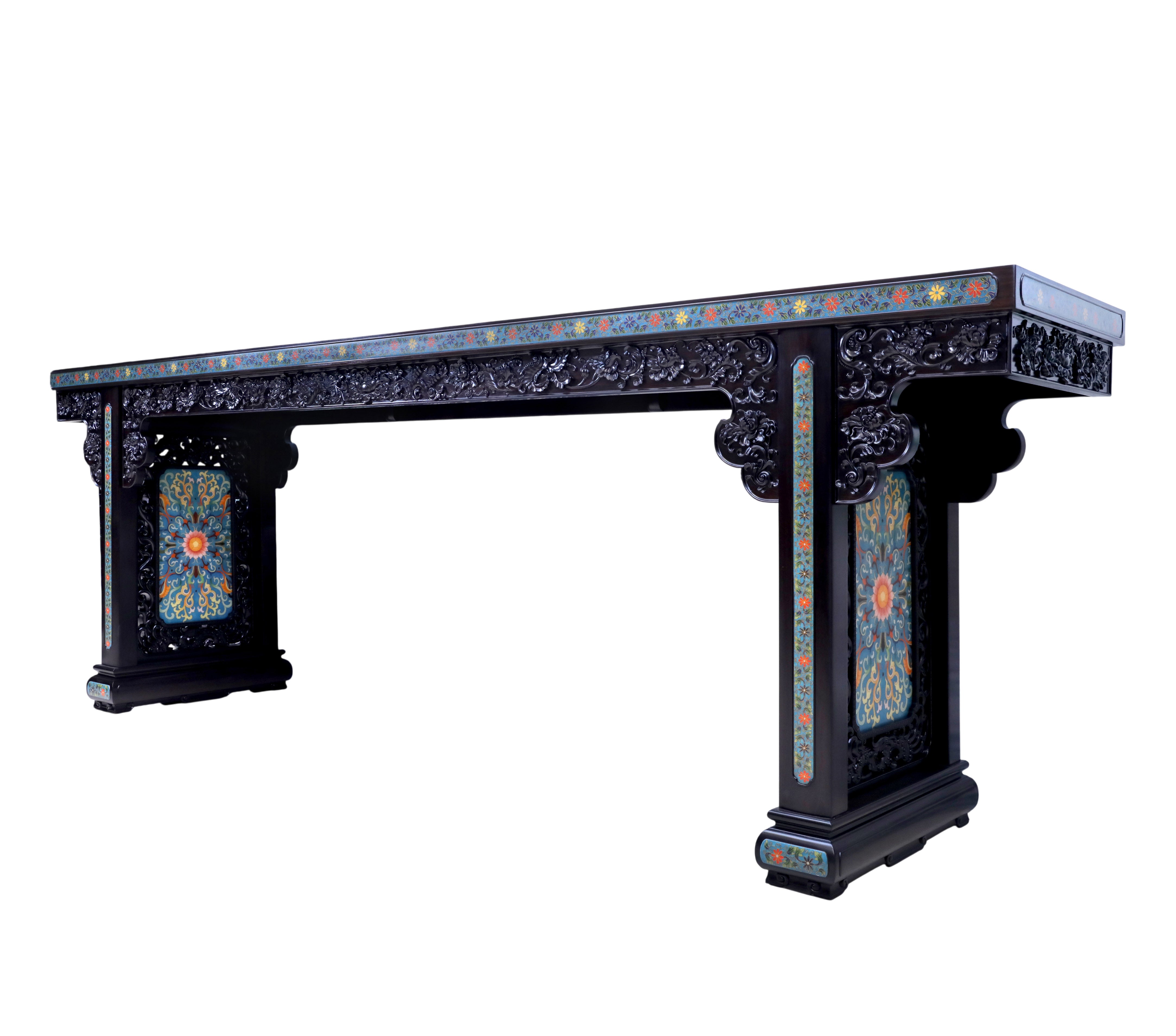
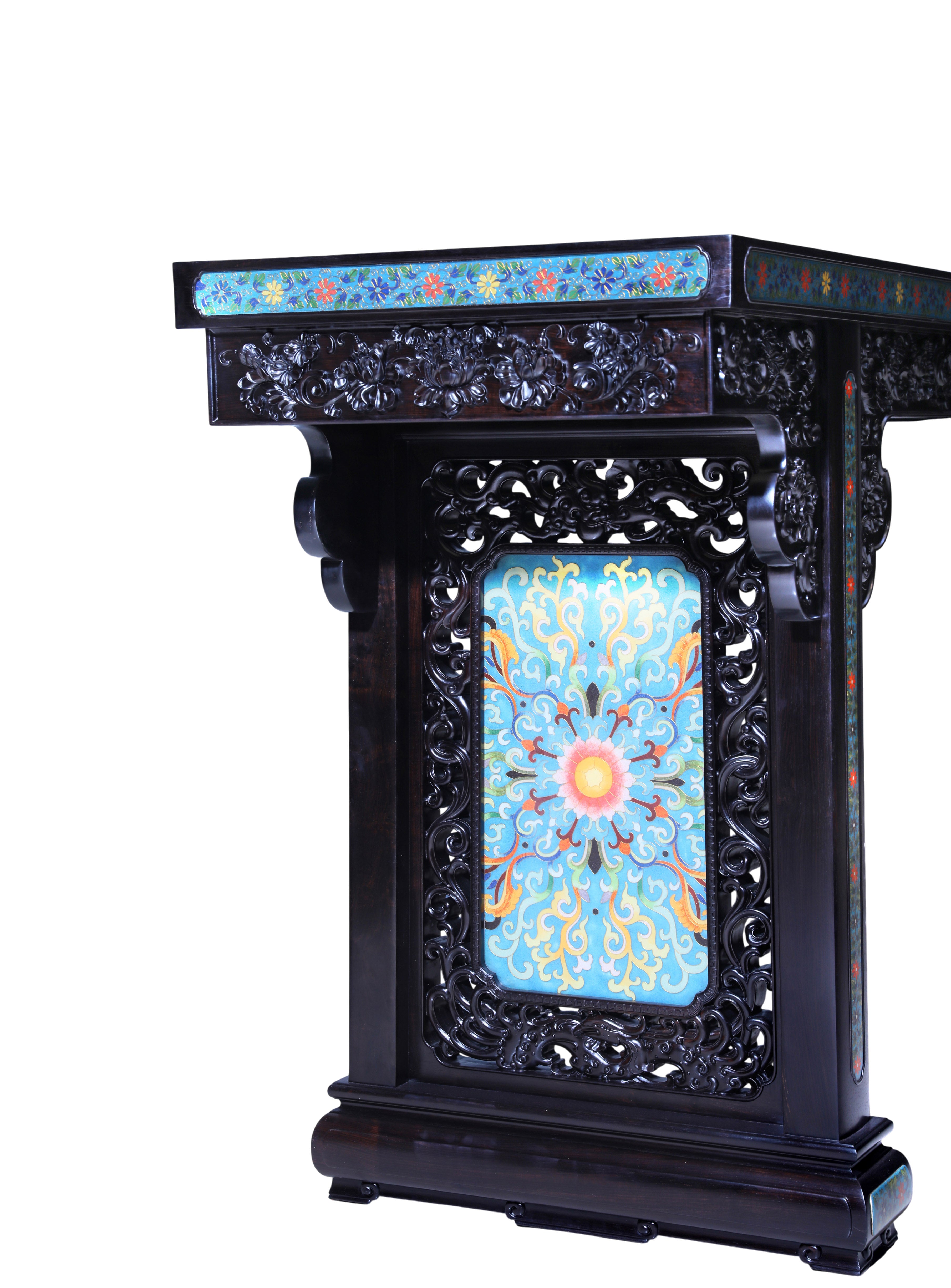
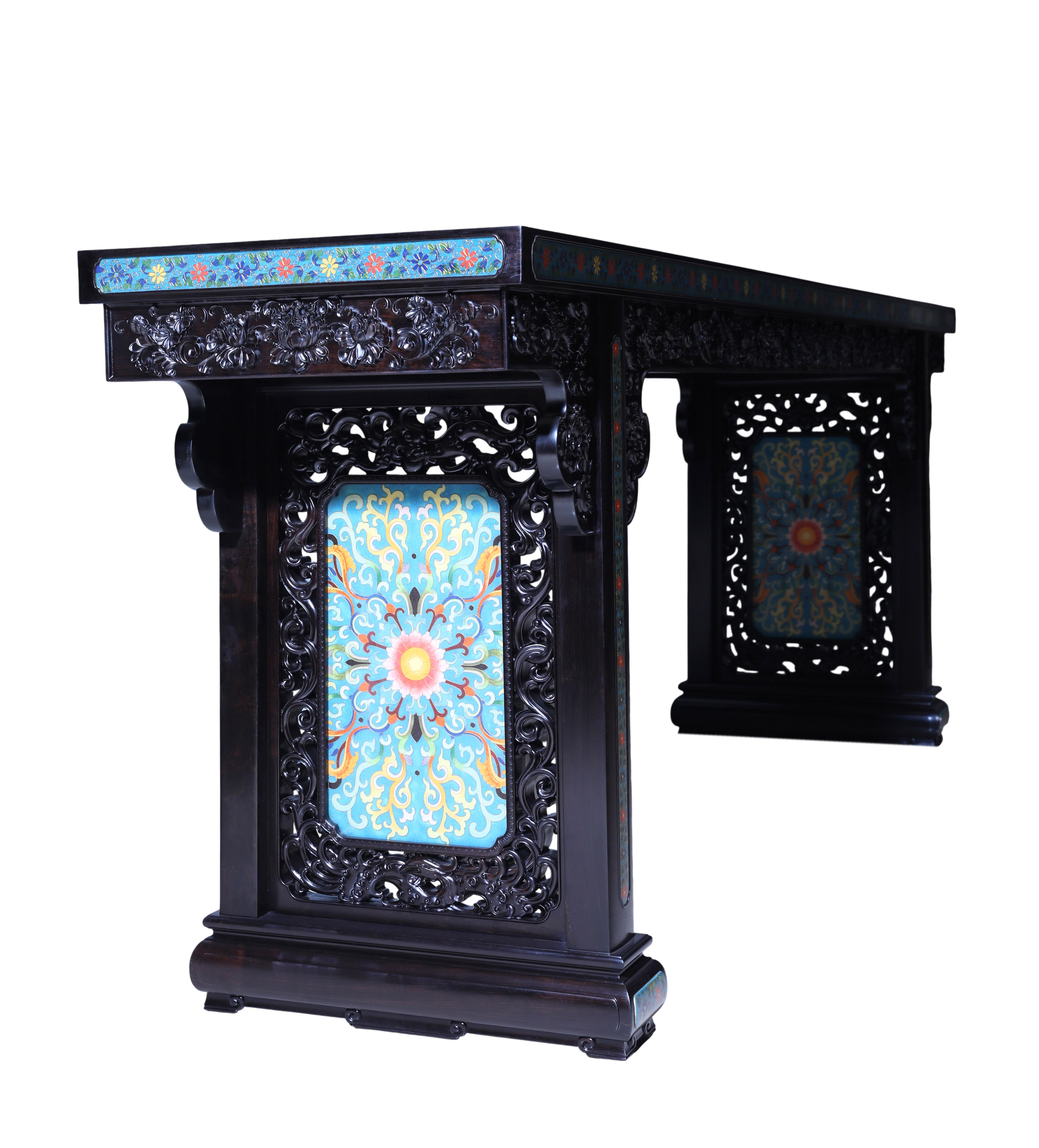
This flat-top altar table is originally modeled after a piece dating back to the Qianlong period of the Qing Dynasty. A collaborative design by Chinese and Western artisans in the imperial palace, it is a quintessential imperial masterpiece crafted either in Guangdong or by Guangdong artisans at the Imperial Household Department Workshop in the Forbidden City, Beijing.
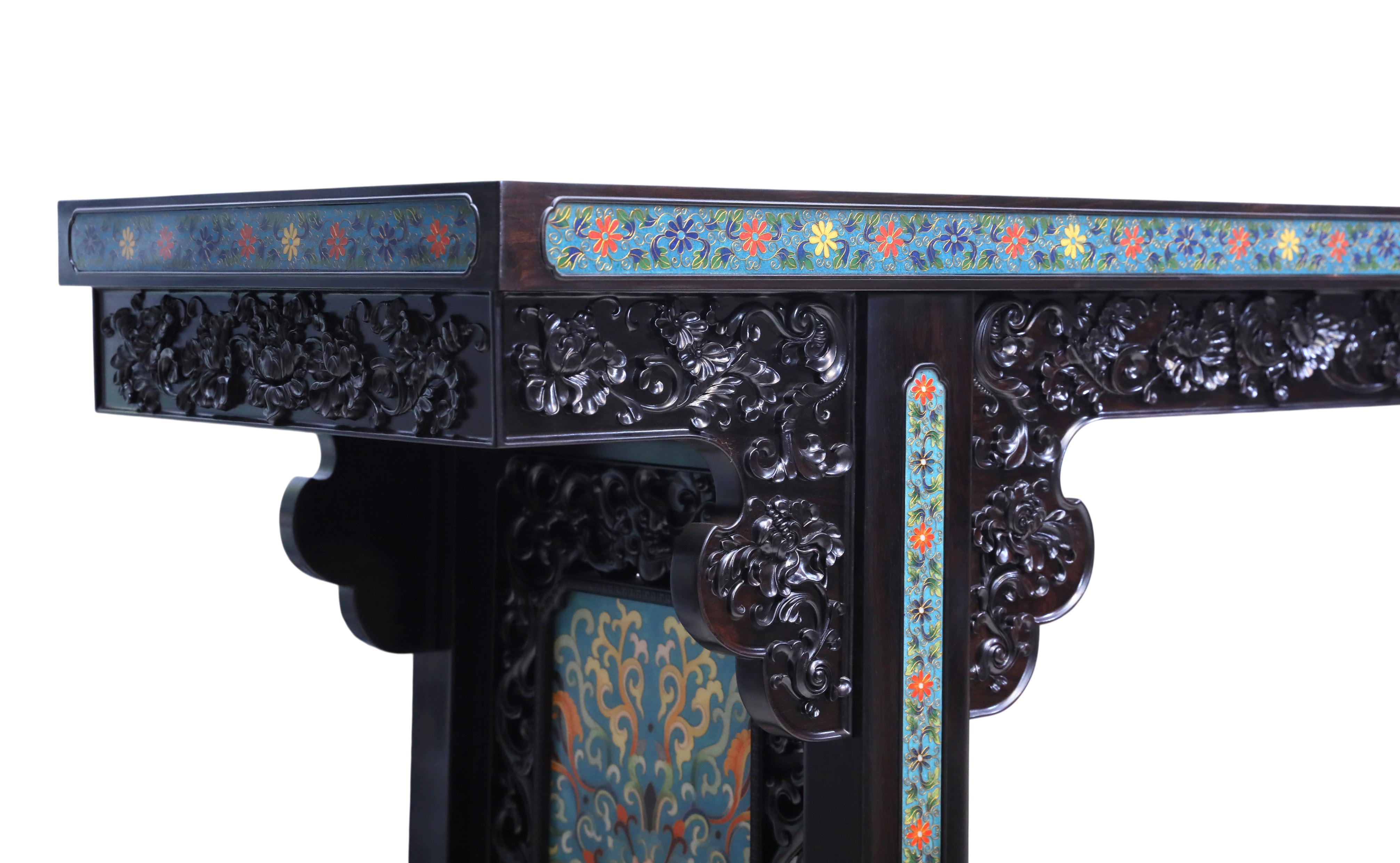
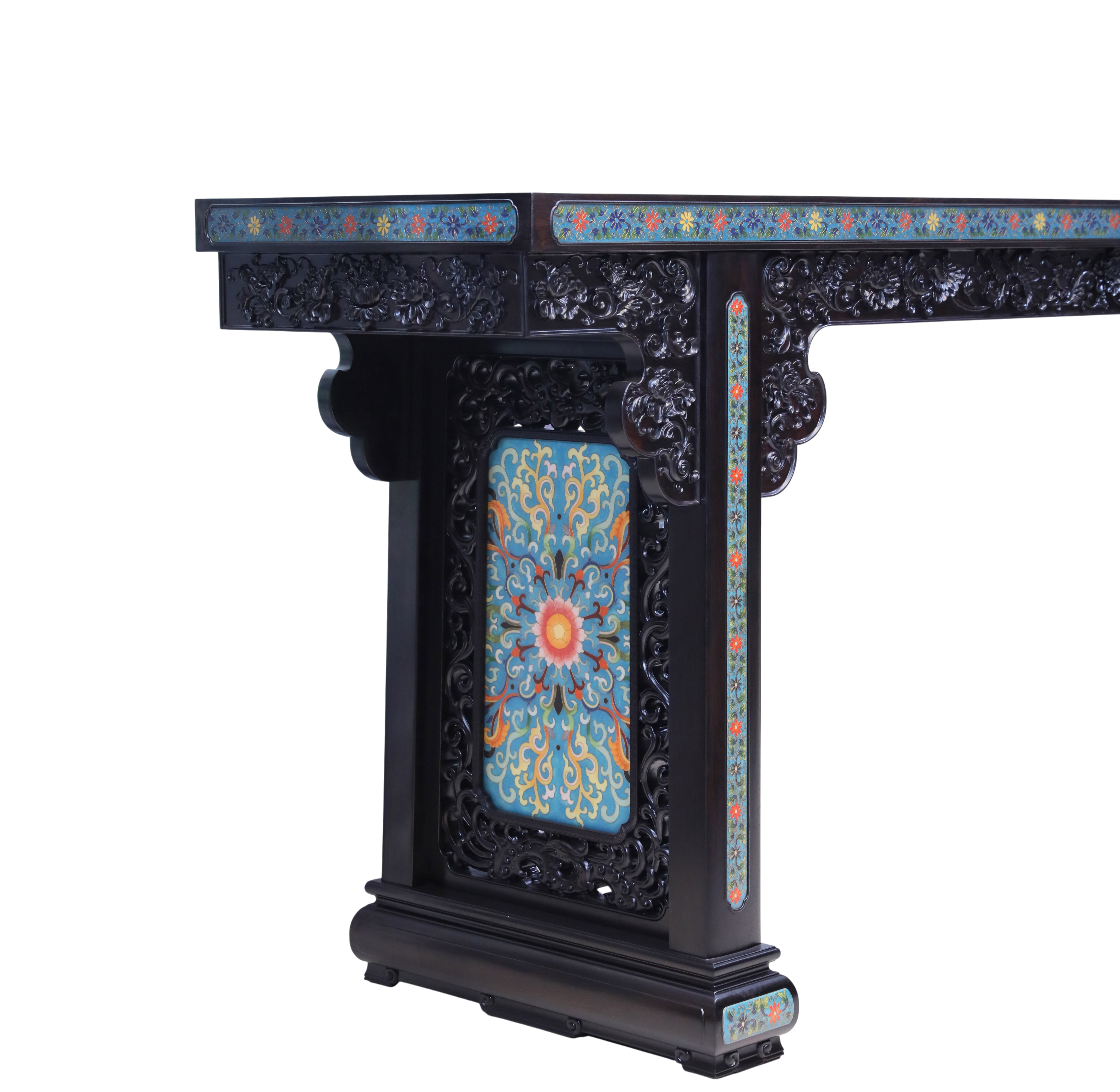
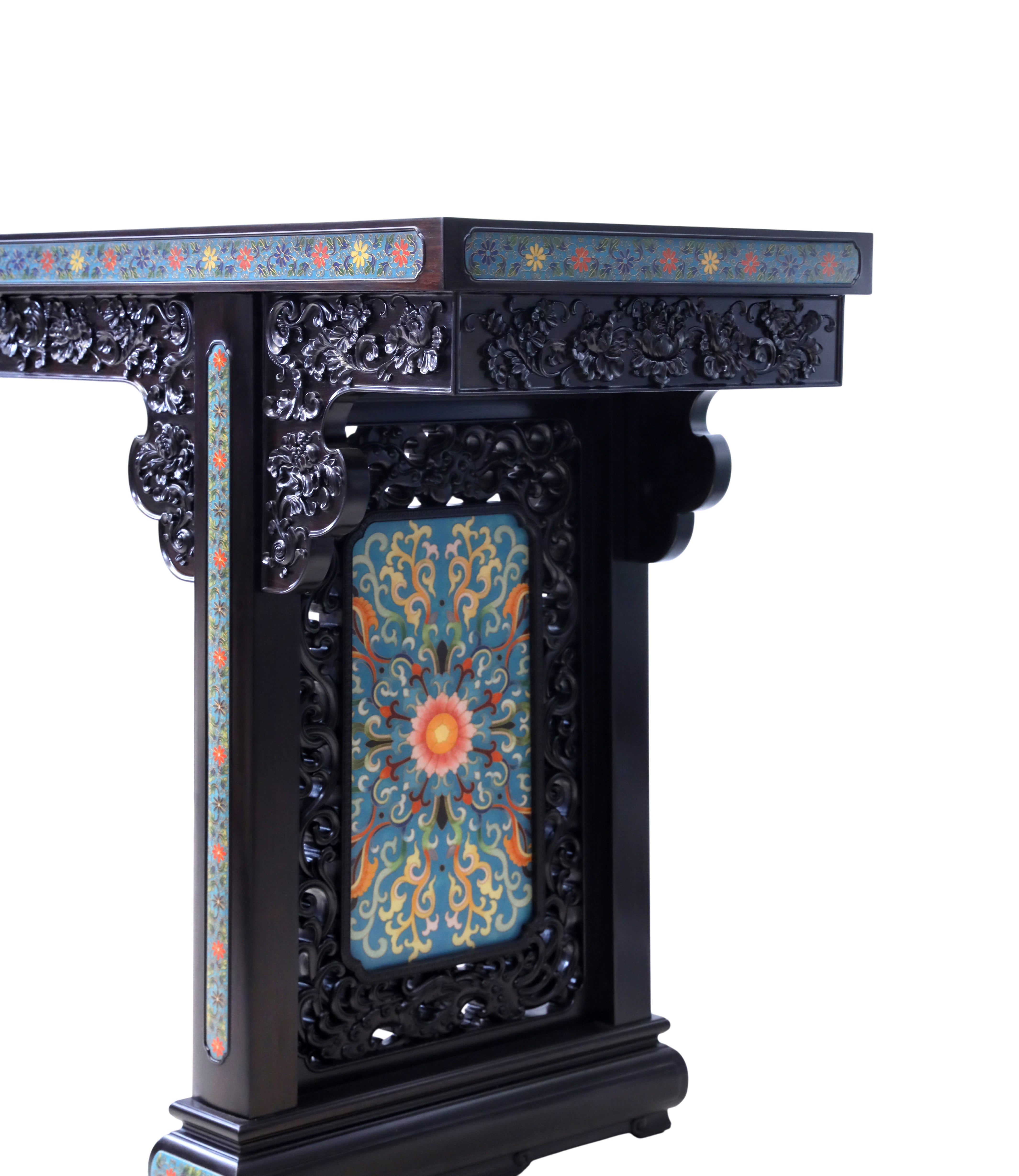
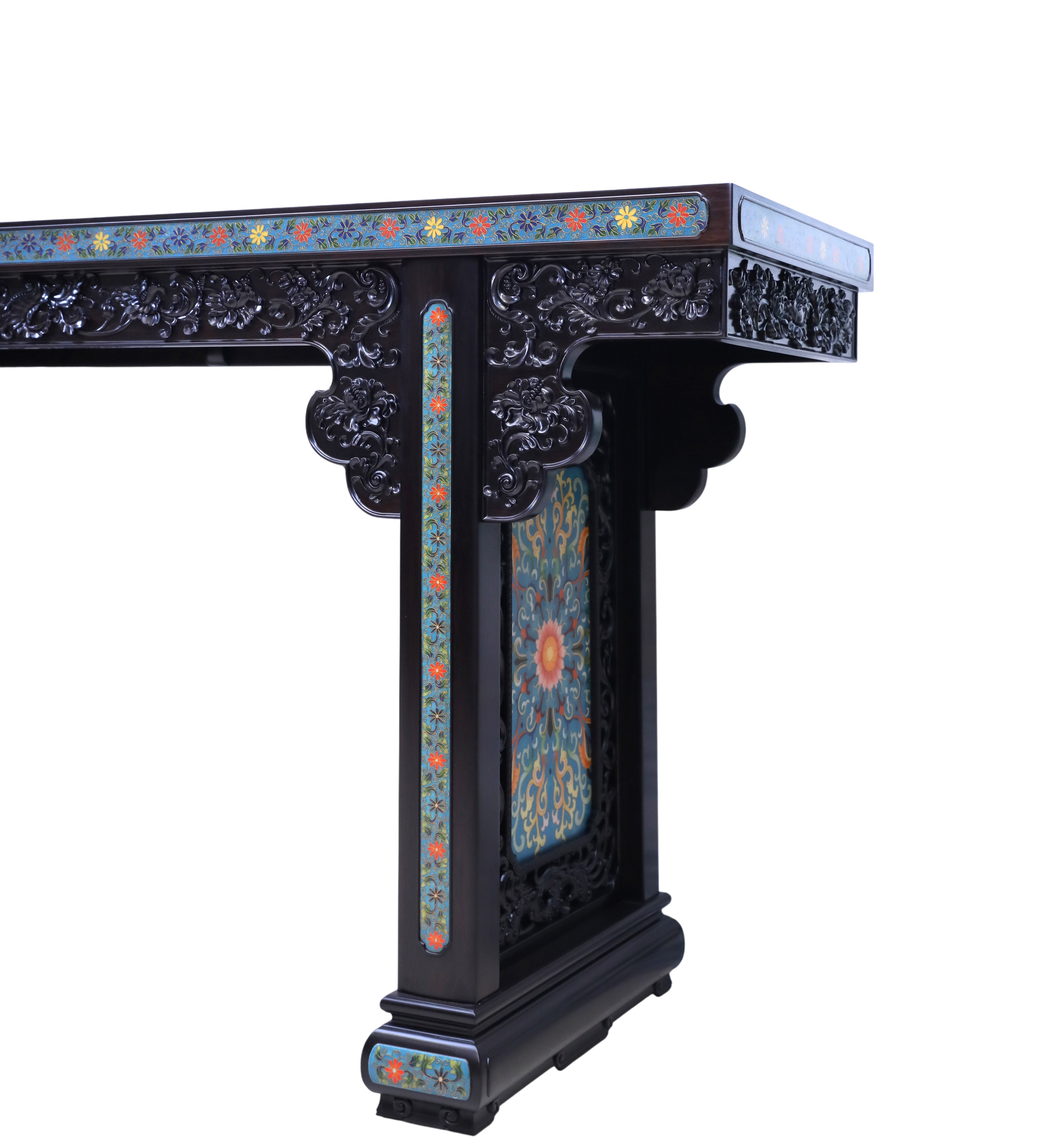
Fashioned from carefully selected African Blackwood, the table features thick, substantial timber that exudes a grand imposing presence. The entire piece blends Western decorative styles with an antique, elegant luster and a stable, dignified form, boasting exquisite carvings that harmoniously unite collection value with practical utility. In terms of structural craftsmanship, it adopts the refined techniques reserved for high-end large furniture pieces. It employs the standard fixed tenon structure: the aprons and side panels are respectively adorned with sunken relief carvings or openwork carvings of passionflowers, showcasing plump floral motifs and fluid leafy stems. The tabletop is constructed with a framed panel inlaid with cloisonné, while its ice-plate edge is decorated with raised linear moldings. The apron boards are inlaid with cloisonné, and their ends are fully carved with passionflowers, which are also featured as decorative elements on the table’s other parts.
The table is supported by massive straight legs; the upper sections of the legs are designed in a columnar style, modeled after stone columns in Western architecture, and are carved with scrolls, flowers, and foliage. The foot bases are adorned with plump relief carvings of upward and downward lotus petals in the style of a Sumeru base, presenting rich layers and an elegant silhouette. This design not only increases the overall height of the table and balances the visual proportions between its upper and lower components but also endows the piece with enhanced stability and solemnity. Panels are installed between the legs on both sides, each decorated with double-sided cloisonné featuring passionflower motifs—a hallmark of the Rococo style, which was a commonly adopted decorative form for tables during the Qing Dynasty.
In the realm of traditional Chinese furniture, there is a well-known saying: "Among thousands of tables and ten thousand chairs, a fine altar table is hard to come by." This adage underscores that altar tables held a far higher status and artistic value in traditional furniture hierarchy than ordinary tables and chairs.