Tea Brewing Guide
Warm the Pot & Toast the Tea (Key Aroma-Enhancing Step):
Wipe the teapot dry and heat it over low heat for 30 seconds.
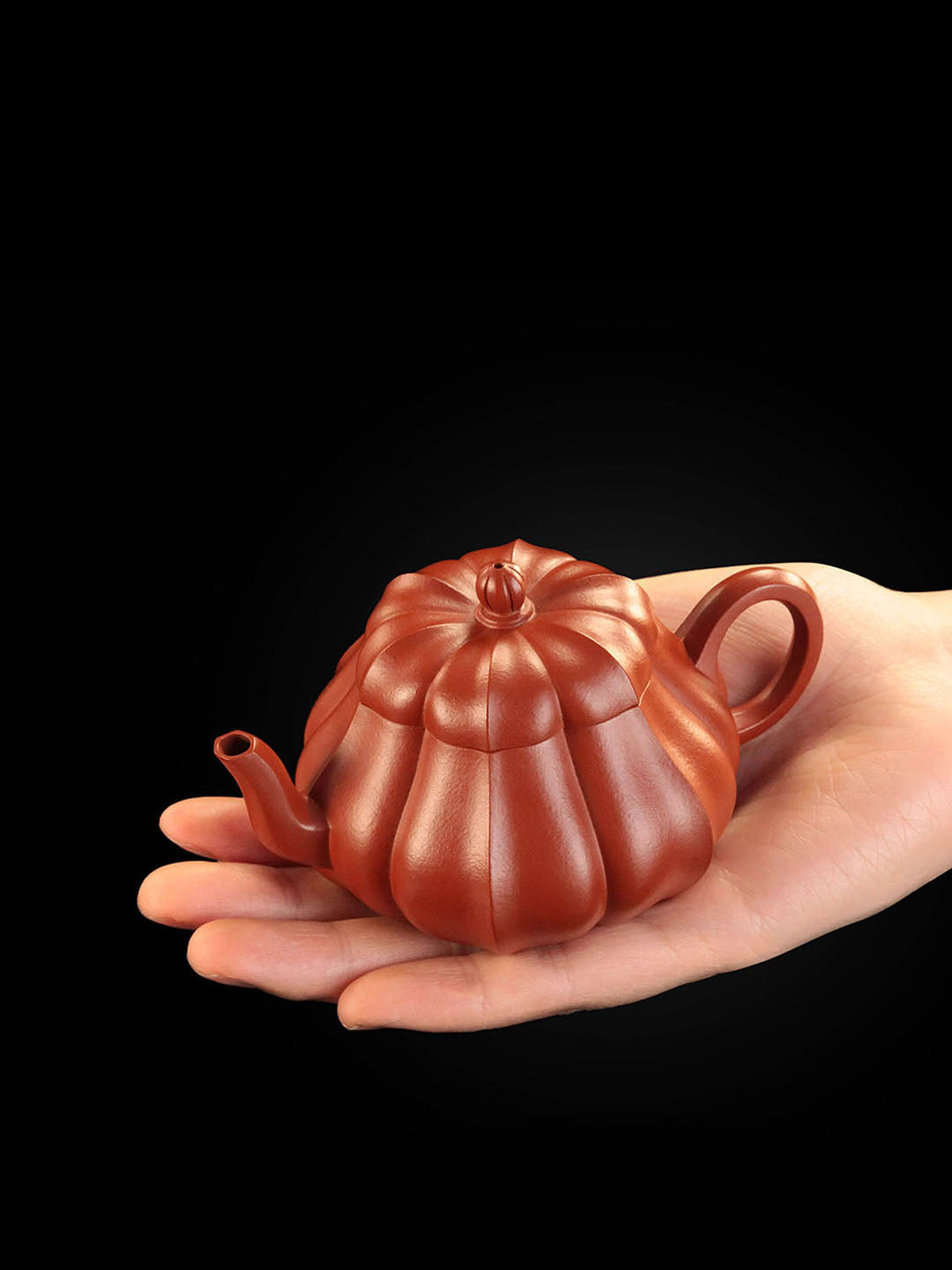
Add 5g of tea cake, gently shake the pot manually, and dry-toast for 1 minute (stop when a slight roasted aroma is detected; do not burn the tea).
Brew with cold water:
Pour 400ml of cold water into the pot. Bring to a boil over high heat, then switch to low heat.
Simmer for 2 minutes while maintaining the "initial crab-eye boil" state (small bubbles on the water surface), then turn off the heat and steep for 5 minutes.
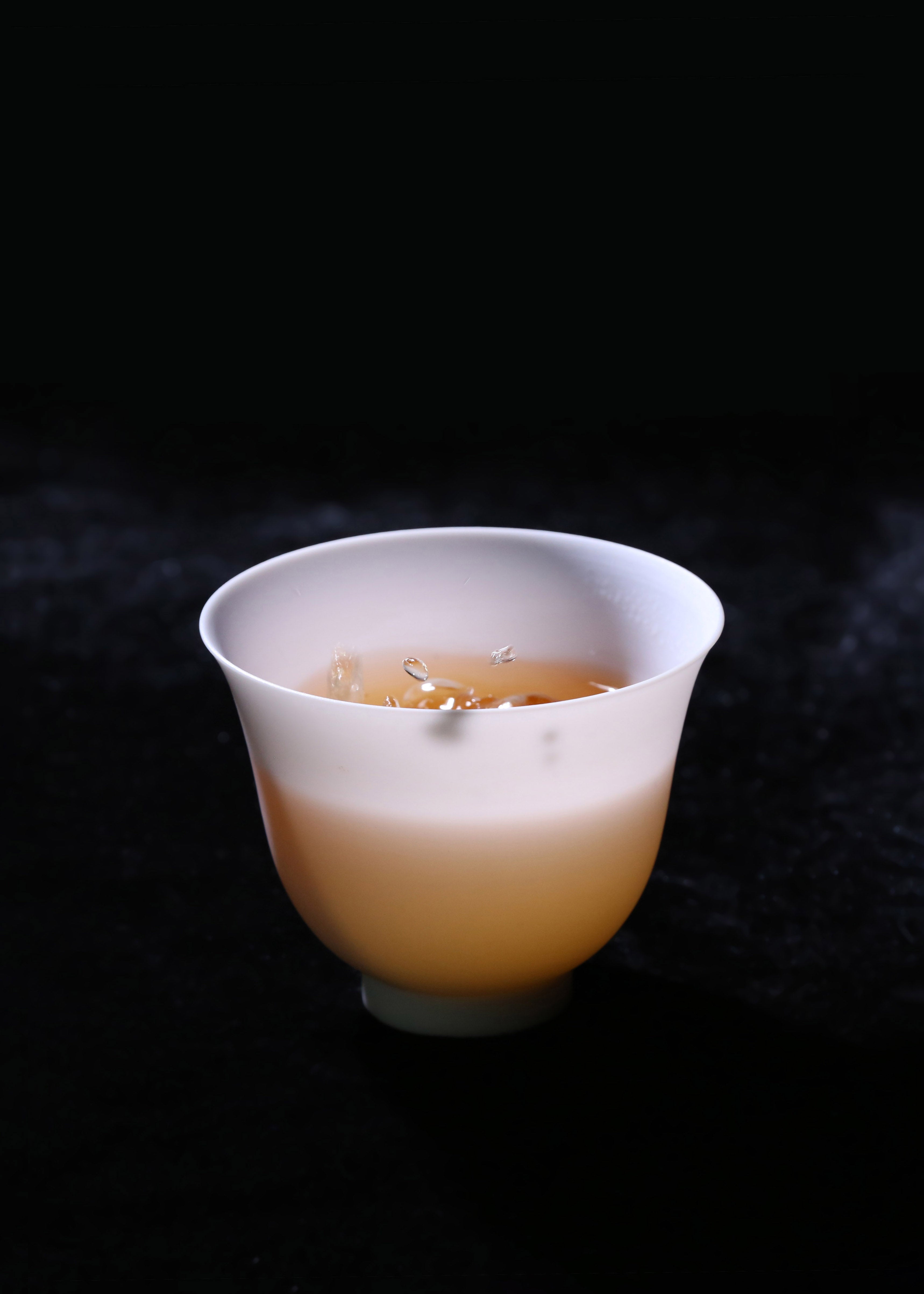
The tea liquor will be deep amber in color, thick in texture, with a blend of medicinal aroma and light roasted scent—perfect for warming the body in autumn and winter.
Refill Brewing Tips:
For the second brew: Add warm water, bring to a boil, and simmer for 1 minute only to avoid over-extraction which causes thin taste.
If the tea leaves at the bottom are not fully unfolded after brewing (especially for tightly pressed tea), fish them out, gently break them apart by hand, and put them back into the pot for rebrewing.
Soaking before boiling
First 3 Infusions (Gaiwan / Purple Clay Teapot – Awaken Tea Aroma)
1st Infusion:
Pour 100℃ boiling water along the inner wall of the vessel.Steep for 8 seconds and decant the liquor immediately.
Liquor color: Light amber, with an initial sweet and mellow taste.
Brew the used tea leaves in a teapot (to release the residual flavor, rebrew 3 times).
Preparation before brewing:
Put the tea leaves that have been brewed 3 times directly into the teapot, add 300ml of cold or warm water (cold water extracts more flavor, while hot water saves time).
If the used tea leaves are relatively crushed, wrap them with a tea strainer to avoid cloudy tea liquor.
Fire Control:
First simmer: Bring to a boil over high heat, then immediately switch to low heat and maintain a gentle simmer for 1-2 minutes. Turn off the heat and let it steep for 3 minutes (the tea liquor is rich red, with a texture like rice soup).
Second simmer: Add 200ml of warm water, bring to a boil over high heat, then simmer on low heat for 1 minute. Let it steep for 2 minutes (the taste remains sweet and mellow, with a long-lasting aged fragrance).
Third simmer: Add a small amount of hot water, bring to a boil, then turn off the heat directly. Let it steep for 5 minutes (the residual flavor is fresh and sweet, suitable for "quenching thirst with tea")..
Tasting Tips
It is recommended to drink the simmered tea when it cools slightly (60-70℃) to feel the "slimy texture of the tea liquor in the mouth" and the "sweet aftertaste at the bottom of the throat".
When simmering the tea, leave the teapot lid slightly open (about 1/3 uncovered) to avoid "over-steaming" which may produce a cooked taste.
water quality
Choose qualified purified water; never use alkaline water.
(For commercially available mineral water brands, their water sources and quality indicators vary. So-called "high-quality mineral water and mountain spring water" may cause loss of functional components and inhibition of aroma in tea.)
I:Effect of Alkaline Water on Green Tea
1. Effects on tea liquor color:
green tea:
Under alkaline conditions, chlorophyll is easily destroyed (chlorophyll stability decreases at pH > 8.0) , causing the tea liquor color to easily change from bright green to yellow or dark yellow, resulting in turbidity , especially noticeable when brewed at high temperatures. Flavonoids (such as catechins) in green tea are easily oxidized in an alkaline environment, exacerbating the darkening of the tea liquor color.
black tea:
Theaflavins (bright orange-yellow) are easily oxidized to thearubigins (dark red) under alkaline conditions, and further generate dark brown, causing the soup color to change from bright red to dark and lose its transparency .
Other types of tea:
The color of oolong tea, white tea, and yellow tea may be darker due to alkaline water. The color of black tea (such as ripe Pu-erh) will become more turbid, and the color stability of aged aroma substances will also be affected .
2. Impact on taste and texture
Analysis reveals differences:
Tea polyphenols and caffeine: lead to insufficient concentration and bland taste . An alkaline environment inhibits the dissolution of tea polyphenols (bitter substances) and caffeine, reducing the bitterness of the tea soup.
Amino acids and sugars: Disruption of amino acid structure reduces the freshness and crispness.
Mineral influence: Alkaline hard water (containing more calcium and magnesium ions) combines with tea polyphenols to form insoluble precipitates (such as "cloudiness after cooling"), resulting in cloudy tea soup and a rough taste .
Balance of taste: It significantly affects the "richness" of tea soup for teas that rely on polyphenols to support their taste (such as raw Pu-erh tea and high-roasted rock tea), with no noticeable aftertaste and an overall taste that is bland and coarse .
3. Effects on aroma
Volatile aromatic substances: An alkaline environment may accelerate the degradation or transformation of aromatic substances (such as aldehydes and alcohols), resulting in a single aroma profile, especially in light-aroma teas (such as jasmine tea and Anji white tea), where the floral fragrance dissipates easily and may even develop a "mushy" taste.
Aged aroma and woody aroma: For fermented teas such as black tea and aged Pu'er, alkaline water may slightly highlight the aged aroma (pH>8.0) and suppress the fruity or honey aroma.
II: The adaptability of different types of tea to water quality
1. The interaction between the physicochemical properties of water and tea components
-
Hard water (>120 mg/L CaCO₃) : Calcium ions combine with tea polyphenols to form precipitates, reducing the astringency of tea soup (EGCG binding rate can reach 23%), but losing antioxidant activity (Food Chemistry, 2018); Magnesium ions promote caffeine dissolution, and every 1 mg/L increase in magnesium can increase the caffeine concentration by 0.8% (Journal of Agricultural and Food Chemistry, 2020).
-
Soft water (<60 mg/L CaCO₃) : Theaflavin dissolution rate increased by 12%, and the brightness of the tea soup increased (L* value increased by 3.2), but the amino acid extraction efficiency decreased (Food Research International, 2019).
2. Supported by scientific experimental data
-
Longjing green tea brewing experiment (TDS = 50 vs 300mg/L) : The amino acid content of the tea soup in the soft water group (1.2mg/mL) was significantly higher than that in the hard water group (0.8mg/mL), but the caffeine content was 18% lower (China Tea Processing, 2021); Sensory evaluation showed that the freshness score of the soft water group was 1.7 points higher (out of 9), while the body of the hard water group was 0.9 points higher.
-
Research on water quality suitability for Wuyi rock tea : Water containing trace amounts of sulfate (20-50 mg/L) can increase the dissolution of cinnamaldehyde, a characteristic aroma compound of cinnamon, by 24% (GC-MS detection), and significantly enhance the rocky aroma (Tea Science, 2020).
3. Water quality selection recommendations (based on tea)
|
Tea |
Ideal TDS |
Recommended pH |
Key ion requirements |
|
F.T.L. Green Tea |
30-80mg/L |
6.8 |
Ca²⁺<15mg/L, Mg²⁺<5mg/L |
|
F.T.L. Oolong Tea |
80-150mg/L |
7 |
HCO₃⁻ 40-60mg/L |
|
F.T.L. Black Tea |
100-200mg/L |
6.8 |
K⁺ 2-5mg/L, SiO₂ 10-15mg/L |
|
F.T.L. Pu'er Tea |
50-120mg/L |
6.8 |
Fe³⁺ < 0.1 mg/L |
4. Examples of the impact of special water quality
London tap water (high hardness) : When brewing black tea, the formation of oxalate-calcium complexes leads to "cold turbidity" appearing 30 minutes earlier, with the turbidity (NTU) of the tea reaching 12.5, which is significantly higher than that of the soft water group (NTU = 4.3) (Food Hydrocolloids, 2019).
Kagoshima hot spring water (containing sulfur) : Sulfides react with theaflavins to form methyl flavonoids, which reduces the umami intensity of sencha by 37% (*Journal of the Japanese Institute of Food Science and Technology, 2022).
One Region, One Tea: Water quality from specific local water sources enhances the color, aroma, and taste of local tea, but using local water requires systematic professional knowledge and high costs. For non-professionals, mastering the basic principles of "softened purified water + temperature control" is far more practical than pursuing famous springs from the origin.
The precise matching of water and tea is essentially a dialogue of geographical genes, which needs to be built on a multidisciplinary system of geology, food chemistry, heat transfer and other disciplines, and cannot be covered in just a few lines of web pages.
The UK-based AquaSim laboratory has simulated 12 core indicators of Tiger Spring water. However, it lacks the original spring's microbial community (such as Nocardia tea-loving bacteria), resulting in a 27% difference in post-fermentation flavor. In addition, the operation is complex: it requires mastering the "listening to the spring while boiling water" method (stopping the fire immediately when the water first boils), and a temperature error of more than 3°C will disrupt the flavor balance.
The charm of tea ceremony lies in appreciating what suits one's taste.
A pot of purified water is enough.
Don't be trapped by the mystique of water quality.