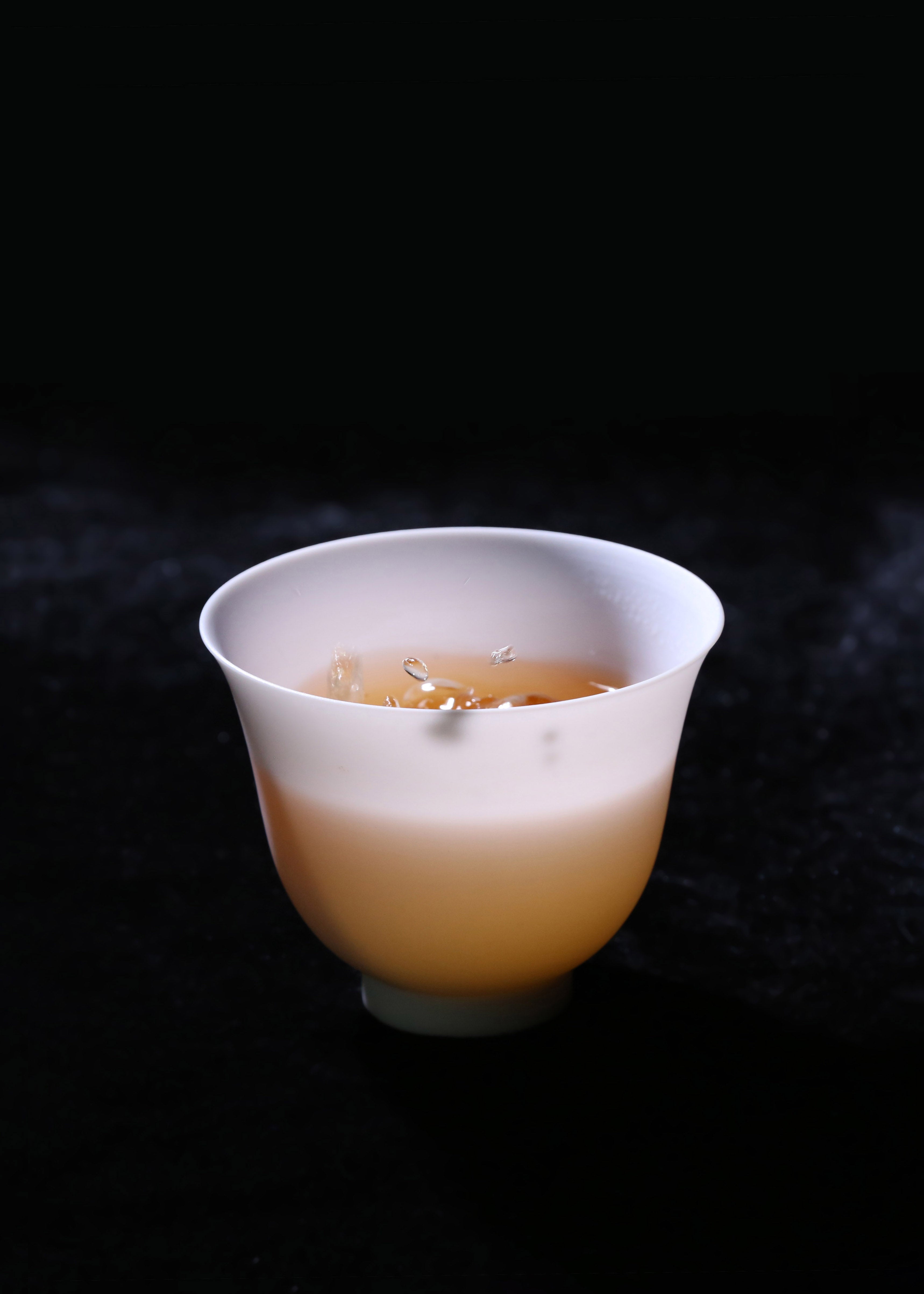

Enamel Painted Interlocking Lotus Waist Drum Cup,
This Enamel Painted Interlocking Lotus Waist Drum Cup is collaboratively crafted by Master Zhang Jian, a master craftsman of Jingdezhen overglaze color and gold-piling technique, together with several other senior artisans.
Interlocking Floral Pattern
The outer wall is painted with enamel interlocking lotus, with clear leaf veins, gracefully curled branches and leaves full of vivid dynamism, and a splendid color matching. It comes in a pair of two styles: pink background and green background.
As its structure stretches continuously without interruption, it carries the meaning of "endless vitality", so the interlocking branch pattern is also known as the "Ten-Thousand-Longevity Vine".
The interlocking branch pattern originated roughly in the Han Dynasty and prevailed in the Northern and Southern Dynasties, Sui, Tang, Song, Yuan, Ming and Qing dynasties.
Enamel Color
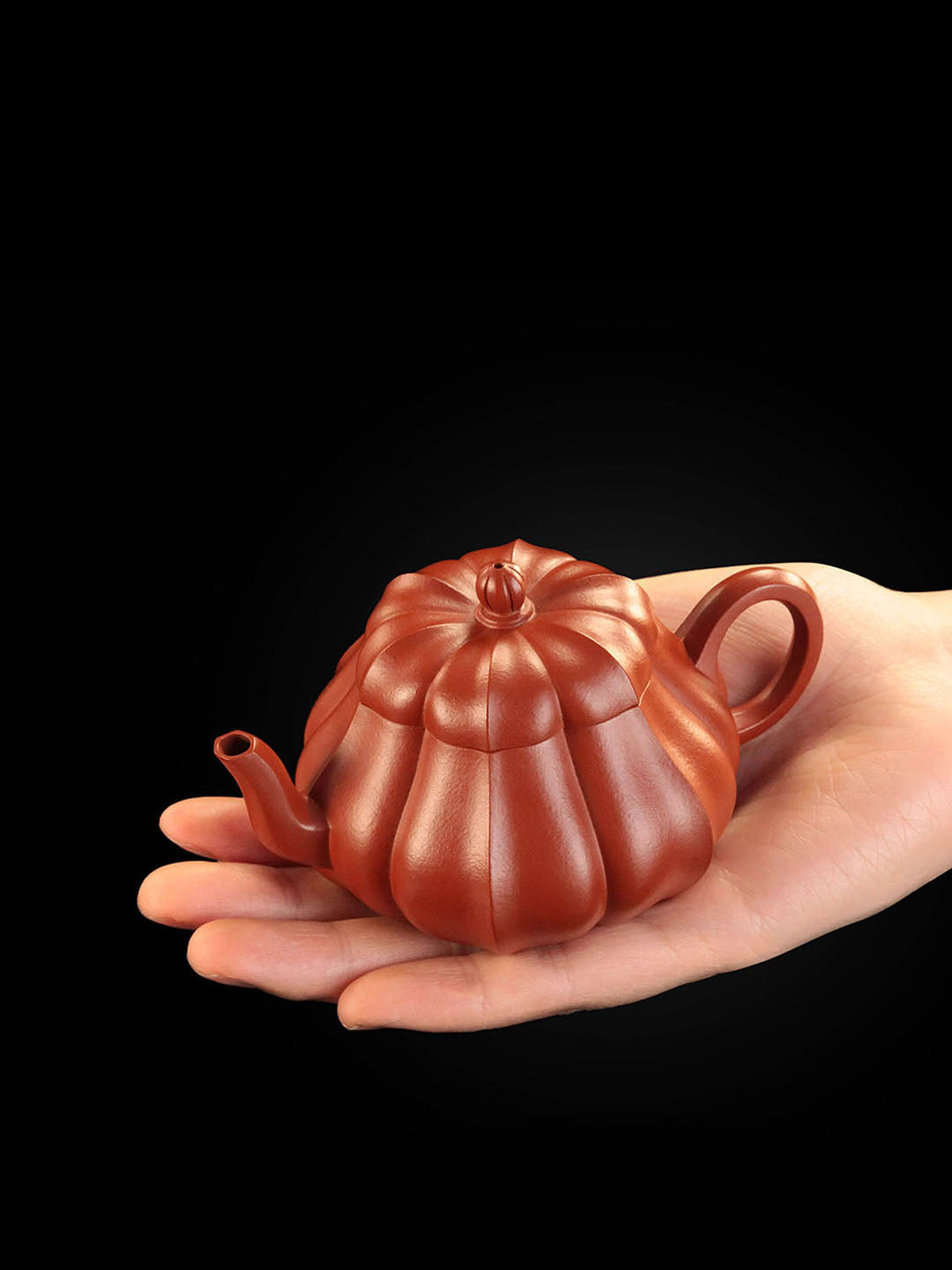
Apart from the complicated and exquisite painting process, the Guyuexuan Palace Lantern Pot requires five kiln firings to be completed, with risks existing in each firing.
In the Qing Dynasty, enamel-colored porcelain was originally a treasure exclusively for the appreciation of emperors and empresses.
Enamel pigment is a special artificial calcined color material. Before the 6th year of Yongzheng Reign (1728), it had to be imported from Europe. After 1728, the Imperial Workshop of the Qing Palace was able to independently refine more than 20 kinds of enamel pigments, which marked that the craftsmanship of ancient Chinese polychrome porcelain had reached its peak.