

Golden Autumn in October – Wajima-style Chrysanthemum Pattern Sunflower Tea Dates
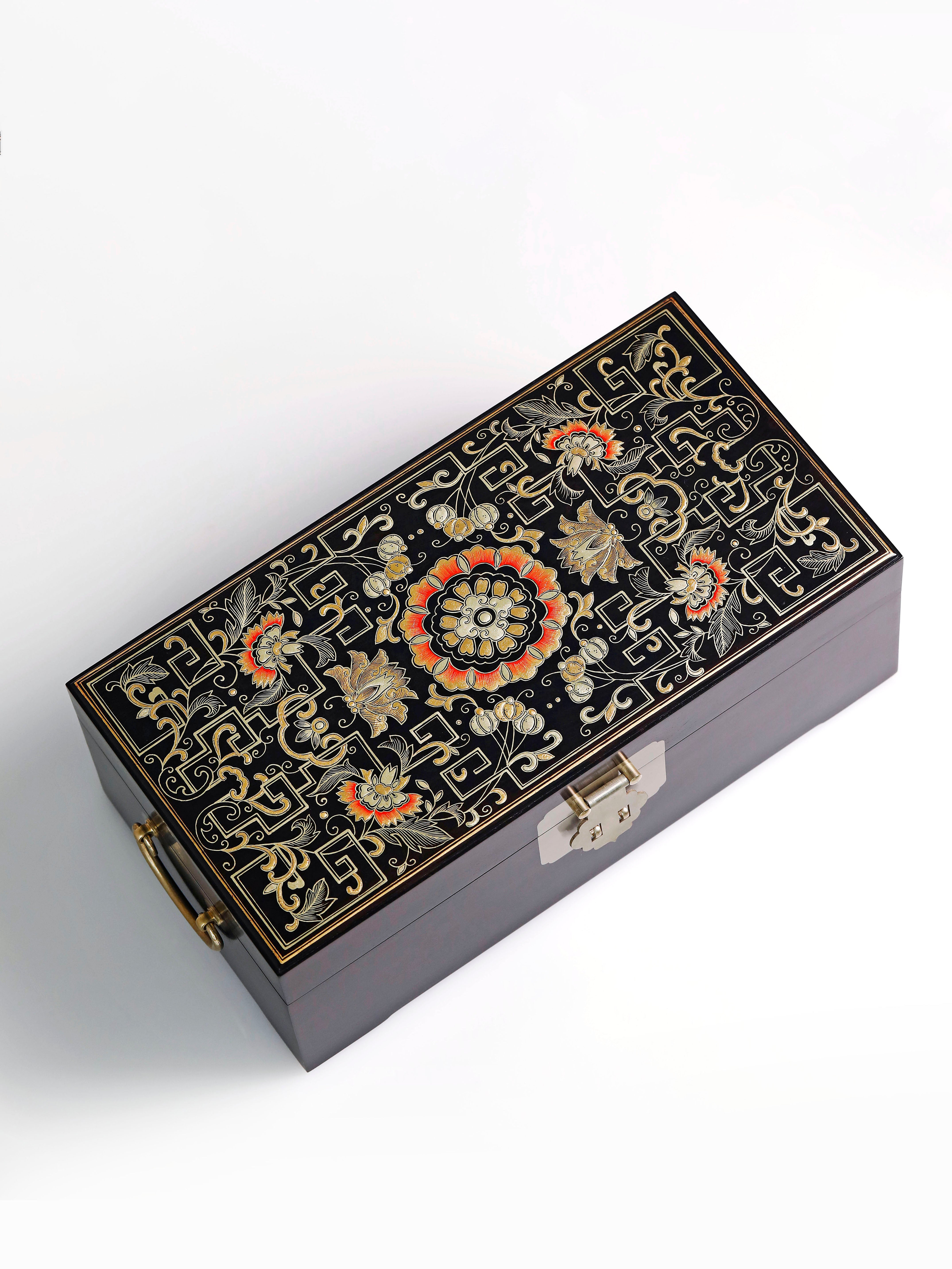
This tea jujube uses the Shenjin technique, resulting in a dazzling golden effect, and features a chrysanthemum motif. The chrysanthemum, one of the Four Gentlemen of Flowers, blooms when all other flowers have faded, symbolizing purity, nobility, and longevity. On the ninth day of the ninth lunar month, Chinese folklore often involves brewing chrysanthemum wine, which is believed to promote health and longevity. Therefore, chrysanthemums frequently represent "longevity" in various auspicious patterns.
Tea dates are an essential tea utensil in the Japanese tea ceremony. They are specifically used to hold tea dust and are one of the thin tea utensils used in Japanese matcha. Because their shape is similar to a date, they are called tea dates.
"Wajima lacquerware" originated in the Kanbun era of the Edo period in Japan. It is the name of lacquerware produced in Wajima City, Ishikawa Prefecture. The lacquer used in Wajima lacquerware is made with high-quality diatomaceous earth (Wajima base powder) produced in Wajima, which makes the base material sturdy and durable. If patterns are carved on the surface of the lacquerware and gold or silver powder is embedded in it, it is called "sinking gold".
 Height: 6.5cm Maximum diameter: 6.5cm


