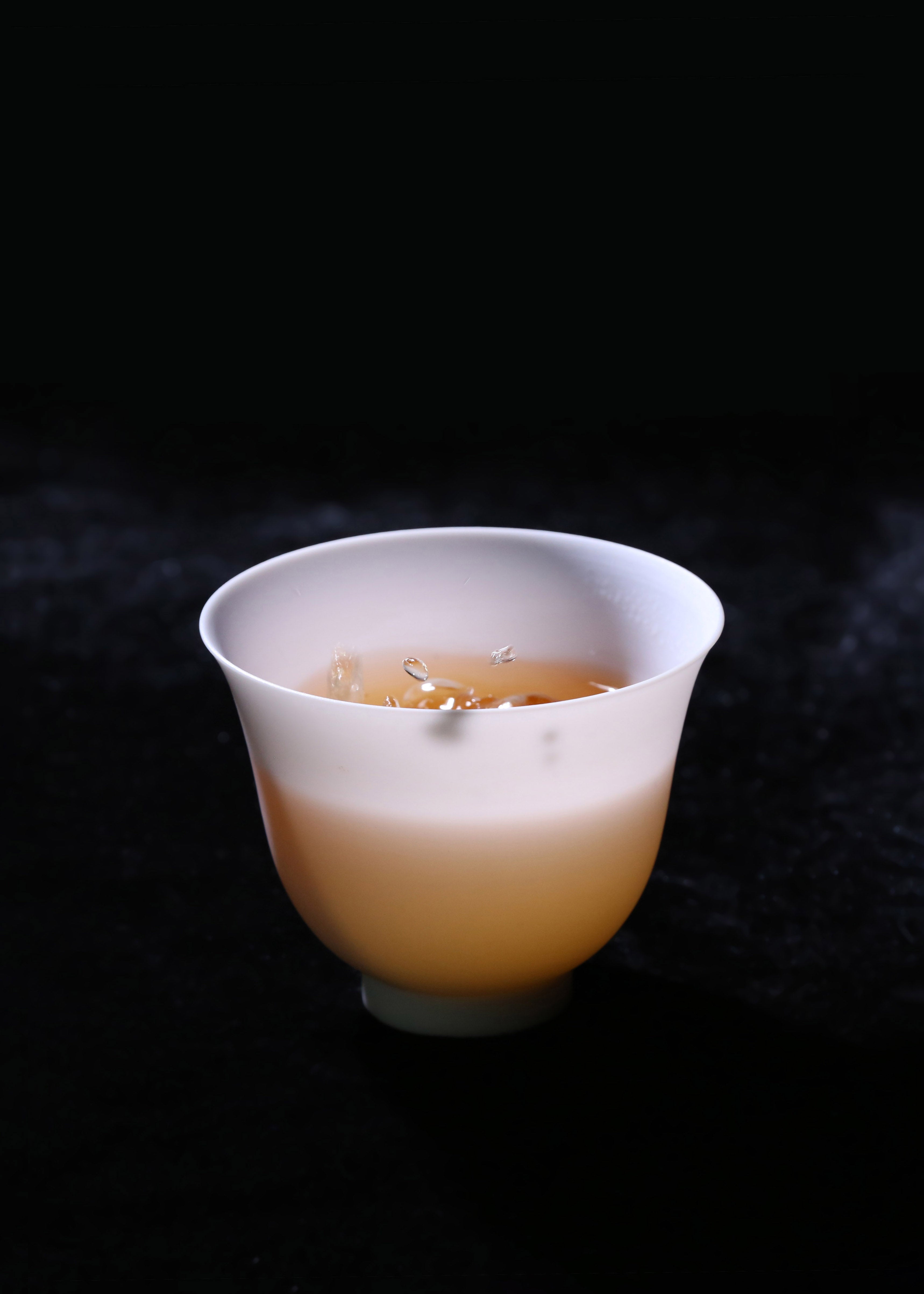
Enamel Iron Red Landscape Reserve Panel Bell-shaped Cup,
The reserve panels are decorated with Iron Red landscapes in a serene, expansive style.
In one scene stand three thatched cottages, half a mu of slender bamboos, a lofty scholar leaning on a staff and strolling, with a small bridge underfoot and a gurgling stream flowing by.
In the other panel floats a lone boat; gulls and herons fly south toward distant mountains, standing faintly visible amid fading mist and clouds, as if in a fairyland.
The entire scene is rendered in Iron Red, with a soft, bright palette, exquisite brushwork, and an elegant, winding composition.
Painting on porcelain is far more difficult than on paper.
Here, the enamel technique is combined with interlocking lotus and precious lotus flowers, creating a delightful contrast and harmony.
Baoxiang Flower (Precious Lotus Flower)
The term “Baoxiang” originates from Buddhism, as a reverential term for the Buddha’s dignified countenance among believers.
The Baoxiang Flower is an ideal floral motif embodying purity, grace and beauty.
It does not represent a single real flower, but a refined artistic design synthesized and refined from elements of the lotus, peony, pomegranate and other blossoms.
Enamel Ware
Beyond its intricate and delicate painting, this Enamel Painted Iron Red Landscape Bell-shaped Cup requires four separate kiln firings, each carrying the risk of flaws.
In the Qing Dynasty, enamel porcelain was originally made exclusively for the appreciation of emperors and empresses.
Enamel pigments are special artificially fired coloring materials.
Before the 6th year of the Yongzheng reign (1728), they had to be imported from Europe.
After 1728, the Imperial Workshop of the Qing Court successfully developed over 20 types of enamel pigments on its own — marking the peak of ancient Chinese polychrome porcelain craftsmanship.