Dayatang Ghostly Fragrance Da Hong Pao
Appreciation
The rocky bones give birth to a wondrous fragrance, and the pollen permeates the heart and soul.
Year: 2025
Grade: Premium Grade
Producer: Dayatang
Origin: Core Zheng Yan Area, Wuyi Mountain
Variety : Da Hong Pao
- Dry Tea Shape: are tight, plump and well-organized, with no crumbs or broken pieces. This stems from the strict "medium-open leaf picking" standard during harvest (hand-picked when new shoots unfurl 3-4 leaves) and the careful control of "gentle rolling and slow airing" during leaf withering. These ensure the tea's internal nutrients are not lost due to external damage.
- Color : Deep brown and glossy, with no obvious burnt spots or dullness. This is evidence of the "low-fire slow roasting" process, which preserves the tea's vitality while promoting the full transformation of substances like tea polyphenols and amino acids—laying the foundation for the release of the "pollen fragrance."
- Texture : Pinching the dry tea, it feels firm yet elastic. A faint sweet aroma lingers, free of the harshness of raw greenness or smokiness, initially revealing the elegant base of the "pollen fragrance."
- Dry Sniff & Warmed Gaiwan Aroma: The Initial Sweetness
When the dry tea is unbrewed, leaning in to smell it closely reveals a faint, delicate fragrance similar to spring pollen, mixed with a touch of elegant orchid. It is unassuming yet refreshing to the heart and spleen. After warming the gaiwan, add the dry tea— the residual heat of the gaiwan walls will awaken the tea’s aroma. At this moment, the "pollen fragrance" becomes more vivid, as if standing in a spring tea garden, with the mixed scent of new tea shoots and mountain wildflowers filling the air. There are no off-odors, boasting extremely high purity.
- Brewed Aroma: Rocky Texture Supporting Extraordinary Fragrance
When pouring boiling water at height, the aroma instantly surging in the gaiwan marks the first burst of the "pollen fragrance". First, a rich yet unimposing sweet pollen scent greets the senses, followed by the gradual emergence of the unique "rock milk fragrance", which interweaves and blends with the pollen fragrance. After waiting for a moment to lift the lid, the orchid fragrance seeps out from the base of the aroma. The three scents are distinct in layers yet seamlessly integrated, forming a complex aromatic structure of "pollen as the soul, rocky fragrance as the backbone, and orchid fragrance as the rhyme".
The uniqueness of this aroma stems from the microclimate of Zhengyan (core rock-producing area): with only 2-3 hours of direct sunlight and over 80% diffused light annually, tea trees synthesize more terpenes, aromatic alcohols and other substances (especially aroma-active components such as theaspirane and linalool). Meanwhile, the leaf withering process of "making tea according to the weather" (adjusting the number of rolling times based on the day’s humidity, usually 1-2 more airing sessions than other producing areas) promotes the full transformation of aromatic substances, ultimately condensing into this distinctive "pollen fragrance".
- Cup Bottom Lingering Fragrance: Long-Lasting Aftertaste
After finishing the tea liquor, the residual aroma at the bottom of the cup is even more precious. At this moment, the "pollen fragrance" remains distinct, mixed with a faint caramel sweetness (from moderate charcoal roasting). After standing for 5 minutes, the elegant aroma still lingers at the cup bottom without obvious fading— a testament to the richness of its aromatic substances. This trait of "long-lasting lingering fragrance" fully reflects the superior quality of the tea.
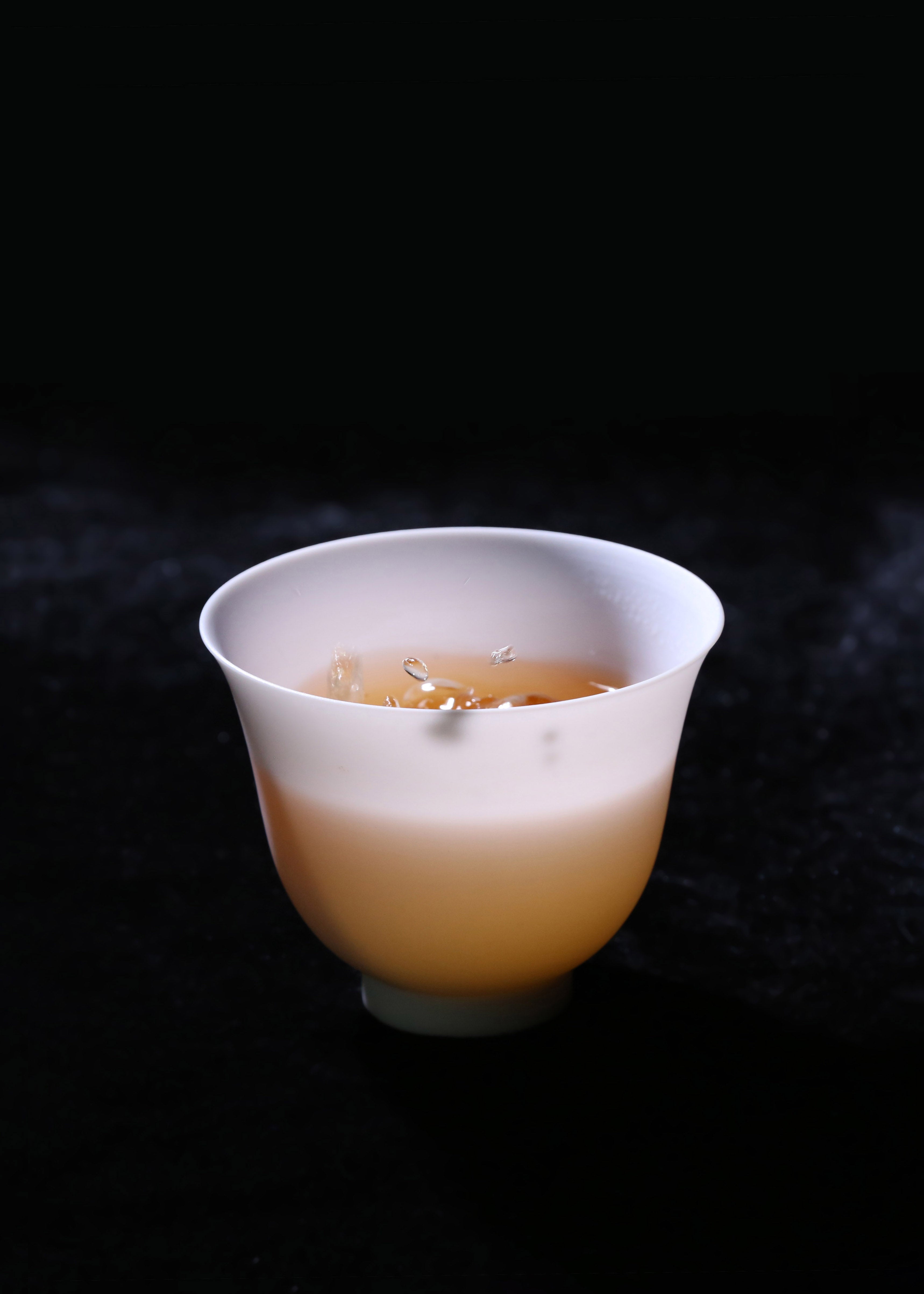
- Tea liquor color : The liquor is orange-yellow and translucent. When poured into white porcelain cups, a faint golden rim (known as the "golden liquor ring") shimmers along the edge of the tea liquor.
- Texture : As the tea liquor is poured into the cup, it flows slowly and densely, as thick as rice soup. When swirling the cup, the liquor coats the walls evenly and does not slide off easily. This texture—"rich yet not turbid, full-bodied yet not heavy"—stems from the nourishing power of the conglomerate soil, which endows the tea liquor with such distinctive traits.
If the "pollen fragrance" is the "outer garment" of this tea, then the "rock rhyme" is its "framework". The two blend perfectly in taste, delivering a layered and progressive sensory experience:
- Initial Taste : The moment the tea liquor enters the mouth, the sweet freshness of the "pollen fragrance" is first perceived. Immediately after, the mellow richness of the liquor spreads across the entire mouth—retaining the inherent integrity of rock tea while boasting the palatability of sweet freshness.
- Sweet Aftertaste : Three to five seconds after swallowing, a distinct sweet aftertaste emerges on the tip of the tongue, spreading from the tongue surface to the throat. Accompanying it is a faint coolness (known as "throat rhyme") and the "firm texture of rock rhyme"—as if the tea liquor leaves a "three-dimensional tension" in the mouth. It is not a single note of sweetness, but a complex experience combining "sweetness, moistness, coolness, and mellow richness".
- Infusion Durability : It can withstand over 10 infusions, with the aroma and taste fading slowly:
Infusions 1-3: The "pollen fragrance" is intense, and the tea liquor is rich and mellow.
Infusions 4-8: The "rock milk fragrance" and orchid fragrance become more prominent, with a long-lasting sweet aftertaste.
Infusions 9-12: Although the aroma fades slightly, the sweet base of the "pollen fragrance" remains, and the final infusions are still sweet.
Truly, the rock texture nurtures extraordinary fragrance, and the pollen aroma touches the soul.
V. Infused Leaves
-
Color : Yellowish-green and evenly bright, with faint reddish-brown edges on the leaves (known as "green leaves with red borders"). The red borders are uniform and free of burnt edges—indicating moderate rolling intensity during leaf withering, which preserves the leaves’ freshness.
-
Texture : Pinching the wet leaves gently, they feel soft, plump and elastic, with full leaf flesh.
-
Uniformity : The wet leaves are consistent in size, with no mixing of old or young leaves. This reflects strict unified harvesting standards, ensuring consistent maturity of fresh leaves. It lays the foundation for standardized subsequent processing, confirming this as a carefully selected premium Zhengyan tea.
Appreciating Ghostly Fragrance Da Hong Pao is more than just "drinking tea"—it is a dialogue with terroir. That hint of "pollen fragrance" is a gift from the Danxia rock cliffs; that touch of "rock rhyme" is the nourishment of gravelly soil and the perseverance of tea-making inheritors. Savoring a cup of this tea means achieving a profound gustatory resonance with the landscapes and humanistic heritage.