Inheritor of the intangible cultural heritage of Fuding white tea handcrafting technique
Mei Xiangjing

Mr. Mei Xiangjing is the only inheritor of the traditional handcrafting techniques for Fuding white tea, a national intangible cultural heritage.
He is the grandson of Mei Bozhen, a tea merchant from Fuding during the late Qing Dynasty and the Republic of China period. His family business is tea, and the family tradition has been passed down to this day.
The old gentleman began learning the art of white tea making when he was a teenager. Over the years, he has become accustomed to getting up early and going to bed late. Although he is over seventy years old, he still lives according to his ancestral teachings.

"Because my grandfather used to be a big tea merchant, our family had a bad class background. During the Cultural Revolution, we were not allowed to make tea. At that time, many old craftsmen also changed careers, and the white tea industry as a whole regressed."
Speaking of the past, Mr. Mei fell into deep thought, “After the Cultural Revolution, I made some new tools and continued to make white tea, thus bringing back the family’s craft.”
Fortunately, the "Xiaoxi's Petition" in the family genealogy was preserved, while other writings by Mei Xiaoxi about tea making were lost during the Cultural Revolution.

Mr. Mei was born in 1941 and has been making tea for more than half a century, inheriting his family's business.
Throughout the long years, they have watched over this village, this tea mountain, and this craft.
With a calm and peaceful approach, tea has been integrated into the modern era, and today, white tea is flourishing.

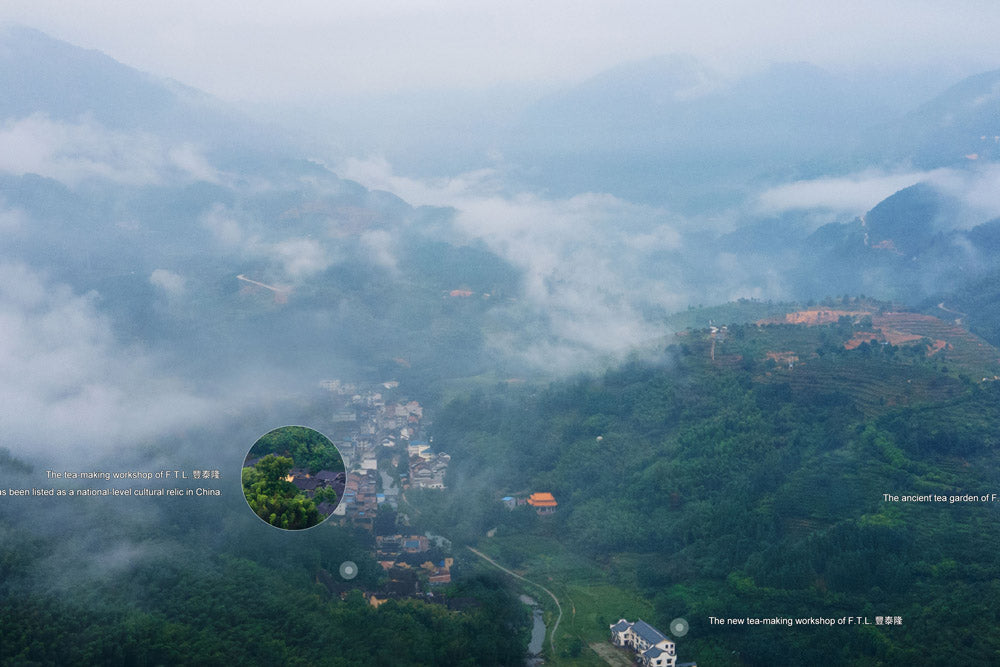
Bailiu Village, Diantou Town, Fuding City, is the birthplace of Chinese white tea, one of the six major tea categories.
Tea originated here because the altitude, soil, sunshine, and air conditions here are all suitable for the growth of white tea.

The Mei family is inextricably linked to white tea. In ancient times, there was Mei Xiaoxi, who dominated the Fujian tea industry, and today there is Mei Xiangjing, a master of intangible cultural heritage.

The white tea making process involves seven parts sun-drying and three parts roasting. It seems simple, but it contains hidden complexities, fully illustrating the principle that the simpler something is, the harder it is to make well.

As the sun slowly fades, the skill and refinement lie in this very slow process. Sunlight, sea fog, and wind are all factors that need to be considered when sun-drying tea, and experience is of paramount importance.

Roast over a low flame, slowly and gently, without rushing, to prevent smoke from forming...

One must touch its dryness, observe its color, smell its aroma, and taste its flavor—only after passing these four tests can one obtain a good cup of tea.

The world's white tea is from China, and China's white tea is from Fuding. Fuding has a village that is the birthplace of Chinese white tea, and in that village lives Mei Xiangjing, a master of tea-making intangible cultural heritage.
Thus, the tea trees, sunshine, and air of the place of origin, along with the tea-making expertise of Mr. Mei Xiangjing over half a century, will together tell you the authentic taste of white tea.